


Imagine logging into your favorite crypto exchange one morning, only to find a blank screen where your portfolio used to be. That is exactly what happened to thousands of Filipino investors in August 2025 when the Philippine Securities and Exchange Commission (SEC) moved to block access to major international platforms. While recent headlines mention a wave of restrictions affecting up to 20 entities, the core enforcement action targeted ten prominent exchanges for operating without proper local licenses. This wasn't just a bureaucratic headache; it was a hard reset on how digital assets are traded in the country.
The situation stems from new rules that took effect in July 2025. If you hold crypto in the Philippines, these changes directly impact your ability to trade, your tax bill, and even whether you can access your funds. Understanding why this happened and what it means for your wallet is crucial right now.
Why the Sudden Crackdown?
The trigger was simple: non-compliance. The SEC issued an advisory naming specific platforms that were serving Philippine residents without registering as Crypto Asset Service Providers (CASPs). The list included heavyweights like OKX, Bybit, KuCoin, Kraken, and others such as Bitget, Phemex, CoinEx, BitMart, Poloniex, and Mexc.
These platforms had been operating freely, but under the new Memorandum Circulars (MC) No. 4 and MC No. 5, they failed to meet three critical requirements:
- Local Registration: They did not obtain a license from the SEC.
- Physical Presence: They lacked a physical incorporation within the Philippines.
- Capital Reserves: They did not maintain the mandatory minimum capital of PHP 100 million (approx. $1.76 USD).
The SEC argued that allowing these platforms to operate unchecked exposed local investors to significant risks, particularly regarding fund safety. To enforce this, the National Telecommunications Commission (NTC) ordered internet service providers to cut off access. Major telecom giants like PLDT Inc. and Smart Communications confirmed the blocks by mid-August 2025, effectively locking users out of their accounts via standard mobile and broadband connections.
The New Rules: What CASPs Must Do Now
If you are an investor, you might wonder why the government is being so strict. The new framework isn't just about control; it's designed to prevent the next collapse of a major exchange. Here is what the regulations actually require from any platform wanting to serve Filipino customers:
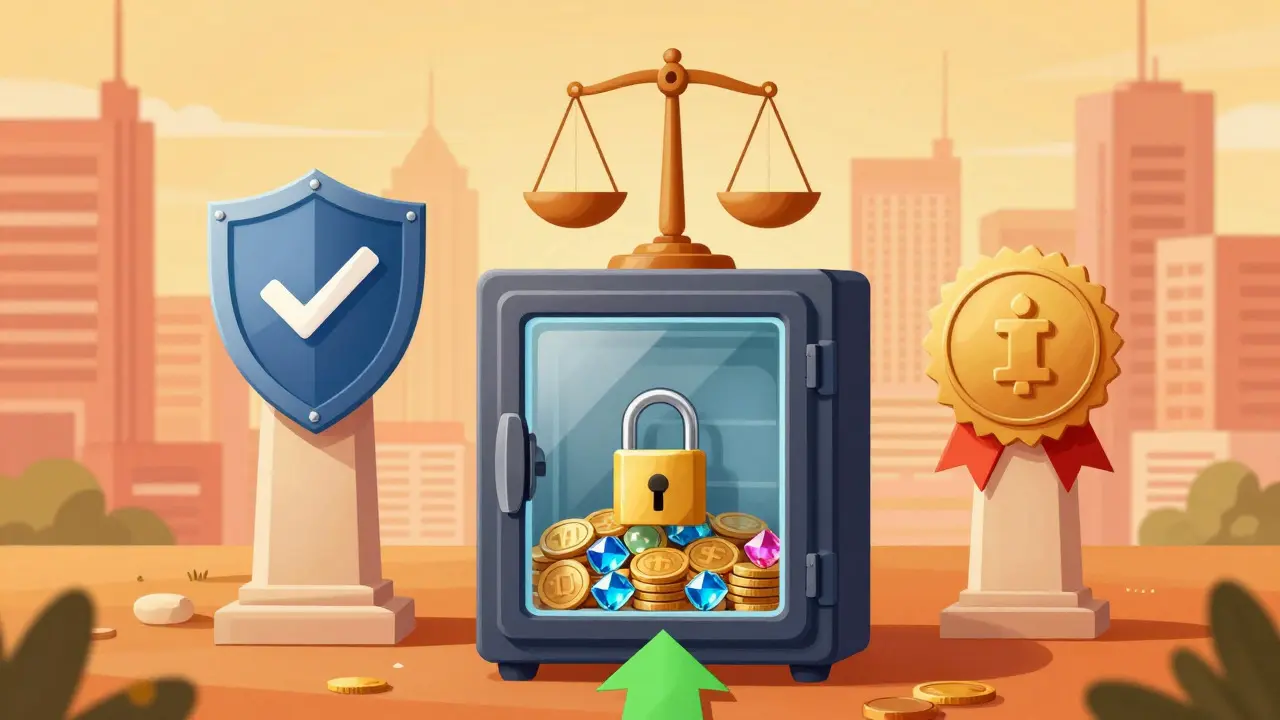
- Fund Segregation: Customer funds must be kept separate from company assets. This was a direct response to global exchange failures where commingled funds led to total loss for users.
- AML Reporting: Platforms must submit regular reports to both the SEC and the Anti-Money Laundering Council to track suspicious activity.
- Marketing Compliance: Even influencers and educators promoting specific coins or platforms must register as corporations and hold appropriate licenses. Transparency is no longer optional.
For smaller exchanges, the PHP 100 million capital requirement is a massive barrier. It ensures that only financially stable operators can compete, theoretically reducing the risk of insolvency. For large international players, it means setting up a local entity, hiring staff, and dealing with local bureaucracy-costs they previously avoided by operating remotely.
Tax Implications: The Hidden Cost
Blocking access is only half the story. The other half is the wallet drain caused by updated tax laws. In 2025, the Philippines brought crypto squarely under its taxation regime. If you sell crypto for fiat currency or use it to buy goods, you now face a 15 percent capital gains tax.
This is a significant jump from previous rates. Additionally, if you receive crypto as payment for services, mine coins, or stake assets, that income falls under the standard income tax regime. There is also a 12 percent Value Added Tax (VAT) on selling goods in exchange for cryptocurrency. Failure to file these taxes correctly carries penalties, meaning "forgetting" to report your trades is no longer a viable strategy.
| Feature | Pre-2025 Status | Post-July 2025 Requirement |
|---|---|---|
| Licensing | No specific SEC license required for offshore exchanges | Mandatory CASP license from SEC |
| Capital Reserve | No local minimum capital specified | Minimum PHP 100 million ($1.76M) reserve |
| Physical Presence | Remote operation allowed | Must incorporate physically in the Philippines |
| Crypto Capital Gains Tax | Varying/unclear treatment | Fixed 15% rate on fiat conversion |
| Fund Separation | Not strictly enforced locally | Mandatory segregation of customer vs. company funds |
How Users Can Still Access Their Funds
So, if your exchange is blocked, do you lose your money? Not necessarily. Network-level blocking affects standard internet traffic, but tech-savvy users have found workarounds. The most common method is using a Virtual Private Network (VPN). By routing your connection through a server outside the Philippines, you can bypass the DNS blocks implemented by ISPs like PLDT and Smart.
However, relying on a VPN has risks. It adds a layer of complexity and potential security vulnerabilities if you choose a free or low-quality provider. Furthermore, while the SEC blocked the websites, they warned that unauthorized platforms could face removal from app stores. This means iOS and Android users might find their apps disappearing from official stores, forcing them to download APK files manually or rely on web browsers via VPN.
For those who want to stay compliant, the best move is to migrate to a licensed local exchange. Several domestic platforms have secured their CASP licenses and are now fully operational. Moving your assets to a compliant venue ensures you don't get locked out again and simplifies your tax reporting, as local exchanges often provide integrated tax documents.
The Broader Regional Context
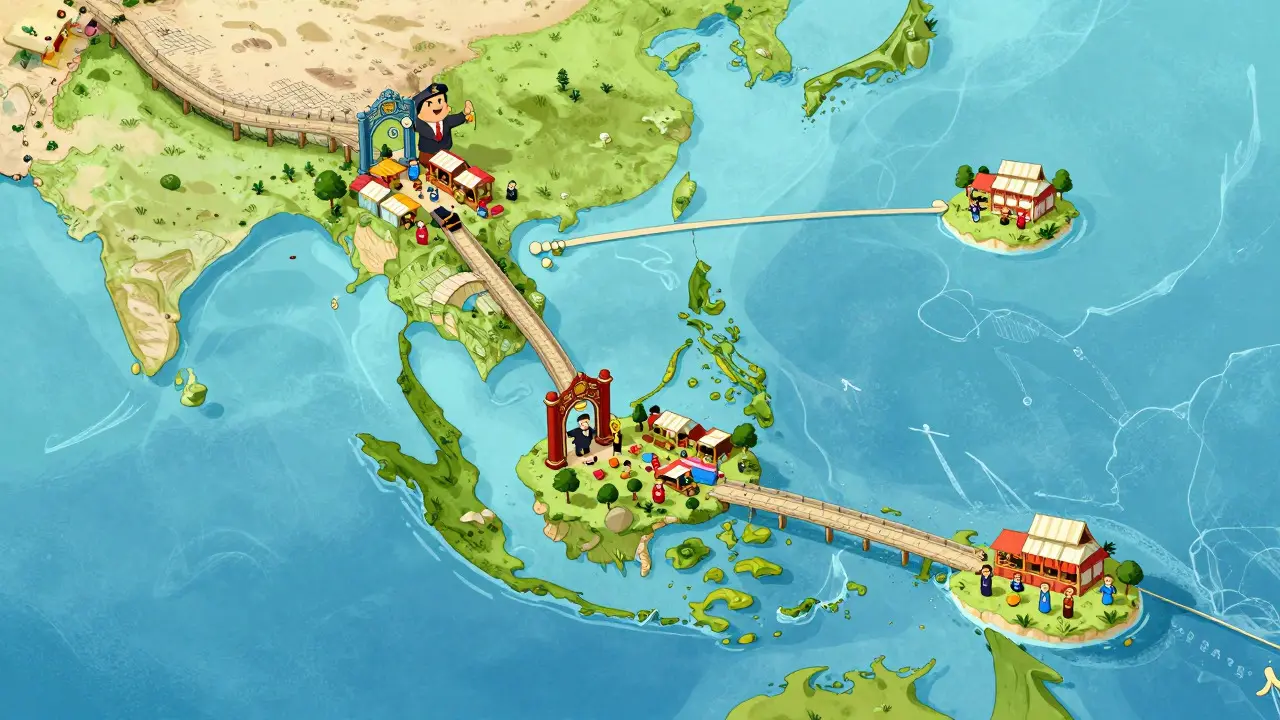
The Philippines isn't acting alone. This crackdown mirrors trends across Southeast Asia. In May 2025, Thailand’s SEC blocked five crypto exchanges, including Bybit and OKX, citing similar compliance issues. Indonesia tightened its net in 2025 by raising income tax on domestic exchange transactions from 0.1% to 0.21%, while slapping a 1% tax on offshore trades-a fivefold increase.
This regional shift signals that the era of "wild west" crypto trading in Asia is ending. Governments are prioritizing investor protection and tax revenue over open market access. For Filipino investors, this means the days of easily hopping between dozens of offshore exchanges without consequence are likely over. The regulatory focus is clear: if you want to play in the Philippines, you follow the local rules.
What Should You Do Next?
If you are currently affected by these blocks, here is a practical checklist to secure your position:
- Audit Your Holdings: Check which of your active exchanges are on the blocked list. Confirm if they have announced a plan to comply or if they are shutting down local operations.
- Verify Local Licenses: Before moving funds, check the SEC’s official registry to ensure the destination exchange holds a valid CASP license.
- Update Your Tax Strategy: Consult a local accountant familiar with the new 15% capital gains rule. Ensure you have records of all transactions since January 2025.
- Secure Your Devices: If using a VPN to access blocked sites, use a reputable paid service. Avoid public Wi-Fi for financial transactions.
- Watch for App Store Removals: Keep an eye on your phone’s app store notifications. If an app disappears, have a backup plan for accessing your account via desktop browser.
The regulatory landscape in the Philippines has shifted from permissive to protective. While the initial shock of blocked exchanges is frustrating, the underlying goal is to create a safer environment for long-term crypto adoption. By staying informed and compliant, you protect yourself from future enforcement actions and ensure your digital assets remain accessible and valued.
Which specific exchanges were blocked in the Philippines in August 2025?
The SEC officially named OKX, Bybit, Mexc, KuCoin, Bitget, Phemex, CoinEx, BitMart, Poloniex, and Kraken. These platforms were restricted for failing to register as Crypto Asset Service Providers (CASPs) under the new 2025 regulations.
Can I still access my blocked crypto exchange using a VPN?
Yes, most users can bypass the network-level blocks imposed by ISPs like PLDT and Smart by using a Virtual Private Network (VPN). However, this is a workaround, not a legal exemption, and there is a risk that apps may be removed from official app stores, requiring manual installation or browser access.
What is the new capital gains tax rate on crypto in the Philippines?
As of 2025, the capital gains tax on selling cryptocurrency for fiat currency or exchanging it for goods is set at 15 percent. Income from mining, staking, or receiving crypto as payment is subject to the standard income tax regime.
Do I need to pay VAT when buying goods with crypto?
Generally, the buyer does not pay VAT directly on the crypto transaction itself, but sellers accepting crypto for goods must charge 12 percent VAT on the sale. The complexity lies in documentation; ensuring both parties report the transaction correctly is essential to avoid penalties.
What is the minimum capital requirement for a crypto exchange in the Philippines?
Under SEC Memorandum Circular No. 4 and No. 5, Crypto Asset Service Providers must maintain a minimum capital reserve of PHP 100 million (approximately $1.76 million USD) and establish a physical presence within the country.
Jade Brown
August 16, 2026 AT 15:15So the SEC finally woke up from their mid-2019 coma and decided that 'trust us' isn't a regulatory framework? Classic. They're basically saying, 'Hey, we want your data, your KYC, and your tax receipts, but don't worry, we'll keep your funds safe... probably.' It's the ultimate bait-and-switch. You think they care about investor protection? Nah, they care about the revenue stream. The PHP 100 million capital reserve is a laughable barrier for giants like Binance or OKX, but it's a death sentence for any indie project trying to bootstrap in Manila. It’s all about consolidation. The big players will just set up shell companies, pay the local bureaucrats a 'consulting fee,' and continue doing exactly what they’ve been doing for a decade. The only real change here is that now you have to file a 1040 equivalent with the BIR before you can even breathe on your Bitcoin. Enjoy the paperwork, folks.
Uday N M
August 17, 2026 AT 23:40India should do this next. We are still waiting for clear crypto laws after years of debate. This is the right move for stability.
Melissa G
August 19, 2026 AT 18:20One must consider the philosophical implications of state intervention in digital sovereignty. By mandating physical presence and local licensing, the Philippine SEC is not merely regulating; it is redefining the boundary between the global digital commons and the national legal jurisdiction. It suggests that trust, once thought to be algorithmic and borderless, is actually a civic contract that requires tangible accountability. The requirement for fund segregation is particularly poignant; it acknowledges that in the absence of a central bank guarantee, the exchange itself becomes the de facto custodian of value, and thus, must bear the weight of institutional integrity. This shift from 'wild west' anarchy to structured governance mirrors the historical trajectory of traditional finance, where innovation eventually bows to regulation. It is a reminder that freedom in markets often necessitates the discipline of law.
Patrick Pat
August 21, 2026 AT 09:21Sarcastic take: Oh great, another country decides that the internet is too dangerous for regular people unless they fill out 40 forms first. Love the energy. Also, good luck getting PLDT to actually block anything without taking down half the web by accident. I've seen their DNS servers work. Or rather, not work. But sure, let's regulate the future while the present is still buffering. Very brave. Very smart. Probably. Maybe. Who knows?
Claudio Perrone
August 22, 2026 AT 06:56this is totaly crazy tho like who does this?? its basically saying you cant use the internt unless the govt says so. i mean sure its for safety but feels like they are just grabbing money. my friend lost his whole portfolio on one of these sites last year and now he has to use a vpn just to check if its still gone. tragic really. also why does it cost 100 million pesos?? thats like nothing for big cos but huge for small ones. weird rules. whatever. drama everywhere.
Aaron Morrissey
August 24, 2026 AT 05:16It is, indeed, a momentous occasion for the archipelago! One cannot help but feel a profound sense of relief, albeit tinged with bureaucratic anxiety, as the nation takes this decisive step toward financial maturity. The imposition of such rigorous standards-particularly the mandatory segregation of client assets-speaks volumes about the government's commitment to shielding the common citizen from the whims of volatile markets. While some may lament the loss of convenience, the long-term benefit of a stable, transparent ecosystem far outweighs the short-term friction. Let us embrace this new era of compliance with open arms and optimistic hearts!
Patrick Quairoli
August 24, 2026 AT 08:34its not about safety at all. its about control. they want to track every single satoshi you move. think about it. why else would they need aml reports to the council? because they are building a database of everyone holding crypto. its the endgame. the fed wants to kill bitcoin and this is just the philippine version of it. wake up sheeple. the vpn thing is a trap too. they will ban vpns next. watch this space. its all connected. the deep state is moving in on our digital gold. dont trust them. ever.
Linda Leeuwesteijn
August 25, 2026 AT 18:54Hey everyone! 👋 Just wanted to drop a quick note to say this is super important if you hold any crypto in PH. 🇵🇭 Don't forget to check which exchanges are licensed! It's easy to get caught off guard. 😅 Stay safe out there! 💪
Shawn Schaerer
August 26, 2026 AT 21:42Let us dissect this with the vigor it deserves! The enforcement mechanism here is not merely punitive; it is structural. By leveraging NTC orders against ISPs, the state effectively privatizes the censorship apparatus, turning telecommunications providers into agents of fiscal policy. This is a bold, aggressive move that signals zero tolerance for non-compliance. For the uninitiated, this means the days of anonymous offshore trading are dead. Embrace the clarity! The market will adapt, but only those who align with the regulatory tide will thrive. Act now, or be left behind in the dust of obsolescence!
Hicham Mounir
August 28, 2026 AT 00:14Oh man, this must be really stressful for a lot of people. I can just imagine waking up and not being able to log in. It’s kind of like when your email provider changes their password rules and suddenly you’re locked out of everything. But with real money on the line. It’s wild. I hope everyone finds a way to sort it out smoothly. Hang in there, guys! 💖
Sarah Campbell
August 29, 2026 AT 21:30Finally!! 🙌 Time for order! No more shady offshore scams ruining our economy. These big exchanges always thought they were above the law. Now they pay the price. America does it better though, at least we have the IRS watching over us (lol). But hey, progress is progress. Let’s make sure our own regulations catch up soon. 🇺🇸💰
michelle aguilar
August 30, 2026 AT 11:00Well, isn't this simply delightful, darling? The sheer audacity of the state to reach into your pocket, label it 'taxation,' and call it 'protection'? How very quaint. I suppose one must admire the efficiency of the bureaucracy, if not the soul-crushing nature of it all. To think, we once celebrated the promise of decentralization, only to find ourselves shackled by the very chains of centralized authority. A truly poetic irony, wouldn't you agree? Do try to keep your composure amidst this administrative chaos, dear heart.
Lance Konig
August 31, 2026 AT 19:50The technical implementation of the block via ISP-level DNS filtering is a crude but effective method. It bypasses the need for individual user consent and operates at the network layer. However, it fails to account for the inherent volatility of the underlying asset class. If an exchange collapses due to insolvency, the license does not protect the principal, only the process. Therefore, the regulatory focus should arguably shift from entry barriers to solvency requirements. The current framework prioritizes access control over risk mitigation. A flawed premise, executed with precision.
Dina Lazarova
September 2, 2026 AT 07:47How tedious. One assumes the average reader will find this level of detail utterly exhausting. It is rare to see such thorough documentation of bureaucratic hurdles, yet one wonders if it serves any practical purpose beyond satisfying the ego of the regulator. Perhaps the true lesson here is that simplicity is a luxury we no longer afford. Nevertheless, the effort is noted, if not appreciated. Carry on.
Walker Perry
September 4, 2026 AT 05:26This is proof they are coming for your money! Think about it, why else block the exchanges? To force you onto local ones where they can spy on you easier. The 15% tax is just the beginning. Next year it's 30%. Then 50%. They want to crush the free market. And don't believe the 'investor protection' nonsense. That's just propaganda to get you to comply. Wake up people! The system is rigged against you. Use cold storage and stay off the grid if you can. Trust no one. Not the SEC. Not the banks. Not the media. Only the code. #Bitcoin #Freedom #NoMoreTaxes
Daniel Brown
September 6, 2026 AT 04:30Did anyone notice that Kraken was on the list? I thought they were pretty compliant already. Seems like the bar is really high now. Good to know we need to double-check everything before moving funds. Thanks for the heads up on the app store removals too, that could be a nightmare.
Marco Maldonado
September 8, 2026 AT 02:17US should learn from this. Our regs are a mess. SEC vs CFTC fighting over who owns crypto. Meanwhile Philippines just did it. Efficient. Respect. Though 15% tax is steep. But better than India's 30% plus 1% TDS. Still, US needs to step up. We are the leader. We should set the standard. Not follow. But yeah, nice move PH. Solid. Strong. Like a rock. Unbreakable. Almost. Well, mostly.
Quang Thai Tran
September 9, 2026 AT 01:49It is evident that the Philippine Securities and Exchange Commission has acted with a degree of foresight rarely seen in emerging markets. The establishment of a minimum capital reserve of PHP 100 million is a prudent measure, designed to ensure that only entities with substantial financial backing can operate within the jurisdiction. This, in turn, mitigates the systemic risk associated with smaller, less regulated platforms. Furthermore, the integration of Anti-Money Laundering reporting into the CASP framework aligns domestic policy with international best practices. One must commend the authorities for their decisive action in curbing the proliferation of unlicensed operators. This sets a positive precedent for the region.
Carmene Jackson
September 9, 2026 AT 19:43I feel like everyone is panicking for no reason. I mean, sure, it's annoying, but you just use a VPN or switch to a local one. It's not like your money disappeared. It's just... moved. Or something. Anyway, don't stress too much, okay? We'll figure it out. Probably. Maybe. Soon. Yeah. Definitely soon. Hope you're all doing well otherwise! ❤️
Jennifer Ulmer
September 9, 2026 AT 20:18It is interesting to see how quickly the narrative shifts from 'innovation' to 'compliance'. I think we should look at this as a maturing market. When a sector grows, regulation follows. It's natural. I'm glad they are setting clear rules. It makes things safer for everyone, I think. Just need to stay informed.
Stephanie Millar
September 10, 2026 AT 10:11From a cultural perspective, this reflects a broader Asian trend towards state-guided capitalism in the digital sphere. Unlike the Western emphasis on deregulation and self-regulation, many Southeast Asian nations view the state as the primary guarantor of economic stability. This approach ensures that technological adoption does not outpace social infrastructure. It is a fascinating contrast to observe. The Philippines is positioning itself as a regional hub, but one with strict guardrails. This balance is crucial for long-term sustainability. It speaks to a unique blend of modernity and tradition in governance styles across the region.
Nikki keller
September 11, 2026 AT 04:48Personally, I think this is a good thing. Clear rules are better than ambiguity. I appreciate that they specified the capital requirements. It gives us a benchmark. I'm not a fan of heavy taxes, but if it keeps the exchanges solvent, maybe it's worth it. Just hoping the local exchanges are reliable. Fingers crossed. It's a delicate balance between freedom and security, but I lean towards security for my savings.
miranda gamboa
September 12, 2026 AT 07:04Let's break down the tech side! The NTC blocking is likely done via BGP route hijacking or DNS sinkholing. If it's DNS, a simple hosts file edit or custom DNS resolver fixes it instantly. If it's IP-based, you need a VPN or Tor. The key is latency. Local licensed exchanges will have lower ping for Filipino users compared to offshore ones, which is a genuine UX improvement. Plus, local fiat on-ramps (like GCash or Maya integrations) will be seamless. This isn't just regulation; it's infrastructure optimization. Get excited! The local ecosystem is going to boom because of this forced migration of liquidity.
Kiran Jayaram
September 13, 2026 AT 15:14typical. always the same story. govts wait until the market crashes then come in with a sledgehammer. its not about protection its about power. look at india again. they blocked binance for years. why? because they wanted their own exchange to dominate. same thing here. the local exchanges will get all the business now. unfair competition. pure and simple. stop pretending its for the people. its for the insiders. wake up. the numbers lie. the headlines lie. only the blockchain tells the truth. but even that is being watched. paranoid? maybe. wrong? never.
Evelyn Kula
September 14, 2026 AT 18:19Ugh, so complicated. I just want to buy some NFTs and sell them. Why do I need a lawyer now? This is ridiculous. I feel like the elites are designing these rules to keep us out. If you have time to read a 20-page circular, you're rich. If you're poor, you're stuck. Classic. I'm thinking of moving everything to DeFi. At least there's no SEC there. Right? Probably. Unless they ban Ethereum next. Which they will. Because they hate freedom. Always have. Always will. Sigh.
manish jha
September 16, 2026 AT 04:10Regulation is necessary. Without it, only the strong survive, and usually the strong are the scammers. This is the moral duty of the state. To protect the weak. The 15% tax is fair compensation for the privilege of using a stable currency. Those who complain are selfish. They want profit without responsibility. This is the path to virtue. Follow the rules. Be honest. Pay your dues. The rest is noise. Silence is golden. Compliance is silver. Rebellion is bronze. Choose wisely.
Nia Franklin
September 16, 2026 AT 04:12Oh wow,, this is such a whirlwind of changes!! 🌪️ I love how colorful the regulatory landscape is becoming, sort of like a messy watercolor painting that no one asked for but we have to live with. 😂 It’s funny how ‘safety’ always comes with a side of red tape. I guess that’s the price of admission to the club. Anyway, keep your wallets secure and your spirits high! We’ll navigate this maze together. 🧩✨