


Imagine buying a coffee with Bitcoin. You scan the QR code, wait three minutes for confirmation, pay a $5 network fee, and hope the price doesn't drop before the transaction clears. It’s a nightmare scenario that highlights why Bitcoin isn’t built for your morning latte. But what if you could pay in seconds, for less than a penny, with zero hassle? That is exactly where everyday cryptocurrency transactions are heading in 2026.
The landscape of digital money has shifted dramatically. We are no longer just talking about storing wealth; we are talking about spending it. With major platforms like Shopify integrating crypto rails and banks adopting blockchain tech, the question is no longer "if" but "which coin." Not all cryptocurrencies are created equal when it comes to speed, cost, and merchant acceptance. Let’s break down the top contenders for your daily wallet.
Why Most Cryptos Fail at Daily Spending
Before picking a winner, you need to understand the hurdles. For a cryptocurrency to work as everyday money, it needs three things: speed, low fees, and stability. If a transaction takes longer than a credit card swipe, you won’t use it. If the fee costs more than the item, it’s useless for small purchases. And if the value swings by 10% while you’re standing in line, merchants will refuse it.
Bitcoin struggles here. Its block time is around 10 minutes, and fees can spike during congestion. Ethereum improved with Layer 2 solutions, but the complexity remains high for average users. This gap left room for newer protocols designed specifically for payment efficiency. Today, three coins stand out: Solana (SOL), XRP, and Monero (XMR). Each solves the problem differently.
Solana (SOL): The Speed King for Retail
If you want speed, Solana is currently the undisputed leader. Founded by Anatoly Yakovenko in 2020, Solana was built from the ground up to handle massive throughput. It uses a unique consensus mechanism called Proof-of-History, which timestamps transactions to prevent bottlenecks.
Here are the hard numbers for 2026:
- Speed: Sub-second finality. Transactions confirm in roughly 400 milliseconds.
- Fees: Average $0.00025 per transaction. Even during peak hours, they rarely exceed $0.001.
- Capacity: Capable of handling 65,000 transactions per second (TPS).
This performance makes Solana ideal for point-of-sale systems. The game-changer, however, is adoption. In Q1 2025, Shopify integrated Solana Pay, instantly opening access to over 2.1 million merchants worldwide. By June 2025, this network had processed $417 million in volume. Imagine walking into any store on Shopify-from local boutiques to global brands-and paying with SOL seamlessly through apps like Phantom Wallet.
User experience is also key. Setting up a Solana wallet takes about 8-12 minutes, and the interface is intuitive. Dr. Linda Xie of Scalar Capital noted in April 2025 that Solana’s combination of speed and merchant integration makes it the most practical choice for daily purchases. However, reliability is a concern. Solana experienced downtime totaling 3.2 hours in Q1 2025. While rare, these outages mean the network isn’t 100% bulletproof for critical payments yet.
XRP: The Bridge for Cross-Border Payments
While Solana dominates retail speed, XRP owns the institutional lane. Launched in 2012 by Ripple Labs, XRP was designed to replace slow, expensive SWIFT transfers between banks. It uses a Federated Consensus model, which allows for incredibly fast settlement without the energy waste of mining.
Key metrics for XRP in 2026:
- Speed: 3-5 seconds for final settlement.
- Fees: A consistent $0.0002, regardless of network congestion.
- Adoption: Integrated with 47 major banks, including Santander and Commonwealth Bank of Australia.
XRP shines when you need to move money across borders. If you’re sending funds to family overseas or paying an international supplier, XRP settles in seconds for fractions of a cent. The resolution of its long-standing SEC case in April 2025 removed regulatory clouds, encouraging more banks to adopt it. Jesse Powell of Kraken highlighted this shift, noting that regulatory clarity made XRP far more viable for mainstream payment systems.
However, using XRP for buying groceries is tricky. Only 12% of XRP transactions come from retail wallets. The main friction point is the "destination tag." Unlike other coins, XRP addresses often require an extra alphanumeric code to identify the recipient within an exchange or bank. Getting this wrong means losing your money-a mistake 7.3% of new users make. Until user interfaces simplify this further, XRP remains better for large transfers than coffee runs.
Monero (XMR): Privacy for Discreet Spending
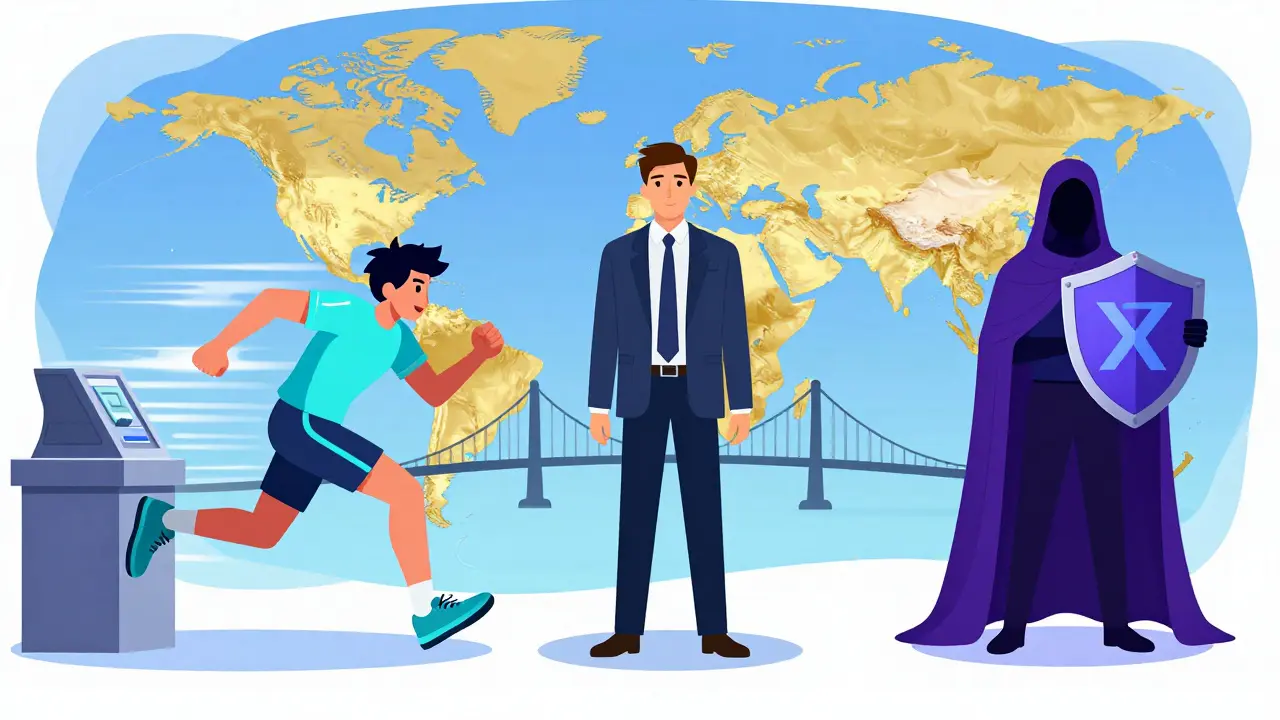
Not everyone wants their spending habits tracked on a public ledger. Enter Monero. Created in 2014, Monero is a privacy-first cryptocurrency. It uses ring signatures and stealth addresses to obscure who sent what to whom. For many, financial privacy is non-negotiable.
Here is the trade-off for that privacy:
- Privacy: 98.7% of transactions are completely untraceable.
- Speed: Average 2 minutes (reduced to 90 seconds in 68% of cases after Kovri integration in Jan 2025).
- Fees: Dynamic, averaging $0.015 but spiking to $0.05 during high demand.
Monero is perfect for sensitive purchases or situations where you don’t want a paper trail. As of May 2025, about 1,850 physical merchants worldwide accept it directly. But it’s not ideal for fast-paced environments. You can’t tap-and-go at a fast-food drive-thru with Monero due to the confirmation time. Additionally, the setup is complex. 68% of new users need help setting up GUI wallets, according to the Monero Project’s 2025 study. If privacy is your priority and you have patience, Monero is unmatched. If convenience is king, look elsewhere.
Comparison: Which Coin Fits Your Lifestyle?
| Feature | Solana (SOL) | XRP | Monero (XMR) |
|---|---|---|---|
| Transaction Speed | Sub-second (400ms) | 3-5 seconds | ~90 seconds - 2 minutes |
| Average Fee | $0.00025 | $0.0002 | $0.015 - $0.05 |
| Merchant Acceptance | High (via Shopify/Pay processors) | Medium (Banking channels) | Low (Niche physical stores) |
| Privacy Level | None (Public ledger) | None (Public ledger) | High (Untraceable) |
| Best Use Case | Retail shopping, microtransactions | Cross-border remittances | Private, discreet purchases |
The Volatility Problem and Stablecoin Solutions
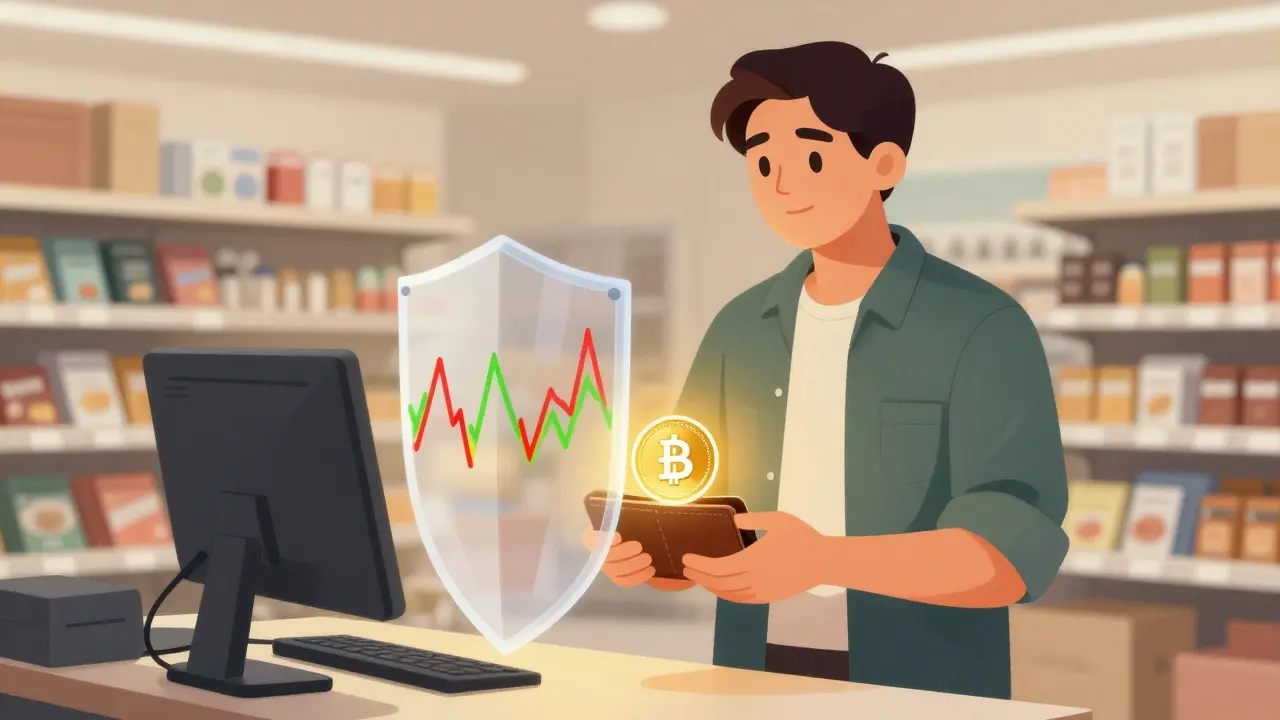
Even with fast speeds and low fees, there’s one elephant in the room: volatility. Crypto prices swing wildly. Buying a $50 shirt with SOL today might leave you with $45 worth tomorrow. Nic Carter of Castle Island Ventures pointed out in May 2025 that even payment-focused cryptos show significant volatility, making stablecoins essential for practical adoption.
The solution? Pair your fast chain with a stablecoin. Solana now supports USDC natively via Circle’s June 2025 integration. This means you get Solana’s speed and low fees, but the value stays pegged to the US dollar. Similarly, Ripple has implemented USDC on the XRP Ledger. For everyday transactions, holding volatile assets like SOL or XRP for spending is risky. Using them as gas to move stablecoins is the smarter play.
Getting Started: Practical Steps
Ready to try crypto payments? Here is how to set up for success in 2026:
- Choose Your Wallet: For Solana, download Phantom or Solflare. They offer smooth mobile experiences with high ease-of-use ratings. For XRP, Exodus simplifies the destination tag issue. For Monero, Monerujo (Android) or Kairos (iOS) are user-friendly options.
- Buy Stablecoins: Purchase USDC or USDT on a reputable exchange like Coinbase or Kraken. Send them to your crypto wallet. This protects you from price swings while you spend.
- Find Merchants: Look for the Solana Pay logo or check Shopify stores. For XRP, check if your bank offers direct crypto payout options. For Monero, consult the XMR Merchant Directory for local physical stores.
- Start Small: Test with a $5 purchase. Ensure you understand the address format and fee structure before committing larger amounts.
The infrastructure is finally catching up to the hype. With Solana leading in retail speed, XRP bridging global gaps, and Monero protecting privacy, you have choices. Pick the tool that fits your specific need, pair it with a stablecoin for safety, and start experiencing the future of money today.
Is it safe to use cryptocurrency for everyday purchases?
Yes, provided you use reputable networks and wallets. Solana and XRP have robust security records, though Solana has experienced occasional outages. Always double-check wallet addresses and consider using stablecoins to avoid price volatility risks. Never share your seed phrase with anyone.
Which cryptocurrency has the lowest fees for small transactions?
XRP and Solana are tied for the lowest fees, averaging around $0.0002 to $0.00025 per transaction. This makes them ideal for microtransactions under $5. Monero fees are higher, averaging $0.015, which can eat into small purchase values.
Can I use Bitcoin for everyday transactions?
Technically yes, but practically no. Bitcoin transactions take 10+ minutes to confirm and fees can be high during congestion. It is better suited as a store of value. For spending, layer-2 solutions like Lightning Network exist, but they are less widely adopted than native fast chains like Solana.
What is the best way to avoid volatility when spending crypto?
Use stablecoins like USDC or USDT. These are pegged to fiat currencies like the US Dollar. You can hold USDC on the Solana network to benefit from Solana’s speed and low fees while maintaining a stable value for your purchases.
Are there any legal risks to using crypto for payments in 2026?
Regulations vary by country. In the EU, MiCA regulations fully implemented in June 2025 have standardized crypto payments. In the US, XRP’s SEC case resolution improved clarity. Always check local tax laws, as crypto transactions may be taxable events depending on your jurisdiction.