

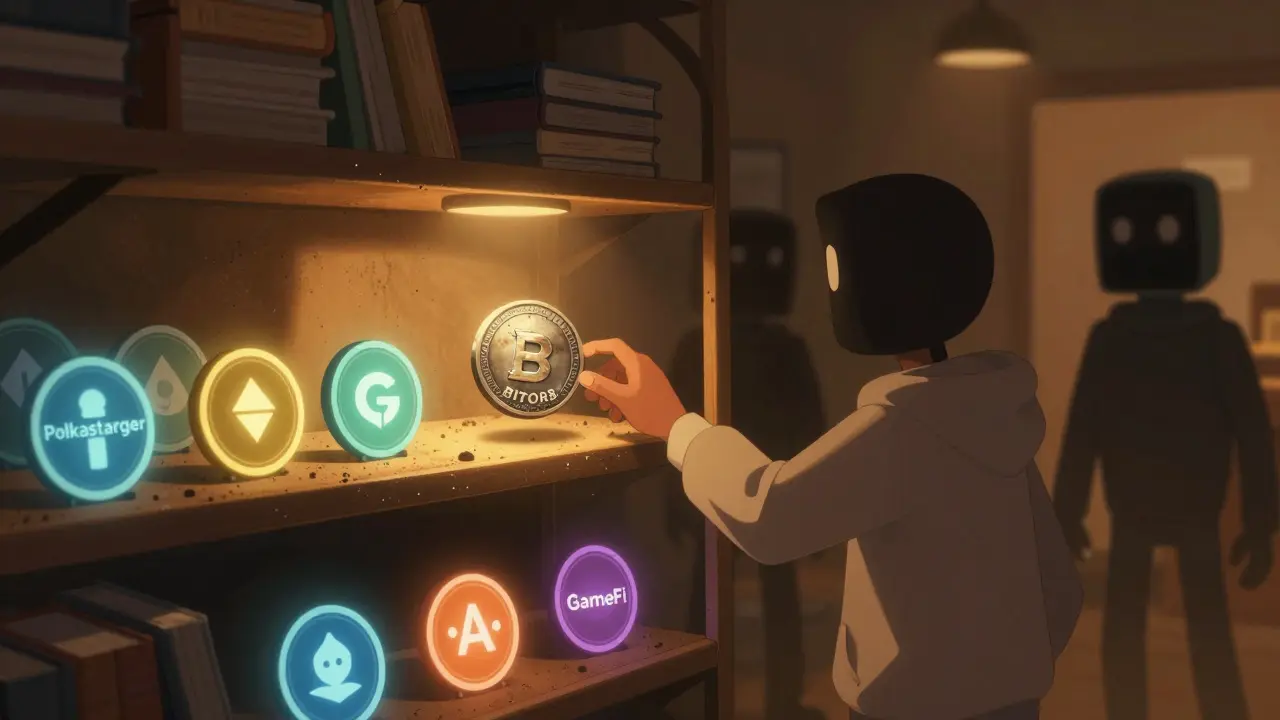
Back in November 2021, BitOrbit (BITORB) launched its token on BSCPad, promising an airdrop and IDO that would give early supporters a shot at low-cost tokens. It wasn’t a flashy project. No celebrity endorsements. No viral memes. Just a quiet launch on the Binance Smart Chain with a structured vesting schedule and a $290,000 raise. But here’s the thing - by early 2026, its market cap sat at just $2,830. That’s less than 1% of what it raised. So what went wrong?
How the BitOrbit Airdrop Actually Worked
The BitOrbit airdrop wasn’t a free-for-all. It was part of a six-phase fundraising campaign that included private sales, public sales, and community rewards. To qualify, users had to complete specific tasks: joining Telegram, following Twitter, and holding a minimum amount of BSCPad’s native token, $BSCPAD. Once verified, participants received a portion of the total BITORB supply allocated for the airdrop - around 10% of the full token supply. Unlike today’s launchpads that use randomized lotteries or staking-based allocations, BitOrbit’s system was simple. You did the tasks. You got in. No caps, no waiting lists. But that simplicity came at a cost. Because there was no mechanism to filter out bots or casual participants, many of the airdrop recipients weren’t long-term believers - they were just there for the quick flip.Token Distribution: The Slow Release That Didn’t Save It
BitOrbit’s team did one thing right: they avoided dumping tokens on the market. At launch, only 10% of the total supply was unlocked. The rest? Locked for 30 days (the cliff), then released linearly over the next four months. That’s a conservative, investor-friendly model. It’s the same structure used by bigger, more successful projects like Polkastarter and DAO Maker. But here’s the catch - locking tokens doesn’t fix a broken story. If people don’t believe in the project’s purpose, they’ll sell the moment they can. And that’s exactly what happened. The vesting schedule kept supply pressure low, but it couldn’t stop the death spiral of falling demand. By the time the last tokens unlocked, there was almost no one left to buy them.Why BSCPad Was the Right Platform - But the Wrong Project
BSCPad was (and still is) one of the top IDO launchpads on BNB Chain. In 2021, it was a trusted name. Projects that launched there had a better chance of visibility than those on obscure platforms. BitOrbit picked the right stage - but the play was weak. Unlike projects that launched around the same time with clear utility - like DeFi protocols offering yield farming or NFT games with real gameplay - BitOrbit’s whitepaper was vague. It mentioned “decentralized orbit-based data sharing” and “blockchain-powered identity verification.” No screenshots. No roadmap. No team photos. Just buzzwords. Investors didn’t know what they were buying. And without a clear use case, even the most loyal community members lost interest.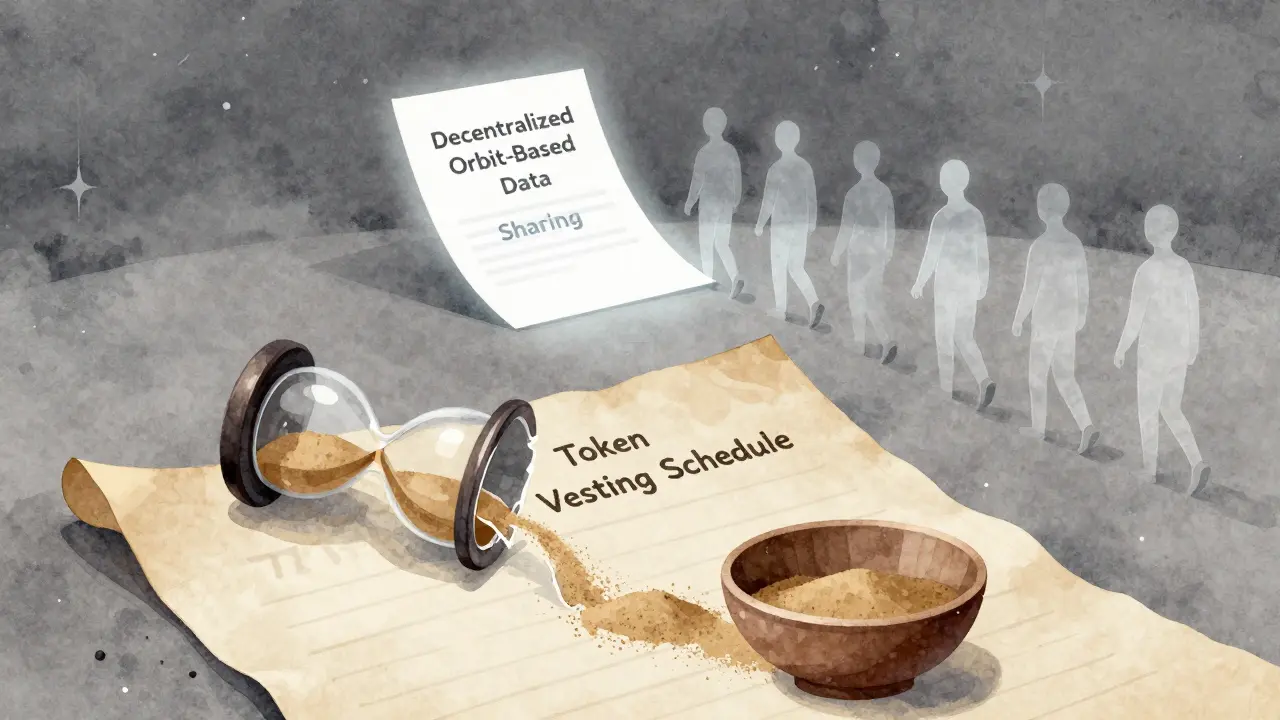
The Market Has Changed - Big Time
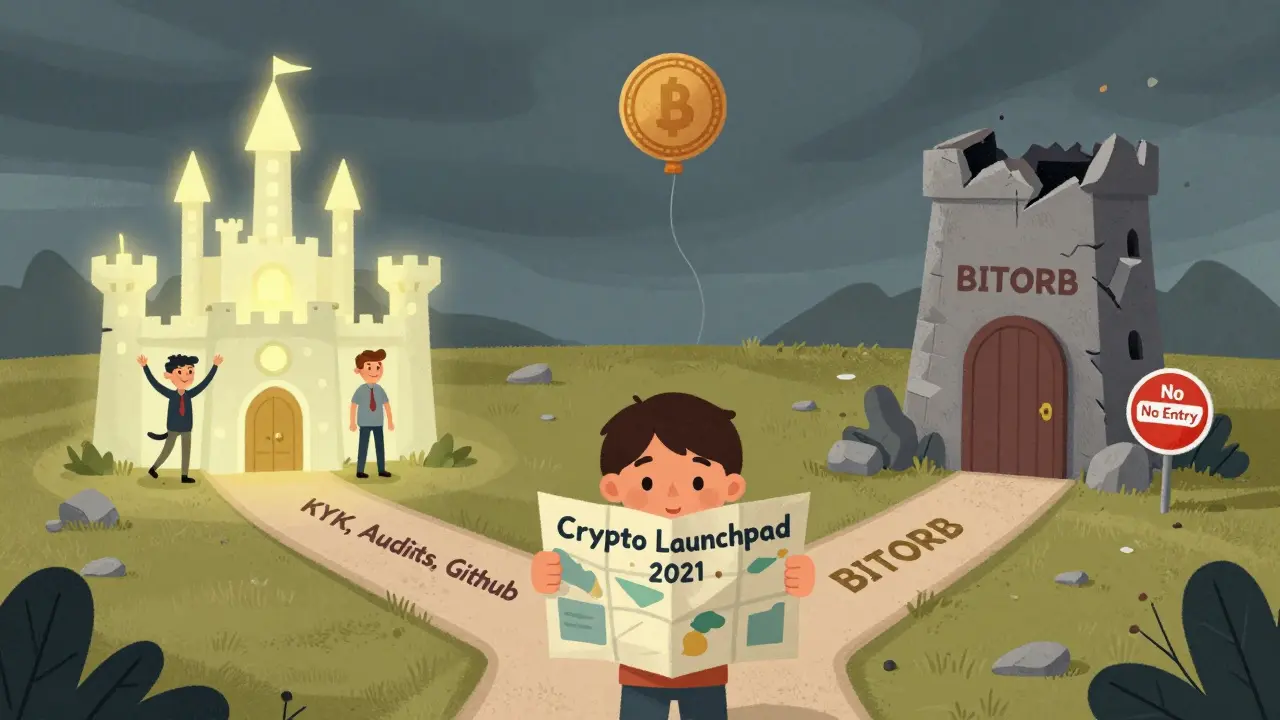
In 2021, you could launch a crypto project with a PDF and a Discord server and still raise six figures. Today? Not even close. Launchpads now require:- Full KYC for the team
- Smart contract audits from top firms like CertiK or Hacken
- Proof of active development (GitHub commits, weekly updates)
- A working prototype or MVP
What Happened to the $290,000?
That’s the real question. $290,000 raised. $2,830 market cap. Where did the money go? It’s unlikely the team vanished. More likely, they spent it on:- Marketing campaigns that didn’t convert
- Legal fees for a project that never got regulated
- Development costs on a product nobody wanted
- Listing fees on low-liquidity exchanges
Lessons from BitOrbit’s Failure
BitOrbit didn’t fail because of bad luck. It failed because it misunderstood what makes a crypto project survive.- Airdrops don’t build communities - consistent value does.
- Token vesting doesn’t save bad projects - it just delays the crash.
- Being on BSCPad doesn’t guarantee success - it just gives you more eyes.
- Transparency isn’t optional - it’s the new baseline.
Is There Any Value Left in BITORB?
Technically, yes - the token still exists on BNB Chain. You can still buy it on decentralized exchanges like PancakeSwap. But liquidity is near zero. The last trade might have been months ago. The wallet holding the largest supply hasn’t moved in over two years. If you’re holding BITORB, you’re not investing. You’re waiting. Waiting for a miracle. A team comeback. A new use case. None of that is coming. The only real value left is as a case study - a textbook example of how not to launch a crypto project.What You Should Do Instead
If you’re looking for airdrops or IDOs in 2026, skip the old projects like BitOrbit. Focus on platforms that vet their teams:- Check if the team is KYC’d on the launchpad
- Look for audited contracts on Etherscan or BSCScan
- Read the project’s GitHub - are commits happening weekly?
- Join their Discord. Are devs answering questions?
- Ask: “If this project vanished tomorrow, would anyone notice?”
Was the BitOrbit airdrop free?
No, the BitOrbit airdrop wasn’t free. To qualify, users had to complete tasks like following social media accounts and holding a minimum amount of $BSCPAD. It was a participation-based reward, not a random giveaway.
Did BitOrbit have a working product at launch?
No public evidence exists that BitOrbit had a working product at launch. There were no demos, no code repositories, and no user-facing tools. The project relied entirely on whitepaper claims without any tangible output.
Why did BitOrbit’s token price crash so hard?
BitOrbit’s price crashed because there was no real demand. Investors bought during the IDO hoping for quick gains, but with no clear use case, no team transparency, and no community engagement, nobody held after the vesting period ended. Selling pressure overwhelmed any buying interest.
Can I still claim BitOrbit tokens from the airdrop?
No, the airdrop claim period ended in December 2021. All tokens were distributed at that time. Any claims you see now are scams or misleading posts on social media.
Is BitOrbit still active in 2026?
There is no evidence BitOrbit is active in 2026. No social media updates, no new announcements, no development activity. The project appears abandoned, with its token trading at negligible volumes on decentralized exchanges.
What launchpads are trustworthy today?
Today’s most trusted launchpads include DAO Maker, Polkastarter, GameFi, and Bybit Launchpad. They require team KYC, smart contract audits, and proof of development. Avoid any platform that doesn’t publicly display these details.
Michael Sullivan
February 3, 2026 AT 22:43laura mundy
February 4, 2026 AT 20:57Mrs. Miller
February 6, 2026 AT 08:25Brittany Coleman
February 8, 2026 AT 03:02Danica Cheney
February 8, 2026 AT 07:22Jacque Istok
February 9, 2026 AT 20:20Reda Adaou
February 11, 2026 AT 12:12Nathaniel Okubule
February 12, 2026 AT 01:09Mendy H
February 13, 2026 AT 01:14sabeer ibrahim
February 14, 2026 AT 10:25Freddie Palmer
February 15, 2026 AT 22:04Taybah Jacobs
February 17, 2026 AT 18:24Alisha Arora
February 18, 2026 AT 20:32Kyle Pearce-O'Brien
February 18, 2026 AT 21:49Matthew Ryan
February 19, 2026 AT 06:36Shruti Sharma
February 21, 2026 AT 04:55Robin Ødis
February 21, 2026 AT 14:00Brittany Novak
February 21, 2026 AT 14:35Joshua Herder
February 22, 2026 AT 14:14David Bain
February 23, 2026 AT 02:35Deeksha Sharma
February 24, 2026 AT 06:07Molly Andrejko
February 24, 2026 AT 14:11