


Crypto Exchange Risk Checker
Exchange Information
Risk Assessment Results
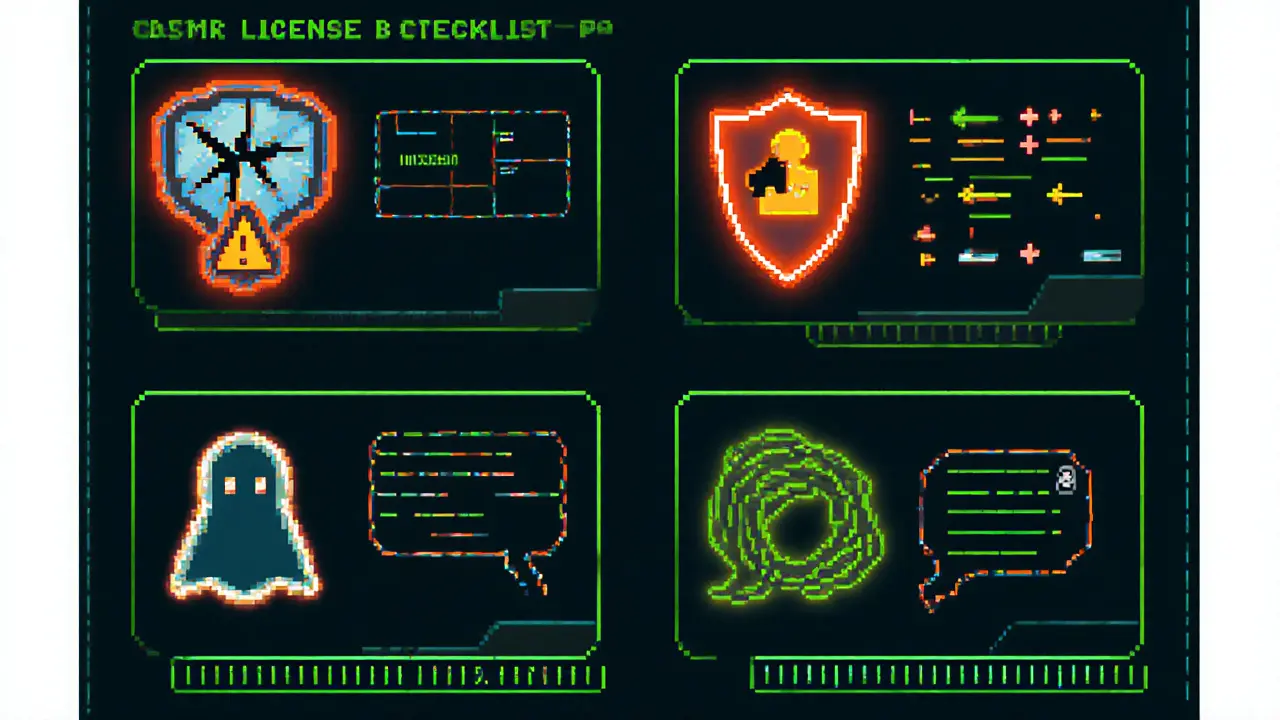
Red Flags Checklist
No Public Regulatory License
Legitimate exchanges display their regulatory license numbers prominently. Lack of this information is a serious warning sign.
Missing Security Audits
Reputable exchanges undergo regular third-party security audits and publish the results. Absence indicates potential vulnerability.
Unclear Fee Structure
Transparent exchanges publish their fee schedules clearly. Hidden or unlisted fees often signal risky operations.
Weak Community Presence
Established exchanges have active user communities on forums, social media, and review sites. Minimal presence may indicate low trust.
When you type Bitwired into a search bar, you expect a clear picture of what the platform offers, how safe it is, and whether it’s worth your hard‑earned crypto. Unfortunately, the web is quiet on Bitwired - there are no official whitepapers, no regulator‑published licenses, and no reputable user‑review sites mentioning it. This review pulls together what we can verify, how to test an unknown exchange yourself, and which established alternatives you might consider instead.
Quick Takeaways
- Bitwired lacks any public regulatory filing (e.g., NYDFS BitLicense) or listing on major exchange directories.
- No verifiable security audits or insurance statements have been published.
- Fees, supported assets, and trading limits are unclear - you’ll likely need to contact support for details.
- For most traders, proven platforms like Binance, Coinbase or Kraken offer far better transparency.
- If you decide to try Bitwired, start with a tiny amount and verify withdrawal processing before committing larger sums.
What We Know About Bitwired
Beyond the name, there is no official public documentation that explains Bitwired’s corporate structure, headquarters, or ownership. A genuine exchange typically publishes:
- Company registration details (country, registration number).
- Licensing information - for example, a BitLicense from the New York State Department of Financial Services, which requires a minimum $500,000 surety bond.
- Security audits - third‑party code reviews, bug‑bounty programs, or insurance coverage for user funds.
None of these items appear in any searchable database (including the NYDFS registry, European financial authorities, or the scam‑watch listings from DataVisor and the Massachusetts Attorney General’s Office). The absence itself is a red flag, especially for a service that handles valuable digital assets.
How to Vet a New Crypto Exchange
When you encounter a platform with limited public information, follow this checklist to protect yourself:
- Regulatory check: Look for a licence number on the site and verify it on the regulator’s portal (e.g., NYDFS for U.S. entities, FCA for the UK, or the relevant EU authority).
- Security credentials: Search for third‑party audit reports, bug‑bounty programs, or statements about cold‑storage percentages.
- Transparency of fees: Legitimate exchanges publish maker/taker fees, withdrawal costs, and any hidden charges.
- Customer support test: Send a technical question and time the response. Poor or generic replies often indicate a thinly‑staffed operation.
- Community presence: Check Reddit, Twitter, and Trustpilot for real‑user experiences. A healthy platform will have a mix of reviews, not just a handful of glowing testimonials.
If any of these items are missing or vague, treat the exchange as high risk.
Bitwired Compared to Established Platforms
| Exchange | Year Launched | Supported Assets | Fee Structure | Regulatory Status | Security Highlights |
|---|---|---|---|---|---|
| Bitwired | Not publicly disclosed | Unknown - web claims “major coins” | Unclear - no published schedule | No verifiable licence | No disclosed audits or insurance |
| Binance | 2017 | 500+ tokens & futures | 0.10% maker / 0.10% taker (discounts for BNB) | Licensed in Malta, Seychelles; awaiting EU registration | Cold‑storage > 95%, bug‑bounty, SAFU insurance fund |
| Coinbase | 2012 | 200+ assets | 0.50% spread (no maker/taker) | NYDFS BitLicense, FCA, EU MiCA pending | 75% cold‑storage, insurance for custodial assets |
| Kraken | 2011 | 180+ assets | 0.16% maker / 0.26% taker | NYDFS BitLicense, FCA, BaFin (Germany) | Cold‑storage majority, SOC 2 Type II compliance |
The table makes it clear why most traders gravitate toward the listed giants: they openly share key data, hold reputable licences, and invest heavily in security. Bitwired, by contrast, appears as a blank cell across the board.
Potential Red Flags Specific to Bitwired
- Missing corporate info: No “About Us” page with legal address or leadership bios.
- No KYC/AML details: Legit exchanges list what documents they require; Bitwired’s login screen offers only an email field.
- Unsupported payment methods: Users typically expect credit‑card, bank‑transfer, or Apple/Google Pay options. Bitwired advertises “instant crypto deposits” without explaining fiat on‑ramps.
- Unclear withdrawal limits: Some scams impose arbitrary caps after the first withdrawal - without published limits you can’t plan liquidity.
- Absence from scam databases: While not being listed as a scam might sound positive, reputable exchanges are also tracked by watchdogs; a complete silence suggests they’re not on anyone’s radar at all.
What Users Can Do If They Still Want to Try Bitwired
If you’re determined to give Bitwired a shot, treat it like a sandbox experiment:
- Create a fresh email address. Keep any personal or financial accounts separate.
- Deposit the smallest possible amount. For most coins, 0.001BTC (≈$30) is enough to test the flow.
- Verify the withdrawal process. Request a small withdrawal to a known wallet. Note the time taken and whether any hidden fees appear.
- Document every step. Screenshot confirmations, note support reply times, and record any transaction IDs.
- Withdraw immediately after testing. If everything works, you can decide whether the risk level matches your comfort.
Remember, even a smooth first transaction doesn’t guarantee long‑term stability. Many fraudulent platforms have operated for weeks before disappearing.
Alternatives Worth Considering
If transparency and security are non‑negotiable, these platforms provide solid alternatives:
- Binance: Low fees, extensive asset list, and a clear roadmap toward regulatory compliance in Europe.
- Coinbase: User‑friendly UI, strong regulatory footing in the U.S., and insurance on custodial balances.
- Kraken: Competitive fees for high‑volume traders, robust security certifications, and a reputation for reliable withdrawals.
- Bitstamp: One of the oldest exchanges (since 2011), simple fee structure, and compliance with EU regulations.
All of these have public audit reports, clear KYC policies, and community feedback you can read on Reddit, Twitter, and Trustpilot.
Final Verdict on Bitwired
Based on the data (or lack thereof) available as of October2025, Bitwired review leads to a cautious stance. The exchange does not publish the fundamental information that seasoned traders and regulators expect. Without verifiable licensing, security audits, or a track record, the risk of loss-whether through a hack, sudden shutdown, or hidden fees-is high.
If you value peace of mind, stick with exchanges that openly share their compliance documents, fee schedules, and security protocols. If you’re a curious early adopter, limit exposure to an amount you can afford to lose and keep a meticulous record of every interaction.
Frequently Asked Questions
Is Bitwired a licensed crypto exchange?
No public licence (e.g., NYDFS BitLicense) has been found for Bitwired. Legit exchanges typically display their licence number on the site; Bitwired does not.
What fees does Bitwired charge?
Fee details are not published. Users must contact support, which is a common red flag for hidden or variable charges.
Can I withdraw my funds from Bitwired?
Withdrawal processes have not been independently verified. The safest approach is to test with a very small amount first.
How does Bitwired compare to Binance?
Binance provides clear fee tables, regulatory disclosures, and a bug‑bounty program. Bitwired lacks any comparable public information, making Binance the far more transparent choice.
Is Bitwired listed on any scam watchlists?
Bitwired does not appear on major scam databases, but the absence of a listing does not guarantee safety; many fraud platforms operate under the radar for months.
Iva Djukić
July 1, 2025 AT 13:09When evaluating a nascent cryptocurrency exchange such as Bitwired, one must adopt a multi‑dimensional risk assessment framework that incorporates regulatory compliance, cryptographic audit provenance, fee transparency, and community liquidity metrics. The absence of a publicly declared licence contravenes the normative expectations set by the Financial Action Task Force (FAFT) and the European MiCA regime, thereby inflating jurisdictional ambiguity. Moreover, the dearth of third‑party penetration testing reports precludes any verifiable assurance of resistance to replay attacks and nonce manipulation. Fee structures that are undisclosed compel users to infer hidden spreads, which in turn erodes the effective yield on arbitrage strategies. Community sentiment, as measured through Reddit Karma vectors and Trustpilot NPS scores, is virtually non‑existent for Bitwired, indicating a failure to achieve network effects. Liquidity depth, typically expressed in order‑book cumulative volume, remains opaque, raising concerns about slippage during large‑scale withdrawals. The platform's KYC/AML policy is not articulated, contravening the Travel Rule mandates and exposing participants to sanctions risk. Asset custodial practices, such as the proportion of cold storage versus hot wallets, have not been disclosed, rendering the platform vulnerable to hot‑wallet exploits. Furthermore, the lack of insurance coverage for custodial assets removes a critical layer of loss mitigation. Operational transparency, including the publishing of a roadmap and governance tokenomics, is absent, which hampers stakeholder confidence. In the context of systemic risk, the inter‑exchange connectivity via cross‑chain bridges is unverified, potentially introducing smart‑contract exploits. Regulatory arbitrage is a hallmark of entities seeking to evade oversight, and Bitwired’s opaque status aligns with this pattern. Historical analysis of similar platforms demonstrates a high probability of exit scams within twelve months of launch. The platform's user interface offers only an email field for onboarding, eschewing the multi‑factor authentication schemas that are standard for secure exchanges. Comparative benchmarking against established entities such as Binance, Coinbase, and Kraken reveals stark deficits across all risk vectors. Consequently, an investor employing a risk‑adjusted capital allocation model should assign a high penalty factor to Bitwired, effectively relegating it to a speculative outlier status.
carol williams
July 1, 2025 AT 21:29Let me elucidate the obvious: a platform that hides its licensing and audits is essentially operating in the shadows, and any savvy trader will steer clear of such a murky venture. The lack of fee disclosure alone is a red flag of potential hidden charges that could erode profits faster than a market dip.
Maggie Ruland
July 2, 2025 AT 05:49Oh great, another exchange that thinks invisibility is a feature.
Joyce Welu Johnson
July 2, 2025 AT 14:09If you're set on testing Bitwired, treat it like a sandbox experiment: open a brand‑new email, deposit the smallest amount you can afford to lose, and verify the withdrawal process step by step. Document every screenshot and support reply-this makes it easier to spot hidden fees or delay tactics later on.
Adeoye Emmanuel
July 2, 2025 AT 22:29From a philosophical standpoint, the epistemic opacity of Bitwired challenges the principle of informed consent in financial transactions. One must question whether the platform's silence on audits is a strategic choice or a symptom of deeper operational frailties.
Raphael Tomasetti
July 3, 2025 AT 06:49Bitwired lacks KYC, audits, and fee tables-basically a black box in a market that rewards transparency.
Jenny Simpson
July 3, 2025 AT 15:09While some hail anonymity as a virtue, in finance it often masks dubious intent; nonetheless, novelty can sometimes surprise the skeptics.
Sabrina Qureshi
July 3, 2025 AT 23:29Wow!!! This looks like a recipe for disaster!!! No license, no audits, no fees-just pure mystery!!!
Rahul Dixit
July 4, 2025 AT 07:49It’s no coincidence that a platform with zero regulatory footprints emerges just when global powers tighten crypto controls; it smells like a front for covert data harvesting.
CJ Williams
July 4, 2025 AT 16:09Hey fam!!! If u decide 2 try, keep it tiny!!! 💡 Take a pic of every receipt!!! 🚀 And don’t forget to ask support about fees‑they’ll love to ghost u!!!
mukund gakhreja
July 5, 2025 AT 00:29Sure, because trusting a ghost is always a brilliant move.
Michael Ross
July 5, 2025 AT 08:49The points raised about transparency are worth keeping in mind when assessing any new exchange.
Aman Wasade
July 5, 2025 AT 17:09Right, because every exchange magically becomes trustworthy the moment you say “transparency”.
Janelle Hansford
July 6, 2025 AT 01:29Hey community! If you’re curious about Bitwired, just remember to limit exposure and stay optimistic about learning from the experience.
Krystine Kruchten
July 6, 2025 AT 09:49Nice reminder! Just a heads up – sometimes the platform may have typos in its terms, so double‑check before you sign anything.
Mangal Chauhan
July 6, 2025 AT 18:09It is imperative, in a highly formal context, to meticulously review all contractual language, ensuring consistency and completeness before any engagement with Bitwired.
Narender Kumar
July 7, 2025 AT 02:29Behold! The saga of Bitwired begins, shrouded in secrecy, beckoning the bold to confront the abyss of unknown fees and phantom audits.
Anurag Sinha
July 7, 2025 AT 10:49Don’t you see? This is the classic “deep state” ploy – they hide the ledger so they can pull the rug right under the unsuspecting.
Raj Dixit
July 7, 2025 AT 19:09Obviously, a platform without disclosures is a scam waiting to happen; stay away.
Lisa Strauss
July 8, 2025 AT 03:29Let’s keep the vibe positive-if you do try it, you’ll gain valuable insight regardless of the outcome.
Darrin Budzak
July 8, 2025 AT 11:49Taking a measured approach and observing community feedback can help you decide if Bitwired suits your risk tolerance.
Andrew McDonald
July 8, 2025 AT 20:09Honestly, the lack of any regulatory proof makes this exchange look like a hobby project for amateurs. 🤨
Enya Van der most
July 9, 2025 AT 04:29Come on, team! Let’s turn this into a learning adventure-push the limits, but keep safety nets ready!
Eugene Myazin
July 9, 2025 AT 12:49Sounds cool, but I’d still stick with the big names unless you’re feeling lucky.
Latoya Jackman
July 9, 2025 AT 21:09In summary, without verifiable licensing, audit reports, or a transparent fee schedule, Bitwired presents a high-risk profile for traders.