

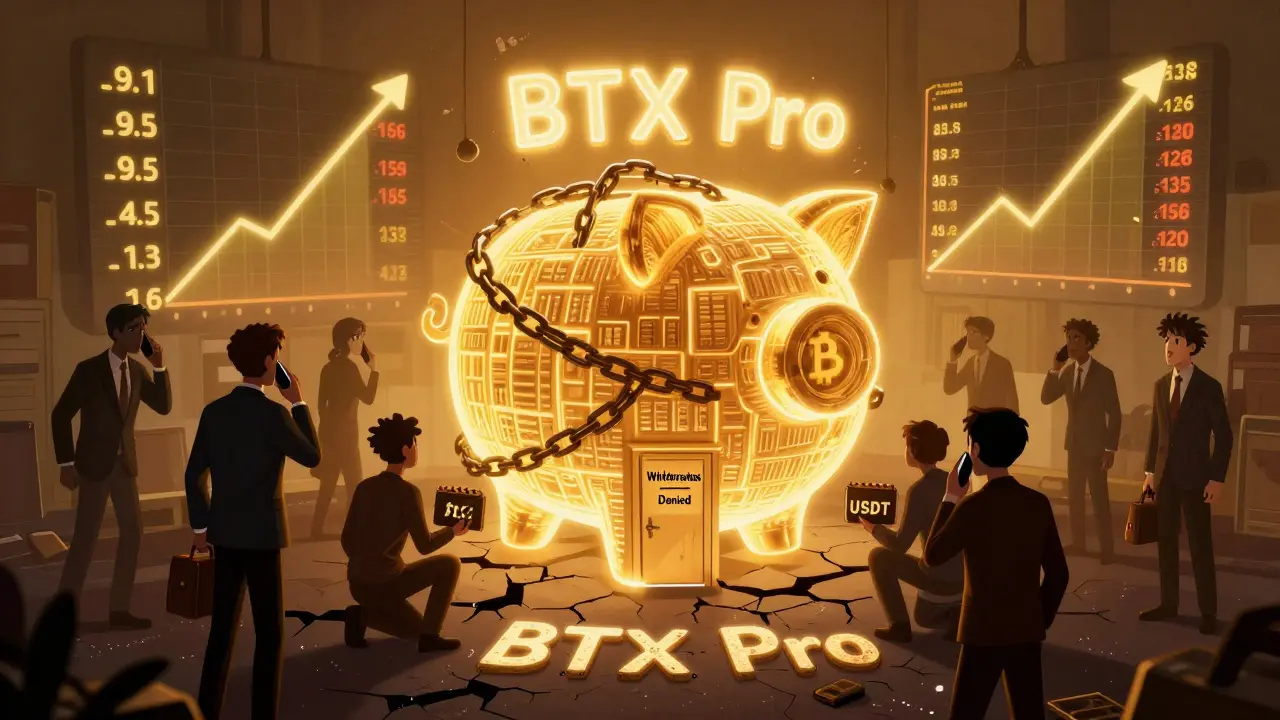
BTX Pro Withdrawal Fee Calculator
If you're considering BTX Pro as a place to trade cryptocurrency, stop. This isn't a crypto exchange you can trust-it's a high-risk operation designed to take your money and disappear. Multiple regulatory agencies and independent analysts have flagged platforms like BTX Pro as fraudulent, and the patterns match known crypto exchange scam tactics used in pig butchering schemes and rug pulls. There are no legitimate reviews, no verified security measures, and no regulatory oversight. What you'll find instead are fake testimonials, manipulated price feeds, and withdrawal traps that lock your funds until you pay more fees.
What BTX Pro Actually Is
BTX Pro isn't a registered or regulated crypto exchange. It doesn't appear on any official list of licensed platforms from the SEC, FCA, ASIC, or any other top-tier financial authority. Instead, it's a cloned or mimicked brand designed to look like a real exchange-often confusing users by borrowing names from legitimate platforms like BTCC. The BTCC.com website even hosts a page titled "Btx Pro exchange review," but the content doesn't review anything. It's a misleading SEO trap, pushing fake traffic to a scam site by piggybacking on BTCC's reputation.How the Scam Works
The BTX Pro scam follows a well-documented pattern used by dozens of similar platforms in 2025:- You're contacted through social media, dating apps, or YouTube ads promising 500% to 2000% returns in weeks.
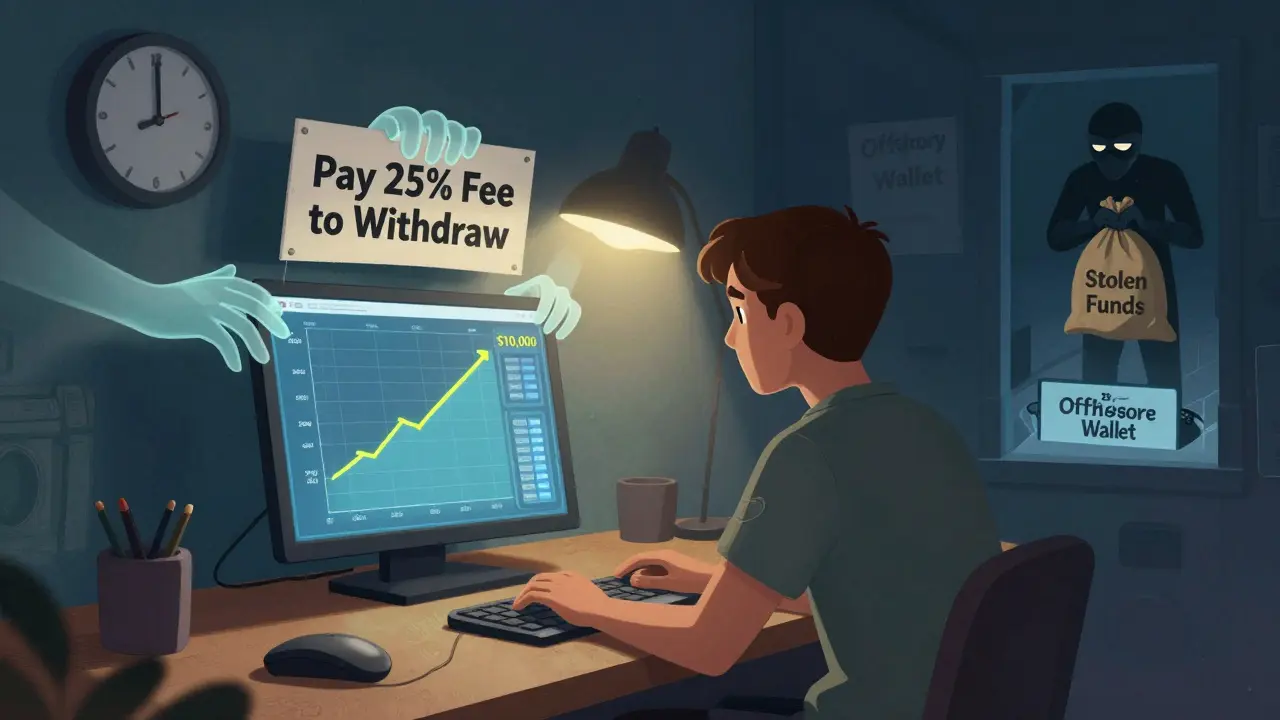
- You deposit your first $500 or $1,000, and your account shows rapid growth-$2,000, then $5,000, even $10,000.
- When you try to withdraw, the platform says you must pay a "tax," "verification fee," or "liquidity charge"-usually 20% to 30% of your balance.
- Once you pay, they demand more fees. Then they vanish. Their website goes offline. Their support emails bounce.
Why BTX Pro Has No Security
Legitimate exchanges like Coinbase, Kraken, and Binance protect user funds with strict protocols:- 95% of assets stored in offline, air-gapped cold wallets
- Two-factor authentication (2FA) with hardware keys
- PGP encryption for communications
- Global setting locks to prevent unauthorized changes
- Real-time monitoring for suspicious activity
False Claims and Misleading Marketing
BTX Pro claims to support the "10 biggest cryptocurrencies" and offers "low fees." But here's the truth:- It only supports BTC, ETH, LTC, XRP, and USDT-no real altcoin diversity
- Trading pairs are limited to USDT, meaning you can't trade BTC for SOL, for example
- Fees are hidden until you try to withdraw-then they appear as "processing fees," "compliance charges," or "currency conversion taxes"
- There are no published fee schedules, no API documentation, no order book transparency
Customer Support? Don't Bother
User reports from similar platforms like btcex.pro show a common pattern: customer support is either non-existent or actively deceptive. One Trustpilot user wrote: "My success rate was 100%. They closed... help with a refund." That’s not a typo. That’s how scams talk-using fake success stories to lure others in. When you contact BTX Pro’s support, you’ll likely get:- Automated replies that never solve your issue
- Slow responses (days or weeks)
- Requests for more money to "unlock" your account
- Blame shifting: "Your wallet is flagged," "You violated terms," "We need KYC documents you never asked for"
Why People Get Tricked
The biggest reason people fall for BTX Pro is familiarity. The name sounds like BTCC-a real, though controversial, exchange founded in 2011. The website design mimics real platforms. The charts look real. The balance grows. It feels legitimate. But here’s the catch: real exchanges don’t need to advertise on TikTok or Instagram with influencers promising overnight riches. They don’t need to push you to deposit more with countdown timers. They don’t lock your funds unless you violate their terms-and even then, they give you clear steps to resolve it. BTX Pro preys on inexperience. It targets people who don’t know how to check regulation status, who don’t understand cold storage, and who believe "high returns" are normal in crypto.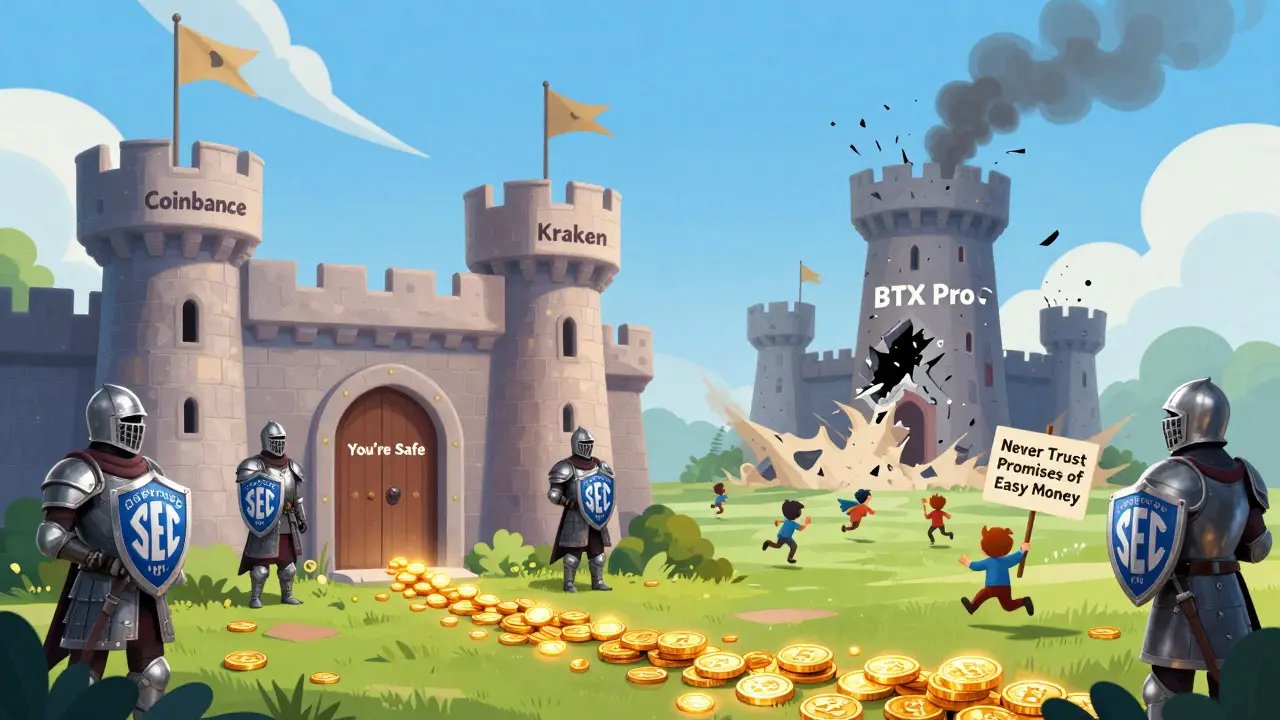
Real Alternatives You Can Trust
If you want to trade crypto safely, stick with exchanges that are:- Registered with top-tier regulators (SEC, FCA, ASIC, etc.)
- Transparent about fees and security practices
- Publicly audited for reserve holdings
- Have years of verified user history
- Coinbase - Best for beginners. Regulated in the U.S., simple interface, insured custody.
- Kraken - Best for active traders. Low fees, 350+ coins, strong security.
- Crypto.com - Good for earning interest on holdings. Regulated in multiple jurisdictions.
- Binance - Largest volume globally. Avoid if you're in the U.S. due to regulatory issues there.
- Bitstamp - One of the oldest exchanges (founded in 2011). Regulated in the EU.
What Happens If You’ve Already Deposited
If you’ve sent money to BTX Pro:- Do NOT pay any additional fees. This will only make it worse.
- Stop all communication with their support team.
- Report the platform to your local financial regulator (e.g., ASIC in Australia, FCA in the UK, DFPI in California).
- File a report with the IC3 (Internet Crime Complaint Center) if you're in the U.S.
- Don’t expect your money back. Recovery rates are under 3%.
Final Warning
BTX Pro is not a crypto exchange. It’s a digital robbery operation. It has no legal standing, no security, no accountability, and no future. The fact that it still exists in December 2025 means more people are still falling for it. Don’t be one of them.If you're new to crypto, start with Coinbase or Kraken. Learn how to store your own keys. Understand what regulation means. And never, ever trust a platform that promises you easy money.
Is BTX Pro a legitimate crypto exchange?
No, BTX Pro is not a legitimate crypto exchange. It has no regulatory license from any top-tier authority like the SEC, FCA, or ASIC. Multiple financial watchdogs classify it as a scam platform with characteristics matching pig butchering frauds-fake profits, withdrawal blocks, and demand for additional fees.
Why does BTX Pro look so real?
Scam platforms like BTX Pro copy the design, branding, and even fake testimonials from real exchanges like BTCC. They use professional-looking websites, live price charts, and even fake customer support chatbots to create the illusion of legitimacy. But real exchanges don’t need to trick you into trusting them-they earn trust through years of transparency and regulation.
Can I recover my money if I deposited into BTX Pro?
The chances of recovering funds are extremely low-less than 3% based on DFPI data. Once the platform blocks withdrawals and demands more payments, it’s usually a sign they’re preparing to disappear. Reporting to authorities like the IC3 or your local financial regulator may help others, but it rarely results in fund recovery.
Does BTX Pro offer any real cryptocurrencies?
BTX Pro claims to support BTC, ETH, LTC, XRP, and USDT, but these are likely just fake ledger entries. Your deposits don’t enter a real blockchain wallet. Instead, they’re held in anonymous wallets controlled by the operators. Even if you see a balance increase, it’s not real market value-it’s programmed to look real until you try to cash out.
What’s the difference between BTX Pro and BTCC?
BTCC is a real exchange founded in 2011, originally based in China and now headquartered in the UK. While it has faced criticism for price manipulation and sudden delistings, it is regulated and operates transparently. BTX Pro is a fake platform that mimics BTCC’s name to trick users. BTCC.com even hosts misleading pages pretending to review BTX Pro-this is a deliberate tactic to confuse searchers and drive traffic to the scam.
Are there any safe crypto exchanges for beginners?
Yes. Coinbase and Kraken are the most trusted for beginners. Both are regulated in multiple countries, offer simple interfaces, provide clear fee structures, and store 95%+ of user funds in offline cold storage. They also have 24/7 customer support and real user reviews on independent sites like Trustpilot and G2. Avoid any platform that pushes you to deposit quickly or promises high returns.
Joe West
December 5, 2025 AT 11:40If you're new to crypto and stumbled on BTX Pro, just walk away. I've seen too many people lose everything because they thought "high returns" meant legitimate. Stick with Coinbase or Kraken - they're boring, yes, but they don't vanish with your funds. Your future self will thank you.
nicholas forbes
December 5, 2025 AT 23:25I appreciate the detailed breakdown. I actually got a DM from someone promoting BTX Pro on Instagram last week - said I could "double my money in 7 days." I reported the account. Scammers are getting smarter with their UI design, but the red flags are still screaming.
miriam gionfriddo
December 6, 2025 AT 16:36OH MY GOD I JUST LOST $18K TO THIS THING LAST MONTH AND I STILL CAN’T BELIEVE I WAS SO STUPID. I thought the charts were real. I thought the support chat was human. I thought I was smart. I was a pig. And now I’m just… numb. Please, if you’re reading this and you’re thinking about depositing - just close your laptop and go for a walk.
Brooke Schmalbach
December 8, 2025 AT 08:11Let’s be clear: BTX Pro doesn’t even qualify as a "scam" - it’s a predatory financial assassination. The fact that it’s still online in 2025 proves the system is broken. Regulators are asleep at the wheel while these clones get indexed by Google under "BTCC review." This isn’t negligence - it’s complicity. And the worst part? The victims aren’t just losing money. They’re losing trust in an entire ecosystem.
Frank Cronin
December 10, 2025 AT 05:13Wow. So someone actually wrote a 2000-word essay to tell people not to give money to a website that looks like a 2012 Flash animation with a .pro domain? Groundbreaking. Next you’ll warn us not to buy Bitcoin from a guy in a hoodie behind a dumpster.
Kenneth Ljungström
December 11, 2025 AT 15:42Hey I just wanna say I used to think crypto was a scam too… until I got into it properly. But I never trusted any platform that pushed me hard. I only used ones with real licenses and public audits. If you’re new, take your time. Learn the basics. Read the whitepapers. Don’t chase hype. You don’t need to be rich tomorrow. You just need to not be broke next week.
Richard T
December 12, 2025 AT 16:56Interesting how BTX Pro mimics BTCC’s branding. I remember when BTCC got hit with a similar clone back in 2018 - they had to issue public advisories. The pattern’s identical: fake testimonials, fake charts, fake support. It’s like they’re using a scam template from a 2020 Reddit thread. The real tragedy is that these people aren’t stupid - they’re just desperate. And scammers know that.
michael cuevas
December 13, 2025 AT 11:53So you're saying if I put $500 in and it turns into $5000 I shouldn't try to cash out? Sounds like a good deal to me. Maybe I'm the exception. Maybe I'm the one who gets out before they vanish. You can't tell me I'm not gonna at least try.
jonathan dunlow
December 14, 2025 AT 03:39Look, I get it - crypto is scary. The whole thing feels like walking into a dark alley with a bag of cash and hoping no one follows you. But here’s the thing: the market isn’t the problem. The predators are. BTX Pro isn’t crypto - it’s a confidence trick wrapped in a website. And the worst part? It’s not even clever. It’s lazy. They use the same script as every other scam since 2021. If you’re falling for this, it’s not because you don’t know enough - it’s because you wanted to believe. And that’s okay. But now you know. So don’t let someone else walk into the same trap. Share this. Talk about it. Make noise. Because silence is what lets them live another day.
Sandra Lee Beagan
December 15, 2025 AT 14:38As someone from Canada, I’ve seen this exact scam target new immigrants through Facebook groups. They use translated testimonials, fake "success stories" from "Toronto residents," and even fake local phone numbers. The Canadian Anti-Fraud Centre has flagged over 400 variants of this in the last year. It’s not just a crypto issue - it’s a social engineering crisis. We need better public education, not just warnings.
rita linda
December 16, 2025 AT 05:09It’s embarrassing that Americans still fall for this. In Europe, we’ve had regulated crypto exchanges since 2019. The SEC is a joke. If you’re trusting a platform that doesn’t have a license you can verify on the FCA website, you’re not investing - you’re gambling with your rent money. And don’t come crying to me when you’re eating ramen next month.
Martin Hansen
December 17, 2025 AT 04:16Wow. So you wrote a novel to tell people not to give money to a website with a .pro domain? Congrats. You’ve earned your Reddit gold. Next time, just say: "Don’t be an idiot." Save us all the time.
Stanley Wong
December 18, 2025 AT 15:08I think what’s missing here is the human side. These aren’t just victims - they’re people who were promised hope. Maybe they lost their job. Maybe they’re single parents. Maybe they saw a video of someone buying a Lamborghini with crypto and thought "that could be me." The scam isn’t just in the platform - it’s in the loneliness and desperation that made them click. We need more compassion and less judgment. And yeah, we also need better regulation.
Nina Meretoile
December 18, 2025 AT 19:22It’s not just about money. It’s about dignity. I watched my aunt lose her life savings to something like this. She didn’t know what cold storage was. She didn’t know how to check a license. She just wanted to retire early. Now she’s working two jobs again. I’m not mad at her. I’m mad at the system that lets this keep happening. Please, if you know someone who’s curious about crypto - sit them down. Show them the real exchanges. Don’t let them feel stupid for asking.
Tom Van bergen
December 19, 2025 AT 16:10BTX Pro is just capitalism. Everything is a scam. Even Coinbase takes your money. Even the dollar is a scam. The only real asset is your mind. If you believe in blockchain, why are you trusting a company to hold your keys? Just HODL your own Bitcoin. End of story.
Barb Pooley
December 19, 2025 AT 16:13Wait… what if BTX Pro is a government psyop? What if they’re testing how many people will give money to a fake site to see who’s gullible? I heard the NSA uses these platforms to collect data on crypto users. Maybe the real scam is that we’re being watched. And the people warning us are part of the cover-up.
Mariam Almatrook
December 21, 2025 AT 09:29While I appreciate the earnestness of this post, one must acknowledge that the moralistic framing of crypto as a binary between "legitimate" and "scam" is profoundly reductive. The regulatory apparatus itself is a construct of institutional power, and the demonization of unlicensed platforms reflects a broader cultural anxiety toward decentralization. One might argue that BTX Pro, however ethically dubious, represents a grassroots attempt at financial sovereignty - albeit catastrophically misexecuted. To dismiss it outright is to replicate the very exclusionary structures it seeks, however ineptly, to circumvent.
Ben VanDyk
December 22, 2025 AT 07:55Post is accurate. But why is this even a thing? The domain was registered 6 months ago. The SSL cert is from a no-name provider. The contact email is Gmail. The "about us" page has stock photos. Anyone with half a brain could tell this is fake. The real question isn’t how the scam works - it’s how so many people have zero digital literacy.
Nicole Parker
December 22, 2025 AT 19:52I used to think crypto was just for tech bros. Then my neighbor, a 72-year-old retired teacher, showed me her Coinbase account. She buys a little BTC every month. She doesn’t check the charts daily. She doesn’t chase pumps. She just holds. And she sleeps at night. That’s the real secret. Not the returns. Not the apps. Not the influencers. Just patience. And a platform that doesn’t pretend to be something it’s not.