


You log in to your favorite cryptocurrency exchange from a coffee shop in Wellington, but the platform suddenly flags your account. It asks for extra identity verification or temporarily freezes withdrawals. You didn't do anything wrong; you just turned on your Virtual Private Network (VPN) to protect your connection. But here is the harsh reality: modern crypto platforms are getting incredibly good at spotting when you are hiding behind one. You might have heard rumors of a 70-80% detection rate for VPN users. While that specific number fluctuates wildly depending on the provider and the exchange, the core truth remains-exchanges are actively hunting down masked traffic.
If you are trying to access restricted exchanges, hide your location for privacy, or simply secure your connection, understanding how these detection systems work is no longer optional. It is essential for keeping your funds accessible. Let’s break down why exchanges care so much, how they catch you, and what actually works in 2026.
Why Do Crypto Exchanges Care If You Use a VPN?
It isn’t just about control. For major platforms like Binance or Coinbase, it is about survival. These companies operate under strict regulatory frameworks. In the United States, the European Union, and other major jurisdictions, they must comply with Know Your Customer (KYC) and Anti-Money Laundering (AML) laws. These regulations require them to know exactly who you are and where you are physically located.
When you use a standard VPN, you mask your real IP address with one from a data center in another country. To an exchange’s security team, this looks suspicious. Is the user in a sanctioned country? Are they using a shared IP address known for fraud? Rapidly changing locations-logging in from New Zealand one minute and Germany the next-are huge red flags. According to analysis by Chainalysis, while VPN usage creates some data attribution challenges, the scale of global transactions means most legitimate users slip through. However, if your behavior triggers their automated risk engines, you become a target for manual review.
The goal of the exchange is not necessarily to ban you forever, but to mitigate risk. They want to ensure that if money disappears from your account, they can prove you were the one accessing it. A VPN makes that proof harder to establish, which is why they push back so hard.
How Exchanges Detect VPN Traffic: The Technical Reality
Gone are the days when a simple IP check was enough. Today’s detection systems are multi-layered. Here is how they usually catch users:
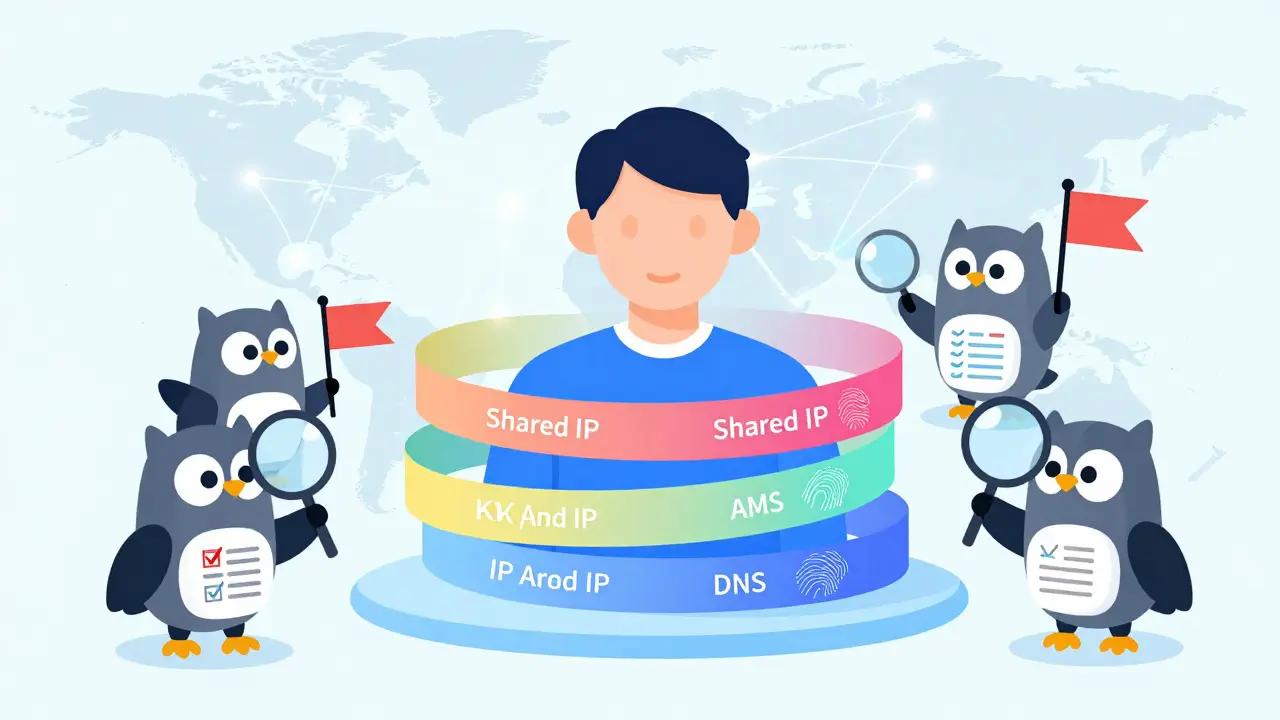
- IP Reputation Databases: Exchanges maintain massive lists of IP addresses known to belong to free or cheap VPN providers. If your IP matches a server used by thousands of others, you get flagged instantly.
- Behavioral Analysis: Algorithms monitor your login patterns. Do you trade at odd hours for your supposed location? Do you switch servers frequently? Inconsistent timing suggests automation or masking.
- DNS Leak Detection: Even if your traffic is encrypted, your DNS requests might reveal your true internet service provider. Exchanges check for mismatches between your IP location and your DNS resolver.
- WebRTC Fingerprinting: This browser technology can sometimes leak your local IP address even when a VPN is active, exposing your real location to the website.
- TCP/IP Stack Fingerprinting: Different operating systems and network devices send packets slightly differently. Sophisticated tools can identify if the packet structure matches a typical corporate VPN server rather than a home router.
This is where the "70-80% detection rate" rumor likely stems from. If you are using a free VPN or a low-tier budget service, your chances of being detected are indeed very high-likely in that range. These services use shared, well-known IPs that are blacklisted almost immediately. Premium services fare better, but they are not invisible.
Best Tools for Bypassing Detection in 2026
If you need to use a VPN for crypto trading, you cannot just pick any app off the store. You need specialized features designed to evade these specific detection methods. Based on performance tests and user reports from 2025 and 2026, two providers stand out significantly above the rest.
| Feature | NordVPN | ExpressVPN |
|---|---|---|
| Dedicated IP Option | Yes (Highly Recommended) | Yes (Via Static IP add-on) |
| Crypto Payment Accepted | Yes (BTC, ETH, LTC, TRX via CoinGate) | Yes (Bitcoin only) |
| Server Locations | 118 Countries | 94 Countries (3,000+ servers) |
| Jurisdiction | Panama (No data retention laws) | British Virgin Islands |
| Obfuscation Technology | Yes (Obfuscated Servers) | Yes (Camouflage Mode) |
NordVPN has emerged as a top choice for traders because of its dedicated IP feature. By renting a single IP address exclusively for yourself, you avoid the "shared IP" flag that triggers most basic detection systems. Since you are the only person using that IP, it builds a clean reputation over time. NordVPN also accepts cryptocurrency payments, adding a layer of financial privacy.
ExpressVPN is another strong contender, particularly for its reliability and speed. Its "Camouflage Mode" hides the fact that you are using a VPN altogether, making your traffic look like standard HTTPS browsing. This helps bypass deep packet inspection used by some stricter networks. However, note that ExpressVPN only accepts Bitcoin for payments, which may be less convenient if you hold other assets.
Beyond VPNs: Advanced Evasion Techniques
If premium VPNs still trigger warnings, you might need to look at more advanced solutions. These methods carry higher costs and complexity but offer better stealth.
- Residential Proxies: Unlike VPNs that route traffic through data centers, residential proxies assign you an IP address belonging to a real Internet Service Provider (ISP) in a specific city. Because the IP looks like it belongs to a regular homeowner, it is much harder for exchanges to distinguish it from legitimate traffic. Services like Bright Data or IPRoyal offer these, but they are expensive.
- GPS Spoofing (Mobile): If you trade via mobile apps, your GPS location might contradict your VPN IP. Using a mock location app can align your physical coordinates with your virtual IP, reducing behavioral flags.
- Browser Fingerprint Randomization: Extensions like CanvasBlocker or using browsers like Brave can help randomize your digital fingerprint, preventing sites from tracking you across sessions based on your device’s unique hardware signature.
Keep in mind that using residential proxies or spoofing tools may violate the Terms of Service of some exchanges. Always read the fine print. If you get caught violating TOS, a temporary suspension could turn into a permanent ban.

Security vs. Privacy: What Should You Prioritize?
Many traders focus solely on avoiding detection, but they forget the primary reason to use a VPN in the first place: security. Public Wi-Fi networks at airports and cafes are breeding grounds for hackers. Without encryption, anyone on the same network can intercept your login credentials, seed phrases, or session cookies.
Security.org highlights that VPNs protect against phishing attacks and malicious downloads targeting sensitive crypto information. Features like dark web monitoring (offered by NordVPN) alert you if your email or passwords appear in data breaches. For many serious traders, accepting occasional friction with exchange security teams is a small price to pay for protecting millions of dollars in assets from outright theft.
The key is balance. Use a high-quality VPN with obfuscation enabled. Stick to one server location to avoid triggering geographic inconsistency alerts. Enable two-factor authentication (2FA) using an authenticator app, not SMS, to add another layer of defense. And always verify your identity thoroughly during the initial KYC process to build trust with the platform before you start masking your location.
Future Outlook: The Arms Race Continues
As of August 2026, the battle between privacy tools and exchange detection is intensifying. Exchanges are investing heavily in machine learning algorithms that analyze metadata and traffic flow characteristics. Meanwhile, VPN providers are rolling out new obfuscation techniques and expanding their server infrastructures.
Expect detection rates for free and low-quality VPNs to remain near 100%. For premium services, the landscape will continue to shift. Regulatory pressure will likely force exchanges to become even more aggressive in identifying masked users. However, the demand for privacy among crypto holders ensures that sophisticated evasion tools will keep evolving. Stay informed, choose reputable providers, and never assume invisibility is guaranteed.
Will using a VPN permanently ban my crypto exchange account?
Not necessarily. Most exchanges prefer to restrict functionality or request additional verification rather than issuing immediate permanent bans. However, repeated violations, especially those involving rapid location changes or use of blacklisted IPs, can lead to account closure. Always check the specific terms of service of your exchange.
Is the 70-80% VPN detection rate accurate?
This figure is an estimate that varies widely. It likely applies to users of free or low-tier VPN services whose IPs are easily identifiable. Users of premium services with dedicated IPs and obfuscation features experience significantly lower detection rates, often below 10-20%, depending on the exchange's sophistication.
Which VPN is best for crypto trading in 2026?
NordVPN and ExpressVPN are currently considered the top choices. NordVPN offers excellent value with dedicated IPs and broad crypto payment options. ExpressVPN provides superior speed and camouflage modes but is more expensive and only accepts Bitcoin. Both have strong no-logs policies and robust security features.
Do residential proxies work better than VPNs for bypassing detection?
Yes, generally speaking. Residential proxies provide IP addresses from real ISPs, making them much harder to distinguish from regular users. However, they are significantly more expensive than VPNs and require more technical setup. They are ideal for high-stakes traders who need maximum stealth.
Can I use a VPN to access banned exchanges in my country?
Technically, yes, but legally, it depends on your jurisdiction. Some countries have strict laws against accessing unauthorized financial platforms. While a VPN can bypass the technical block, you may face legal risks. Additionally, exchanges may eventually detect and ban users from restricted regions despite VPN use.