

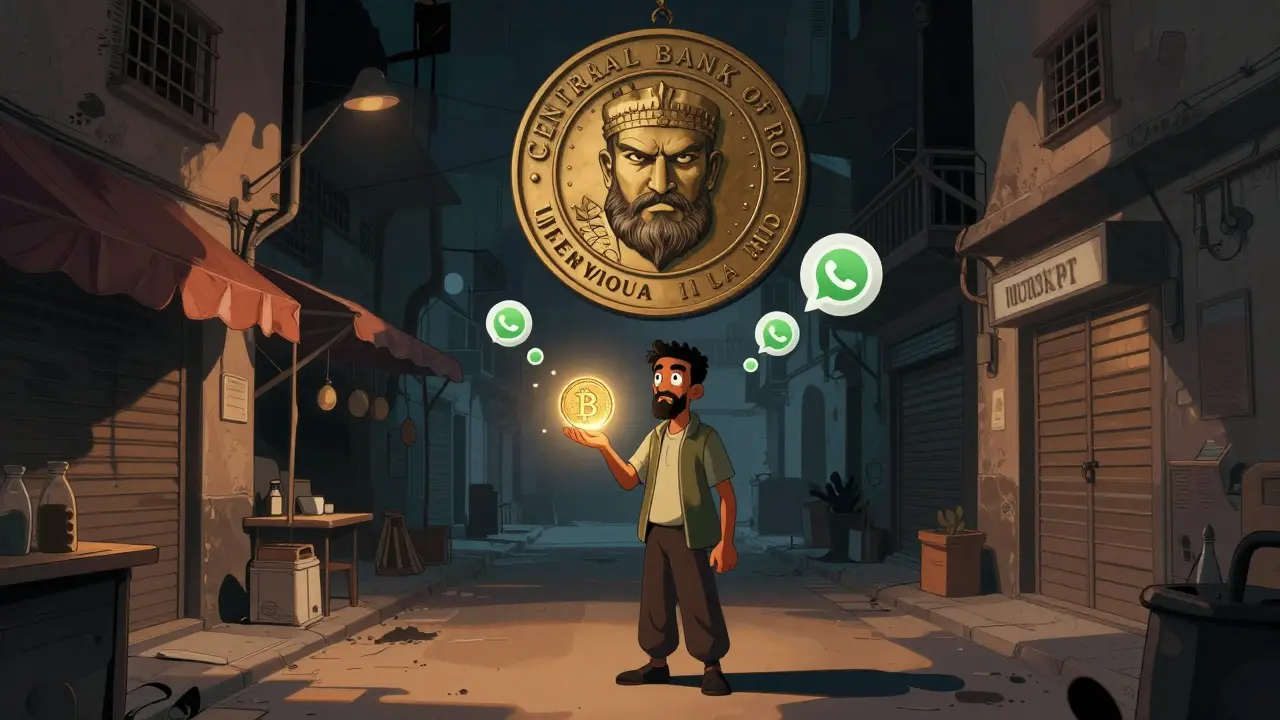
As of 2025, the Central Bank of Iraq maintains one of the strictest cryptocurrency bans in the world. Unlike countries that regulate digital assets with licensing rules or tax frameworks, Iraq doesn’t just discourage crypto-it outright forbids it. Banks, payment processors, and even individuals using e-wallets or debit cards to buy Bitcoin or Ethereum are breaking the law. And yet, despite this total prohibition, crypto trading still happens-quietly, underground, and without clear consequences for ordinary users.
How the Ban Works
The legal foundation of Iraq’s crypto ban comes from CBI Circular No. (125/5/9), issued in November 2021. This document doesn’t just say "don’t do it." It says digital currencies have no legal status in Iraq. That means if someone owes you 10 Bitcoin, you can’t take them to court and demand payment in Iraqi dinars. The contract isn’t recognized. The debt isn’t enforceable. The Central Bank of Iraq made it clear: only the Iraqi dinar counts as real money. In March 2022, the ban got even tighter. The CBI aligned its rules with the Financial Action Task Force (FATF), a global anti-money laundering body. Banks and financial firms had to overhaul their internal systems to block any transaction linked to crypto. Payment cards couldn’t be used to buy Bitcoin. E-wallets couldn’t hold digital assets. Even exchanging crypto for cash through peer-to-peer platforms became a red flag for regulators. What’s unusual is how far the ban reaches. Most countries focus on stopping banks from handling crypto. Iraq goes further-it targets the tools everyday people use. If you try to buy crypto with your mobile wallet or a prepaid card, you’re not just risking your money-you’re violating a national directive.Why Did Iraq Ban Crypto?
The official reasons are familiar: money laundering, fraud, volatility. But Iraq’s situation is more complex. In 2020, the government devalued the Iraqi dinar from 1,182 to 1,450 per U.S. dollar. Prices for food, fuel, and medicine jumped overnight. People lost trust in their own currency. That’s when many turned to crypto-not to gamble, but to protect their savings. The Central Bank of Iraq saw this as a threat. If people started using Bitcoin to store value, it would undermine the dinar’s control. And with government spending needing 18-20 trillion dinars every month, but only 8.8% of that money actually sitting in banks, liquidity was already a crisis. Crypto, even in small amounts, could make that worse. Religious leaders added fuel to the fire. In 2018, the Supreme Fatwa Authority in Kurdistan banned OneCoin-a scam crypto project-calling it haram (forbidden). That ruling didn’t just target fraud. It framed all crypto as morally wrong, tying financial regulation to cultural values. For many Iraqis, this made resisting crypto feel like a religious duty, not just a legal one.What About the CBDC?
While private crypto is banned, the government is quietly building its own digital currency. In March 2025, financial advisor Mazhar Mohammed Saleh confirmed the Central Bank of Iraq is developing a Central Bank Digital Currency (CBDC). This isn’t Bitcoin. It’s not decentralized. It’s not anonymous. It’s a digital version of the Iraqi dinar, fully controlled by the state. The government says the CBDC will cut printing costs, reduce cash smuggling, and help track illegal spending. But critics see something darker. Human rights groups warn that a state-controlled digital currency could become a surveillance tool. Every transaction-buying bread, paying rent, sending money to family-could be logged, monitored, and potentially used against people who speak out. Iraq already has low scores for civil liberties and political rights. Commenting on politics online can lead to arrest or salary cuts. A CBDC with built-in tracking could make that even easier. Instead of fighting crypto, Iraq may be replacing it with something more powerful: a financial system where the government sees everything.
Is Anyone Still Using Crypto?
Yes. But not through banks. Not through apps. Not openly. Crypto trading survives in Iraq through informal networks-WhatsApp groups, cash exchanges in markets, peer-to-peer trades in Baghdad cafes. People buy Bitcoin with dinars from strangers, then send it overseas. Some use it to pay for services abroad. Others hold it as a hedge against inflation. The CBI doesn’t arrest individuals. There’s no law saying "possessing Bitcoin is a crime." But if you’re caught moving large sums through crypto, you could be investigated under anti-money laundering laws. That’s the gray zone: crypto isn’t illegal to own, but using it to move money might be. Enforcement is patchy. In cities like Erbil or Basra, people trade crypto with little fear. In Baghdad, security forces monitor suspicious transactions more closely. The system isn’t perfect. It’s not even consistent. But the threat is enough to keep most people quiet.How Does Iraq Compare to Other Countries?
Only about ten countries have a full crypto ban like Iraq’s. China has strict controls, but crypto trading still happens through underground channels. Nigeria bans banks from crypto but allows peer-to-peer trading. Iraq is different. It doesn’t just restrict-it erases. In neighboring countries like Jordan or the UAE, crypto is regulated. Exchanges are licensed. Taxes are collected. Iraq chose a different path: total denial. It’s not about innovation. It’s about control. The Central Bank of Iraq doesn’t want to manage crypto. It wants to make sure it never takes root.
Sammy Tam
December 18, 2025 AT 12:41Man, I’ve seen this play out before in places like Venezuela and Nigeria - when the state panics about losing monetary control, they don’t fix the currency, they just outlaw the escape hatch. Crypto’s not the problem, it’s the symptom. The dinar’s collapsing because the government’s broke and scared, not because people are ‘gambling’ on Bitcoin. They’re just trying not to starve.
And now they’re replacing it with a CBDC that’ll track your grocery runs? That’s not progress, that’s dystopia with better UI.
Also, anyone else notice how the same people who scream ‘crypto is for criminals’ are the first to cash out their crypto gains in the US? Hypocrisy is the national sport here.
Chevy Guy
December 18, 2025 AT 20:15CBDC = Central Bank Digital Control. They’re not building a currency they’re building a prison with a debit card.
They’ll ban crypto so they can track every damn coffee you buy. Next thing you know, your account gets frozen because you bought too many beans from a ‘suspicious vendor’.
Also, the FATF? That’s just the IMF in a trench coat. They don’t care about money laundering - they care about control. And Iraq’s just the lab rat.
They’ll say it’s for security. It’s not. It’s for obedience.
Amy Copeland
December 20, 2025 AT 19:26How is this even a debate? People are using Bitcoin because their own government is economically incompetent. It’s not revolutionary - it’s basic survival. But of course, the elite in Baghdad would rather see their citizens beg for dinars than admit the currency is a joke.
And the CBDC? Please. It’s not digital money, it’s digital slavery. You think your ‘transaction history’ won’t be used to punish dissent? You’re naive. The moment you use it, you’re signing a contract with the surveillance state. No one in their right mind would ever trust this.
Abby Daguindal
December 21, 2025 AT 14:24Let’s be real - anyone who thinks crypto is a legitimate store of value is either delusional or has never held a real asset. Gold, land, bonds - those are assets. Bitcoin is a speculative meme with code. And now Iraq’s trying to stop people from playing with digital toys while their economy burns?
The real tragedy isn’t the ban - it’s that people think this is a solution. It’s not. It’s just a bandage on a severed artery.
Heather Turnbow
December 22, 2025 AT 08:58While I deeply respect the Central Bank’s intent to preserve monetary sovereignty, I must express grave concern regarding the implications of a state-controlled digital currency. The absence of transparency, public consultation, and constitutional safeguards raises fundamental questions about civil liberties. A CBDC, absent robust privacy protections, becomes a mechanism of social control rather than financial inclusion.
Furthermore, the criminalization of peer-to-peer digital asset transfers may inadvertently push vulnerable populations into even riskier informal economies. The solution to monetary instability cannot be the erosion of individual financial autonomy.
Perhaps the more prudent path would be to strengthen institutional trust through accountability, rather than through technological surveillance.
Jesse Messiah
December 23, 2025 AT 21:29Hey everyone - just wanted to say this post is super well researched. I’ve been following Iraq’s crypto scene for a while and this nails it.
People think banning crypto will stop inflation? Nah. It just stops people from having any control over their own money. The CBDC might seem like a fix, but it’s just the government saying ‘we’ll decide how you live now’.
And honestly? If I lived there, I’d be using WhatsApp groups too. No shame. Survival > bureaucracy.
Rebecca Kotnik
December 25, 2025 AT 19:18The structural irony here is profound. The Central Bank of Iraq, in its effort to preserve the integrity of the Iraqi dinar as the sole legal tender, has inadvertently created a vacuum that incentivizes the very behaviors it seeks to suppress - namely, the informal adoption of decentralized financial instruments. The state’s inability to provide economic stability - manifested in hyperinflation, currency devaluation, and institutional mistrust - has rendered its regulatory posture not only ineffective but counterproductive.
Moreover, the proposed CBDC, while technologically sophisticated, replicates the same power asymmetry that underlies the dinar’s failure: centralized control without accountability. The absence of public discourse, parliamentary oversight, or civil society engagement in the design of this digital infrastructure suggests not innovation, but authoritarian consolidation.
One cannot outlaw financial freedom without simultaneously outlawing economic dignity. The question is not whether Iraq will enforce its ban - it is whether the population will tolerate the replacement of one form of control with another, more insidious one.
Jonny Cena
December 26, 2025 AT 09:28Big respect to the person who wrote this. So many people miss the real story here - it’s not about crypto. It’s about trust. When your currency loses 20% of its value overnight and the government doesn’t even acknowledge it, people aren’t choosing Bitcoin because they’re tech bros. They’re choosing it because they’re desperate.
And now the state’s trying to replace it with a digital leash? That’s not innovation. That’s a power grab wrapped in a tech buzzword.
But hey - if you’re in Iraq and you’re using crypto right now, you’re not a criminal. You’re a smart person trying to keep your family fed. Keep your head down, stay safe, and know you’re not alone.
Kayla Murphy
December 28, 2025 AT 08:30You guys are overthinking this. Crypto isn’t the enemy. The enemy is fear. Fear of losing control. Fear of change. Fear of people being smarter than the system.
But guess what? The world’s moving forward. Even if Iraq slams the door, people will find the window. And when they do? They’ll be ready. The future isn’t waiting for permission.
Stay strong, Iraq. We see you.
Florence Maail
December 28, 2025 AT 22:40CBDC = Communist Bank Digital Control 😏
They banned crypto so they can track your toilet paper purchases. Next thing you know, your account gets flagged because you bought 3 loaves of bread on a Tuesday. Suspicious. Suspicious behavior.
Also, the FATF? That’s just the CIA with a spreadsheet. They told Iraq to ban crypto so they can push their own agenda. And now Iraq’s just doing their bidding like a good little puppet.
God help us all if this spreads to the US. 😭
Terrance Alan
December 30, 2025 AT 12:53People don’t get it - the ban isn’t about money. It’s about power. The government doesn’t want people to have financial independence. They want people to be dependent. To need them. To beg them for dinars. To be afraid to move money without their permission.
And now they’re building a digital prison with a fancy app? Brilliant. So when someone posts something critical online, the state can just freeze their account. No more rent. No more food. No more voice.
This isn’t economics. It’s psychological warfare.
And the worst part? Most people will thank them for it. Because they’re scared. And scared people obey.
Sally Valdez
December 30, 2025 AT 23:15Let’s be honest - Iraq is just jealous. The US, UK, UAE - they all let people trade crypto. But Iraq? No. They’re too busy pretending their currency isn’t garbage. It’s not about money. It’s about national pride. They’d rather see their people poor than admit they’re behind the times.
And now they want to spy on everyone with a CBDC? Cool. So when you buy a SIM card, they’ll know you’re planning to protest. When you pay for a bus ride, they’ll know you’re visiting your cousin who’s on the banned list. Perfect.
Meanwhile, the rest of the world is moving on. Iraq? Still stuck in 1998 with a spreadsheet and a grudge.
George Cheetham
December 31, 2025 AT 07:36The philosophical tension here is fascinating. On one hand, the state seeks to preserve monetary order through rigid control. On the other, the people, in their quiet defiance, assert a form of economic self-determination through decentralized means.
Is it not ironic that the very tool designed to dismantle centralized power - blockchain - has become the last refuge of the financially disenfranchised? The Central Bank fears crypto not because it is unstable, but because it is free. And freedom, in any form, is the greatest threat to absolute authority.
The CBDC, then, is not a solution - it is a confession. A confession that the state cannot compete in the marketplace of trust. So it builds a cage instead.
Timothy Slazyk
January 1, 2026 AT 18:20Let me break this down like I’m explaining it to a 12-year-old: The dinar is collapsing. People are using crypto because they have no other choice. The government bans it. Then builds a digital version of the same failing currency - but now with a tracker.
It’s like if your car broke down, you bought a bike. Then the government outlawed bikes… and gave you a tricycle with a GPS chip.
They’re not protecting the economy. They’re protecting themselves. And the people? They’re collateral damage.
Also - if you think this won’t happen in the US someday, you’re not paying attention. The playbook’s already written.
Madhavi Shyam
January 2, 2026 AT 10:17CBDC implementation requires interoperability with existing AML/KYC frameworks. Iraq’s regulatory architecture lacks the technical maturity to support decentralized finance, hence the prohibition. The CBDC is a necessary institutional evolution - not surveillance, but compliance.
Moreover, the informal crypto economy exacerbates capital flight and undermines fiscal policy. The state must maintain seigniorage control. No alternative.
Mark Cook
January 3, 2026 AT 00:46They banned crypto so they can track your Netflix account? 😂
Next thing you know, your CBDC gets suspended because you watched a documentary about democracy.
Also - who’s the genius who thought ‘let’s copy China’s surveillance state but with less money’? 🤡
Greg Knapp
January 3, 2026 AT 06:14So let me get this straight - people are using crypto to survive and the government calls it illegal? That’s not law. That’s cruelty.
And now they’re gonna spy on every damn transaction? Great. So if I buy a bag of rice, they’ll know I’m ‘suspicious’ because I didn’t buy it from a government-approved vendor.
Meanwhile, the rich are still buying Lambos in Dubai. But the poor? They get a digital leash.
This isn’t justice. It’s punishment.
Shruti Sinha
January 4, 2026 AT 03:40This is a well-structured and meticulously researched piece. The distinction between private cryptocurrency and state-backed digital currency is clearly articulated, and the socio-political implications are thoughtfully examined. The cultural and religious dimensions of the ban, particularly the influence of the Supreme Fatwa Authority, add necessary depth to the analysis. The absence of public consultation regarding the CBDC remains a critical democratic deficit.
Cheyenne Cotter
January 4, 2026 AT 06:49Okay but like… why is everyone acting like this is new? Every government that’s ever had a failing currency tries to ban the thing people use to escape it. Remember when Venezuela banned Bitcoin? Then they made their own crypto - Petro - and it was worth less than a candy bar. Same script. Different country.
And now Iraq wants to track every coffee? Cool. So when you buy a sandwich, they’ll know you’re ‘not spending responsibly’. Like, what? You’re not a child. You’re an adult. Let people live.
Also - who’s paying for this CBDC? Taxpayers? Or the IMF? Because if it’s the IMF, then we already know who’s really in charge.
Sean Kerr
January 5, 2026 AT 11:53Y’all need to chill 😌
This isn’t about crypto. It’s about people trying to survive in a broken system. The government’s scared because they can’t fix the economy - so they ban the thing that’s helping people cope.
And now they’re gonna spy on everyone? Bro. That’s not tech. That’s trauma.
But hey - if you’re using WhatsApp to trade Bitcoin in Baghdad? You’re a legend. Stay safe. I got you 🤝💛
Patricia Amarante
January 6, 2026 AT 11:13I just hope the people using crypto in Iraq know they’re not alone. People are doing this everywhere - in Lebanon, Argentina, Nigeria. It’s not rebellion. It’s basic dignity.
And the CBDC? It’s not progress. It’s just control with a better logo.
Donna Goines
January 8, 2026 AT 06:06CBDC is just the first step. Next they’ll ban cash. Then they’ll ban bartering. Then they’ll ban you from owning more than 500 dinars. Then they’ll track your thoughts via neural implants. This is how dictatorships start - with ‘financial stability’.
They banned crypto because they know people are smarter than the system. And they’re terrified.
Also - the FATF? They’re owned by the same people who made the Iraq War. Coincidence? I think not. 🤫
Jack Daniels
January 8, 2026 AT 07:12I don’t care about crypto. I don’t care about CBDC. I just care that my cousin in Basra can’t send money to his sick mom because the bank flagged her transaction as ‘suspicious’. The system doesn’t care about people. It only cares about control.
And that’s why I can’t sleep.
Bradley Cassidy
January 9, 2026 AT 12:10So the gov bans crypto so they can build a digital version of the same broken system? Classic. Like banning water because people are drinking too much and then giving them Gatorade with a tracking chip.
Also - who’s gonna fix the internet in rural Iraq so people can use the CBDC? No one. So guess what? The only people who’ll use it are the ones already connected. Everyone else? Still using cash. Still using WhatsApp. Still using crypto.
The ban just made it harder. Not better.
Sammy Tam
January 10, 2026 AT 22:29Just read the comment above about the cousin in Basra. That’s the real story. Not the tech. Not the CBDC. Not the FATF.
It’s about a mother who needs medicine. And a son who can’t send her money because the system says it’s ‘risky’.
That’s what this is really about.
Jesse Messiah
January 12, 2026 AT 01:51Yeah… that’s the one that hits hardest.
They’re not banning crypto because it’s dangerous.
They’re banning it because it’s human.