

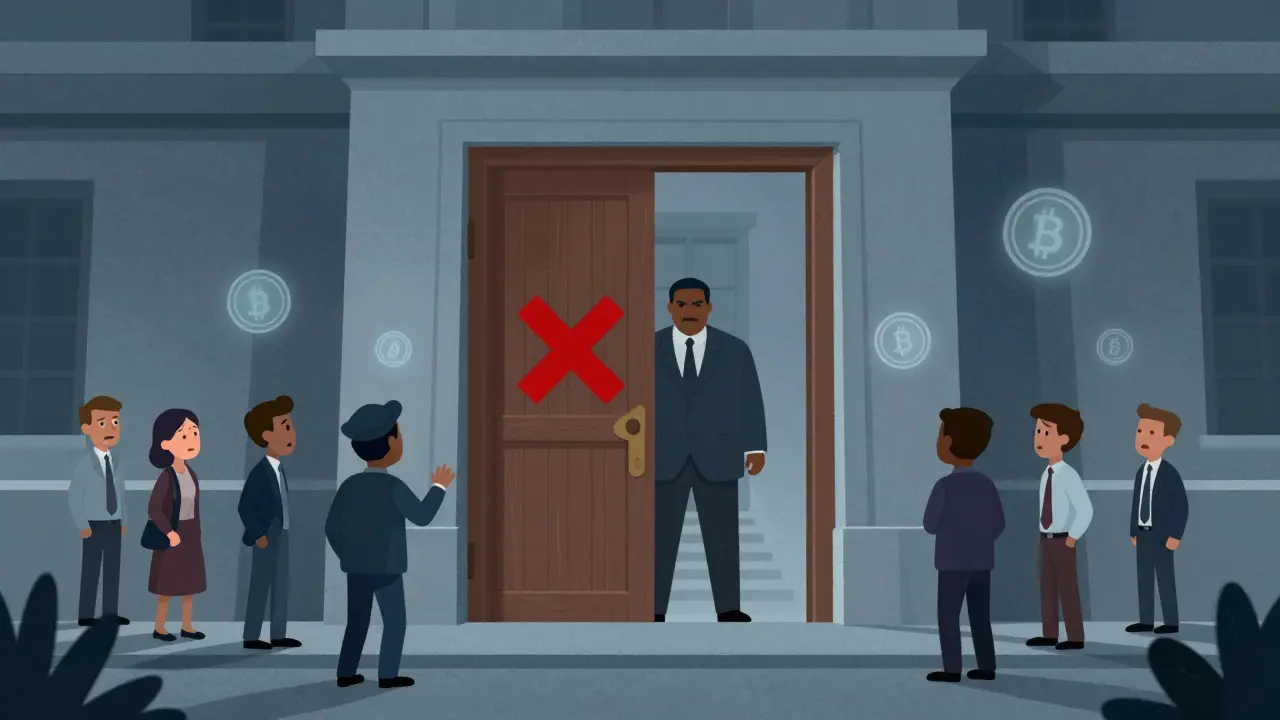
In 2017, the Central Bank of Nigeria sent a clear message to banks: stay away from virtual currencies. Fast forward to 2025, and that same institution is working alongside regulators to license crypto businesses. This shift isn't just a change in opinion; it's one of the most dramatic regulatory reversals in African finance. If you've been following the Nigerian market, you know the journey has been rocky. It went from heavy restrictions that pushed traders into peer-to-peer deals to a formal framework where crypto is treated as a security. Here is how the rules changed, why they changed, and what it means for anyone operating or investing in Nigeria today.
The Early Warnings: 2017 Circular
The story starts on January 12, 2017. The CBN issued its first official circular regarding Virtual Currency Operations. The directive was simple but impactful. Banks and financial institutions were told to avoid using, holding, or transacting in virtual currencies. They also had to implement strict anti-money laundering (AML) controls for customers who were already using crypto exchanges.
This wasn't a total ban on individuals buying Bitcoin or Ethereum. Instead, it cut off the banking infrastructure. If your bank wouldn't process the transaction, trading became significantly harder. The goal was to control capital flight and maintain stability in the naira. At the time, many saw this as a temporary measure to cool down speculation. However, it set the tone for the next several years of friction between the state and the crypto community.
Tightening the Squeeze: The 2021 Ban
Things got much stricter on February 5, 2021. The CBN sent a letter to all Deposit Money Banks and Non-bank Financial Institutions. This time, the order was explicit: prohibit dealing in cryptocurrencies and facilitate payments for crypto exchanges. Banks were directed to identify and close accounts of anyone involved in crypto transactions.
This move effectively forced the industry underground. Major exchanges couldn't rely on bank transfers anymore. Users turned to Peer-to-Peer (P2P) platforms, where individuals traded directly with each other using local payment methods like bank transfers or mobile money. While this kept the market alive, it created a gray area. Without bank oversight, tracking funds became difficult, raising concerns about fraud and money laundering. The government viewed this as a loss of control, while traders saw it as resilience.
The Role of the SEC and Dual Regulation
While the CBN was closing doors, another regulator was opening windows. On September 14, 2020, the Securities and Exchange Commission (SEC) released a statement on digital assets. The SEC declared it would regulate any digital asset that looked like an investment under the Investments and Securities Act 2007.
This created a dual regulatory environment. The CBN controlled the banking side, while the SEC took interest in the investment side. An Inter-Agency committee was formed to try and bridge the gap. The challenge was defining what exactly counts as a "security" versus a "currency." This ambiguity persisted for years, leaving companies unsure which rulebook to follow. The SEC's involvement was crucial because it provided a path to legitimacy that the CBN initially refused to offer.

The Turning Point: 2023 VASP Guidelines
The major shift happened in December 2023. The CBN issued new guidelines for Virtual Asset Service Providers (VASPs). This was a 180-degree turn. For the first time, banks were allowed to open accounts for crypto businesses, provided those businesses were licensed by the SEC.
This decision acknowledged reality. You can't ban technology that millions of people use daily. By allowing banks to serve licensed VASPs, the CBN brought transparency back to the system. It meant that crypto firms now had to comply with Know Your Customer (KYC) standards and AML requirements. This didn't just help investors; it helped the government track flows and reduce illicit activity. The guidelines established a clear path for legal operation, ending the era of guesswork for compliant firms.
Legal Recognition and the 2025 Framework
The final piece of the puzzle fell into place with the passage of the Investments and Securities Act 2025. This law formally recognized cryptocurrency as securities under SEC regulation. Digital assets are now defined clearly within the legal framework, removing years of ambiguity.
Under this new regime, crypto firms must obtain licensing from the SEC and adhere to its Digital Assets Rules. These rules represent the first comprehensive attempt to regulate digital assets in Nigeria. The focus is on investor protection and market integrity. By classifying crypto as securities, the SEC gains full authority to enforce compliance, audit firms, and penalize violators. This structure mirrors traditional stock market regulations, giving institutional investors more confidence to enter the space.
| Year | Regulatory Action | Key Outcome |
|---|---|---|
| 2017 | CBN Circular on Virtual Currencies | Banks instructed to avoid crypto transactions; AML controls tightened. |
| 2020 | SEC Statement on Digital Assets | SEC began regulating digital assets as potential investments. |
| 2021 | CBN Letter to Banks | Effective ban on bank-facilitated crypto trades; rise of P2P markets. |
| 2023 | CBN VASP Guidelines | Banks allowed to serve SEC-licensed crypto firms; end of informal ban. |
| 2025 | Investments and Securities Act | Crypto legally recognized as securities; comprehensive SEC regulation begins. |

Market Impact and Global Consequences
The restrictive period from 2021 to 2023 had real consequences. Several global exchanges pulled out or scaled back operations. OKX suspended services in July 2024, citing recent changes in local laws. Binance removed the naira from some trading pairs and faced scrutiny over untraceable funds. These exits signaled that regulatory uncertainty was a risk factor for international players.
However, the new framework aims to reverse this trend. By aligning with global AML standards, Nigeria hopes to improve its standing with the Financial Action Task Force (FATF). Being on the FATF Gray List hurts foreign investment and currency exchange rates. Clear crypto regulations could help remove Nigeria from that list, boosting overall economic confidence. The goal is to make Nigeria a hub for regulated crypto innovation in Africa, rather than a place where only informal P2P trading thrives.
What This Means for Investors and Businesses
If you are an investor, the days of flying blind are over. Licensed VASPs must follow strict KYC rules, which should reduce scams and fraud. However, it also means less anonymity. Your identity will be tied to your transactions. For businesses, the path to legality is clear: get licensed by the SEC, comply with AML/KYC, and partner with compliant banks.
The transition hasn't been without friction. In 2024, the government still blamed crypto traders for forex volatility, showing that tensions remain. But the direction is clear. The CBN and SEC are no longer at odds; they are collaborating. This balanced approach allows for innovation while maintaining monetary control. It’s a pragmatic shift that recognizes you can’t fight technology forever-you have to regulate it.
Frequently Asked Questions
Is cryptocurrency banned in Nigeria?
No, it is not banned. Since the 2023 VASP Guidelines and the 2025 Investments and Securities Act, crypto is legally recognized as a security. Individuals can trade, and businesses can operate if they are licensed by the SEC.
Who regulates crypto in Nigeria?
The Securities and Exchange Commission (SEC) is the primary regulator for digital assets classified as securities. The Central Bank of Nigeria (CBN) oversees the banking side, ensuring that banks serving crypto firms comply with AML and KYC rules.
Can banks process crypto transactions now?
Yes, but only for businesses that are licensed Virtual Asset Service Providers (VASPs) by the SEC. Banks can open accounts for these licensed entities, bringing them back into the formal financial system.
Why did the CBN change its policy?
The CBN realized that prohibition was ineffective. Traders moved to Peer-to-Peer platforms, making it hard to track funds. By regulating instead of banning, the government regained oversight, improved AML compliance, and positioned Nigeria better for global financial integration.
How does this affect the Naira?
Regulated crypto access may stabilize the market by reducing speculative panic selling through unofficial channels. It also helps Nigeria aim for removal from the FATF Gray List, which could strengthen the Naira's position in foreign exchange markets.