

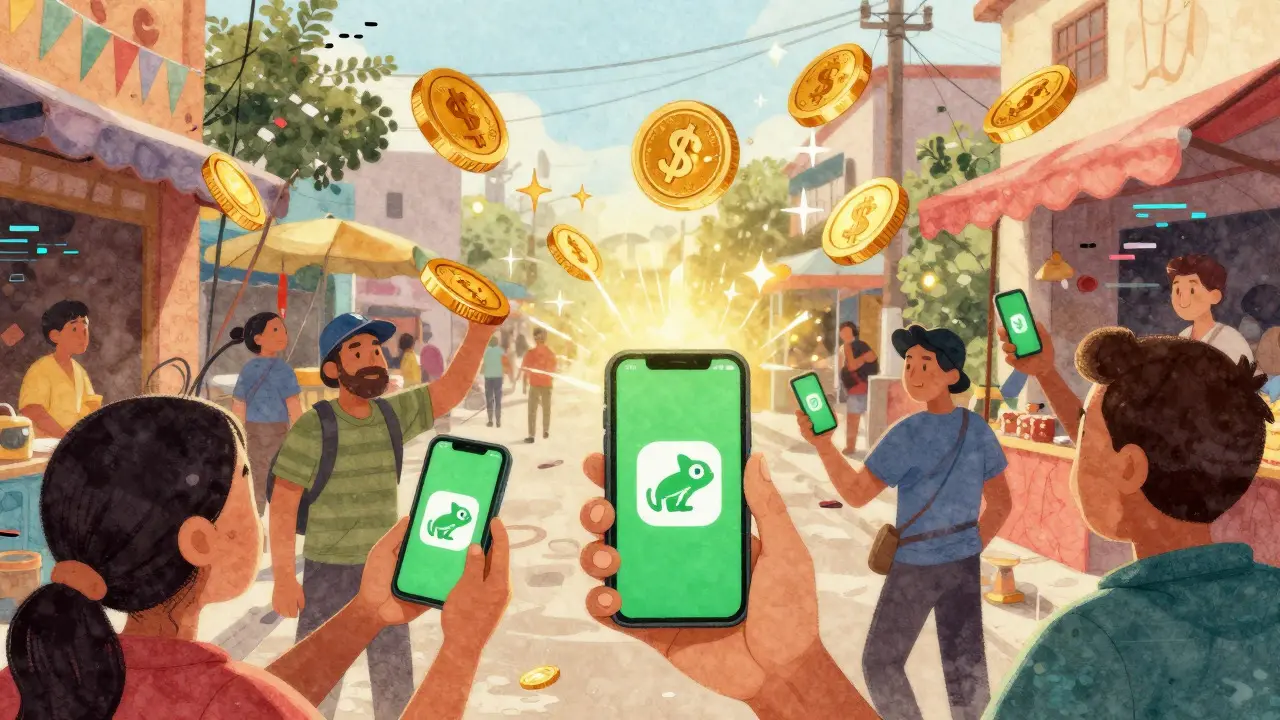
Imagine handing over your cash to a government app that promises zero fees, only to watch the value of your savings drop by half because the global market took a nosedive. That was the reality for many in El Salvador, a nation that made history on September 7, 2021, by becoming the first country to adopt Bitcoin as legal tender. At the center of this bold experiment was the Chivo Wallet, the official national cryptocurrency application designed to bring financial inclusion to a population where 70% previously lacked access to traditional banking.
The story of Chivo is not just about technology; it is a tale of ambition, technical hurdles, economic pressure, and eventual compromise. As we stand in August 2026, looking back at the events of 2025, the narrative has shifted from revolutionary adoption to managed restriction. The dream of a Bitcoin-powered economy collided with the harsh realities of volatility and international finance, leading to significant changes in how the country handles digital assets today.
The Ambitious Launch of Chivo Wallet
When President Nayib Bukele announced the launch of the Chivo Wallet, the goal was clear: eliminate the high costs associated with remittances, which make up nearly 20% of El Salvador's GDP. Before Chivo, sending money across borders via services like Western Union or MoneyGram came with steep fees. Chivo promised to cut those costs to zero for Bitcoin transactions.
To kickstart adoption, the government pulled out all the stops. They deposited $30 into every new user’s account. This wasn’t just a marketing gimmick; it was a massive fiscal commitment intended to force behavioral change. The result? A staggering 46% of the population downloaded the app almost immediately. For a brief moment, Chivo became the most-used fintech application in the country’s history.
However, the excitement was tempered by immediate technical chaos. The platform, built by AlphaPoint, a firm with nine years of experience in Bitcoin infrastructure, struggled under the weight of millions of simultaneous users. Glitches shut down the platform temporarily. Reports of identity theft and security breaches surfaced, shaking user confidence right out of the gate. While the ambition was praised by industry experts, the execution revealed the immense difficulty of deploying government-scale cryptocurrency infrastructure overnight.
The Volatility Trap and User Experience
You can give people an app, but you cannot control the market. One of the biggest hurdles for Chivo was Bitcoin’s inherent price instability. During 2022, Bitcoin’s value plummeted from around $69,000 to $16,000. For a merchant accepting payment in Bitcoin, this meant their inventory could lose significant value before they even converted it back to dollars. For everyday citizens, the $30 seed money felt less like wealth and more like a risky bet.
User experiences were mixed at best. Those engaged in cross-border remittances found genuine value in the reduced transaction costs. But for the average person buying groceries or paying bills, the complexity of managing a digital wallet combined with the fear of losing value created friction. Data from 2024 painted a sobering picture: eight out of ten Salvadorans did not actively use Bitcoin despite the government’s aggressive promotional campaigns. The gap between policy implementation and actual daily usage was wide.
The learning curve was steep. Many users lacked the digital literacy required to navigate private keys, verify identities securely, and understand market fluctuations. Government training programs attempted to bridge this gap, but support quality varied, and initial technical difficulties overwhelmed customer service teams. The distinction between downloading an app for free money and adopting a new currency for daily life proved to be a massive psychological barrier.

Regulatory Evolution: From Bitcoin Law to LEAD
As the dust settled on the initial launch, the regulatory landscape began to mature. In 2023, El Salvador introduced the Digital Assets Issuance Act (LEAD). This was a crucial step that moved beyond the original Bitcoin Law. LEAD established the National Commission of Digital Assets (CNAD) as a central regulatory body. This shift signaled a move toward comprehensive oversight rather than just promoting one specific coin.
The CNAD was tasked with ensuring that digital asset operations within the country were secure and compliant. This framework allowed for broader cryptocurrency business operations in the private sector, even as the state’s direct involvement faced scrutiny. It provided a structure for future innovations, such as tokenized securities and other digital assets, positioning El Salvador as a hub for crypto regulation in Central America, albeit with stricter guardrails than initially envisioned.
The 2025 Turning Point: IMF Pressure and Legal Tender Status
The defining moment for El Salvador’s crypto journey arrived in January 2025. The International Monetary Fund (IMF), long critical of the Bitcoin mandate due to risks to financial stability, secured its conditions for a $1.4 billion financial assistance program. The key requirement? Remove Bitcoin’s status as legal tender.
This decision marked the end of an era. While Bitcoin remained legal to own and trade, merchants were no longer obligated to accept it, and the government stopped forcing its use in public sectors. The agreement included commitments to keep the total amount of Bitcoin held in government wallets unchanged and to unwind public sector participation in the Chivo wallet by July 2025. This was a strategic retreat, acknowledging that mandatory adoption was unsustainable without international financial backing.
Franklin Templeton’s analysis in March 2025 highlighted this shift, noting that while the motivations behind the adoption were well-intentioned, the implementation challenges had become too great. The removal of legal tender status was not a rejection of Bitcoin itself, but a pragmatic response to macroeconomic pressures. It allowed El Salvador to stabilize its finances while keeping the door open for voluntary crypto usage.
Current Status in 2026: A Hybrid Model
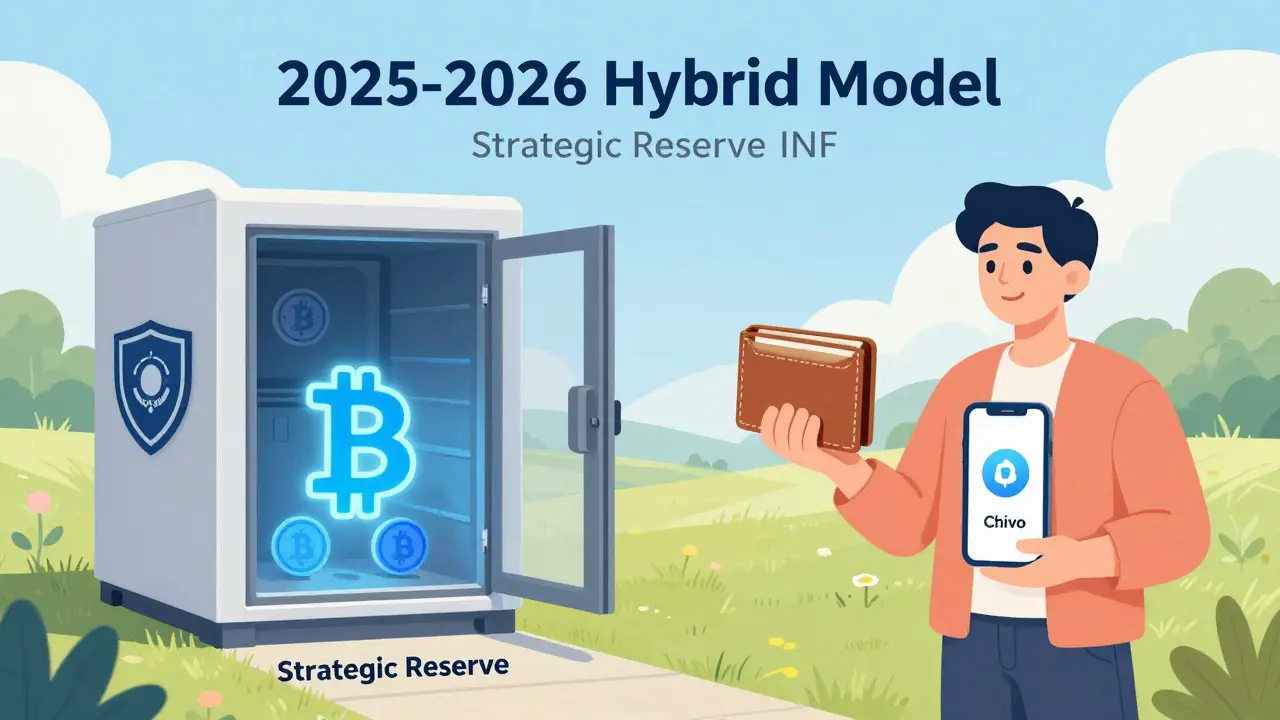
So, what does the landscape look like today in August 2026? El Salvador has transitioned into a hybrid model. The Chivo Wallet still exists, but its role has changed. It is no longer the primary tool for mandatory government transactions. Instead, it serves a niche audience of crypto enthusiasts and remittance users who prefer its zero-fee structure.
The government continues to hold a Strategic Bitcoin Reserve Fund, which expanded to 6,102 coins worth approximately $500 million in March 2025. This reserve acts as a long-term investment bet rather than a circulating currency. Meanwhile, the private sector thrives under the LEAD framework. Events like the PLANB Forum 2025, hosted in January, demonstrate that El Salvador remains a regional leader in crypto education and business, attracting investors and developers alike.
The restrictions imposed by the IMF have not killed the crypto spirit in El Salvador; they have refined it. The focus has shifted from forced mass adoption to sustainable, regulated growth. Users now choose whether to engage with Bitcoin based on personal preference and risk tolerance, rather than legal obligation. This voluntary approach has led to more stable, albeit slower, integration of digital assets into the local economy.
| Feature | Pre-2025 (Legal Tender Era) | Post-2025 (Current Status) |
|---|---|---|
| Legal Status | Mandatory legal tender | Voluntary digital asset |
| Government Role | Active promoter & user | Regulator & reserve holder |
| Merchant Obligation | Required to accept | Optional acceptance |
| Primary Use Case | Daily transactions & remittances | Investment & niche payments |
| Regulatory Body | Ministry of Finance | National Commission of Digital Assets (CNAD) |
Lessons Learned and Future Outlook
The Chivo experiment offers valuable lessons for any nation considering cryptocurrency adoption. First, technology alone cannot drive financial behavior; trust and stability are paramount. Second, exposing an entire national economy to the volatility of a single asset carries significant risks. Third, international financial institutions play a decisive role in shaping domestic monetary policy.
Looking ahead, El Salvador’s position as a crypto hub depends on balancing innovation with prudence. The LEAD framework provides a solid foundation for private sector growth. If the government can maintain regulatory clarity and continue investing in digital literacy, the country could emerge as a model for how emerging economies can integrate blockchain technology without sacrificing economic stability. The restrictions of 2025 were not a failure, but a necessary correction that allowed the ecosystem to mature.
Is Bitcoin still legal tender in El Salvador?
No. As of January 2025, Bitcoin is no longer legal tender in El Salvador. This change was part of an agreement with the International Monetary Fund (IMF) to secure financial assistance. While citizens can still buy, sell, and hold Bitcoin, merchants are no longer legally required to accept it as payment.
Does the Chivo Wallet still work?
Yes, the Chivo Wallet is still operational. However, its role has shifted from a mandatory government tool to a voluntary option for users. It continues to offer zero-fee Bitcoin transactions and is used primarily for remittances and by crypto enthusiasts. Public sector participation in Chivo was unwound by July 2025.
What happened to the $30 Bitcoin bonus?
The $30 bonus was a one-time incentive offered during the initial launch in 2021 to encourage downloads. It is no longer available to new users. The government used this strategy to achieve rapid adoption, but sustained usage required more than just initial incentives.
How does the National Commission of Digital Assets (CNAD) affect users?
The CNAD, established under the 2023 Digital Assets Issuance Act (LEAD), regulates digital asset businesses in El Salvador. For users, this means increased consumer protection and clearer rules for companies offering crypto services. It ensures that exchanges and wallets operate within a defined legal framework.
Why did the IMF require the removal of Bitcoin's legal tender status?
The IMF cited concerns about financial stability, transparency, and the risks associated with Bitcoin's volatility. They argued that mandatory adoption exposed the economy to unnecessary shocks and hindered effective monetary policy. Removing legal tender status was a condition for receiving a $1.4 billion loan.
Can foreigners use the Chivo Wallet?
While the Chivo Wallet was designed primarily for Salvadoran citizens, foreigners can technically register if they meet identity verification requirements. However, its utility is highest for residents due to local integrations and remittance features. Global users often prefer international exchanges for broader accessibility.
Joshua Hofford
August 8, 2026 AT 11:49It is fascinating to see how El Salvador navigated the turbulent waters of crypto adoption. The shift from mandatory legal tender to a voluntary hybrid model shows a level of pragmatism that many critics initially doubted existed in their policy framework. It reminds us that innovation often requires iteration and sometimes, a step back to move forward more securely.
Joy Kwant
August 8, 2026 AT 13:02So they just gave up? After all that hype and spending taxpayer money on an app that barely worked? It feels like a massive waste of resources for something that was never going to work in the first place. Typical government overreach failing spectacularly while people lost real value.
Marcia Albert
August 9, 2026 AT 19:45I mean, look at it this way: it was a bold experiment, right? Not every nation can claim they tried to be the first Bitcoin country. The tech glitches were messy, sure, but you gotta respect the ambition even if the execution was a bit... rocky. Like trying to build a skyscraper during an earthquake.
Emma Smith
August 11, 2026 AT 05:20the whole thing screams systemic failure wrapped in shiny blockchain packaging why did anyone think forcing volatility onto daily bread purchases was a good idea its not philosophy its financial suicide masked as progress
Ed Mitchell
August 11, 2026 AT 13:15Let us be clear about what actually happened here. The IMF forced their hand because they could not tolerate a sovereign nation escaping the fiat trap. This was not a 'pragmatic retreat' as the article suggests; it was a capitulation to global banking elites who want to keep control over your money. The Chivo wallet was working fine until the suits decided it threatened their hegemony.
Michael Mostyn
August 11, 2026 AT 15:14The distinction between legal tender status and voluntary usage is crucial here. One imposes obligation, the other offers choice. By removing the mandate, El Salvador arguably created a healthier environment for genuine adoption based on utility rather than coercion. It is a nuanced shift that deserves careful analysis beyond simple success or failure metrics.
Erica Johnson
August 13, 2026 AT 12:42Oh please. :rolleyes: You really believe the IMF cares about 'financial stability' for the little guy? They care about leverage. And let's not forget that AlphaPoint had nine years of experience yet still crashed. That is not bad luck, that is incompetence. We should have known better.
Ken G
August 15, 2026 AT 05:17they always say they want freedom but then they force you to use a broken app its so hypocritical the whole system is rigged against the common man anyway might as well keep cash under the mattress
Lorraine Surringer
August 16, 2026 AT 23:59Honestly I feel bad for the people who downloaded it just for the thirty bucks only to watch it vanish. Its such a cruel lesson in economics. But hey, at least we learned something about digital literacy right? Maybe next time they will teach math before crypto lol
Alex Di Mango
August 17, 2026 AT 18:13Look, no one said it would be easy. But consider the alternative: doing nothing. At least they tried to solve the remittance fee problem. Now that the dust has settled, maybe the private sector can pick up the pieces without the government micromanaging every transaction. It is a learning curve for everyone involved.
Amor Jordan
August 18, 2026 AT 03:52It breaks my heart to think about the merchants who were forced to accept payments that could lose half their value overnight. Imagine the stress! The human cost of these macroeconomic experiments is often ignored. I hope the new regulatory body actually listens to the small business owners this time.
Nick Darring
August 19, 2026 AT 01:45You know what I think? I think everyone is missing the point entirely. The point wasn't Bitcoin. The point was attention. Bukele got his fifteen minutes of fame and now he can go back to being a dictator with a slightly cleaner image. The wallet doesn't matter, the narrative does. And honestly? It worked perfectly for him.
Eden Tadesse
August 20, 2026 AT 17:31i dont get why people are so mad. if it works for some then cool. if not then dont use it. seems pretty simple to me. maybe stop complaining and start saving?
Eric Zehr
August 20, 2026 AT 22:13The data speaks for itself: eight out of ten Salvadorans did not actively use Bitcoin. That is a staggering statistic that cannot be ignored. While the intent was noble, the outcome suggests a fundamental mismatch between the tool and the user base. Education must precede implementation, not follow it as an afterthought.
Namrata Mapgaonkar
August 21, 2026 AT 11:23from india we see similar issues with digital payments rolling out too fast without proper infrastructure support :( its sad when technology becomes a burden instead of a help. hope they find a balance soon
Rita Dutta
August 21, 2026 AT 20:30oh the irony of calling it a 'hybrid model' when it really just means they failed at being fully crypto and failed at being fully traditional. its a limbo state. very unsexy. but hey, at least the reserve fund is sitting there gathering dust like a digital museum piece
Paul Smith
August 22, 2026 AT 15:47I think the key takeaway here is the importance of community buy-in 🤝. Without trust, even the best tech fails. El Salvador took a huge leap, and while they stumbled, they paved the way for other nations to learn from their mistakes. Let's keep supporting innovation responsibly! 🚀
Rodmun Tarnowski
August 24, 2026 AT 12:50Indeed, the transition to the LEAD framework represents a significant maturation of their regulatory approach. It is commendable that they established the CNAD to provide oversight. This structured environment may well foster sustainable growth in the private sector, which is ultimately where true economic resilience lies.
Matthew Smith
August 24, 2026 AT 14:54morality dictates that governments should not gamble with citizen wealth. by forcing bitcoin they violated basic fiduciary duty. now they hide behind 'voluntary' usage to save face. typical political maneuvering devoid of ethical grounding
Lance Jantz
August 25, 2026 AT 04:21One must appreciate the sheer audacity of the endeavor, yes? To attempt to rewrite the rules of monetary sovereignty in the digital age is nothing short of theatrical brilliance. The fact that it collapsed under the weight of its own complexity is merely a detail for the lesser minds. The vision remains intact, even if the wallet is empty.
Don Fizy
August 25, 2026 AT 17:27Hey folks, don't give up on the concept just yet! The tech is improving every day. The early days of any revolution are messy. What matters is that we keep pushing for financial inclusion. If you are interested in crypto, focus on education and security first. You got this! :)
Phil Babb
August 26, 2026 AT 03:56LISTEN UP! The private sector is where the action is now! Stop looking at the government failures and look at the PLANB Forum! Investors are coming! Developers are building! This is the golden age of crypto regulation! Get on board or get left behind!!!
Dominic Greco
August 26, 2026 AT 20:46They are watching you 👁️. Every transaction tracked. The 'security breaches' were probably just them testing how much data they could steal. Now that the IMF is involved, expect total surveillance. Run while you still can. 🏃♂️💨
Sean Rowland
August 27, 2026 AT 12:27Let us dissect the semantic implications of 'legal tender' versus 'digital asset'. The former implies state-backed value consensus, whereas the latter relies on speculative market dynamics. By conflating the two, policymakers created a cognitive dissonance among the populace that inevitably led to rejection. It is not just about money; it is about epistemological certainty in an uncertain world.
Sus Sawyer
August 28, 2026 AT 13:23Yo, check this out! The real win here is the digital literacy boost. Even if the app sucked, people learned about wallets and keys. That knowledge sticks. Plus, the zero-fee remittances are still a game changer for families. Keep grinding, El Salvador! 💪✨