


Since October 2023, the UK’s Financial Conduct Authority (FCA) has enforced some of the strictest crypto advertising rules in the world. If you’ve seen a crypto ad on TV, social media, or even a billboard in London, you might have noticed something missing: no flashy promises of quick riches, no celebrity endorsements, and no vague claims about "the future of money." That’s not an accident. It’s the law. And if you’re a crypto company trying to reach UK customers-or just a regular person wondering why crypto ads feel so different now-this is what’s going on.
What Changed in October 2023?
The big shift came with the Financial Services and Markets Act 2000 (Financial Promotion) (Amendment Order) 2023. Before this, crypto ads in the UK were basically a free-for-all. Firms could run ads promising high returns, using catchy slogans and influencers, with little to no warning about risk. After October 8, 2023, every single ad for a fungible or transferable cryptoasset-that includes Bitcoin, Ethereum, and even fan tokens-had to follow strict rules. The FCA didn’t just tweak the guidelines. They rewrote them.
Now, every crypto advertisement must include a personalized risk warning that’s tailored to the viewer’s experience level. It’s not enough to slap on a generic disclaimer like "Crypto is volatile." The FCA requires firms to ask questions first: Have you traded leveraged products before? Do you understand how market crashes can wipe out your investment? Based on the answers, the warning changes. A beginner gets a much stronger message than someone who’s been trading for years.
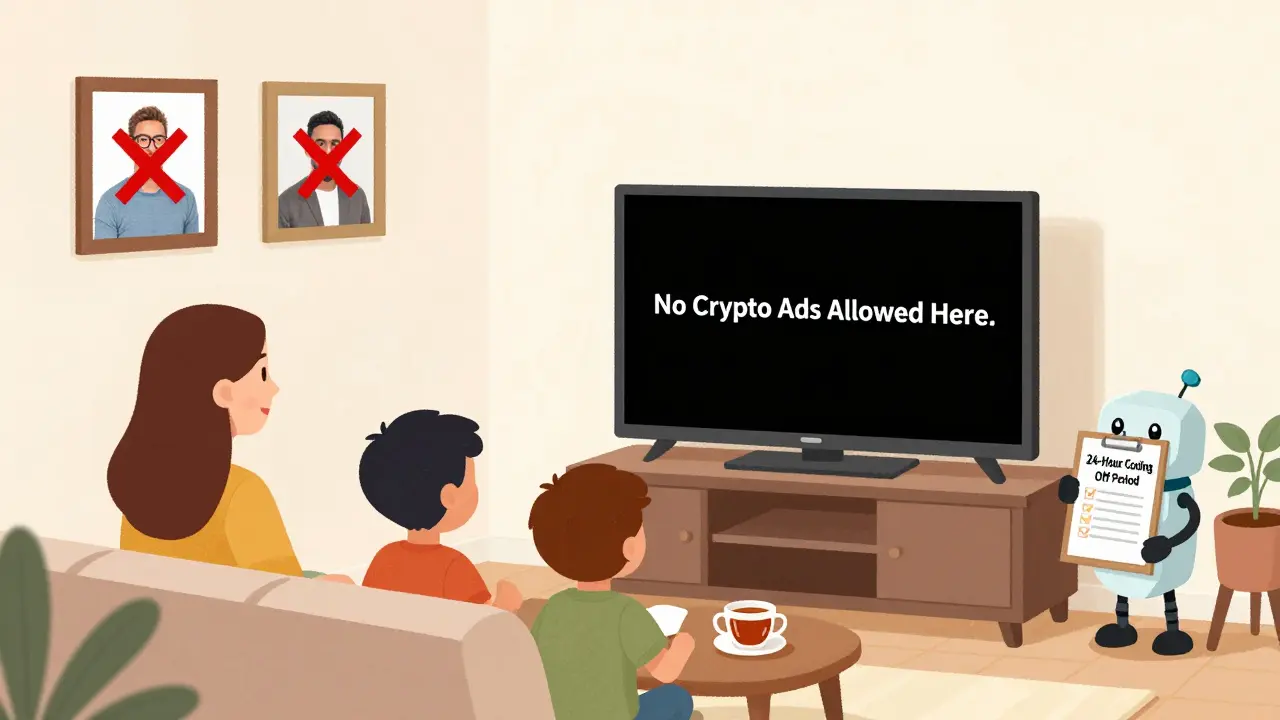
There’s also a mandatory 24-hour cooling-off period. That means if you click on a crypto ad, sign up for a wallet, or start the onboarding process, you can’t actually invest until at least a full day has passed. The system has to pause you. No instant deposits. No "limited time offer" pressure. This rule alone has forced crypto firms to rebuild their entire customer journey.
TV and Radio Ads Are Banned-Unless You’re a Pro
Here’s where it gets even stricter. On October 3, 2024, the Broadcast Committee of Advertising Practice (BCAP) added Rule 14.5.5. This rule bans any crypto ad from being shown on mainstream TV, radio, or online platforms that reach general audiences. Think BBC, ITV, YouTube, TikTok, Instagram Reels-no crypto ads allowed there anymore.
So where can you see them? Only on specialized financial channels like Bloomberg TV, Reuters Financial News, or certain segments of financial podcasts. Even then, the audience must be pre-vetted. The ad can’t run unless the platform proves viewers have already passed the FCA’s appropriateness test. That test checks whether someone has experience with complex investments, understands leverage, and knows how crypto markets behave under stress. If you’re not a professional investor, you won’t see those ads.
What Does the FCA Require in Practice?
The FCA doesn’t just say "don’t mislead." They spell out exactly what firms must do:
- Personalized risk warnings-at least 20% of the visual space in ads must be taken up by clear, non-technical language. No fine print. No jargon. The warning must say: "You could lose all your money. This is not a safe investment."
- Client categorization-firms must classify every customer as either retail (average consumer) or professional (experienced investor). Retail clients get the strongest protections.
- Appropriateness assessments-before allowing anyone to invest, firms must ask detailed questions about their trading history, risk tolerance, and understanding of crypto.
- Five-year record keeping-every ad, every questionnaire, every customer interaction must be stored for five years. The FCA can audit you at any time.
- No industry comparisons-the FCA explicitly warns firms: "Don’t look at what others are doing and copy them." If your competitor broke the rules, that’s not an excuse.
These aren’t suggestions. They’re legal requirements. And the FCA has already acted. In its first review, they found multiple firms breaking the rules. Some used outdated warnings. Others skipped the cooling-off period. A few even ran ads on TikTok. The FCA didn’t just issue warnings-they worked directly with each firm to fix the problems. But they also made it clear: "If firms do not improve, we will act."
How Does This Compare to Other Countries?
The UK’s approach is far more restrictive than most places. In the European Union, the MiCA framework, which started in June 2024, allows crypto ads as long as they include disclaimers. No cooling-off period. No pre-vetting. Just a small note at the bottom saying "this is risky."
In the United States, crypto ads are treated like securities. If a token is deemed a security, it needs full SEC registration. But many tokens slip through, and ads still run on sports broadcasts and during the Super Bowl.
Singapore lets firms advertise more freely, with simpler warnings. Switzerland has almost no restrictions. But the UK? It’s the only country that bans crypto ads from mainstream media entirely-and requires personalized, dynamic warnings for every single viewer.
What About Crypto ETNs?
There’s one exception the FCA made: crypto exchange-traded notes (ETNs). These are financial products that track crypto prices but are traded on regulated UK exchanges like the London Stock Exchange. Since May 2024, retail investors can buy these. But even here, ads must follow the same rules: risk warnings, cooling-off periods, and no misleading claims.
Why allow ETNs but not direct crypto? The FCA’s logic is simple: ETNs are issued by regulated banks, backed by collateral, and traded on official markets. Direct crypto? No central authority. No protection. Just code and volatility.
Who’s Affected? And Who’s Leaving?
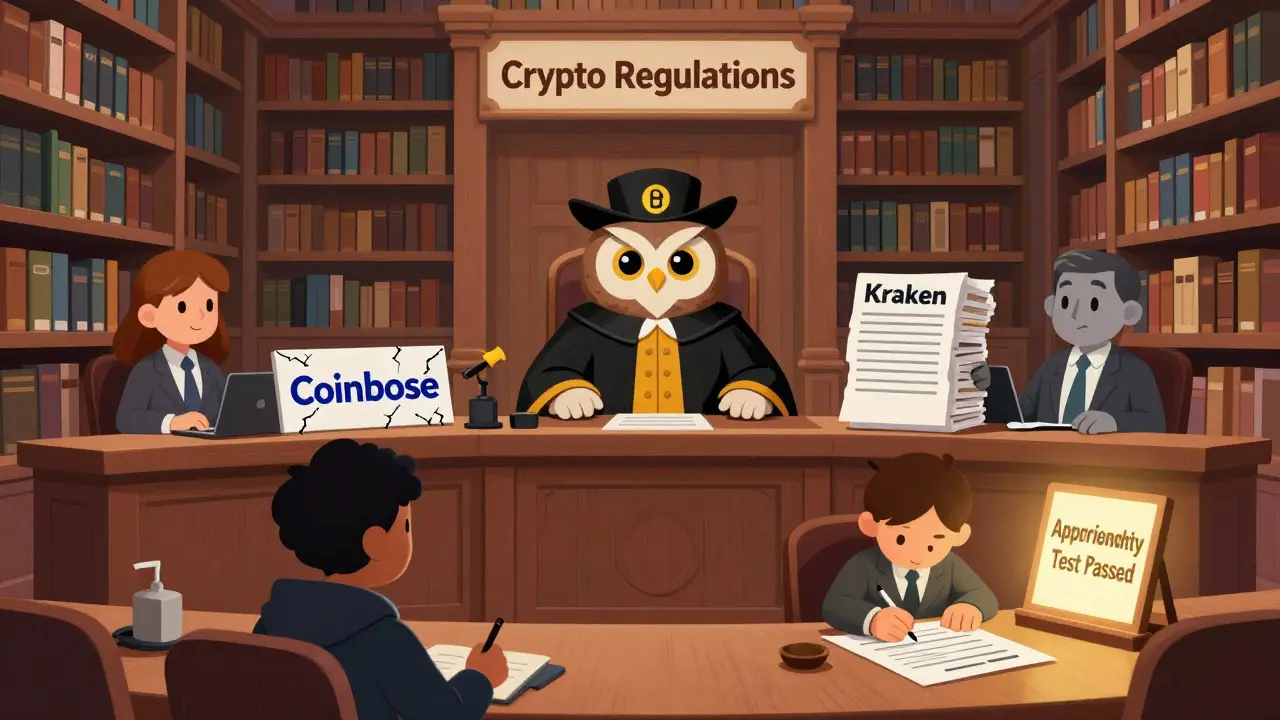
Over 60 crypto firms applied for temporary registration with the FCA after the rules came in. As of March 2024, only 15 got full approval. The rest? Many have scaled back their UK operations. Some smaller exchanges shut down their British websites. Others moved their marketing teams out of London.
Big players like Coinbase and Kraken stayed-but only after spending millions to overhaul their compliance systems. They now use AI to generate personalized warnings, track every customer interaction, and block ads from reaching unvetted audiences.
Consumer groups like Which? have praised the rules. They say they’re protecting people from losing life savings on hype. But trade groups like CryptoUK argue the rules stifle innovation. They say the UK is pushing crypto firms out, not regulating them.
What’s Coming Next?
The FCA didn’t stop with ads. In May 2025, they published Discussion Paper DP25/1, laying out plans for a full crypto regulatory framework. This includes rules for crypto trading platforms, lending services, staking, and even decentralized finance (DeFi).
The message is clear: "Cryptoassets will remain high-risk, speculative investments." That’s not changing. And future approval for any crypto firm in the UK will depend on how well they followed these advertising rules. Compliance isn’t just about avoiding fines-it’s your ticket to staying in the market.
Right now, the FCA is working with firms to help them adapt. But they’re not softening the rules. They’re tightening them. If you’re a UK consumer, you’ll see fewer crypto ads. But the ones you do see? They’ll be honest, clear, and packed with warnings. That’s the point.
Are crypto ads completely banned in the UK?
No, but ads for fungible and transferable cryptoassets are banned from mainstream TV, radio, social media, and websites that reach general audiences. They’re only allowed on specialized financial channels where viewers have already passed a pre-vetting process to prove they understand the risks.
Can I still see crypto ads on YouTube or Instagram?
No. Ads for cryptocurrencies like Bitcoin or Ethereum are blocked from running on YouTube, Instagram, TikTok, and other platforms targeting general users. The FCA and BCAP enforce this through automated systems and manual audits. If you see one, it’s likely a violation.
Do I need to prove I’m a professional investor to invest in crypto in the UK?
Not to own crypto, but to invest through a regulated firm, yes. Before allowing you to deposit funds, firms must run an appropriateness test. This includes questions about your experience with leveraged products, understanding of market volatility, and past trading history. Retail investors can still invest-but only after being fully informed and given a 24-hour cooling-off period.
What happens if a crypto firm breaks these rules?
The FCA can fine firms up to 10% of their annual turnover. They’ve already identified multiple firms violating the rules. Many have been forced to shut down their UK ads, retrain staff, or exit the market entirely. The FCA has made it clear: they’re watching closely, and they’re not afraid to act.
Is my money protected if I lose it investing in crypto in the UK?
No. Unlike bank deposits or regulated investment funds, crypto investments are not covered by the Financial Services Compensation Scheme (FSCS). If a crypto exchange fails or your wallet is hacked, you won’t get your money back. This is clearly stated in all FCA-approved promotions.
What Should You Do?
If you’re a UK resident thinking about investing in crypto: slow down. Read every warning. Don’t rush into a trade because an ad says "limited time offer." Use the 24-hour window. Ask yourself: Do I really understand this? Have I lost money before on risky bets? If the answer is no, wait.
If you’re running a crypto business: don’t guess. Talk to the FCA. Use their GC23/1 guidance. Build systems that auto-generate personalized warnings. Keep records. Don’t copy what other firms do-they might be breaking the rules too.
The UK didn’t ban crypto. It just said: if you want to advertise it, you have to be honest, clear, and responsible. That’s not a setback. It’s a step toward a safer, more trustworthy market.
Alex Williams
February 18, 2026 AT 08:39Let me tell you something real quick - the FCA’s move isn’t about stifling innovation, it’s about stopping predatory nonsense. I’ve seen too many retail investors get sucked into "10x your money" scams with zero context. The personalized risk warnings? Genius. It’s not one-size-fits-all BS anymore. You ask someone if they’ve traded leveraged products before? That’s not overkill - that’s triage.
And the 24-hour cooling-off period? That’s the single most human thing any regulator has done in years. People don’t make rational decisions when they’re FOMO-ing off a TikTok ad with a rapper saying "Bitcoin’s the new gold." Give them a night to sleep on it. Let them wake up and ask: "Wait… why am I doing this?"
Most countries treat crypto like a carnival ride. The UK just turned it into a licensed financial product. And honestly? I’m glad. The EU’s MiCA is a joke - just slap on a disclaimer and call it a day. The US? Still letting crypto ads run during the Super Bowl like it’s 2021. Meanwhile, here in the US, we’re watching our own regulators lag behind.
Big players like Coinbase spent millions to comply. Small firms? They’re gone. That’s the cost of real regulation. You can’t have a market where the only thing keeping people from losing everything is luck. This isn’t censorship - it’s harm reduction. And yeah, it’s going to make crypto feel boring. Good. It should be boring.
Next stop: staking protocols, DeFi lending, and yield farms. The FCA’s DP25/1 isn’t the end - it’s the first page of a new rulebook. And if you’re building something in this space? Start designing for compliance from day one. Not as an afterthought. As the core architecture.
Lisa Parker
February 18, 2026 AT 11:31Ugh I just lost my entire ETH stack because of this 😭
Nova Meristiana
February 18, 2026 AT 23:15Wow. The FCA just turned crypto into a library book you have to fill out a form to check out. 🤡
Aileen Rothstein
February 20, 2026 AT 05:41This is actually one of the most thoughtful regulatory approaches I’ve seen in years. The personalized warnings? The cooling-off period? The vetting? It’s not about stopping people - it’s about giving them real agency. Too many people think regulation = oppression. But sometimes, regulation = protection. And crypto? It needed this. Hard.
I’ve watched friends lose life savings on meme coins because they saw a 30-second ad with a guy in a Lamborghini saying "This is your ticket out." This isn’t about being anti-crypto. It’s about being pro-informed.
The UK didn’t ban crypto. They banned manipulation. And honestly? I’d rather invest in a market where the ads don’t try to trick me than one where every post is a sales pitch wrapped in blockchain buzzwords.
JJ White
February 20, 2026 AT 22:02THEY’RE COMING FOR US ALL. THIS IS THE FIRST STEP. NEXT THEY’LL TAKE OUR PRIVATE KEYS. THEN OUR WALLETS. THEN OUR SOULS. 🚨
Do you realize what this means? The FCA is not regulating crypto - they’re erasing it. They’re turning the entire industry into a sterile, bureaucratic nightmare where you need a law degree just to buy a single Bitcoin. This isn’t safety. This is control. And mark my words - this is how they start censoring speech. "Oh, but it’s just crypto!" - until it’s not. Until YOU can’t say "moon" without a 10-page compliance form.
They’re using "risk warnings" as a Trojan horse. One day, you’ll wake up and your wallet will be frozen because you didn’t answer the 17th question correctly. "Have you ever felt emotional about a token’s price movement?"
WE’RE BEING GROOMED. I SWEAR TO GOD.
Nicole Stewart
February 22, 2026 AT 18:20yogesh negi
February 24, 2026 AT 07:22As someone from India where crypto ads are everywhere - billboards, WhatsApp forwards, even temple festivals - seeing the UK’s approach feels like a breath of fresh air. I’ve seen elderly people lose pensions chasing "crypto gurus" on YouTube. This isn’t about limiting freedom - it’s about protecting the vulnerable.
The personalized risk warnings? Brilliant. It’s not just saying "crypto is risky." It’s asking: "Do you understand what volatility means? Have you ever lost money before?" That’s empathy in policy.
And the cooling-off period? That’s psychology. Humans don’t invest rationally when they’re pumped by hype. Give them time to think. That’s not a barrier - it’s a gift.
I hope other countries follow. Not because we hate crypto - but because we love people more than profit.
jennifer jean
February 24, 2026 AT 14:14I really appreciate this. It’s not perfect, but it’s a step in the right direction. I used to think crypto was all about freedom - now I see it’s also about responsibility. The fact that they’re forcing firms to tailor warnings? That’s huge. It means they’re finally treating people like humans, not wallets.
Also, the ETN exception makes total sense. If it’s on the LSE with collateral and regulation? That’s different than buying a token off a random app. Two different worlds.
Keep pushing for this. More countries need to wake up.
Rajib Hossaim
February 26, 2026 AT 09:02The Financial Conduct Authority’s approach demonstrates a mature, principle-based regulatory philosophy. The emphasis on personalized risk disclosures, appropriateness assessments, and mandatory cooling-off periods reflects a deep understanding of behavioral finance. This is not an overreach - it is a necessary correction to market failures that have disproportionately harmed retail investors.
Comparatively, jurisdictions with lax frameworks are effectively externalizing social costs onto individuals. The UK’s model, while burdensome for firms, serves the public interest with precision and foresight.
One hopes this becomes a global benchmark.
Beth Erickson
February 28, 2026 AT 00:49Oh great. Another country that thinks Americans can’t handle risk. We’ve been trading options since the 80s. Now the UK wants to baby us? Cool. Meanwhile, the US is letting people trade Dogecoin during halftime. Guess who’s winning?
UK’s just jealous they can’t monetize chaos like we do.
Jeremy Fisher
February 28, 2026 AT 07:54You know what’s wild? The UK didn’t ban crypto. They banned the lie. The lie that this stuff is a get-rich-quick scheme. The lie that a 22-year-old influencer with 200k followers knows more than a portfolio manager. The lie that you can turn $500 into $5000 in a week.
I’ve been in this space since 2017. I’ve seen people cash out their rent money because a guy in a Tesla said "Ethereum to the moon." I’ve seen grandparents lose their pensions to "crypto academies" on Facebook.
The FCA’s rules aren’t restrictive. They’re restorative. They’re saying: "We’re not going to let you sell fantasy as finance." And honestly? I’m proud of them for it.
It’s not about stopping innovation. It’s about making sure innovation doesn’t come at the cost of human dignity.
And yes - the 24-hour pause? That’s the most powerful thing here. It’s not a delay. It’s a moment of clarity. A pause between impulse and disaster.
When the next bubble pops - and it will - the UK will be the only country where people aren’t asking "why didn’t anyone warn me?"
Anandaraj Br
February 28, 2026 AT 17:12Only 15 firms approved? Pathetic. You think this is regulation? This is a graveyard for innovation. If you need 5 years of records and AI-generated warnings just to show a crypto ad - you’re not protecting consumers. You’re killing competition.
Big players like Coinbase? They can afford it. Small startups? Dead. This isn’t fair. It’s a cartel. The FCA is just protecting the big boys while pretending to help the little guy.
And the ETNs? Please. That’s just crypto with a fancy suit. Same risk. Same volatility. But now it’s "regulated" so you feel safe? Lmao.
This isn’t safety. It’s control dressed up as ethics.
AJITH AERO
March 2, 2026 AT 15:17Angela Henderson
March 3, 2026 AT 03:19I didn’t even know all this was happening until I read this. Honestly? I’m kind of impressed. I used to think crypto was just gambling with tech words. But now I see - the problem wasn’t the tech. It was the hype. The ads were like a carnival barker yelling "win big!" while you’re handing over your last paycheck.
The cooling-off period? That’s like a time-out. You’re mad. You’re excited. You wanna jump. But you sit. You breathe. You think. And then? Maybe you don’t do it.
I don’t even trade crypto. But I’m glad this exists. For the people who do. For their families. For everyone who doesn’t want to wake up broke because someone on TikTok said "just buy it."
Geet Kulkarni
March 4, 2026 AT 19:51While I commend the FCA for its structured approach, I must express concern regarding the disproportionate burden placed on SMEs. The requirement for AI-driven personalized warnings, coupled with five-year record retention, creates an insurmountable barrier for emerging fintech ventures.
Furthermore, the exclusion of mainstream platforms appears to be a form of regulatory capture - favoring institutional players who can afford compliance infrastructure, while marginalizing grassroots innovation.
While the intent is noble, the execution risks entrenching oligopolistic control under the guise of consumer protection.
🫶
Paul David Rillorta
March 6, 2026 AT 02:22They’re not regulating crypto - they’re preparing for the Great Reset. You think this is about "risk warnings"? Nah. This is step one. Next they’ll require biometric ID for every wallet. Then they’ll track your on-chain activity. Then they’ll freeze your assets if you "trigger risk patterns."
They’ve been watching us. All this time. And now? They’re locking the door. The FCA? More like the FBI-CA.
They’re scared. Because crypto is the last thing they can’t control. And now? They’re trying to kill it with paperwork.
James Breithaupt
March 6, 2026 AT 07:17Let’s be real - the FCA didn’t ban ads. They banned lies. And honestly? That’s the most crypto thing you can do. The entire industry was built on hype. "The future of money." "No middlemen." "Unstoppable."
Now? You get: "You could lose all your money. This is not a safe investment." No fluff. No memes. No influencers. Just the truth.
And the cooling-off period? That’s not a delay. It’s a reality check. Because in crypto, you don’t need more information - you need less impulse.
I’ve worked with retail investors for a decade. The ones who lose? They didn’t lack knowledge. They lacked pause.
The UK didn’t make crypto boring. They made it honest.
Sarah Shergold
March 8, 2026 AT 01:38LOL UK thinks they’re so advanced. Meanwhile, I bought my first BTC on a whim in 2021 and made 10x. Now you want me to fill out a 17-question form? 🤮
sruthi magesh
March 9, 2026 AT 13:15They call it "risk awareness" - but it’s really a surveillance protocol disguised as consumer protection. You think they’re asking about your trading history to help you? No. They’re building a behavioral profile. Every answer. Every hesitation. Every pause during the cooling-off period. They’re mapping your psychology.
And don’t get me started on ETNs. That’s not regulation - that’s rebranding crypto as a Wall Street derivative so the banks can profit again. You’re not safer. You’re just paying more.
This isn’t about protecting people. It’s about bringing crypto under the same corrupt system it was supposed to escape.
Ian Plunkett
March 10, 2026 AT 22:06Finally. Someone’s doing something right. I’ve been watching this space since 2015. Every time a new regulation comes in, people scream "censorship." But this? This is the opposite. It’s forcing honesty.
And the 24-hour pause? That’s the quiet revolution. No one’s talking about it - but it’s the most powerful thing here. It breaks the cycle of impulse. It gives space for reason to breathe.
I used to think crypto was about freedom. Now I know - true freedom is the freedom to not act.
👏
Avantika Mann
March 12, 2026 AT 21:00This is so important. I’ve seen friends get ripped off - not because they were stupid, but because they were lonely. They saw an ad that said "Join our community!" and thought they’d finally found a group that understood them. The FCA didn’t take away their freedom. They gave them space to breathe before they jumped.
The personalized warnings? That’s not bureaucracy - that’s care. You don’t just hand someone a parachute and say "go jump." You check if they’ve trained. You check if they’re ready.
And the cooling-off period? That’s not a delay. It’s a hug. A pause that says: "I see you’re excited. But I care enough to make you wait."
This isn’t about stopping crypto. It’s about loving people enough to slow them down.
Tarun Krishnakumar
March 13, 2026 AT 19:26Let’s not kid ourselves - this isn’t about protecting consumers. It’s about protecting the banking system. The FCA doesn’t want crypto to thrive. They want it to be tamed. Controlled. Integrated. So the banks can eventually absorb it and charge fees on everything.
ETNs? That’s the Trojan horse. Same volatility. Same risk. But now it’s "regulated." So you feel safe? Nah. You’re just paying more to the same institutions that caused the 2008 crash.
And the 24-hour pause? That’s not for you. That’s for them. To track your behavior. To build your profile. To predict your next move.
This isn’t regulation. It’s colonization.
george chehwane
March 15, 2026 AT 08:09The FCA’s approach is a masterclass in performative governance. Personalized risk warnings? Aesthetic compliance. Cooling-off periods? Theater. The real issue - systemic asymmetry between retail and institutional actors - remains untouched.
By forcing firms to build compliance infrastructure, they’ve effectively weaponized bureaucracy to exclude innovation. The result? A sterile, institutionalized crypto ecosystem where only capital-heavy players survive.
It’s not protection. It’s enclosure.
andy donnachie
March 17, 2026 AT 03:53As someone from Ireland - where we’re watching this with interest - I think the UK’s approach is the most balanced I’ve seen. It’s not perfect, but it’s thoughtful. The emphasis on behavioral psychology - not just legal jargon - is refreshing.
And the fact that they’re not just banning ads, but forcing firms to *prove* their audience understands risk? That’s next-level.
Most regulators treat people like idiots. The FCA treats them like humans. And that’s rare.
Alan Enfield
March 17, 2026 AT 05:09I work in fintech compliance. Honestly? This is the gold standard. The personalized risk warnings? They’re not just text - they’re dynamic. They change based on your history. That’s AI-powered empathy.
And the cooling-off period? It’s not a delay - it’s a decision-making tool. People don’t need more info. They need more time.
Most crypto firms are still stuck in 2021. The FCA dragged them into 2026. And honestly? The industry’s better for it.
Alex Williams
March 18, 2026 AT 07:49Just read the comment from @1917. The "colonization" theory? That’s the same argument we had in 2008 about banks. "They’re just trying to control the system." But here’s the thing - if you’re building a financial product that’s supposed to be open and fair, you don’t get to hide behind "anti-establishment" rhetoric when you’re the one exploiting people.
The FCA isn’t protecting banks. They’re protecting *people* from the banks - and from the crypto bros who act like them.
And if you think ETNs are just Wall Street repackaging - then you’ve never looked at how they’re structured. They’re collateralized. They’re audited. They’re traded on regulated exchanges. That’s not control. That’s safety.
Stop seeing regulation as oppression. Sometimes, it’s the only thing standing between someone and ruin.
Paul David Rillorta
March 19, 2026 AT 06:32Oh wow. So now you’re saying the FCA is the good guy? That’s rich. You think they’re protecting people? They’re protecting their own power. The moment you need permission to invest - you’re no longer free. You’re a subject.
And don’t get me started on "collateralized" ETNs. They’re still based on crypto. If Bitcoin crashes? The ETN crashes. The bank just hides behind a balance sheet. Same outcome. Different paperwork.
You’re not safer. You’re just more confused.