


You think you’re just buying Bitcoin. You transfer your hard-earned rupees, click 'buy,' and wait for the price to go up. But what if that exchange doesn’t actually follow Indian law? What if your bank suddenly blocks the transaction, or worse, the platform gets shut down by authorities because it’s operating illegally? For millions of Indians trading crypto in 2026, this isn’t a hypothetical nightmare-it’s a daily reality for those using non-compliant platforms.
The regulatory landscape in India has shifted dramatically. The Financial Intelligence Unit of India (FIU-IND) now acts as the gatekeeper for legitimate crypto business. If an exchange isn’t registered with them, you are essentially gambling with funds that have no legal protection. This guide breaks down exactly which exchanges you should steer clear of, why they are dangerous, and how to spot the red flags before you lose money.
Why FIU-IND Compliance Is Non-Negotiable
To understand which exchanges to avoid, you first need to understand the rulebook. In India, cryptocurrency is not legal tender, but trading it is legal-provided you play by the rules. The most critical rule involves registration with the Financial Intelligence Unit of India (FIU-IND), which is the central agency responsible for receiving, processing, analyzing, and disseminating information relating to suspicious financial transactions.
Think of the FIU-IND like a license plate for a car. Without it, you can still drive, but the police can stop you anytime, impound your vehicle, and fine you heavily. For crypto exchanges, being FIU-registered means they report suspicious activities, verify customer identities (KYC), and adhere to anti-money laundering (AML) laws. As of mid-2025, the FIU had not released a comprehensive public list of compliant exchanges, creating a gray area. However, penalties for non-compliance have been severe and public.
If an exchange is not FIU-compliant, you face three immediate risks:
- Banking Blockades: Indian banks are under strict orders from the Reserve Bank of India (RBI) to avoid high-risk entities. If your exchange isn’t compliant, your INR deposit will likely fail, or your bank account could be frozen for future transactions.
- No Legal Recourse: If the exchange hacks your account or runs away with your funds, Indian courts and consumer forums may refuse to help because the platform operates outside the recognized financial framework.
- Tax Nightmares: Non-compliant exchanges do not generate proper tax reports. With India imposing a flat 30% capital gains tax on crypto profits and a 1% Tax Deducted at Source (TDS) on sales over ₹50,000, you are left to manually calculate every trade. Mistakes here mean heavy fines from the Income Tax Department.
Major International Exchanges Facing Heat
Many traders flock to global giants because they offer better liquidity or more coin varieties. However, these platforms often ignore local nuances until it’s too late. Two names stand out as examples of what happens when you ignore Indian regulations.
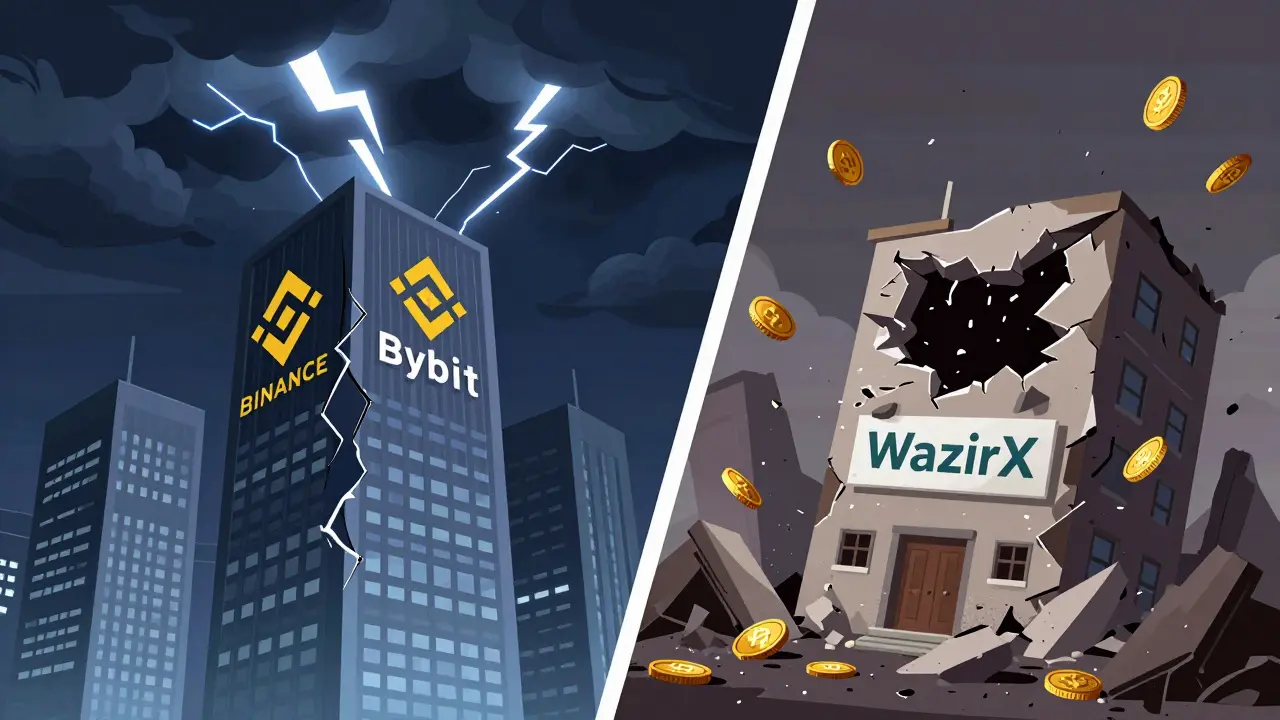
Binance is the world's largest cryptocurrency exchange by trading volume, known for its wide range of assets and advanced trading features. While Binance remains a powerhouse globally, it has faced significant friction in India. Authorities have penalized Binance for failing to register with the FIU-IND. These aren't small warnings; we're talking about millions of dollars in fines. When a regulator slaps a massive fine on a platform, it signals that their operations are fundamentally at odds with local law. Using such a platform puts your access at risk. They can restrict Indian IP addresses or block INR channels overnight.
Similarly, Bybit is a prominent international cryptocurrency exchange focusing on derivatives and futures trading. Bybit has also faced substantial financial penalties for non-adherence to Indian regulatory requirements. The pattern is clear: if a global exchange hasn’t explicitly stated its compliance with Indian FIU guidelines and secured banking partnerships within India, it is a ticking time bomb for your portfolio.
The WazirX Case Study: A Local Disaster
If international exchanges are risky due to regulation, domestic ones should be safer, right? Not always. WazirX was one of India's leading homegrown crypto exchanges, backed by Binance and serving millions of users. It seemed like the perfect choice: local support, INR deposits, and a familiar interface. Then came July 2024.
WazirX suffered a catastrophic security breach. Hackers compromised a multi-signature wallet, stealing approximately $230 million worth of cryptocurrencies. This wasn't a minor glitch; it was a collapse of trust. The exchange held around 6 million users who were trading roughly $5.4 billion monthly. After the hack, instead of immediately refunding users, the company announced restructuring plans. Investors criticized these plans heavily, noting that the platform continued to hold user funds rather than returning them promptly.
This incident highlights a critical flaw: even if an exchange is popular, it might lack robust security protocols or transparent governance. WazirX supported over 250 cryptocurrencies and charged tiered fees between 0.10% and 0.40%, but none of that matters if your principal investment vanishes in a hack. For Indian users, WazirX serves as a stark warning: popularity does not equal safety. Always check the security audit history and insurance coverage of any platform you consider.
Red Flags: How to Spot Unsafe Platforms
You don’t need to be a cybersecurity expert to identify a sketchy exchange. Look for these specific warning signs before you deposit a single rupee.
| Feature | Safe / Compliant Platform | Risky / Non-Compliant Platform |
|---|---|---|
| Regulatory Status | Registered with FIU-IND; clear compliance page | No mention of FIU; vague legal disclaimers |
| Banking Partnerships | Smooth UPI/IMPS/NEFT deposits via major Indian banks | Frequent failed transfers; reliance on P2P only |
| Tax Reporting | Generates Form 26AS-aligned statements; deducts TDS | No tax reports; user must track manually |
| Customer Support | Responsive chat/email; clear grievance redressal mechanism | Ghost town; automated replies only; long wait times |
| Security Transparency | Public audits; cold storage majority; bug bounties | No security info; frequent downtime during hacks |
Pay close attention to banking partnerships. If you try to deposit INR via UPI and it fails repeatedly, or if the exchange forces you to use peer-to-peer (P2P) methods exclusively, that is a major red flag. Banks are cutting ties with non-compliant crypto firms to protect themselves. If your bank treats the exchange as a stranger, the government probably does too.
Another subtle sign is the quality of customer support. Try contacting them with a simple question before you invest. If you get robotic responses or days-long delays, imagine what happens when your account is locked during a crisis. Consumer protection mechanisms are often absent on these platforms. There is no timeline for resolution, no ombudsman to call, and no guarantee that you’ll ever see your money again.
Safer Alternatives for Indian Traders
Avoiding bad exchanges is half the battle. Finding good ones requires diligence. While the regulatory environment is still evolving, several domestic platforms have made strides in compliance. Names like CoinDCX, CoinSwitch, ZebPay, Unocoin, and Bitbns are generally considered more reliable because they operate within India and engage directly with local regulators.
However, "safer" does not mean "risk-free." Even compliant exchanges can face sudden policy changes. The key is to choose platforms that prioritize transparency. Look for exchanges that publish regular proof-of-reserves, participate in industry self-regulation bodies, and provide clear terms of service regarding fund custody.
For serious investors, the best strategy is diversification across platforms and, more importantly, moving assets off-exchange. Use reputable exchanges for buying and selling, but store your long-term holdings in hardware wallets like Ledger or Trezor. This way, if an exchange goes bankrupt or gets hacked, your primary assets remain secure in your private control.
Legal Consequences Beyond Lost Funds
Most people worry about losing their investment. Fewer realize they could face legal trouble. Using non-compliant platforms can attract the attention of the Enforcement Directorate (ED). If you are trading large volumes on a blacklisted or non-registered exchange, authorities may investigate you for potential money laundering or illegal financial transactions.
You might say, "I’m just trading Bitcoin, I’m not doing anything illegal." But intent doesn’t always matter in financial investigations. If your funds flow through a channel that violates foreign exchange management acts or anti-money laundering norms, you become part of the case. This can lead to frozen bank accounts, lengthy interrogations, and reputational damage. Staying on FIU-registered platforms is not just about protecting your wallet; it’s about protecting your legal standing.
Final Thoughts on Navigating the Gray Area
The Indian crypto market is vibrant, with over 15 million active traders. But it is also a minefield of regulatory uncertainty. The absence of a definitive, publicly updated list of compliant exchanges means you must do your own homework. Check the latest news from the Ministry of Finance and SEBI. Verify the exchange’s registration status directly on the FIU website if possible. And never keep more money on an exchange than you need for active trading.
In 2026, the trend is clear: regulation is tightening, not loosening. Platforms that cut corners today will be forced out tomorrow. By avoiding non-compliant exchanges now, you ensure that your crypto journey is built on a foundation of legality and security, not sand.
Which crypto exchanges are banned in India?
India does not have a single official "banned" list of crypto exchanges published for the general public. However, the Financial Intelligence Unit of India (FIU-IND) penalizes and restricts exchanges that fail to register with them. Exchanges like Binance and Bybit have faced heavy fines and operational restrictions for non-compliance. Additionally, platforms like WazirX have faced severe scrutiny and loss of trust due to security breaches. While not officially "banned" in a criminal sense, using non-FIU registered exchanges is highly risky and effectively restricted by banking partners.
Is it safe to use Binance in India?
Using Binance in India carries significant risk. Although it is one of the world's largest exchanges, it has faced penalties from Indian authorities for not complying with FIU-IND guidelines. This can lead to difficulties in depositing INR, as many Indian banks block transactions to non-compliant platforms. Furthermore, there is no legal recourse if you face issues with your account. For Indian residents, prioritizing FIU-registered domestic exchanges is a safer alternative.
What happened to WazirX?
In July 2024, WazirX, a major Indian crypto exchange, suffered a massive hack resulting in the loss of approximately $230 million in digital assets. The breach occurred due to a compromise in their multi-signature wallet. Following the incident, the exchange faced intense criticism for its handling of user funds and restructuring plans. This event highlighted the security risks associated with centralized exchanges, even those with strong local brand recognition.
How do I know if a crypto exchange is FIU compliant?
You can check an exchange's compliance by visiting the Financial Intelligence Unit of India (FIU-IND) website and searching their registry of registered entities. Legitimate compliant exchanges will also prominently display their FIU registration number on their website, usually in the footer or legal pages. If an exchange avoids mentioning FIU registration or provides vague legal disclaimers, it is likely non-compliant.
Can my bank freeze my account for using a non-compliant crypto exchange?
Yes, it is possible. Indian banks are under strict directives from the Reserve Bank of India (RBI) to monitor and prevent transactions involving high-risk or unregulated entities. If your bank detects repeated transactions to a non-FIU compliant crypto platform, they may flag your account for suspicious activity, block further transfers, or even freeze the account pending investigation.
Narendra Kulkarni
June 8, 2026 AT 07:54hey guys, just wanted to say that this is a really good point about the FIU registration. i always thought it was just red tape but now i see why it matters for our safety. thanks for sharing this info.
Dr Lynea LaVoy
June 8, 2026 AT 14:38It is crucial to understand that regulatory compliance is not merely a bureaucratic hurdle but a fundamental safeguard for your financial assets. The distinction between a compliant and non-compliant exchange often lies in their willingness to undergo rigorous audits and maintain transparent records. When you deposit funds into an unregistered platform, you are essentially entering a legal vacuum where consumer protection laws offer little to no recourse. I have seen too many individuals lose significant portions of their savings because they prioritized lower fees over security protocols. It is imperative that traders verify the status of any exchange on the official FIU-IND registry before initiating transactions. Furthermore, the tax implications mentioned in the post are severe; failing to report gains from non-compliant platforms can lead to audits and penalties that far exceed the initial profits. Always prioritize platforms that provide clear documentation and adhere to local financial regulations.
verna kennedy
June 10, 2026 AT 06:41You people really need to wake up and realize that using these shady exchanges is a sign of poor financial literacy. If you cannot be bothered to check if a platform is registered with the FIU, then you do not deserve to make money in crypto. It is that simple. The article clearly states the risks, yet here we are discussing it as if it is optional. Stop being lazy and start doing your due diligence or stay out of the market entirely.
Greg Lewis
June 11, 2026 AT 18:30the real question is why does the government feel the need to control what we do with our own money anyway isn't freedom supposed to mean we can trade however we want without some agency breathing down our necks it feels like they are trying to stifle innovation under the guise of protection
Matthew Malone
June 12, 2026 AT 18:48Typical Indian bureaucracy at its finest. They don't want to help you grow your wealth; they just want to tax it and restrict your movements. But hey, at least we have 'safe' domestic options that probably run slower than a snail. I would rather use Binance and deal with the occasional bank block than trust these local entities that collapse like WazirX. At least global giants have some semblance of liquidity.
dan kaffeman
June 13, 2026 AT 07:01Oh, look at you all crying about regulations. You think you are special? You are just another lemming jumping off the cliff. I bet most of you here are losing money anyway and blaming the exchange instead of your own incompetence. The elites know how to navigate these waters while you lot get frozen accounts. Pathetic.
Meg Gran
June 15, 2026 AT 02:00its funny how everyone panicks when the word regulation comes up but then loses millions because they didnt read the terms of service. maybe if people took responsibility for their actions instead of blaming the system things would be different. but nah lets just keep ignoring the red flags until the money disappears
Brad Ranks
June 15, 2026 AT 03:16I actually had my account frozen last month after trying to withdraw from a non-compliant site. It was a nightmare. No support, no answers, just silence. This article is spot on about the banking blockades. My bank called me three times asking where the money was going. It was embarrassing and stressful. Now I only use CoinDCX because my UPI works smoothly. Don't risk it folks.
Caitlin Donahue
June 16, 2026 AT 01:57i totally agree with the part about customer support. i tried contacting one of those big international exchanges once and got nothing but bots for weeks. it makes you feel so helpless when your money is stuck. its better to stick with places that actually answer emails even if the fees are slightly higher. peace of mind is worth it.
Madhu Menon
June 16, 2026 AT 10:29The WazirX hack was a pivotal moment for the Indian crypto community. It showed us that even trusted names can fail. 📉 We must learn from this and diversify. Hardware wallets are not just for hoarders; they are essential for anyone serious about asset preservation. Not your keys, not your coins. 🗝️
Caralee Robertson
June 17, 2026 AT 13:54this is so scary reading about the tax nightmares part. i never realized that using a non compliant exchange could mess up my tax returns so badly. i hope i dont get audited lol. im definitely checking my current exchanges today to make sure they are on the fiu list. thanks for the heads up!
JEVON HALL
June 18, 2026 AT 05:29Hey everyone! 👋 Just a friendly reminder that keeping your assets on an exchange is risky business. Even if they are compliant, hacks happen. I always recommend moving your long-term holdings to a Ledger or Trezor. 💻🔒 It gives you total control and peace of mind. Plus, you avoid the hassle of KYC updates every few months. Stay safe out there! 🚀✨
aaliyah zahid
June 19, 2026 AT 00:47It is interesting to see how different countries handle crypto regulations. In some places, it is fully embraced, while here it feels like walking through a minefield. But honestly, having some rules might prevent the kind of chaos we saw with WazirX. Maybe strict compliance will eventually make the market more stable and attractive to institutional investors who need certainty.
Erik Kirana
June 19, 2026 AT 14:22You are all missing the bigger picture. The FIU is just a tool for surveillance. They want to track every rupee you spend. By complying, you are handing them the keys to your financial life. Is that really what you want? A world where your private transactions are public record? Think about the privacy implications before you rush to register with every new agency. 🕵️♂️
Alexander DeVries
June 21, 2026 AT 02:44Let's focus on the solution rather than the problem. The path forward is clear: education and adoption of secure practices. Do not let fear paralyze you; let it motivate you to learn. Check the FIU registry. Use hardware wallets. Diversify your holdings. Take control of your financial destiny by making informed decisions today. You have the power to protect your assets if you choose to act wisely.
Mark Corpuz
June 22, 2026 AT 19:49The argument regarding legal recourse is particularly compelling. Without a recognized legal framework, disputes are resolved not by law but by leverage, which typically favors the platform operator. Therefore, selecting an exchange that operates within the jurisdictional boundaries of India provides a theoretical avenue for grievance redressal, albeit imperfect. This structural advantage should not be underestimated by retail investors who lack the resources to engage in cross-border litigation.
Narendra Kulkarni
June 24, 2026 AT 02:41thanks for all the advice everyone. im gonna switch to a safer exchange tomorrow. better safe than sorry right?