

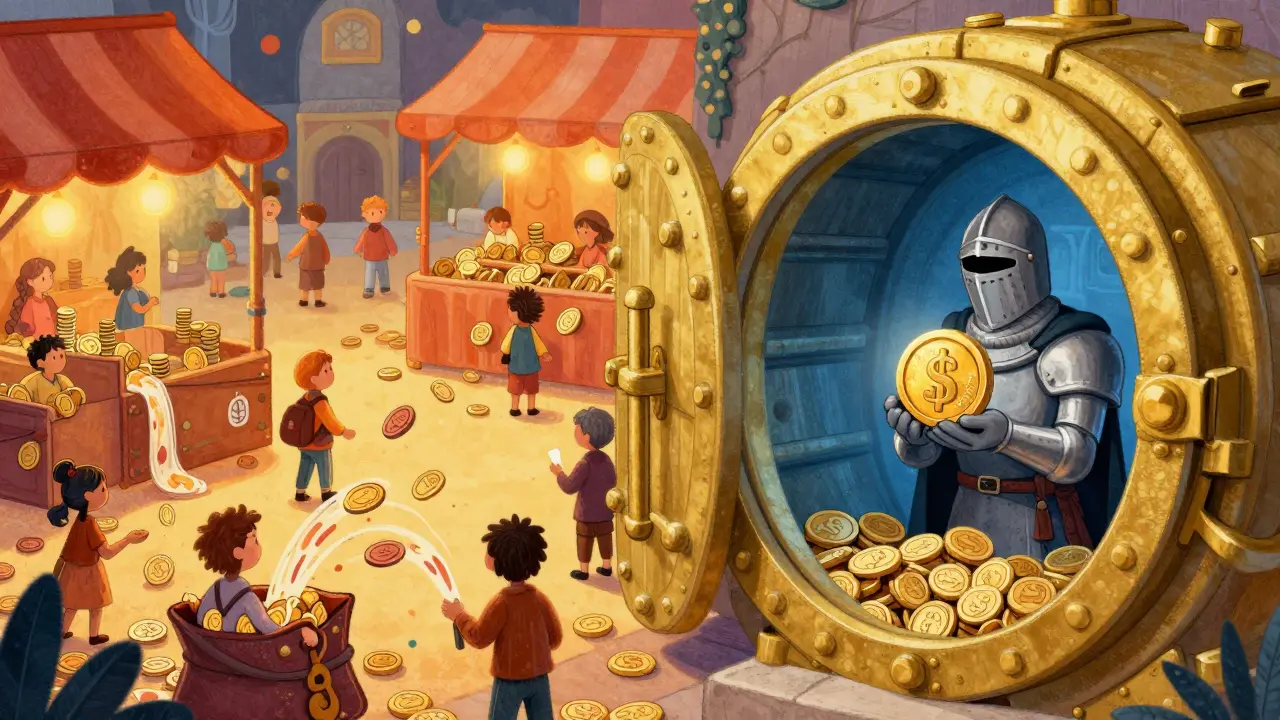
You buy a digital coin today. A year from now, is it worth more because there are fewer of them, or less because the network printed billions more? This isn't just a philosophical debate; it is the core mechanic that decides whether a cryptocurrency acts like gold or like cash in your pocket.
In the world of cryptocurrency, digital assets secured by cryptography and operating on decentralized networks, money doesn't just sit still. It moves, changes, and sometimes disappears forever. Understanding the difference between deflationary and inflationary models is the first step to figuring out if a project is built for spending, saving, or something entirely different.
The Core Difference: Supply Mechanics
At its simplest, the battle comes down to one question: Is the total number of coins going up or down?
Inflationary tokens cryptocurrencies with an increasing supply over time through issuance mechanisms work like traditional fiat currencies. The central bank prints more dollars; the blockchain protocol mints more coins. New tokens enter circulation regularly, usually as rewards for miners or validators who keep the network secure. Think of Ethereum (ETH) before recent updates, or Dogecoin (DOGE). These systems rely on a growing supply to fuel participation.
On the flip side, Deflationary tokens cryptocurrencies with a fixed or decreasing supply designed to increase scarcity fight against growth. They have a hard cap-like Bitcoin’s 21 million limit-or they actively destroy tokens through "burning" mechanisms. Every time you send a transaction, a small fee might be deleted from existence permanently. The goal here is simple: make the remaining tokens rarer.
| Feature | Inflationary Tokens | Deflationary Tokens |
|---|---|---|
| Supply Trend | Increases over time | Fixed or decreases over time |
| User Behavior | Encourages spending | Encourages holding (HODLing) |
| Primary Use Case | Medium of exchange, payments | Store of value, investment |
| Volatility | Generally lower (stable flow) | Higher (scarcity-driven spikes) |
| Example | Dogecoin, Cardano (ADA) | Bitcoin (BTC), Binance Coin (BNB) |
Why Inflation Exists: Paying for Security
If everyone hates losing purchasing power, why do so many projects choose inflation? It’s not a mistake; it’s a necessity for network survival.
A blockchain needs workers. In Proof-of-Work systems like early Bitcoin, these are miners using massive amounts of electricity. In Proof-of-Stake systems like modern Ethereum, these are validators locking up their coins. How do you pay them? You print new money.
This is called block reward newly minted tokens given to miners or validators for securing the network. Without this inflation, no one would have an incentive to secure the ledger. If the reward stops, the security drops, and the network becomes vulnerable to attacks.
Dogecoin is the extreme example here. When creator Jackson Palmer removed the 100 billion DOGE cap in 2014, he created a system with unlimited annual supply. Why? To force people to use it. If you know your pile of Doge will shrink in value relative to the total supply, you’re more likely to spend it on coffee or memes than hide it under a digital mattress. It keeps liquidity high and transactions flowing.

The Deflationary Trap: Hoarding vs. Spending
Deflation sounds great on paper. Scarcity equals value, right? That’s basic economics. But in crypto, it creates a weird behavioral loop known as the Thaler's Paradox economic theory suggesting deflationary money discourages spending because people expect higher future value.
If you hold Bitcoin, you know it won’t exceed 21 million. You also know mining rewards halve every four years. So, what do you do? You wait. You hope the price goes up. You don’t spend it. This makes Bitcoin an incredible store of value-a "digital gold" hedge against government printing presses-but a terrible currency for buying groceries.
Imagine trying to run a business where your main asset loses utility because everyone refuses to sell it. That’s the risk for deflationary chains. Low transaction volume can mean low fees, which means less revenue for developers. It’s a catch-22: the scarcer the token, the less useful it is as money.
Hybrid Models: The Best of Both Worlds?
Smart engineers realized that pure inflation kills long-term holders, while pure deflation kills daily users. So, they built hybrids.
Ethereum is the prime example. After the "Merge" to Proof-of-Stake, it became net-inflationary most of the time because staking rewards outweighed the fees burned. But then came EIP-1559. This update introduced a base fee that gets destroyed with every transaction. When the network is busy, more ETH is burned than is issued. Suddenly, Ethereum becomes deflationary during peak usage.
This dynamic adjustment is powerful. It aligns incentives:
- High Usage = Deflation: More people transacting burns more supply, rewarding holders.
- Low Usage = Inflation: Fewer transactions mean less burning, but validators still get paid to keep the lights on.
Binance Coin (BNB) takes another approach. It has a quarterly "Auto-Burn" mechanism that destroys a portion of its supply based on the price and circulating amount. The goal is to reach 100 million BNB from the original 200 million. It combines a capped supply with active reduction, trying to balance ecosystem funding with scarcity.
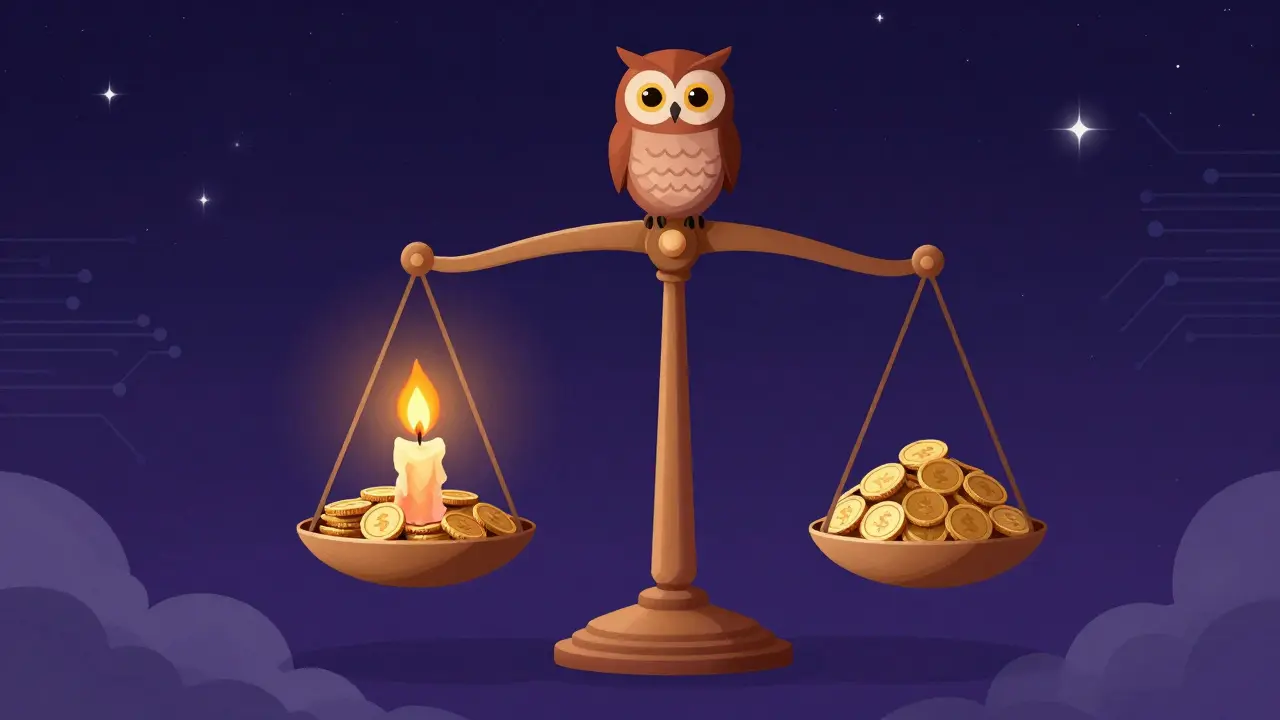
How to Evaluate Tokenomics Before Buying
Don't just look at the chart. Look at the math. Here is a quick checklist to determine if a token’s economic model fits your goals.
- Check the Max Supply: Is it fixed (like BTC) or infinite (like DOGE)? Infinite supply isn't bad, but it requires exponential demand growth to maintain price.
- Analyze the Vesting Schedule: Are early investors unlocking millions of tokens next month? That’s incoming inflation that will crush the price, regardless of the model.
- Look at Burn Rates: For deflationary claims, verify the burn data. Is the protocol actually destroying tokens, or is it just marketing hype? Check on-chain explorers like Etherscan or BscScan.
- Understand the Utility: Does the token need to be spent to use the service? If yes, an inflationary model might be healthier to prevent hoarding.
- Review Staking Rewards: High APY (Annual Percentage Yield) often masks underlying inflation. If you earn 20% staking rewards, ask yourself: where did those new coins come from?
Real-World Impact on Your Portfolio
Your strategy should match the token type. If you want a long-term hedge against fiat currency devaluation, deflationary assets like Bitcoin or Litecoin fit the bill. You buy them, lock them up, and wait for scarcity to drive price appreciation.
If you are looking for yield farming or active trading in DeFi protocols, inflationary tokens often provide better liquidity and deeper markets. Projects like Cardano (ADA) or Polkadot (DOT) use inflation to fund grants, development, and community initiatives. This keeps the ecosystem alive and evolving, even if your individual bag dilutes slightly over time.
The market doesn't care about ideology. It cares about utility. A deflationary token with no users is worthless dust. An inflationary token with massive adoption and real-world usage can appreciate significantly despite rising supply. Always prioritize network activity over supply mechanics alone.
Is Bitcoin truly deflationary?
Yes, Bitcoin is structurally deflationary due to its hard cap of 21 million coins. However, until all coins are mined, new bitcoins are created via block rewards. The rate of creation halves every four years (the Halving event), making the issuance increasingly scarce over time. While technically still issuing new coins, the slowing supply growth combined with constant demand creates deflationary pressure on price.
Can an inflationary token increase in value?
Absolutely. Value is determined by supply AND demand. If demand for an inflationary token grows faster than the new supply being issued, the price will rise. For example, if a network adds 5% more tokens annually but user adoption doubles, each token becomes more valuable. Many successful altcoins operate on this principle.
What is token burning?
Token burning is the process of permanently removing tokens from circulation. This is done by sending them to a "burn address"-a wallet with no private key, meaning the tokens can never be accessed again. Protocols burn tokens to reduce supply, combat inflation, or reward holders through scarcity. Examples include Ethereum's EIP-1559 base fees and Binance Coin's auto-burn.
Which model is better for everyday payments?
Inflationary models are generally better for payments. Because the supply increases, holders are incentivized to spend their tokens rather than hoard them, fearing loss of purchasing power. This encourages velocity of money, which is essential for a functional currency. Deflationary tokens like Bitcoin tend to be held as investments, reducing their availability for daily transactions.
Does Ethereum burn more ETH than it issues?
It depends on network activity. During periods of high congestion, the fees burned via EIP-1559 exceed the new ETH issued to stakers, making Ethereum net-deflationary. During quiet periods, issuance exceeds burning, making it net-inflationary. This dynamic design aims to balance security costs with supply scarcity.