

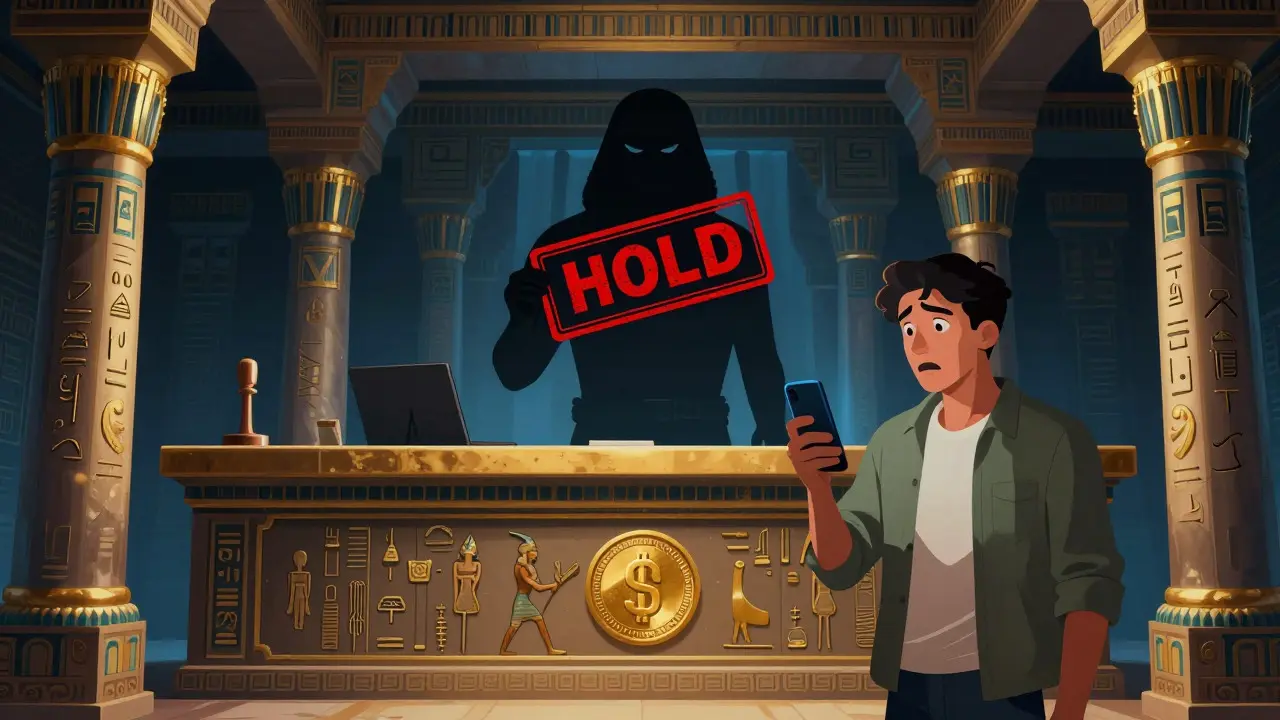
You send money to a friend abroad, or maybe you’re trying to pay for an online service, and suddenly your bank account freezes. No warning, no clear explanation-just a hold. If you live in Egypt and have dabbled in digital assets, this scenario is all too familiar. The relationship between Egyptian banks and cryptocurrency is not just complicated; it’s actively adversarial.
In 2026, the landscape hasn’t softened. In fact, it has hardened. Between the strictures of Banking Law No. 194 of 2020 and fresh warnings from regulators in 2025 and 2026, the message from Cairo is loud and clear: stay away from unlicensed crypto activities, or face the consequences. For anyone holding an Egyptian bank account, understanding how these institutions monitor your transactions isn't just good advice-it's essential for keeping your finances accessible.
The Legal Wall: Banking Law No. 194 of 2020
To understand why your bank is watching your every move, you have to look at the law that changed everything. Before 2020, things were murky. There were warnings, yes, but no definitive legal framework. Then came Banking Law No. 194 of 2020. This legislation didn't just suggest caution; it criminalized specific actions. It made it illegal to issue, trade, or promote cryptocurrencies without prior approval from the Central Bank of Egypt (CBE).
This wasn't a minor tweak. It was a foundational shift. The CBE used this law to establish a regulatory perimeter around the financial system. Essentially, if a transaction looks like it involves crypto, and there’s no license for it (and currently, there are very few), the bank has a legal obligation to stop it or report it. The law targets the infrastructure of crypto adoption: exchanges, payment processors, and promoters. But because individuals use these infrastructures, the net casts wide over everyday users.
The intent behind the law was twofold: protect investors from volatile, unbacked assets and prevent capital flight. With the Egyptian Pound facing pressure and inflation concerns lingering, the state views unchecked crypto flows as a threat to monetary stability. For banks, this means compliance isn't optional. Failure to monitor can result in heavy fines or loss of operating licenses.
How Banks Actually Monitor Your Transactions
You might wonder, "How do they know?" I mean, if I just send dollars to a wallet address, does my bank care? The answer is yes, and here is how they do it. Egyptian banks don't just guess; they use sophisticated transaction monitoring systems mandated by the CBE.
These systems scan for patterns. They look for transfers to known cryptocurrency exchange entities. Even if the recipient isn't directly named "Binance," the bank’s database likely contains lists of associated corporate structures, shell companies, or high-risk jurisdictions often linked to crypto trading hubs. When you initiate a wire transfer to a company registered in a jurisdiction known for lax crypto oversight, flags go up automatically.
Beyond destination checks, banks analyze behavior. Sudden, frequent small transfers followed by a large withdrawal? That’s a red flag. Peer-to-peer (P2P) trading patterns, where you receive funds from multiple unknown individuals before moving them out, trigger anti-money laundering (AML) alerts. The banks are looking for "layering," a technique used to obscure the origin of funds, which is common in crypto cash-outs.
Furthermore, the Financial Regulatory Authority (FRA) requires banks to report suspicious activities. If your transaction history shows links to crypto-adjacent services-like certain e-wallets or remittance apps popular among crypto traders-the bank may request documentation. They want to see invoices, contracts, or proof of legitimate trade. If you can’t provide that, the account gets scrutinized further, leading to holds or closures.
The 2025-2026 Regulatory Crackdown
If you thought the rules were set in stone after 2020, think again. The regulatory environment in Egypt has become more aggressive in recent years. On May 12, 2025, the FRA issued a significant warning targeting the surge in local online advertisements promoting cryptocurrency investments. This wasn't just about stopping ads; it was a signal that enforcement was ramping up.
The FRA highlighted specific risks: terrorist financing, fraud, and the lack of investor protection. They noted that without a central regulatory body overseeing crypto markets, investors had zero recourse if an exchange collapsed or was hacked. This narrative reinforced the CBE’s stance. By March 8, 2023, the CBE had already warned citizens against engaging in crypto transactions, emphasizing the unlicensed nature of these activities. The 2025 warning extended this logic to the marketing side, aiming to cut off demand at the source.
In 2026, this trend continues. Banks are under increased pressure to demonstrate proactive compliance. This means their algorithms are being tuned to be more sensitive. What might have passed through unnoticed two years ago could now trigger an immediate inquiry. The focus has shifted from merely tracking large institutional players to catching retail users who use international platforms like Bitget or Binance.
Legal experts from firms like Matouk Bassiouny have pointed out that the current framework creates a "grey area" for individuals. While buying crypto isn't explicitly criminalized for the end-user in the same way it is for unlicensed brokers, the *means* of doing so-using the banking system to funnel money into unregulated channels-is heavily restricted. This ambiguity puts the burden on the user to prove legitimacy, which is nearly impossible when dealing with decentralized finance.

Real-World Consequences for Users
What does this look like in practice? Let’s talk about real scenarios. Many Egyptians still try to access global crypto markets using international exchanges. You sign up for Binance, link your card, or use P2P features. Here is where the friction happens.
Account Freezes: This is the most common outcome. A user sends money via bank transfer to a P2P seller. The bank detects the transfer to an individual with a history of similar transactions. The account is frozen pending investigation. The user must visit the branch, explain the transaction, and provide evidence. Often, the evidence required doesn't exist because P2P trades are informal.
Card Blocks: Credit and debit cards issued by Egyptian banks are frequently blocked when attempting to make purchases on crypto-friendly merchants or exchanges. The bank’s risk engine identifies the merchant category code (MCC) as high-risk and declines the transaction instantly. Repeated attempts can lead to the card being suspended entirely.
Enhanced Due Diligence (EDD): Some users aren't frozen immediately but are flagged for EDD. This means every future transaction is manually reviewed. Transfers take days instead of minutes. The bank asks for detailed explanations for each outgoing wire. It’s a bureaucratic nightmare designed to discourage further activity.
User discussions on forums like Reddit reveal a community aware of these risks. Many share tips on how to minimize detection, such as using smaller amounts or diversifying payment methods. However, these tactics are a cat-and-mouse game. As banks upgrade their AI-driven monitoring tools, these workarounds become less effective.
Why the Strict Stance? Economic Context
To fully grasp the severity of these measures, you need to look at the broader economic picture. Egypt has faced significant currency volatility. The Egyptian Pound has depreciated against the US Dollar in recent years, driven by inflation, debt burdens, and regional instability. In such an environment, capital controls become a priority for the central bank.
Cryptocurrencies offer an easy exit valve for capital. If people can easily convert pounds to Bitcoin or stablecoins like USDT, they can move wealth out of the country, bypassing traditional forex channels. This drains liquidity from the domestic market and weakens the pound further. The CBE sees crypto not just as a speculative asset but as a tool for capital flight.
Additionally, there is the issue of financial crime. The anonymity (or pseudonymity) of blockchain transactions makes it difficult to trace illicit funds. The FRA has cited concerns about terrorist financing and money laundering. By restricting bank access to crypto, the state aims to keep financial flows transparent and within the regulated economy.
Religious guidance also plays a subtle role. Dar Al-Ifta, the official religious authority, has stated that Bitcoin and other cryptocurrencies are not considered "real" money because they lack central bank issuance and tangible backing. While this isn't a legal statute, it influences public perception and supports the regulatory narrative that crypto is risky and potentially impermissible.

Comparison: Egypt vs. Regional Neighbors
| Country | Regulatory Status | Bank Access | Key Focus |
|---|---|---|---|
| Egypt | Prohibitive / Unlicensed | Restricted & Monitored | Capital Control, AML |
| Saudi Arabia | Regulated Framework Developing | Limited but Evolving | CBDC, Institutional Adoption |
| UAE | Permissive / Licensed | Open for Licensed Entities | Innovation Hub, Tax Revenue |
| Turkey | Restrictive on Payments | Banks Cannot Process Directly | Consumer Protection, FX Stability |
As the table shows, Egypt stands out for its strictness compared to some neighbors. While the UAE has embraced crypto as a strategic industry, creating dedicated zones like VARA in Dubai, Egypt maintains a defensive posture. Turkey similarly restricts bank payments for crypto but allows trading. Egypt goes further by criminalizing unlicensed promotion and trading, making the banking channel a primary enforcement point.
Navigating the System: Practical Advice
If you must engage with digital assets while maintaining an Egyptian bank account, caution is paramount. Here are practical steps based on current enforcement patterns:
- Avoid Direct Links: Do not use your primary salary account for crypto-related transfers. Keep a separate account for discretionary spending, though even this is not foolproof.
- Document Everything: If you use P2P platforms, treat it like a business. Save chats, invoices, and proof of delivery for any goods sold. Banks ask for this during inquiries.
- Watch for MCC Codes: Be aware that credit card transactions on known crypto sites will likely be declined. Don't keep retrying, as this triggers fraud alerts.
- Understand the Grey Area: Recognize that while holding crypto isn't illegal, moving fiat currency through banks to buy it is heavily scrutinized. The risk lies in the conversion layer.
- Stay Updated: Regulations evolve. Follow announcements from the CBE and FRA. A change in policy could mean new penalties or expanded monitoring capabilities.
Remember, the goal of the banks is compliance, not customer service. Their algorithms are designed to err on the side of caution. A false positive freeze is better for them than a missed illicit transaction. Patience and documentation are your best defenses.
Future Outlook: Will Things Change?
Looking ahead to late 2026 and beyond, signs of relaxation are scarce. The CBE has shown interest in Central Bank Digital Currencies (CBDCs), which would allow the state to maintain control over digital money while offering modern payment solutions. This suggests the preference is for state-backed digital currency, not private cryptocurrencies like Bitcoin.
Unless there is a major shift in economic stability or a change in leadership priorities, the restrictive framework is likely to persist. Banks will continue to invest in monitoring technology. The gap between consumer demand for crypto and regulatory permission will remain a source of tension. For now, the safest path is to assume that your bank knows more about your digital habits than you think.
Is owning cryptocurrency illegal in Egypt?
Owning cryptocurrency is not explicitly criminalized for individuals under current law. However, Banking Law No. 194 of 2020 makes it illegal to issue, trade, or promote cryptocurrencies without a license from the Central Bank of Egypt. This creates a grey area where possession is tolerated, but active trading through licensed financial channels is prohibited.
Can Egyptian banks freeze my account for crypto transactions?
Yes. Egyptian banks are required to monitor for suspicious activities related to unlicensed crypto trading. If your transaction patterns resemble money laundering or involve transfers to known crypto exchanges, the bank can freeze your account pending investigation. This is part of their Anti-Money Laundering (AML) obligations.
What happened with the Financial Regulatory Authority (FRA) warning in 2025?
On May 12, 2025, the FRA issued a warning targeting the surge in online advertisements promoting cryptocurrency investments. The warning emphasized the lack of regulatory protection for investors and the risks of fraud and terrorist financing. It signaled a tightening of enforcement against both promoters and participants in the crypto market.
Do Egyptian banks block credit card payments to crypto exchanges?
Most major Egyptian banks block credit and debit card transactions to known cryptocurrency exchanges. They use Merchant Category Codes (MCC) to identify high-risk vendors. Attempts to pay for crypto with a local bank card often result in instant declines and potential fraud alerts on your account.
How do banks detect peer-to-peer (P2P) crypto trades?
Banks use pattern recognition software to detect P2P trades. Indicators include frequent small transfers from multiple unknown sources, rapid movement of funds after receipt, and transfers to individuals with histories of similar activity. These patterns trigger Enhanced Due Diligence (EDD) reviews, requiring customers to prove the legitimacy of the transactions.