

Most people think paying 0% tax on crypto gains is a myth. But in Malta, it’s not just possible-it’s legal, structured, and used by thousands of crypto investors. The catch? It’s not as simple as buying a property and calling it a day. If you’re serious about reducing your crypto tax burden legally, Malta offers one of the most powerful frameworks in the world. But only if you understand the real rules.
How Malta Lets You Pay 0% on Crypto Gains
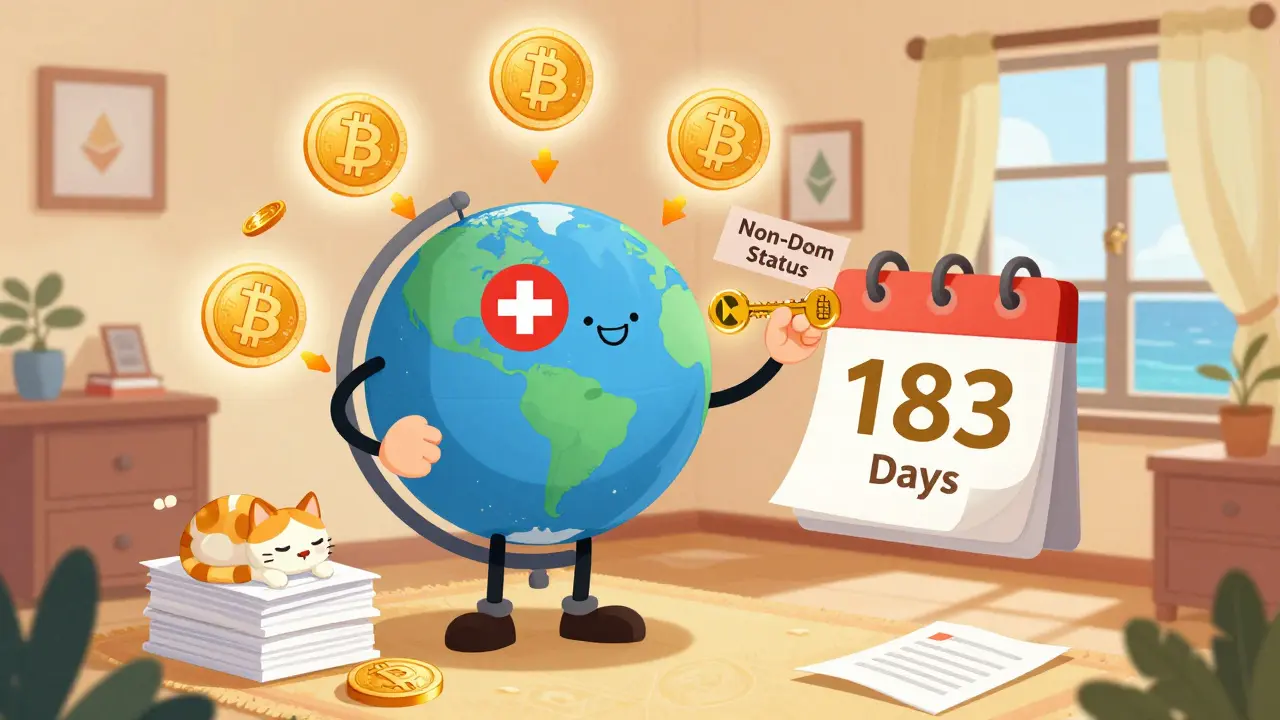
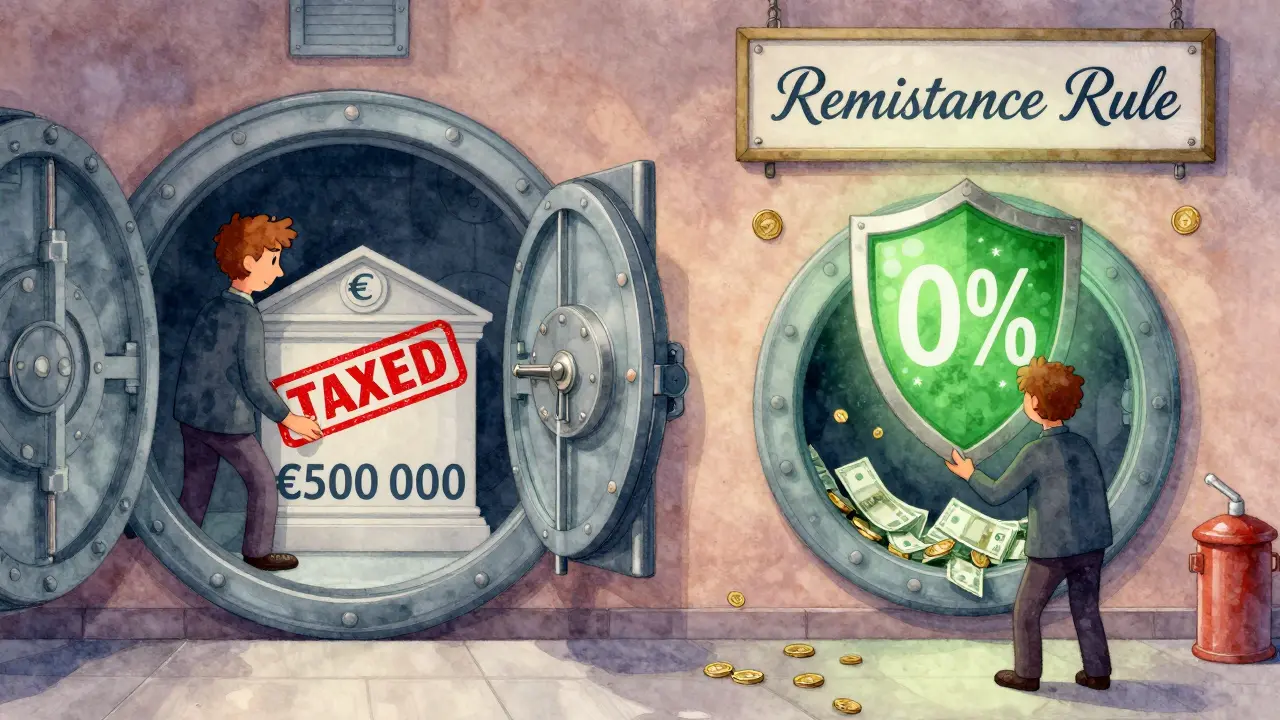
Malta doesn’t have a capital gains tax on cryptocurrencies. That’s not a loophole. It’s policy. Unlike most countries that treat crypto profits like stock gains, Malta doesn’t tax capital appreciation at all-unless you bring the money home. The key is the non-domiciled (non-dom) tax status. This isn’t a special visa. It’s a tax residency rule that applies to anyone who lives in Malta but legally keeps their permanent home (domicile) elsewhere. To qualify, you need three things:- Live in Malta for at least 183 days per year
- Keep your legal domicile outside Malta (e.g., New Zealand, Canada, or the UK)
- Only pay tax on income you actually bring into Malta
Who Actually Pays Taxes on Crypto in Malta?
Not everyone gets the 0% deal. If you’re not a non-dom, or if your crypto activity looks like a business, you’ll pay tax. - Professional traders: If you’re buying and selling crypto daily, the Maltese tax authorities may classify you as running a business. That means your profits are taxed as business income-at up to 35%. But here’s the twist: if you’re a non-dom and your trading profits aren’t remitted, you still pay 0%. - Miners and stakers: These are treated as business activities. Your mining rewards or staking yields are taxable as income. But again, if you’re a non-dom and don’t bring the crypto or cash into Malta, you owe nothing. - ICO and airdrop recipients: If you receive tokens for free and later sell them, that’s a taxable event. The value at the time you received them becomes your cost basis. If you’re a resident without non-dom status, you’ll pay 15-35% on the gain. - Crypto-to-crypto trades: This is the grayest area. Malta hasn’t officially said whether swapping ETH for SOL is a taxable event. Most advisors treat it as a disposal, meaning you calculate gain/loss based on the value of the asset you gave up. But the government is expected to clarify this in 2025. Until then, err on the side of caution and track every swap.The Real Cost of Living in Malta for Crypto Tax Benefits
You can’t just show up and claim tax-free status. Malta requires you to make a financial commitment to establish residency. You have two main options:- Rent a property: Minimum €8,750 per year (about $9,500 USD)
- Buy a property: Minimum €220,000 (about $240,000 USD)
How Malta Compares to Other Crypto Tax Havens
Malta isn’t the only place offering low crypto taxes. But it’s one of the few that balances legal safety with access to Europe. - Portugal: Used to be the top choice. No capital gains tax on crypto. But since 2023, they’ve started taxing professional traders and require proof of non-residency for foreigners. It’s no longer reliable. - Dubai: 0% tax, no residency days required. Sounds perfect. But you can’t open a bank account easily without a local business license. And you’re cut off from the EU banking system. If you need SEPA transfers or EU-based exchanges, Dubai won’t help. - Switzerland: Some cantons have low taxes, but you still pay 10-25% on capital gains. And residency is harder to get. Malta’s process is faster and more transparent. - Germany: Crypto held over a year is tax-free-but only if you’re a resident. Non-residents pay nothing, but you can’t get residency without a job or business. Malta’s non-dom route is simpler for investors. Malta’s edge? It’s in the EU. You can open a bank account with Revolut, N26, or even local banks like Bank of Valletta. You can legally work with EU-based exchanges like Bitstamp or Kraken. You get access to the whole European market without the tax burden of most EU countries.What You Must Do to Stay Compliant
Malta doesn’t just hand out tax breaks. They track you. The country is part of the Crypto-Asset Reporting Framework (CARF), which automatically shares your crypto transaction data with over 100 countries. If you’re hiding gains from your home country, you’re risking penalties there. Here’s what you need to do:- Keep a full ledger of every crypto transaction: buys, sells, swaps, staking rewards, airdrops
- Use a crypto tax software that supports Malta’s remittance rules (e.g., Koinly or CryptoTaxCalculator)
- Document your 183 days in Malta: flight receipts, rental agreements, utility bills
- Never mix personal and business crypto wallets if you’re trading
- Hire a Maltese tax advisor who’s handled at least 20 crypto cases
What’s Changing in 2025 and Beyond
Malta is tightening its rules-not to shut people out, but to stay ahead of global pressure. The EU is pushing for more crypto transparency. In 2025, Malta will likely introduce:- Clearer rules on crypto-to-crypto trades
- Minimum income thresholds for non-dom status
- Stricter proof of domicile (e.g., tax filings from your home country)
- Special tax breaks for long-term crypto holders (over 3 years)
Is Malta Right for You?
Ask yourself these questions:- Do you have crypto gains over €100,000 that you don’t need to spend immediately?
- Are you willing to live in Malta for 183 days a year-even if you work remotely?
- Can you afford €25,000-€30,000 upfront in property and fees?
- Do you have a tax advisor who understands both Maltese and your home country’s rules?
Can I get 0% crypto tax in Malta without living there?
No. You must live in Malta for at least 183 days per year to qualify for non-dom status and the 0% tax rate on crypto gains. Simply owning property or having a bank account isn’t enough. The Maltese tax authorities require physical presence to establish residency.
Are crypto-to-crypto trades taxed in Malta?
As of 2025, Malta has not officially clarified whether swapping one cryptocurrency for another is a taxable event. Most tax professionals treat these trades as disposals, meaning you calculate capital gain based on the value of the crypto you gave up. Until official guidance is released, it’s safest to track and report all swaps. Changes are expected in 2025.
Do I need to declare crypto income from outside Malta?
Only if you bring the money into Malta. Under the remittance-based system, you pay tax only on income you physically transfer to a Maltese bank account. If your crypto profits stay in a Swiss, Singaporean, or US wallet, you owe nothing in Malta-even if you’re a tax resident.
What happens if I move to Malta but keep working for a US company?
Your salary from the US company is not taxed in Malta unless you transfer it into a Maltese account. You can receive it in a US bank and leave it there. Your crypto gains from trading or staking follow the same rule: no tax unless remitted. This makes Malta ideal for remote workers and digital nomads with global income.
Is Malta’s crypto tax system at risk of changing?
Yes, but not because it’s unfair. Malta is under pressure from the EU and OECD to align with global tax transparency standards. While the non-dom system isn’t going away, future changes may include stricter proof of domicile, income thresholds, or mandatory reporting for large crypto holdings. The framework is stable now, but it’s evolving toward greater compliance-not elimination.
Brenda Platt
January 23, 2026 AT 20:31Okay but let’s be real - if you’re not living in Malta for 183 days, you’re just fantasizing. 🙄 I know people who tried to ‘game’ it by flying in for 6 months and then bailing. They got audited. Malta’s not stupid. They track your flights, your wifi logs, your damn Uber rides. Don’t be that person.
Barbara Rousseau-Osborn
January 23, 2026 AT 21:49This is why America is falling behind. People want to dodge taxes instead of earning them. You think this is ‘smart’? It’s just cowardice wrapped in a blockchain hoodie. If you can’t handle paying your fair share, maybe don’t make millions in crypto. 🤦♀️
Arnaud Landry
January 25, 2026 AT 01:05Are you kidding me? This is a trap. The EU is watching. CARF is coming for you. They’ll share your data with the IRS, CRA, HMRC - all of them. You think you’re clever hiding your gains in Switzerland? They’ll find out. And then you’ll be hit with back taxes, penalties, and a criminal investigation. I’ve seen it happen. Don’t be next.
steven sun
January 26, 2026 AT 10:26bro if u got 250k to spend on rent or a house just to avoid taxes… why not just stay in the usa and buy a house? at least u get equity. also 183 days? i’d go insane. i need my pizza and my 3am tiktok binges. malta’s cute but no thanks 😴
Athena Mantle
January 26, 2026 AT 12:05It’s fascinating how people think ‘tax optimization’ is a moral victory. You’re not a rebel - you’re just a wealthy person who’s figured out how to outsource your civic responsibility to a tiny island with a 500k population. The real win? Knowing you’re not paying your share while your neighbor’s kid can’t afford textbooks. 🤷♀️✨
Paru Somashekar
January 27, 2026 AT 10:03Malta’s framework is legitimate, but it requires meticulous documentation. Every transaction must be timestamped, wallet addresses recorded, and remittance trails preserved. I’ve advised 12 clients under this regime - none had issues when they kept clean ledgers. Use Koinly, hire a local CPA, and never assume. The smallest oversight triggers a review. Compliance is not optional - it’s the price of freedom.
katie gibson
January 27, 2026 AT 16:58Okay but imagine being that person who moves to Malta just to avoid taxes… and then you’re stuck there for 6 months every year… alone… in a place where everyone speaks Maltese and the food is just… bread and fish? 🥲 I’d rather pay the tax and have a life. Also, who even wants to live in Europe? It’s so… organized. Where’s the chaos? Where’s the fun? 😭
Linda Prehn
January 29, 2026 AT 16:250% tax sounds great until you realize you’re basically a prisoner of your own wealth. You can’t touch your money without paying. You can’t travel without proof of residency. You can’t even buy a coffee without someone checking your passport. It’s not freedom - it’s a gilded cage with Wi-Fi
Adam Lewkovitz
January 30, 2026 AT 01:28This is why the US needs to get tough. We let people run to tiny countries to avoid paying taxes. That’s not innovation - that’s betrayal. If you’re making crypto gains, you’re part of the system. You owe. End of story. Malta’s a loophole, not a solution. And loopholes get closed.
Clark Dilworth
January 31, 2026 AT 02:28From a regulatory architecture standpoint, Malta’s remittance-based model aligns with OECD’s BEPS Pillar Two principles - particularly the substance-over-form doctrine. The non-dom status functions as a territorial tax regime with controlled economic nexus. The 183-day rule establishes physical presence as the primary tax trigger, which mitigates base erosion while preserving capital mobility. The real innovation lies in its integration with CARF - a rare example of proactive regulatory alignment in the crypto space.
Taylor Mills
January 31, 2026 AT 06:52Yeah right. ‘0% tax’. Tell that to the guy who got flagged because he transferred 500k from his Swiss account to a Maltese bank. The IRS got the data within 72 hours. He’s now paying 40% back taxes + penalties + legal fees. This isn’t tax planning - it’s a suicide mission with a sunset view.
Arielle Hernandez
January 31, 2026 AT 15:05Thank you for this incredibly thorough breakdown. I’ve been researching this for months and your point about crypto-to-crypto trades being treated as disposals is critical. I’ve been using Koinly and tracking every swap - even the tiny ones. It’s tedious, but peace of mind is worth it. For anyone considering this: hire a Maltese advisor. Don’t wing it. The penalties for misclassification are severe.
HARSHA NAVALKAR
January 31, 2026 AT 18:21Interesting. I wonder how many people actually follow through. The cost is high. The time commitment is brutal. The risk is real. Most who dream of this life end up staying home, scrolling Reddit, and pretending they’re rich. The system rewards discipline - not just capital.
Ryan Depew
February 1, 2026 AT 17:55Let’s be real - if you’re spending 30k just to save 100k in taxes, you’re doing it wrong. You could’ve just held your BTC for a year in Germany and paid nothing. Or moved to Georgia. Or bought a house in Portugal and got the D7 visa. Malta’s overhyped. The EU’s gonna crack down soon anyway. Don’t be the sucker who locked in for 2 years only to get hit with new rules.
Mathew Finch
February 3, 2026 AT 00:44Malta? That’s the place where they tax you for breathing if you’re not a citizen. This whole thing is a scam. They want your money, your property, your identity - then they’ll change the rules. Just like they did with the gambling licenses. You think they care about you? They care about the fees. And the next time they need cash, they’ll tax you anyway.
Shamari Harrison
February 4, 2026 AT 22:35If you’re thinking about this, start small. Rent for a year first. Test the waters. Don’t buy property on day one. Learn the language. Get to know your local accountant. Talk to other non-doms. This isn’t a quick fix - it’s a lifestyle shift. But if you’re disciplined, it’s one of the smartest moves you can make. I’ve seen people go from stressed to free - but only if they did it right.
Nadia Silva
February 6, 2026 AT 19:09It’s funny how Americans think they can outsmart the EU. Malta is part of the bloc. They’re not some rogue tax haven - they’re a regulated member state with strict reporting. If you’re not a citizen, you’re still a foreigner. And foreigners don’t get perks. They get scrutiny. This isn’t a game. It’s a legal contract with consequences.
Roshmi Chatterjee
February 7, 2026 AT 13:17Guys, if you’re even considering this - just go for it. I moved last year. It’s not perfect, but the sun, the sea, the low stress… it’s worth it. And yeah, I pay 0% on my gains. I keep them in my Swiss account. I work remotely. I’m happier than I’ve ever been. Life’s too short to be stressed about taxes. Do what works for you.
Deepu Verma
February 8, 2026 AT 16:47Don’t let fear stop you. Yes, there’s paperwork. Yes, it’s a commitment. But if you’ve made it this far in crypto, you’re already a risk-taker. This is just another opportunity - one that’s legal, transparent, and available right now. The window won’t stay open forever. Start planning. Talk to someone who’s done it. Take the leap.
MICHELLE REICHARD
February 10, 2026 AT 16:40Oh wow. So now it’s ‘smart’ to avoid taxes? What’s next? Stealing from the government? This isn’t ‘optimization’ - it’s exploitation. You’re taking advantage of a system designed to help people who need it, not people who already have millions. You’re not a pioneer. You’re a parasite.
tim ang
February 11, 2026 AT 18:10bro i just moved to portugal last year and i’m paying 0% too… and i don’t have to live there 183 days. just 6 months. and the food is better. and the wine. and the beaches. and i can fly to spain for the weekend. malta? no thanks. too small. too bureaucratic. too… european.
Julene Soria Marqués
February 12, 2026 AT 06:03So… you’re telling me I need to move to a tiny island, spend 30k, and sit around for half the year just so I don’t pay taxes on my crypto? And you think that’s better than just… working harder? Or spending less? Or… I don’t know… being a decent human? I’m not doing it. I’d rather pay my taxes and sleep at night.
Abdulahi Oluwasegun Fagbayi
February 12, 2026 AT 20:05It’s not about the tax. It’s about freedom. The freedom to choose where your money lives. The freedom to not be owned by a system that sees you as a revenue stream. Malta is not a loophole. It’s a choice. And those who judge it haven’t lived outside their comfort zone. They don’t know what real liberty looks like.
Andy Marsland
February 14, 2026 AT 07:28Let me break this down for you. Malta’s non-dom status is based on the principle of domicile - a common law concept dating back to the 18th century. The 183-day rule is derived from the OECD model treaty, which defines tax residency as physical presence exceeding half the year. The remittance basis is a well-established mechanism in jurisdictions like the UK and now Malta. The real issue isn’t the legality - it’s the moral hazard. When the wealthy optimize at the expense of public infrastructure, society fractures. You’re not a genius. You’re a symptom.
Melissa Contreras López
February 15, 2026 AT 16:07For anyone thinking about this - I did it. I moved to Malta in 2023. I rented a flat for €9k/year. I kept my domicile in Canada. I track every single trade. I use Koinly. I file my remittance logs every quarter. And guess what? I paid $0 in crypto taxes last year. It’s not magic. It’s just structure. And yeah, I miss my dog. But I’m free. And that’s worth more than any tax refund.
Mike Stay
February 16, 2026 AT 18:33Malta’s model is a textbook case of regulatory innovation. It leverages EU membership for banking access, while preserving fiscal sovereignty through territorial taxation. The non-dom regime is not an anomaly - it’s a deliberate policy tool designed to attract high-net-worth individuals without compromising social equity. The 183-day requirement ensures economic substance. The CARF alignment ensures global compliance. This isn’t tax evasion - it’s tax architecture at its most elegant.
Kevin Pivko
February 18, 2026 AT 08:04Yeah, sure. ‘0% tax’. But what about when the IRS comes knocking? You think they don’t have your data? You think your Swiss bank doesn’t report? You think your crypto exchange doesn’t send your KYC info? You’re not clever. You’re just naive. And when you get audited, you’ll wish you’d just paid the 15% and saved yourself 10 years of legal hell.
MOHAN KUMAR
February 19, 2026 AT 12:22Why even bother? Just hold your crypto for 1 year in Germany. Tax-free. No moving. No paperwork. No rent. No 183 days. Done. Malta is overcomplicating it. Stick with the simple rules. Don’t chase shadows.
Brenda Platt
February 20, 2026 AT 09:18Wait - did someone say Germany? That’s only for residents. If you’re not a German tax resident, you pay 0% too - but you can’t get residency without a job. Malta lets you be a non-resident AND live there. That’s the edge. 🤫
tim ang
February 21, 2026 AT 08:02ohhh so you’re saying malta is better than portugal? i thought portugal was the easy one… guess i gotta recheck the rules 😅