

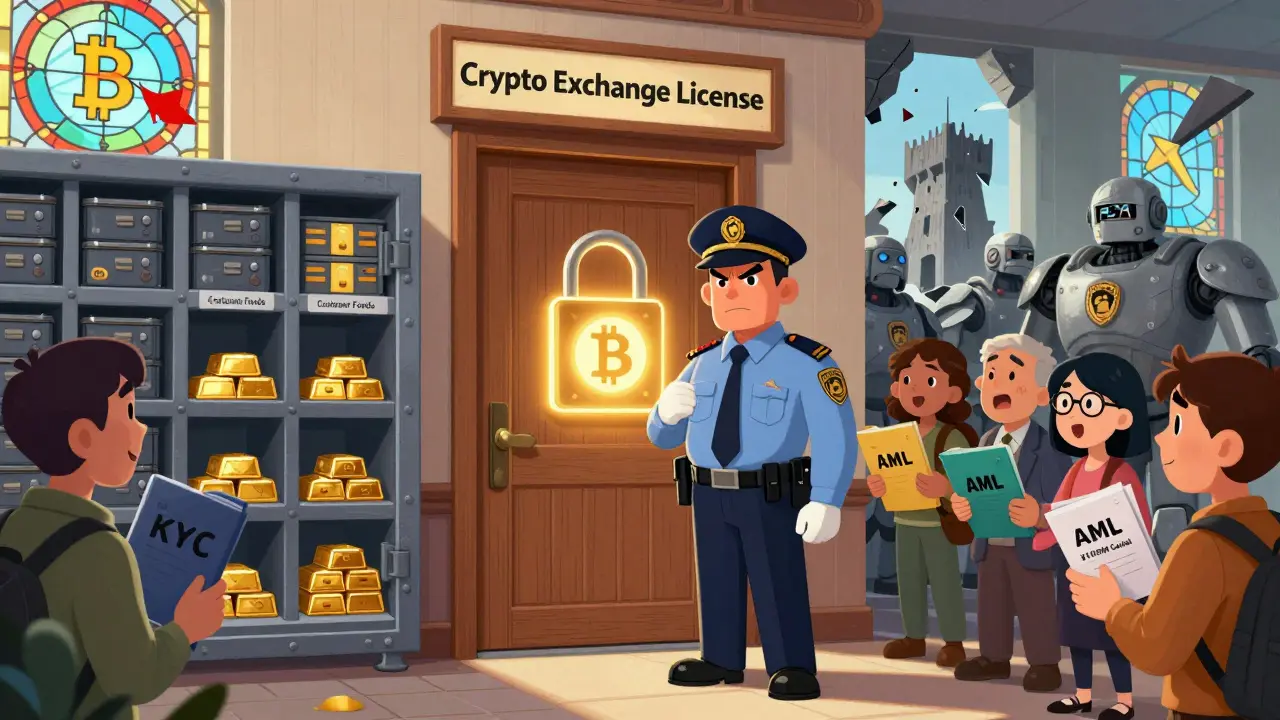
When you trade cryptocurrency in Japan, you're not just using an app-you're operating under one of the strictest financial oversight systems in the world. The FSA (Financial Services Agency) doesn't just watch over banks and brokers. It also controls every crypto exchange, wallet provider, and token issuer in the country. And it does so with a level of detail that leaves most other nations behind.
Why Japan's Crypto Rules Are So Tight
The story starts with a crash. In 2014, Mt. Gox, once the world’s largest Bitcoin exchange, collapsed after losing 850,000 BTC. That wasn’t just a financial loss-it shattered public trust. Japan didn’t respond with panic. It responded with precision. The FSA stepped in, rewrote the rules, and built a system designed to prevent another disaster. Today, that system is more advanced than ever.Before 2025, crypto businesses operated under the Payment Services Act (PSA). That law defined what counted as a crypto-asset, forced exchanges to register with the FSA, and required them to keep customer funds completely separate from company money. But in September 2025, everything changed. The FSA moved digital assets under the Financial Instruments and Exchange Act (FIEA)-the same law that governs stocks, bonds, and mutual funds.
This wasn’t a tweak. It was a full upgrade. Now, tokens that act like investments-those that promise profit, voting rights, or分红-are treated as securities. That means issuers must file disclosures, follow insider trading rules, and avoid market manipulation. It also opens the door for regulated spot Bitcoin ETFs, something most countries still can’t offer.
What Exchanges Must Do to Stay Licensed
If you want to run a crypto exchange in Japan, you don’t just fill out a form. You pass a gauntlet.- You must have a physical office in Japan-not a PO box, not a virtual address.
- You must prove you have enough capital to cover losses. Minimum? ¥100 million (about $650,000 USD).
- At least 95% of all customer crypto must be stored in offline cold wallets. No exceptions.
- Customer funds must be fully segregated. If your company goes bankrupt, your users’ Bitcoin aren’t part of your bankruptcy estate.
- You must run a full AML/KYC system that checks every user’s identity, source of funds, and transaction history.
- You must submit quarterly reports to the FSA, detailing all trades, deposits, withdrawals, and security incidents.
These aren’t suggestions. They’re legal requirements. And the FSA doesn’t just check once. They audit. Randomly. Unannounced. And they shut down exchanges that fail.
In 2024, two exchanges lost their licenses after failing to prove they had proper cybersecurity. One had been using a single cloud server for all user data. Another had employees who reused passwords across accounts. The FSA didn’t warn them twice.
The Hidden Cost of Compliance
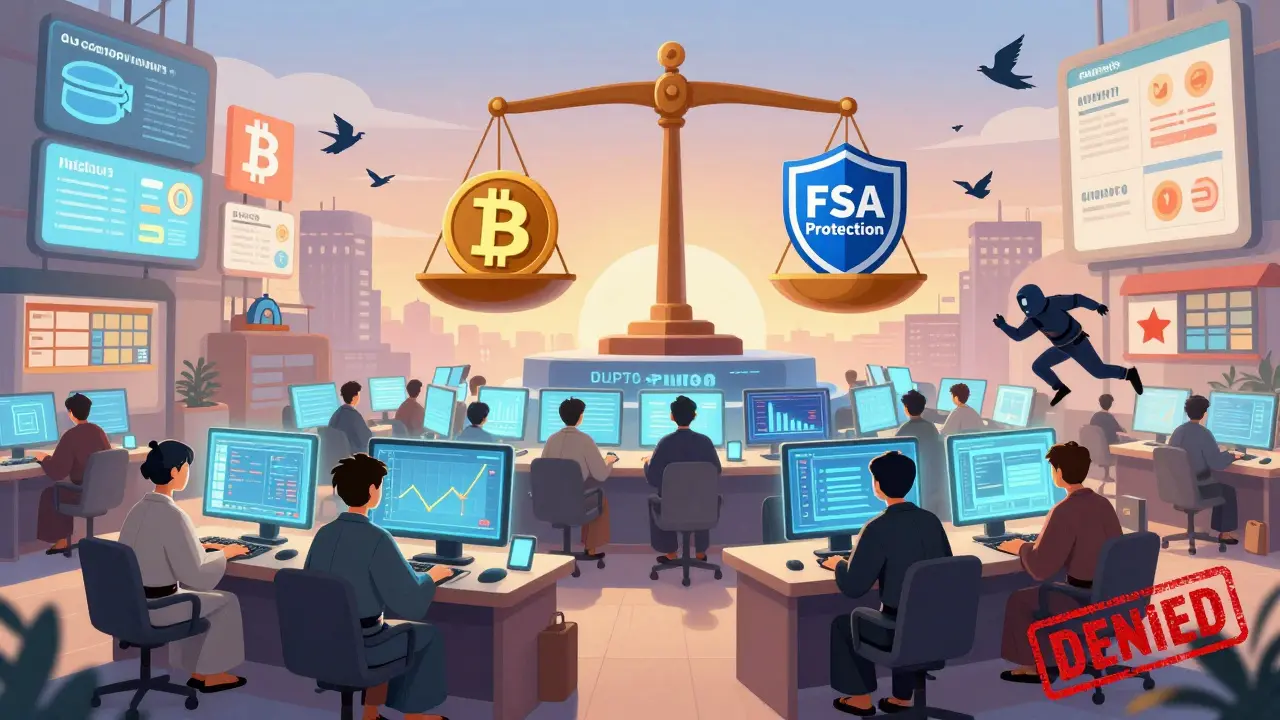
You might think strict rules mean slower innovation. But Japan’s model proves the opposite. Because the rules are clear, companies can build confidently.Still, the cost is real. Industry insiders say full FSA registration takes 6 to 12 months. Legal teams, security audits, internal controls, compliance software-all add up. For major exchanges, compliance costs make up 15% to 20% of total operating expenses. That’s why Japanese exchanges often charge higher fees than those in the U.S. or Singapore.
But users notice the difference. Reddit threads from Japanese traders consistently mention one thing: "I feel safe here." There are no major exchange hacks in Japan. No stolen wallets. No sudden disappearances. That’s not luck. It’s design.
The Japan Virtual Currency Exchange Association (JVCEA) and Japan Security Token Offering Association (JSTOA) help too. These aren’t government bodies-they’re industry groups, but they work hand-in-hand with the FSA. They set standards higher than the law requires. For example, JVCEA members must now use multi-sig wallets with geographically distributed key holders. The FSA didn’t mandate it. But the industry adopted it anyway.
DeFi, Stablecoins, and What’s Coming Next
Japan isn’t just regulating exchanges. It’s looking ahead.The FSA created a formal DeFi Study Group in 2024. It meets every two months. Attendees include engineers from blockchain startups, university researchers, and FSA regulators. They’re not trying to shut down DeFi. They’re trying to understand it. What happens if a smart contract freezes? Who’s liable? How do you apply AML rules to a protocol with no CEO?
Stablecoins are next. The FSA has signaled it will treat asset-backed stablecoins like digital yen or dollar clones as financial instruments. That means they’ll need reserve audits, redemption guarantees, and transparency rules. Algorithmic stablecoins? Those are still under review-but the FSA has made it clear: no unbacked tokens will be allowed on licensed platforms.
And then there’s taxation. In August 2025, Japan proposed a major tax reform: crypto gains will be taxed at 20%, but investors can carry forward losses for three years. That’s a big deal. It means if you lose money in 2025, you can offset it against profits in 2026, 2027, or 2028. It’s not a giveaway-it’s a signal. Japan wants people to trade, not hide.
Why This Matters Beyond Japan
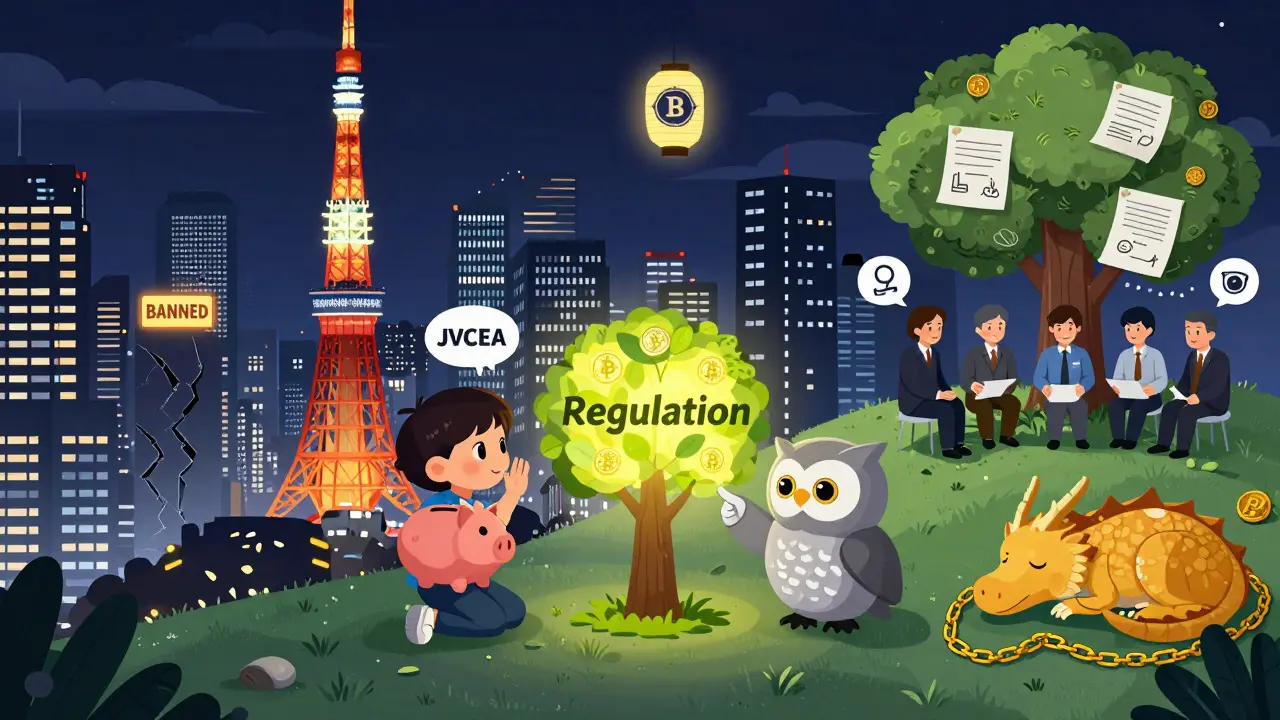
Other countries are watching. The U.S. SEC is still arguing over whether crypto is a security or a commodity. The EU’s MiCA law is complex, but lacks enforcement teeth. Singapore is friendly, but vague.Japan has done something no one else has: built a system that’s both strict and stable. It doesn’t ban innovation. It channels it. It doesn’t scare away companies. It rewards the ones that do things right.
Legal experts at Gamma Law call it "potentially transformative." Industry analysts say it’s becoming the global benchmark. And in early 2026, when the formal FIEA reclassification bill passes, Japan will officially have the world’s most comprehensive crypto regulation framework.
That doesn’t mean it’s perfect. Small startups still struggle with the cost. Some traders complain about delays. But for the first time, crypto users in Japan know: if your money is on a licensed exchange, it’s protected.
What This Means for You
If you’re a trader in Japan: your assets are safer here than almost anywhere else. The FSA doesn’t promise returns. It promises security.If you’re a developer or founder: Japan isn’t easy to enter. But if you pass the bar, you gain trust, legitimacy, and access to millions of users who won’t touch unregulated platforms.
If you’re a regulator elsewhere: look at Japan. Not because it’s perfect-but because it works. It combines clear rules, real enforcement, and continuous adaptation. It doesn’t try to control every innovation. It just makes sure the ones that matter don’t break the system.
Is Bitcoin legal in Japan?
Yes. Japan was the first country to officially recognize Bitcoin as a legal payment method, back in 2017. It’s treated as property for tax purposes, but can be used to buy goods and services just like yen. All licensed exchanges must accept and process Bitcoin trades.
Can I use Binance or Coinbase in Japan?
No-not directly. Binance and Coinbase are not licensed by Japan’s FSA. Japanese users can’t sign up on their global sites. However, some international exchanges operate separate Japanese entities that are FSA-registered, like BitFlyer, Coincheck, and Zaif. Only those platforms are legal for Japanese residents to use.
What happens if an exchange gets hacked?
If an FSA-licensed exchange is hacked, it must immediately report the incident and prove it has enough capital to reimburse users. The FSA requires exchanges to maintain insurance and reserve funds specifically for this purpose. Since 2017, no user has lost funds due to a hack on a licensed Japanese exchange.
Are NFTs regulated in Japan?
NFTs are currently not regulated unless they function as securities-like if they promise profit-sharing, royalties, or voting rights. Simple digital art NFTs are exempt. But if an NFT project sells tokens that act like investments, the FSA treats them like stocks. The line is blurry, so most issuers consult legal experts before launch.
How does the FSA handle DeFi platforms?
The FSA doesn’t regulate DeFi protocols directly-because they have no company, no CEO, and no headquarters. But it does regulate the centralized services that connect to them. For example, if a Japanese exchange lets users stake ETH through a DeFi protocol, that exchange must ensure the protocol is secure and disclose risks. The FSA’s DeFi Study Group is working on rules for when and how these interactions can be safely permitted.
Reggie Fifty
February 25, 2026 AT 22:11Derek Sasser
February 27, 2026 AT 10:59Molley Spencer
February 27, 2026 AT 12:44Robert Kromberg
February 28, 2026 AT 06:21Nicki Casey
March 1, 2026 AT 10:10Jessica Carvajal montiel
March 2, 2026 AT 05:39maya keta
March 3, 2026 AT 03:01Curtis Dunnett-Jones
March 3, 2026 AT 19:36Sean Logue
March 4, 2026 AT 09:14Carl Gaard
March 5, 2026 AT 14:22bella gonzales
March 6, 2026 AT 18:07Paul Reinhart
March 7, 2026 AT 15:08Samantha Stultz
March 7, 2026 AT 21:02Dianna Bethea
March 8, 2026 AT 13:08KingDesigners &Co
March 9, 2026 AT 01:37Felicia Eriksson
March 10, 2026 AT 05:27Tracy Whetsel
March 10, 2026 AT 10:23Alyssa Herndon
March 12, 2026 AT 03:19Jeff French
March 13, 2026 AT 16:24Elana Vorspan
March 13, 2026 AT 17:15Kenneth Genodiala
March 13, 2026 AT 19:18Michael Rozputniy
March 15, 2026 AT 13:57Colin Lethem
March 15, 2026 AT 17:21Sriharsha Majety
March 16, 2026 AT 07:34Tabitha Davis
March 16, 2026 AT 14:28Nadia Shalaby
March 18, 2026 AT 10:01