

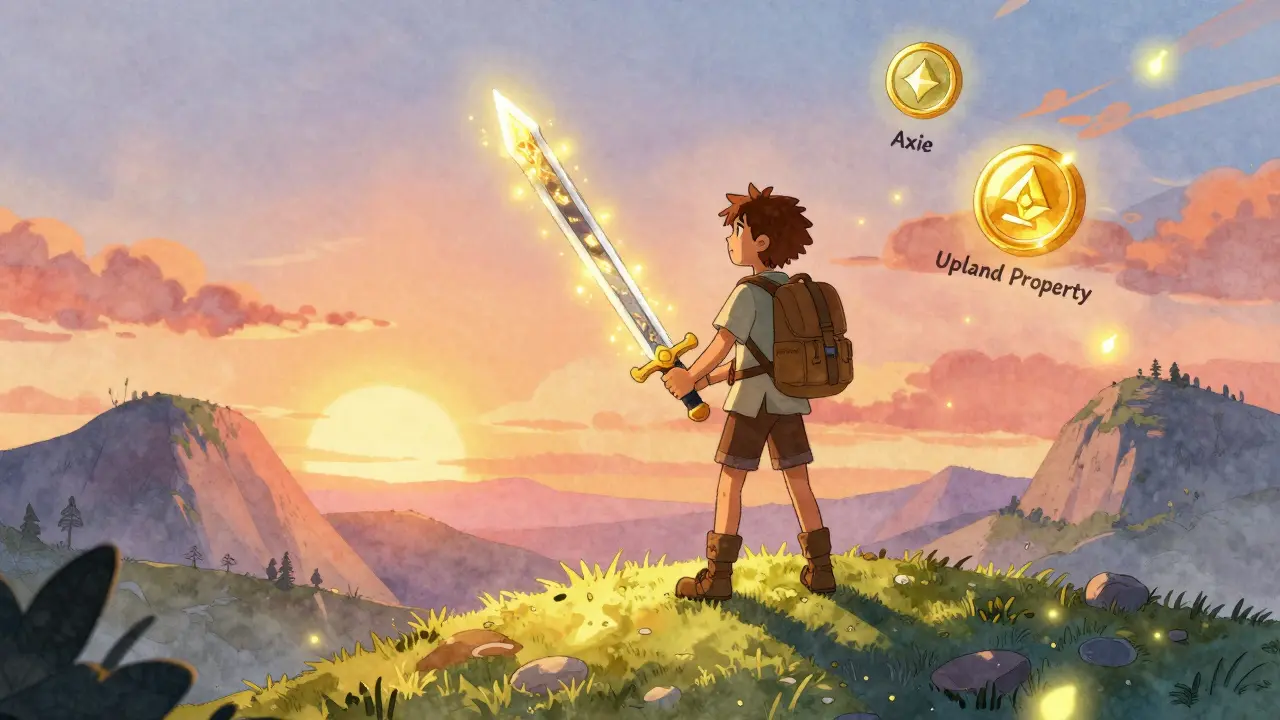
When you finish a battle in a game and walk away with a sword that no one else in the world has - not because it’s rare in the game, but because it’s uniquely yours - that’s the promise of NFTs in gaming. Not a cosmetic skin you bought once and lost when the server shut down. Not a loot box you spent hours grinding for, only to get a common item. But a real, verifiable, ownable asset that lives on a blockchain, and stays with you even if the game changes hands, shuts down, or gets remade. This isn’t science fiction anymore. It’s happening now.
What NFTs Actually Do in Games
NFTs in gaming aren’t just digital trading cards. They’re proof of ownership. Each one is a unique token stored on a blockchain - usually Ethereum, Solana, or Polygon - that can’t be copied, forged, or deleted. When you buy a weapon, a character, a piece of land, or even a name in a blockchain game, you’re not just paying for access. You’re paying for something that belongs to you, like a physical collectible. You can sell it. Trade it. Use it in another game - if the developers allow it.
Games like Axie Infinity a blockchain-based game where players breed, battle, and trade digital creatures called Axies, each represented as an NFT and Splinterlands a card game where each card is an NFT with unique stats and rarity have shown that players will invest real money into digital items if they feel real ownership. In 2024, Axie Infinity’s secondary market saw over $1.2 billion in NFT trades. That’s not speculation - that’s people buying and selling digital assets like they would vintage sneakers or rare comic books.
The Money Behind the Magic
The NFT gaming market isn’t just growing - it’s exploding. By 2024, it was already worth $471.9 billion, and projections show it could hit nearly $1.2 trillion by 2029. That’s not because of hype. It’s because of real behavior. Over 50% of players now access these games from mobile devices. Developers are optimizing for touchscreens, low data usage, and simple wallet setups. Companies like MetaverseGo a platform that simplifies cryptocurrency wallet creation for NFT gaming have cut the barrier to entry by letting players sign up with just an email - no complex seed phrases, no confusing crypto wallets.
But here’s the catch: most players don’t care about blockchain. They care about fun. And that’s where many NFT games failed. In 2022, dozens of projects launched with flashy NFTs but boring gameplay. Players got tired of grinding for tokens instead of enjoying the game. The result? Player retention dropped. Communities shrank. By late 2024, over half of game developers surveyed said the NFT gaming market felt stagnant or declining. The tech didn’t fail. The execution did.
What’s Working Now
The smartest developers aren’t building NFT games. They’re building games with NFTs.
Take Alien Worlds a decentralized metaverse game where players mine tokens and battle using NFT-based spaceships and tools. It doesn’t force you to earn money. It lets you earn rewards as a side effect of playing. You mine resources, trade them, upgrade your gear - and if you want, you can sell your NFT tools on the open market. But if you just want to explore the universe and fight aliens? You can do that too.
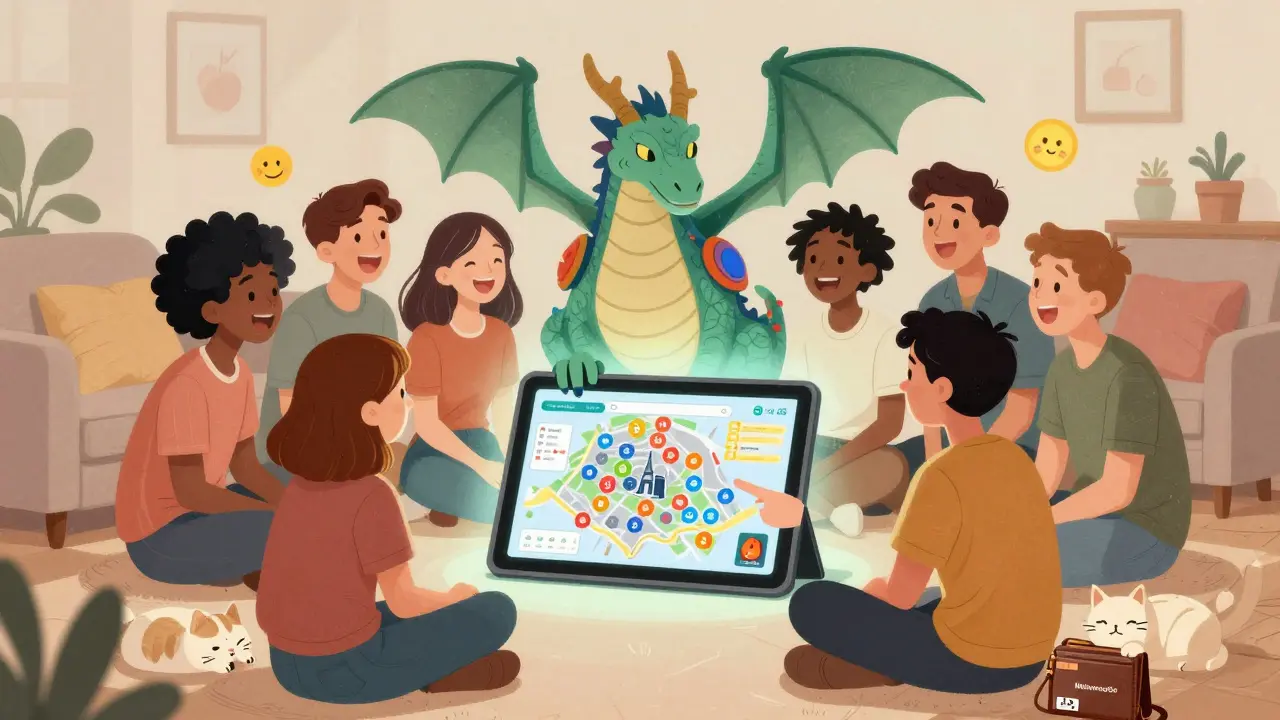
Same with Upland a blockchain-based virtual real estate game where players buy, sell, and trade digital properties mapped to real-world locations. It turns your neighborhood into a game board. You buy a digital version of your local coffee shop. You rent it out. You trade it. But you also decorate it, host events, and connect with other players. It’s not just about flipping assets. It’s about building something.
The best NFT games now feel like traditional games first - with blockchain as a quiet enhancement, not the main attraction.
The Future: Cross-Game Ownership
The real game-changer isn’t owning a sword. It’s owning a sword that works in five different games.
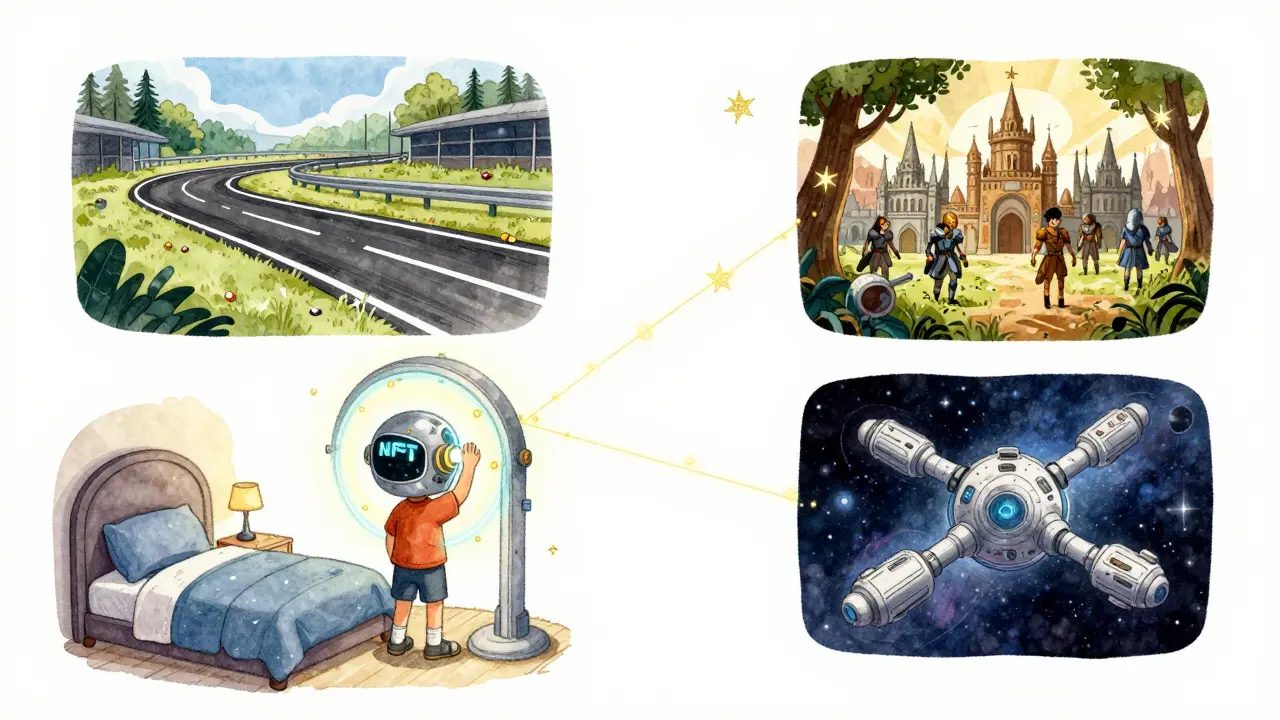
Imagine a helmet you bought in one game. You wear it in a battle. Then you log into a different game - maybe a racing sim, maybe a fantasy RPG - and that same helmet gives you a speed boost or a defense bonus. That’s interoperability. And it’s coming. Developers are experimenting with open standards like ERC-6551, which lets NFTs carry other NFTs inside them. Your character could have a backpack full of tools from other games. Your armor could change based on your history across multiple worlds.
Companies are already testing this. A pilot project in late 2025 let players bring their Axie characters into a new racing game, where their stats affected how fast they could drive. It wasn’t perfect. But it worked. And players loved it.
Barriers Still Standing
But the road isn’t smooth.
First, wallets. Too many players still get scared off by seed phrases, gas fees, and blockchain confirmations. Even with tools like MetaverseGo, most people don’t understand what a wallet does. They just want to play.
Second, regulation. Governments are watching. The U.S. SEC, EU regulators, and even New Zealand’s Financial Markets Authority are asking tough questions: Are NFTs securities? Are play-to-earn games gambling? The answers aren’t clear yet - and that uncertainty slows investment.
Third, environmental concerns. While newer blockchains like Solana and Polygon use 99% less energy than Bitcoin, many players still associate NFTs with the old, wasteful crypto days. Developers need to be loud about sustainability. They need to show they’re using clean energy, not just saying it.
And fourth - gameplay. No amount of blockchain magic can save a bad game. If the combat feels clunky, the story is thin, or the UI is confusing, players will leave. NFTs won’t fix that. Only good design will.
Who’s Driving This Forward?
Gen Z is. Not because they’re crypto nerds - but because they’re tired of digital things that don’t belong to them.
A 2025 survey found that 60% of U.S. Gen Zers are early adopters of tech that gives them control. They don’t want to rent their game progress. They want to own it. They want to sell it. They want to trade it with friends. They want their digital lives to have real value.
And they’re not alone. In Europe, Australia, and Southeast Asia, players are testing NFT games in record numbers. The market isn’t dead. It’s maturing.
What Comes Next
The future of NFTs in gaming won’t look like a crypto ad. It’ll look like a game.
Here’s what’s likely to happen in the next three years:
- More games will use NFTs for cosmetic upgrades - not pay-to-win gear. Think skins, emotes, pets - things that express identity, not power.
- Decentralized marketplaces will replace centralized ones. Instead of buying from one company, you’ll trade directly with other players, with smart contracts handling the sale.
- AI will personalize your NFTs. Your dragon might grow smarter based on how you play. Your armor might change color depending on your mood.
- DAOs will run game updates. Players will vote on new maps, balance changes, and even revenue splits - turning gamers into stakeholders.
- Mobile will dominate. Over 70% of NFT games will be playable on phones by 2027.
The biggest winners won’t be the ones shouting about blockchain. They’ll be the ones who quietly made ownership feel natural. Who made trading feel like a normal part of the game. Who made you forget you were using crypto - until you sold your NFT for real money.
Final Thought
NFTs in gaming aren’t about getting rich. They’re about getting real.
For decades, gamers have poured hours into worlds that vanish when the servers close. They’ve spent thousands on items that can’t be moved, sold, or passed down. NFTs offer something different: permanence. Control. Ownership.
It’s not magic. It’s not a bubble. It’s a shift - slow, messy, and uncertain. But it’s real. And if developers listen to players instead of investors, this could be the first time in gaming history that what you build, earn, and collect actually lasts.
Are NFTs in games just a way to make players pay more?
Not if they’re done right. NFTs become exploitative when they’re forced into pay-to-win mechanics or used to gate core gameplay behind expensive assets. But when they’re optional - like cosmetic upgrades, collectible pets, or tradable tools - they enhance the experience without breaking it. The key is player choice. If you can play the game fully without buying an NFT, then it’s not predatory. It’s empowering.
Can I really sell my NFTs for real money?
Yes. Many blockchain games have built-in marketplaces where you can list your NFTs and sell them to other players. You get paid in cryptocurrency, which you can then convert to cash via exchanges like Coinbase or Kraken. Some players have made thousands - even tens of thousands - from selling rare in-game items. But it’s not guaranteed. Like any collectible, value depends on demand. A common item might sell for $1. A legendary one could sell for $1,000. It’s unpredictable.
Do I need a crypto wallet to play NFT games?
Not always. Some games now let you play with just an email or social login, and only ask you to connect a wallet if you want to trade or sell items. Platforms like MetaverseGo and WalletConnect have made this much easier. But if you want full ownership - meaning you control your assets and can move them anywhere - you’ll need a wallet. Think of it like owning a physical item: you can store it in a box (the game), or you can take it home (your wallet).
Are NFT games environmentally harmful?
It depends on the blockchain. Games on Bitcoin or Ethereum (pre-upgrade) used a lot of energy. But today’s top NFT games run on blockchains like Solana, Polygon, or Immutable X - which use less energy than a single Google search. Many developers now highlight their carbon-neutral status. The industry is moving fast to fix its image. If you’re concerned, check which blockchain the game uses before playing.
Will NFTs replace traditional in-game purchases?
Not entirely. Most players still prefer buying skins or loot boxes that work only in one game. NFTs are better suited for collectors, traders, and players who want long-term value. The future likely holds both: traditional microtransactions for casual players, and NFTs for those who want ownership. They’ll coexist - not replace.
Christopher Wardle
February 10, 2026 AT 00:08blake blackner
February 10, 2026 AT 00:09Andrea Atzori
February 11, 2026 AT 17:03Gaurav Mathur
February 12, 2026 AT 10:38Jeremy Lim
February 13, 2026 AT 10:28kelvin joseph-kanyin
February 14, 2026 AT 03:36Michelle Cochran
February 14, 2026 AT 16:15monique mannino
February 14, 2026 AT 18:46Peggi shabaaz
February 16, 2026 AT 11:02bala murali
February 16, 2026 AT 22:17Ekaterina Sergeevna
February 18, 2026 AT 06:51Ace Crystal
February 18, 2026 AT 15:33Brittany Meadows
February 19, 2026 AT 05:44SAKTHIVEL A
February 20, 2026 AT 04:08Lindsey Elliott
February 22, 2026 AT 04:01John Doyle
February 23, 2026 AT 19:24Santosh kumar
February 25, 2026 AT 15:11Claire Sannen
February 27, 2026 AT 03:00Grace Mugambi
February 28, 2026 AT 22:00Donna Patters
March 1, 2026 AT 05:22Robbi Hess
March 1, 2026 AT 16:32Keturah Hudson
March 2, 2026 AT 08:13