

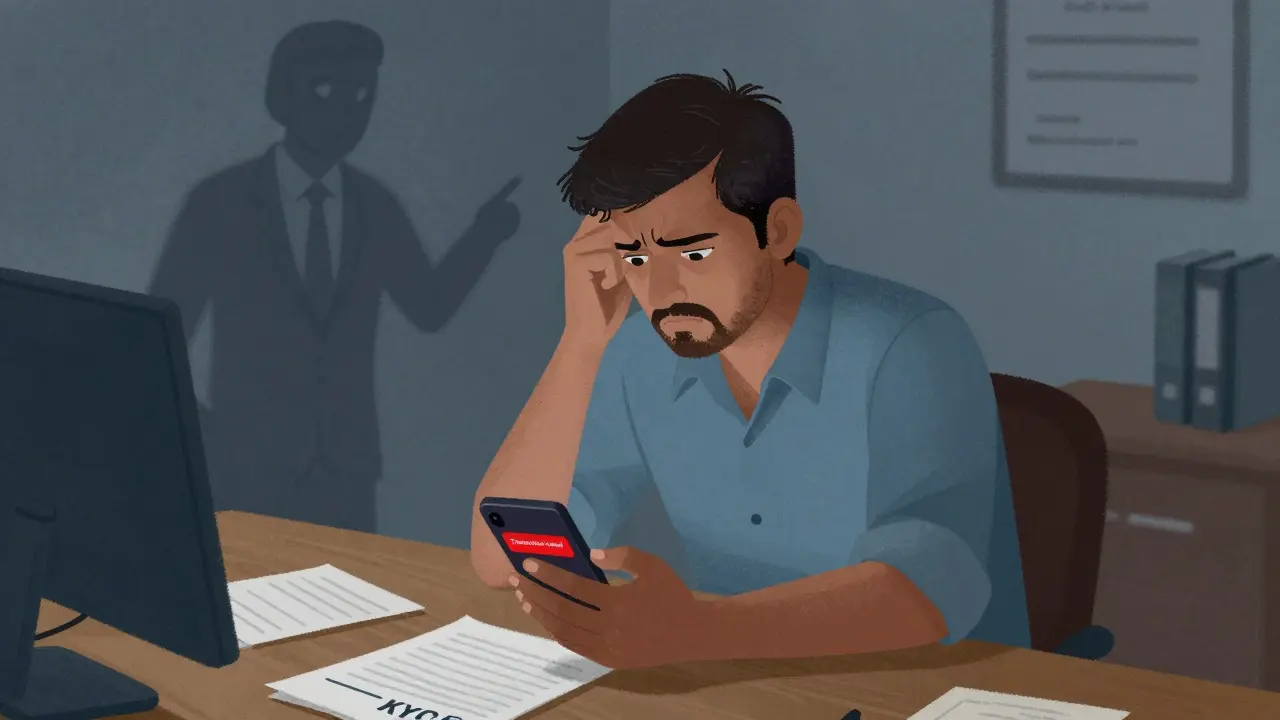
You hit the 'withdraw' button on your exchange. You expect the rupees to land in your bank account within minutes. Instead, you get a notification: Transaction Failed. Or worse, a call from your branch manager asking why you’re receiving money from a "high-risk entity." If you are holding cryptocurrency in India, this friction is not a glitch. It is a feature of the current regulatory landscape.
As of mid-2026, withdrawing crypto to fiat in India is legal, but it is bureaucratically heavy. The Reserve Bank of India (RBI) still views private cryptocurrencies with deep suspicion, even though the Supreme Court struck down the outright ban in 2020. This creates a strange reality: you can own Bitcoin, but getting that value into your HDFC or SBI account requires navigating a minefield of Anti-Money Laundering (AML) laws and Know Your Customer (KYC) checks.
The Legal Reality vs. Bank Caution
To understand why your transaction might be flagged, you have to look at who is pulling the strings. In March 2020, the Supreme Court of India ruled that the RBI’s 2018 circular banning banks from serving crypto entities was unconstitutional. That ruling made owning and trading crypto legal again. However, legality does not equal ease of access.
Banks in India are regulated by the RBI. And let’s be clear about the central bank’s stance. Current Governor Sanjay Malhotra has been vocal: he believes Central Bank Digital Currency (CBDC), specifically the digital rupee, is the future, not private tokens like Bitcoin or Ethereum. He has explicitly stated that cryptocurrencies pose risks to monetary policy and financial stability. Because of this institutional skepticism, many bank managers treat any incoming transfer from a crypto exchange as a potential red flag for money laundering, even if your activity is perfectly legal.
This means that while no law says "you cannot withdraw," individual banks often enforce internal policies that are stricter than the law. Some branches may freeze accounts temporarily to conduct due diligence. Others may simply reject transfers from entities they deem non-compliant.
The PMLA Hammer: Why Compliance Matters Now
If the 2020 Supreme Court ruling opened the door, the Prevention of Money Laundering Act (PMLA) amendments slammed it shut for anyone playing loose with regulations. Since March 2023, Virtual Digital Asset (VDA) service providers-meaning crypto exchanges-have been brought under the PMLA. This is the game-changer for withdrawals.
Under these rules, every crypto platform operating in India must register with the Financial Intelligence Unit-India (FIU-IND). They must follow banking-level KYC norms. This includes verifying your identity, tracking your source of funds, and reporting suspicious transactions. If the exchange you use is not FIU-registered, your withdrawal will likely fail because compliant banks will refuse to process funds from unregistered entities.
In 2024 and 2025, the government cracked down hard. The FIU-IND issued notices to 25 offshore exchanges-including major names like BingX, LBank, and CoinW-for failing to comply. These platforms were ordered to block Indian users. If you try to withdraw from an exchange that hasn’t registered with the FIU-IND, you aren’t just risking a failed transaction; you are interacting with an entity that Indian banks are actively avoiding.
| Entity | Role in Crypto Ecosystem | Impact on Your Withdrawal |
|---|---|---|
| Reserve Bank of India (RBI) | Regulates banks and payment systems; skeptical of private crypto. | Banks may delay or reject transfers due to RBI’s risk warnings. |
| Financial Intelligence Unit-India (FIU-IND) | Enforces AML laws; registers VDA service providers. | Only FIU-registered exchanges can reliably send fiat to Indian banks. |
| Supreme Court of India | Judicial body that lifted the 2018 banking ban. | Ensures crypto ownership is legal, protecting users from arbitrary bans. |
| Income Tax Department | Collects taxes on crypto gains; enforces TDS. | Withholds 1% TDS on sales; requires declaration of income. |
What Happens When You Click Withdraw?
Let’s walk through the actual mechanics. When you initiate a withdrawal from a compliant exchange like WazirX, CoinDCX, or ZebPay, several things happen behind the scenes.
- KYC Verification: The exchange checks your documents. If your PAN card and Aadhaar details don’t match their records, the request stops here.
- TDS Deduction: Under current tax laws, a 1% Tax Deducted at Source (TDS) is applied to your crypto sale if it exceeds ₹50,000 in a financial year. The exchange deducts this before sending the net amount to the bank.
- Bank Transfer Initiation: The exchange sends the fiat via NEFT, RTGS, or IMPS. Crucially, the remitter name will be the exchange’s corporate entity.
- Bank Screening: Your bank receives the money. Its automated system scans the sender. If the sender is a known, FIU-registered entity, the money usually clears. If the sender is obscure or flagged, the transaction may be held for manual review.
If you receive a call from your bank, stay calm. They are not accusing you of a crime. They are following RBI guidelines to prevent financial crimes. Be ready to provide proof: screenshots of your trade history, your tax returns showing declared crypto income, and confirmation that the exchange is FIU-registered.

The FATF Travel Rule and Data Privacy
Another layer of complexity is the Financial Action Task Force (FATF) Travel Rule. India implemented this with no minimum threshold. This means that for every crypto-to-fiat transaction, the exchange must share detailed information about both the sender (you) and the receiver (your bank account) with the relevant authorities if requested.
Why does this matter to you? It means there is no anonymity. Every rupee you convert from Bitcoin is traceable. Banks use this data to build a profile of your financial behavior. If your withdrawal patterns look unusual-such as frequent large deposits followed by immediate international transfers-your account could be flagged for enhanced monitoring. This isn’t unique to crypto, but the scrutiny is higher because the RBI considers crypto a high-risk asset class.
Common Pitfalls That Trigger Account Freezes
Most users face issues not because they broke the law, but because they didn’t manage expectations. Here are the most common triggers for banking friction:
- Using Unregistered Exchanges: Withdrawing from offshore platforms that haven’t registered with FIU-IND is the fastest way to get your funds stuck. Banks will often return these transfers or hold them indefinitely.
- Mismatched Names: Ensure the name on your bank account exactly matches the name on your exchange KYC. Even small discrepancies can cause rejections.
- Sudden Large Volume: If you’ve had a dormant account and suddenly withdraw ₹10 lakh, the bank’s fraud detection algorithms will light up. Gradual, consistent activity is less likely to raise alarms.
- Ignoring Tax Declarations: The Income Tax Department shares data with banks. If you withdraw significant amounts but haven’t declared crypto income in your ITR, your account may be frozen during tax audits.

How to Smoothly Withdraw Crypto to Fiat in 2026
You can navigate this system successfully if you play by the rules. Here is a practical checklist:
- Stick to FIU-Registered Exchanges: Only use platforms that are publicly listed as registered with the FIU-IND. Check the official FIU website regularly for updates on banned or suspended entities.
- Keep Records: Maintain a spreadsheet of all your crypto transactions. Note the date, amount, currency pair, and purpose. This documentation is your shield if a bank asks questions.
- Declare Income: File your taxes correctly. Pay the 30% flat tax on crypto profits and the 1% TDS. A clean tax record makes banks more willing to trust your transactions.
- Communicate Proactively: If you plan to make a large withdrawal, consider informing your relationship manager beforehand. Explain that the funds are from legal crypto trading and offer to provide documentation. This pre-empts surprise freezes.
- Use Dedicated Accounts: Some experienced traders use a separate savings account solely for crypto withdrawals. This isolates any potential banking friction from your primary salary and expense accounts.
The Future: CBDC vs. Private Crypto
Looking ahead, the tension between private crypto and the state-backed digital rupee will only intensify. The RBI is aggressively promoting the e-Rupee as a safer, faster alternative to private tokens. As the digital rupee infrastructure matures, we may see banks prioritizing CBDC transactions over traditional fiat conversions from crypto.
Parliament is also working on comprehensive legislation that could place crypto under the Securities and Exchange Board of India (SEBI). If this happens, the regulatory framework will become more structured, potentially reducing the ad-hoc nature of bank reactions. Until then, however, the status quo remains: crypto is legal, but banking support is conditional on strict compliance.
The bottom line is simple. Indian banks are not out to stop you from using crypto. But they are terrified of regulatory penalties. By ensuring your exchange is compliant, your taxes are paid, and your documentation is ready, you remove the fear factor. Treat your crypto withdrawals like business transactions, not casual cash grabs, and you’ll find the path much clearer.
Is it illegal to withdraw crypto to fiat in India?
No, it is not illegal. The Supreme Court of India legalized crypto ownership in 2020. However, you must use FIU-registered exchanges and comply with tax laws. Banks may scrutinize transactions due to RBI guidelines, but the act itself is legal.
Which exchanges are safe to use for withdrawals in India?
You should only use exchanges registered with the Financial Intelligence Unit-India (FIU-IND). As of 2026, major domestic platforms like WazirX, CoinDCX, and ZebPay are compliant. Always verify the current registration status on the official FIU website, as offshore exchanges like BingX and LBank have faced bans for non-compliance.
Why did my bank freeze my account after a crypto withdrawal?
Banks may freeze accounts temporarily for due diligence if they detect unusual activity or if the sender is not a recognized FIU-registered entity. This is part of Anti-Money Laundering (AML) protocols. Contact your bank immediately, provide proof of your trade history and tax declarations, and confirm the exchange's compliance status.
Do I need to pay tax on crypto withdrawals?
Will the RBI ban crypto withdrawals again?
While the RBI strongly opposes private cryptocurrencies and favors the digital rupee (CBDC), a direct ban on withdrawals would require overturning the Supreme Court's 2020 judgment. Currently, the focus is on strict regulation via the PMLA and FIU-IND rather than an outright prohibition.