

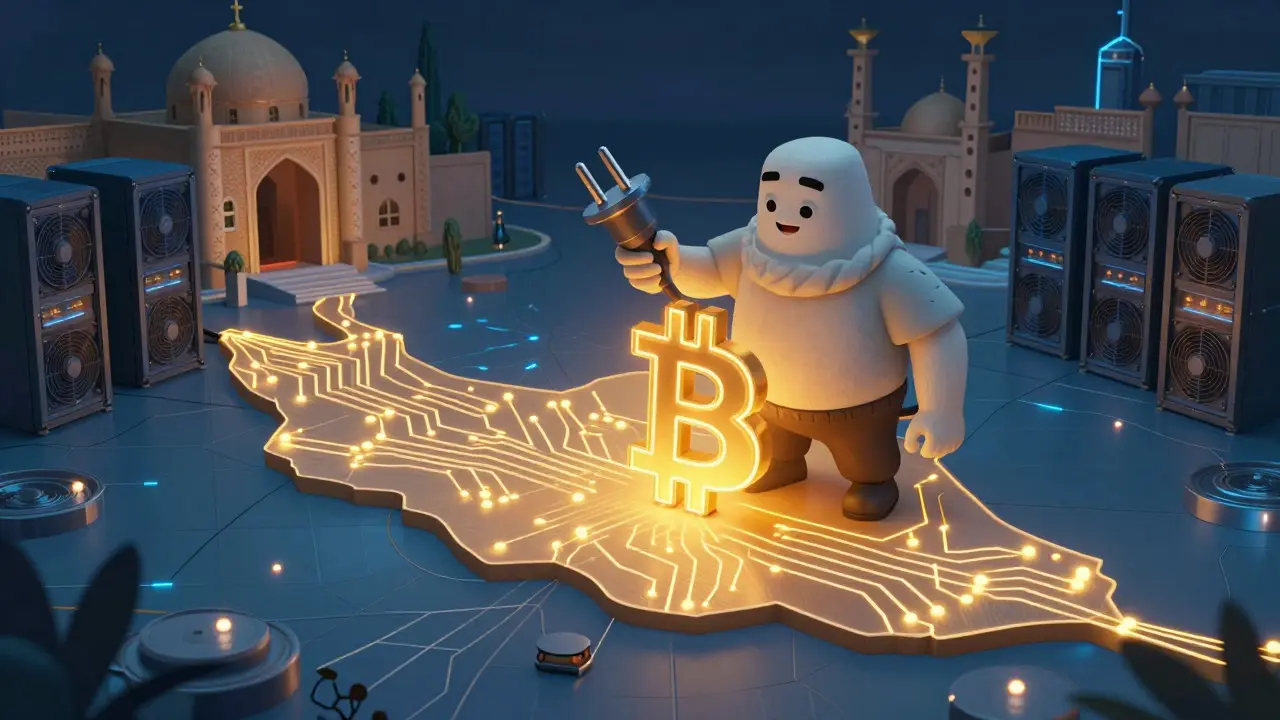
Imagine a country cut off from the global banking system, unable to move money through SWIFT or hold dollars in Western banks. Now imagine that same country quietly powering nearly half a percent of the world’s Bitcoin network. This isn’t science fiction; it is the reality of Iran's Bitcoin mining, which serves as a sophisticated tool for sanctions circumvention. Since the United States withdrew from the Joint Comprehensive Plan of Action (JCPOA) in 2018, Tehran has transformed its abundant, subsidized energy into digital gold, creating a parallel financial ecosystem that operates largely outside traditional oversight.
The Shift from Oil to Digital Currency
For decades, oil was Iran’s primary source of foreign currency. But when sanctions tightened after 2018, cutting off billions in export revenue, the regime needed a new way to access hard cash. Enter cryptocurrency. Initially, Iran followed China’s early playbook: legalize mining but ban crypto payments. However, by 2020, the strategy evolved dramatically. The government began legalizing crypto payments for imports and issued licenses to thousands of mining farms.
This shift wasn't accidental. It was a calculated response to isolation. By converting electricity-generated from cheap natural gas-into Bitcoin, Iran creates an asset that is globally recognized, easily transferable, and difficult to block. In 2024 alone, $4.18 billion worth of cryptocurrencies flowed out of Iran, a 70% increase from the previous year. This surge demonstrates how effective the strategy has become at generating liquidity without touching traditional banking rails.
The Role of the IRGC and State Infrastructure
You cannot understand Iran’s crypto strategy without looking at who controls the plugs. The Islamic Revolutionary Guard Corps (IRGC) is the military branch responsible for national security and significant economic influence in Iran. Under direct orders from Supreme Leader Ali Khamenei, the IRGC accelerated its entry into cryptocurrency mining between 2019 and 2020. They viewed Bitcoin generation not just as profit, but as compensation for lost access to US dollar transactions.
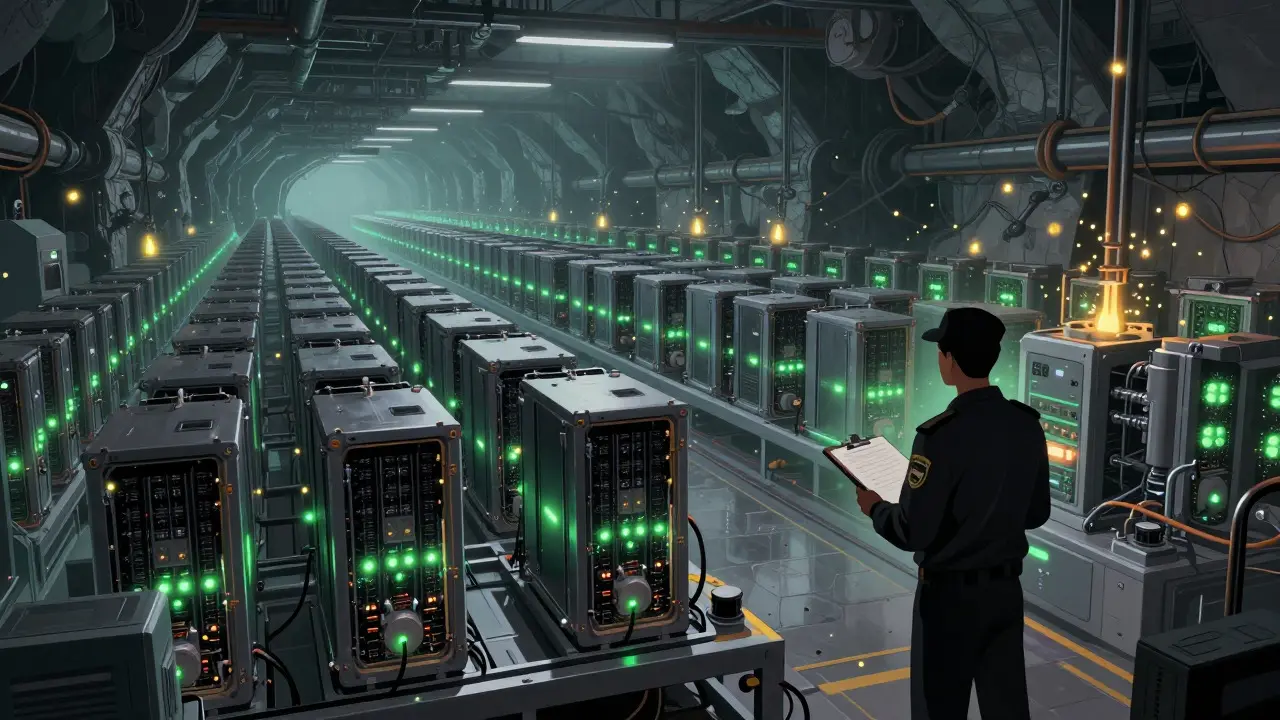
The infrastructure supporting this effort is massive. A prime example is the 175-megawatt Bitcoin farm in Rafsanjan, Kerman province. Established as a joint venture between IRGC-linked enterprises and Chinese investors, this facility benefits from rock-bottom electricity tariffs. These state-affiliated operations often sit on military bases or within facilities controlled by powerful religious foundations like Astan Quds Razavi. Investigative reports describe this network as a "crypto cartel" that systematically exploits national electricity resources.
Because these entities have political protection, they can ignore electricity bills entirely or access effectively free energy. This creates a competitive advantage that private miners in other countries simply cannot match. While a miner in Texas might pay $0.06 per kWh, an Iranian state-backed miner pays near zero. This cost disparity allows them to keep mining profitable even when global Bitcoin prices dip.
Technical Execution and Global Connections
So, how does the money actually leave the country? It’s not as simple as clicking "sell" on a local app. Iranian firms use a complex web of intermediaries. Recent investigations revealed that entities affiliated with the IRGC processed $8 billion worth of transactions through the Binance exchange is one of the largest cryptocurrency exchanges in the world by trading volume. since 2018. To move these funds, they rely on "teapot" refineries in Beijing, shell companies in UAE and Hong Kong free zones, and TRON-based stablecoin systems.
In August 2025, Iran executed its first official import order using cryptocurrency, totaling $10 million. This milestone marked a significant step in state-level adoption, proving that crypto could be used for tangible goods, not just speculative trading. The regime also signed bilateral cryptocurrency cooperation agreements with Russia in November 2018 and negotiated deals with eight other countries, including Austria, France, and Germany, aiming to create a network of crypto-friendly trade partners.
| Country | Primary Crypto Method | State Control Level | Key Advantage |
|---|---|---|---|
| Iran | Bitcoin Mining & Trade | High (IRGC-led) | Cheap Energy & Licensing |
| Venezuela | Petro Token | High | Government Backing (Low Market Trust) |
| North Korea | Hacking & Theft | Medium | Stealth Operations |
| Russia | Mining & Payments | Medium-High | Large Energy Base |
Energy Costs and Domestic Impact
The strategy comes with a heavy price tag for ordinary Iranians. The electricity consumed by these mining operations requires the equivalent of approximately 10 million barrels of crude oil annually to generate. That represents roughly 4% of Iran’s total oil exports in 2020. Instead of exporting that oil, they burn the gas to mine Bitcoin.
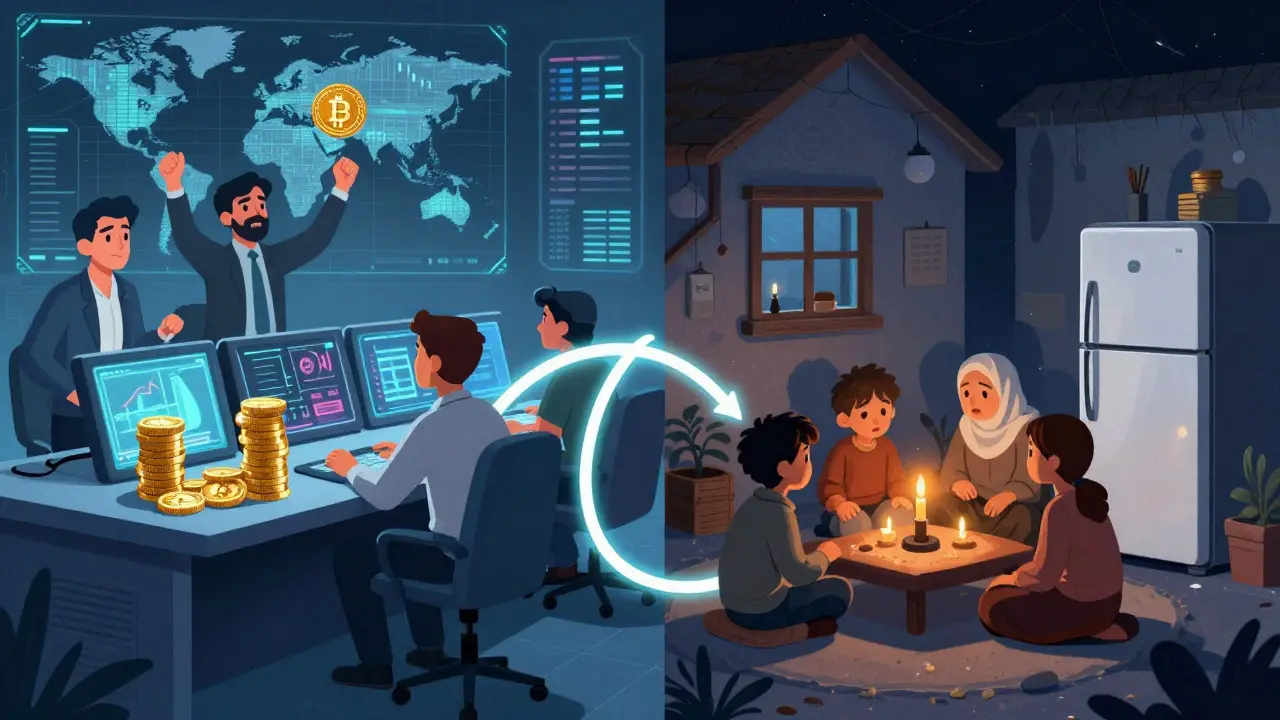
This massive energy draw exacerbates the country’s ongoing power grid crisis. During summer months, when demand peaks, mining facilities consume electricity that could otherwise serve civilian homes and hospitals. The result? Nationwide blackouts and strained infrastructure. Energy sector analysts warn that this trade-off highlights a disconnect: while the regime gains access to foreign currency, citizens face rolling power cuts and internet instability.
Furthermore, the concentration of benefits among IRGC-connected entities means that the wealth generated doesn’t trickle down. Independent miners struggle with equipment access due to sanctions, forcing them to buy smuggled ASIC miners at inflated prices. Meanwhile, state-backed farms operate continuously, protected by political connections.
Global Risks and Enforcement Challenges
For international financial institutions, Iran’s mining presence poses systemic risks. Elliptic estimates that 4.5% of all global Bitcoin mining occurs within Iran. This means that any Bitcoin transaction has a statistical probability of involving fees paid by Iranian miners. Chainalysis and TRM Labs confirm that Iran-linked flows are increasingly moving through third-party jurisdictions, making enforcement harder.
FinCEN issued a advisory in June 2025 highlighting these risks, noting that banks and crypto service providers face potential sanctions violations through inadvertent transactions with Iranian miners. Yet, technical limitations remain. Bitcoin’s design makes it difficult to discriminate against coins based on their origin. Some advocates argue that trying to "taint" Iranian-mined Bitcoin would undermine the network’s fundamental property of fungibility.
Despite these challenges, enforcement is escalating. International authorities are increasing monitoring of cryptocurrency flows and sanctioning specific Iranian mining entities. However, because the network is decentralized and uses proxy services to obscure origins, decisive disruption remains elusive. As long as sanctions persist, Iran will likely continue to expand its crypto capabilities, viewing them as a vital lifeline.
Is Bitcoin mined in Iran considered "dirty"?
The term "dirty" is subjective, but technically, Bitcoin is fungible. Once mined, a Bitcoin from Iran is identical to one mined in Texas. However, compliance teams at major exchanges may flag transactions linked to known Iranian IP addresses or wallet clusters due to sanctions risks. For the average user, the risk is low unless you are directly transacting with sanctioned entities.
How much of the global Bitcoin hash rate comes from Iran?
According to data from blockchain analytics firm Elliptic, Iran accounts for approximately 4.5% of the global Bitcoin mining hash rate. This makes it the fourth-largest mining region globally, behind the United States, Kazakhstan, and Russia.
Does Iran use crypto for everyday purchases?
While initially banned for payments, Iran legalized crypto payments for imports around 2020. There have been reports of small-scale domestic usage, but the primary driver remains large-scale mining for export and state-level trade facilitation rather than consumer retail transactions.
Who controls most of the mining in Iran?
The majority of large-scale mining operations are controlled or influenced by the Islamic Revolutionary Guard Corps (IRGC) and associated religious foundations. These entities benefit from subsidized electricity and political protection, creating a quasi-monopoly on the most profitable aspects of the industry.
Can sanctions stop Iran's crypto mining?
Sanctions make it harder to import advanced mining hardware and connect to global exchanges, but they haven't stopped the activity. Iran relies on smuggling equipment and using third-country intermediaries. As long as the cost of electricity remains low, the incentive to mine persists despite regulatory pressure.