

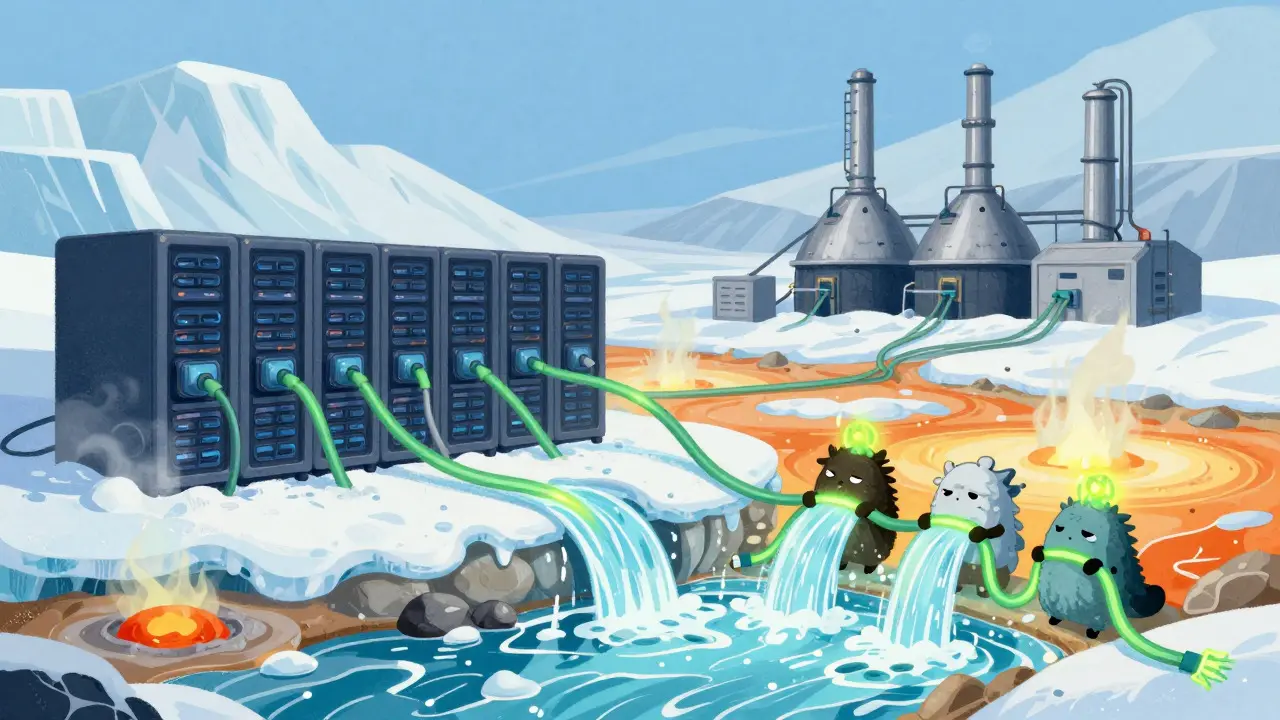
For years, Iceland was the gold standard for cryptocurrency miners. You had cheap power from volcanoes and waterfalls, a climate that kept your servers cool without expensive AC units, and a government that mostly stayed out of your way. It seemed like the perfect storm. But by mid-2026, that story has changed dramatically. The same renewable resources that made Iceland attractive are now its biggest bottleneck.
If you are looking to expand mining operations into Reykjavik or Akureyri today, you are hitting a wall. That wall is built from grid constraints, political pressure, and simple math. The country’s electricity generation is maxed out. When every kilowatt-hour has a competing buyer-from aluminum smelters to AI data centers-crypto mining finds itself at the back of the line. This article breaks down exactly why energy allocation in Iceland has become so difficult, what it means for existing operators, and where the industry might go next.
The Renewable Ceiling: Why There Is No More Power
To understand the current crisis, you have to look at how Iceland generates electricity. Unlike countries that burn coal or gas, Iceland runs almost entirely on geothermal energy and hydroelectric power. Geothermal plants provide about 25% of the total generation, tapping directly into the earth's heat. Hydroelectric facilities handle the remaining 75%, using the flow of glacial rivers. For decades, this mix provided a surplus of clean energy that industrial giants could buy up cheaply.
But nature has limits. The waterfalls run dry if you pump too much; the geothermal wells cool down if you drill too deep or too fast. By 2024, analysis from the Hashrate Index showed that Iceland’s Bitcoin mining operations were constrained to approximately 120 megawatts of power allocation. That might sound like a lot, but in the context of national infrastructure, it represents a hard ceiling. There hasn't been significant buildout of new power plants in recent years. The infrastructure is old, and expanding it takes time and massive capital investment.
This creates a zero-sum game. Every megawatt given to a crypto farm is one less available for other industries. The National Energy Authority of Iceland reported that cryptocurrency mining consumed roughly 8% of the nation's total energy consumption in 2023. That number jumped sharply from previous years. When you consider that Iceland also hosts some of the world’s largest aluminum manufacturers per capita, the competition for electrons becomes fierce. Aluminum smelting requires constant, heavy power loads, just like modern ASIC miners. The difference? Aluminum provides stable, long-term jobs and tangible exports. Crypto mining offers volatile revenue and few direct employees.
Policy Shift: From Welcome Mat to Closed Door
Politicians in Iceland didn’t always view crypto mining as a drain on resources. In the early days, between 2013 and 2017, the government saw it as a way to monetize stranded energy-power generated in remote areas that couldn’t easily be transmitted elsewhere. But attitudes shifted as the scale of consumption grew.
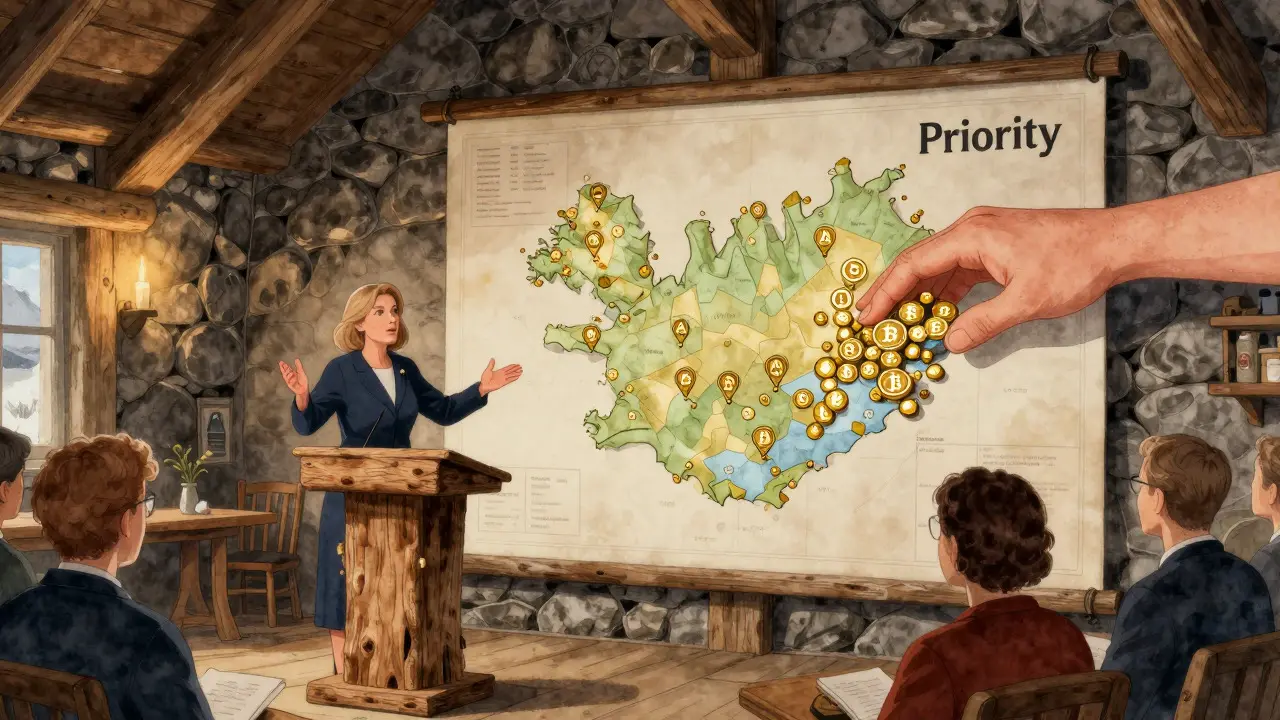
In March 2024, Prime Minister Katrín Jakobsdóttir made her position clear. She expressed a desire to reduce cryptocurrency mining activities in the country. Her concern wasn’t about carbon emissions-Iceland’s grid is nearly 100% renewable-but about opportunity cost. Why use precious clean energy to mine digital tokens when that same energy could power data centers for artificial intelligence, produce green hydrogen for export, or support tourism infrastructure?
This policy shift marked a fundamental change. The government began prioritizing domestic consumption and traditional industries. New entrants to the mining space found themselves facing steep tariff hikes and energy rationing measures similar to those seen in Quebec and Inner Mongolia. The message was loud: if you want power here, you need to prove you bring more than just foreign currency earnings.
| Industry | Energy Demand Profile | Economic Impact | Government Priority (2026) |
|---|---|---|---|
| Aluminum Smelting | High, continuous load | Stable GDP contribution, high employment | High |
| Crypto Mining | Very high, variable based on hash price | Volatile revenue, low direct jobs | Low / Declining |
| Data Centers (AI/Web) | Medium-High, growing rapidly | High tech sector growth, innovation | High |
| Green Hydrogen Production | High, scalable | Future export potential | Moderate / Emerging |
The Operator’s Dilemma: Stability vs. Growth
If you are an established miner who secured a power purchase agreement (PPA) back in 2015, you are likely still profitable. You have locked-in rates, you have physical access to the grid, and you benefit from Iceland’s legendary political stability. Unlike miners in Kazakhstan or China, who face sudden bans or erratic grid shutdowns, Icelandic operators can plan with some confidence. The risk of regulatory interference remains low.
However, scaling is practically impossible. Industry experts like Daniel Jonsson from Greenblocks point out that while Iceland offers unbeatable conditions in terms of reliability and green credentials, the inability to access new electricity connections has created a hard cap. New hardware demands more power. Modern ASICs like the Antminer S19 XP or Whatsminer M50S are efficient, yes, but they still draw substantial continuous loads. If you try to double your rig count, you hit the grid limit immediately.
New entrants face a different reality. Reddit discussions and mining forums from 2024 to 2025 are filled with reports of lengthy waiting lists for grid connections. Some miners waited over two years just for an assessment. Local authorities scrutinize energy usage closely. The era of plug-and-play mining in Iceland is over. Today, it is a battle for scarce resources against entrenched industries.
Economic Trade-offs: Who Wins the Watt?
The core issue isn’t technical; it’s economic. Policymakers are running cost-benefit analyses on every megawatt. Crypto mining contributed an estimated 2% to Iceland’s GDP in 2024. That is not insignificant. It brings in foreign exchange and supports local service providers. But compare that to the aluminum industry, which has historically been the largest consumer of electricity in the country. Aluminum provides predictable revenue streams and hundreds of stable jobs.
Then there is the rise of the broader digital economy. The government is increasingly interested in fostering blockchain development that doesn’t require massive energy inputs. Think decentralized finance protocols, supply chain tracking, or even a potential Central Bank Digital Currency (CBDC). These applications leverage Iceland’s strong internet infrastructure and legal framework without draining the hydroelectric dams.
Tourism also plays a role. Iceland relies heavily on visitors. Expanding data centers for global cloud services or AI training clusters can boost the tech sector’s profile without the negative perception sometimes associated with crypto speculation. The narrative is shifting from "energy sink" to "tech hub."
What Does This Mean for Miners?
For those already operating in Iceland, the outlook is stable but stagnant. You will likely remain profitable due to the low cost of renewable energy compared to fossil-fuel-dependent regions. Your political risk is minimal. But don’t expect expansion. The grid won’t grow significantly before 2030, according to current infrastructure timelines.
For new investors, Iceland is no longer the easy entry point it once was. You are competing with AI firms and heavy industry for power. The tariffs may rise. The approval processes will lengthen. If your strategy relies on rapid scaling, you might be better served looking at Texas, Canada, or parts of Eastern Europe where grid capacity is less saturated.
However, if you value sustainability and long-term stability over quick growth, Iceland still holds appeal. Just know that you are buying into a mature, capped market. The wild west days are gone. Now, it is about efficiency, optimization, and making the most of the limited watts you can secure.
Future Outlook: Beyond the Hashrate
Looking ahead, Iceland’s relationship with crypto will likely evolve rather than disappear. The government’s preference for less energy-intensive blockchain applications suggests a strategic pivot. We may see more collaboration between mining firms and local universities or tech startups, focusing on software development and financial services rather than pure proof-of-work computation.
Additionally, advancements in battery storage and grid management could unlock some flexibility. If Iceland can store excess geothermal energy during low-demand periods, it might create small windows for additional industrial use. But until then, the status quo remains: tight allocation, high scrutiny, and a focus on balancing economic benefits with resource preservation.
The lesson for the global mining community is clear. Location matters, but so does timing. As renewable energy becomes scarcer relative to demand, the advantage shifts from those who can find cheap power to those who can negotiate priority access. Iceland’s story is a warning and a guide: sustainable growth requires respecting the limits of the grid.
Is crypto mining still legal in Iceland?
Yes, crypto mining is still legal in Iceland. However, obtaining new energy allocations is extremely difficult due to grid constraints and government prioritization of other industries. Existing operations can continue, but expansion is heavily restricted.
How much energy do crypto miners use in Iceland?
In 2023, cryptocurrency mining accounted for approximately 8% of Iceland's total national energy consumption. This represents a significant portion of the country's renewable output and has led to increased regulatory scrutiny.
Why is Iceland restricting crypto mining power?
Iceland is restricting power allocation because its renewable energy sources (hydro and geothermal) are near maximum capacity. The government wants to prioritize energy for aluminum production, AI data centers, and domestic needs, which offer more stable economic benefits and job creation compared to crypto mining.
Can new miners get power contracts in Iceland?
It is very difficult for new miners to secure power contracts. Waiting lists for grid connections are long, and approvals are rare. Most available capacity is already committed to established players or other industrial sectors. New entrants face high barriers to entry.
What is the future of Bitcoin mining in Iceland?
The future is likely stable but stagnant. Existing mines will remain operational due to favorable long-term contracts and political stability, but significant growth is unlikely before 2030. The focus may shift toward supporting the broader blockchain ecosystem rather than expanding proof-of-work hashrate.
How does Iceland compare to other mining hubs?
Compared to hubs like Texas or Kazakhstan, Iceland offers superior political stability and 100% renewable energy but lacks scalability. While Texas has vast grid capacity, Iceland’s grid is saturated. Miners in Iceland trade growth potential for reliability and green credentials.