

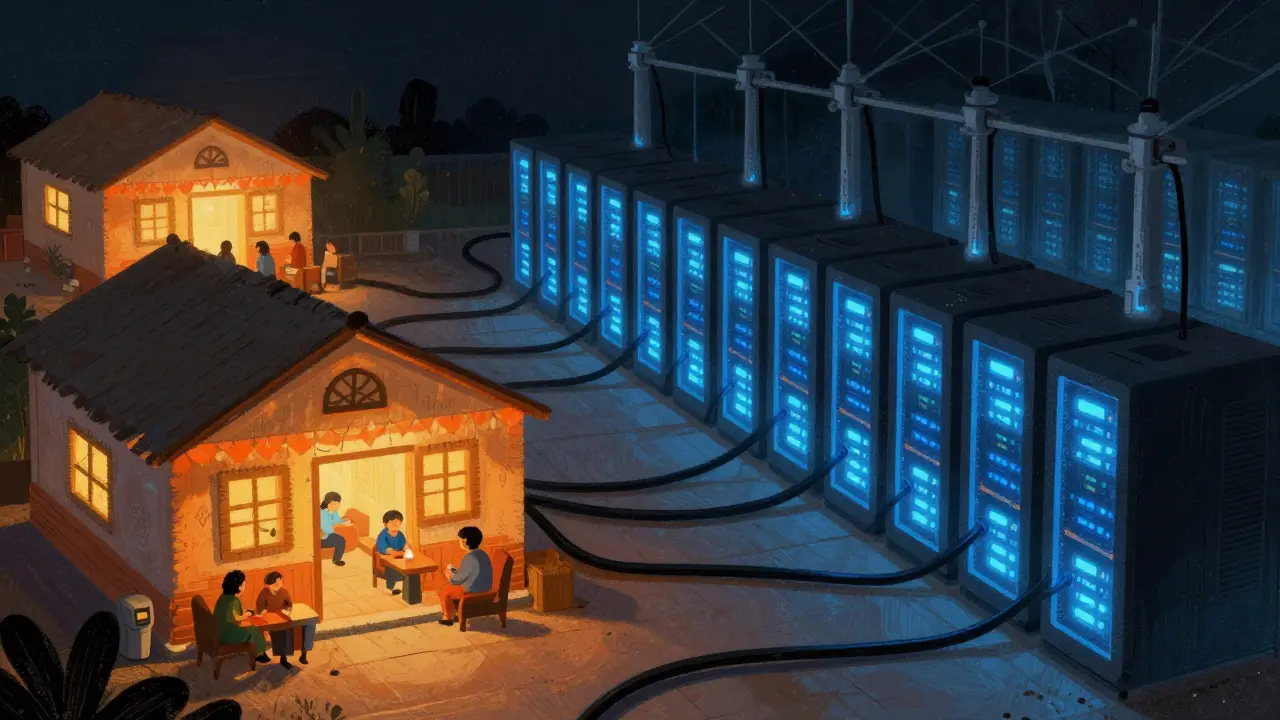
Imagine a country that went from being the world’s top Bitcoin mining hub to shutting down entire cities’ power grids because of it. That is exactly what happened in Kazakhstan. If you are looking to mine crypto there today, or if you are just trying to understand why the landscape changed so drastically, you need to know one thing: the wild west days are over. The government has pulled the plug on unregulated operations, not out of hatred for cryptocurrency, but out of sheer necessity to keep the lights on for hospitals, homes, and factories.
By 2021, Kazakhstan was leading the global hash rate for Bitcoin. It sounded like a gold rush. Miners flocked in, drawn by cheap electricity. But the infrastructure wasn't built for this load. The result? Blackouts. And when your neighbors can’t heat their homes because a server farm is burning through megawatts, the government reacts. Fast. As we move through 2026, the rules are strict, specific, and enforced with teeth. Here is how the current system works, what you need to do to stay legal, and why the energy crisis changed everything.
The Energy Crisis That Changed Everything
To understand the rules, you have to understand the trigger. It wasn’t ideology; it was physics. The national grid simply couldn’t handle the surge. In August 2025, authorities dismantled a massive illegal mining operation in East Kazakhstan Oblast. This wasn’t a small basement setup. This network consumed over 50 megawatt-hours of electricity. To put that in perspective, that is enough power to supply a city of 50,000 to 70,000 residents. The value of that stolen energy was roughly $16 million (9 billion tenge).
This operation involved corrupt utility employees who diverted electricity meant for local populations and strategic enterprises. It exposed a critical vulnerability: without strict controls, crypto mining becomes a parasite on the national economy. The government realized that allowing unchecked consumption threatened national security and public welfare. This led to a complete overhaul of how energy is allocated to miners. You can no longer just plug in and hope for the best. Every kilowatt-hour is now tracked, taxed, and limited.
Who Controls the Rules Now?
If you are operating in Kazakhstan, you are dealing with a complex web of regulators. It is not just one agency. You need to navigate multiple bodies, each with its own mandate:
- National Bank of Kazakhstan (NBK): They oversee the financial stability aspect. Deputy Governor Berik Sholpankulov has been vocal about integrating digital assets into the formal financial system while preventing systemic risk.
- Astana Financial Services Authority (AFSA): Located within the Astana International Financial Centre (AIFC), this body regulates the trading side. All significant crypto transactions must flow through here.
- Ministry of Digital Development, Innovation and Aerospace Industry (MDDIAI): They handle the licensing and technical registration of mining equipment.
- Financial Monitoring Agency (FMA): They are the anti-money laundering (AML) police. If your money trails look suspicious, they will find you.
As of 2025, the government has issued only 84 licenses for mining operations. They have accredited five mining pools and registered 415,000 mining machines. These numbers seem low compared to the peak years, but that is the point. The goal is quality control, not quantity. The era of anonymous farms is dead.
The 2026 Regulatory Framework: What You Must Do
So, what does compliance actually look like for a miner in 2026? It is a multi-step process that requires transparency at every level. Here is the checklist you need to follow:
- Get Licensed: You cannot operate without a license from the Ministry of Digital Development. This involves registering your hardware and proving your operational capacity.
- Join the Association: You must register with the National Association of Blockchain and Data Center Industry in Kazakhstan. This body monitors your energy consumption and environmental impact.
- Buy Power Legally: You can only purchase electricity through a state-run platform operated by the Ministry of Energy. There is a hard cap: you can buy a maximum of one megawatt-hour per transaction. This prevents hoarding and ensures fair distribution during peak times.
- Pay the Tax: There is a 15% tax rate on mining operations. Additionally, a specific mining electricity tax was introduced in 2022 to offset the strain on the grid.
- Sell Through AIFC: This is the biggest change. As of 2025, miners are required to sell 75% of their mined cryptocurrency on AIFC platforms. This increased from the previous 50% requirement in 2024. The remaining 25% can be held or traded elsewhere, but the majority must flow through the regulated exchange to ensure liquidity tracking and AML compliance.
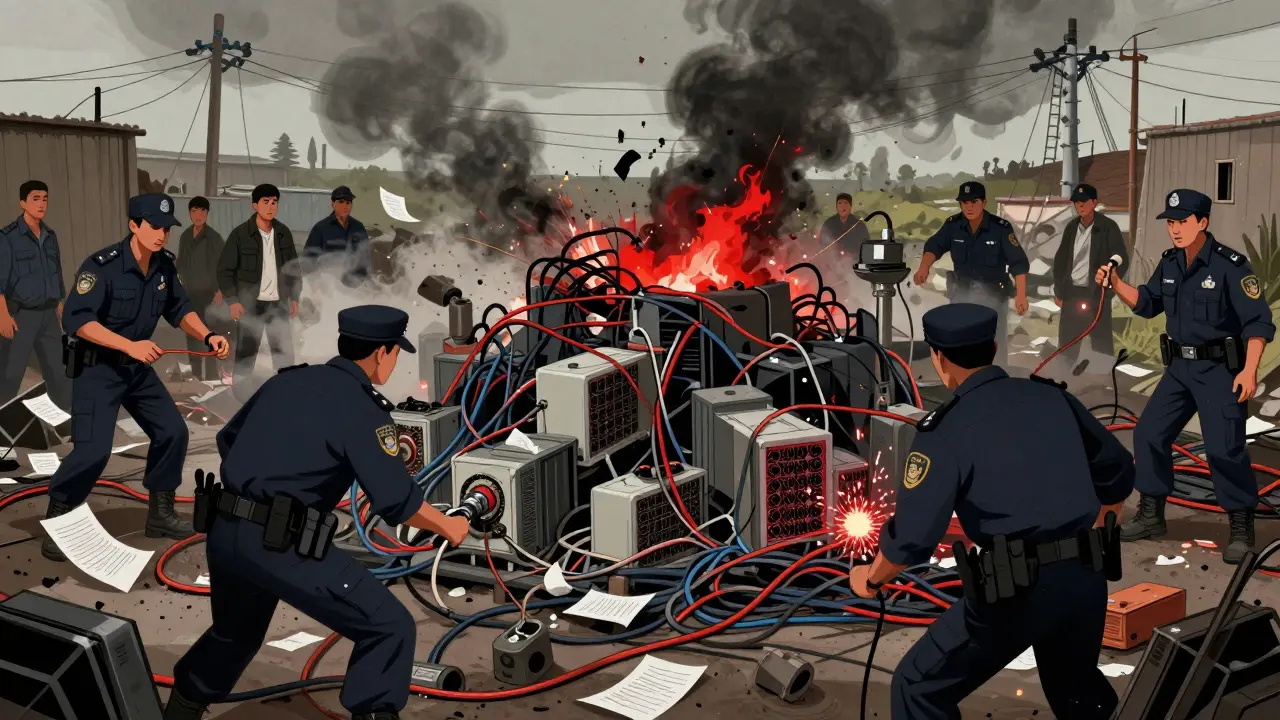
These rules are not suggestions. Non-compliance leads to immediate shutdowns, asset forfeiture, and criminal prosecution. The government has shown it is willing to seize high-end apartments and vehicles purchased with illicit mining profits, as seen in recent raids by the National Security Committee (KNB).
Why the AIFC Requirement Matters
You might wonder why the government forces you to sell 75% of your output on the AIFC. It comes down to visibility. In the past, miners could sell their Bitcoin on dark web markets or unregulated exchanges, making it impossible to track money laundering or tax evasion. By funneling the majority of sales through the Astana International Financial Centre, the government creates a transparent ledger of all crypto-to-fiat conversions.
This also stabilizes the local currency. When large amounts of foreign currency enter the country through regulated channels, it supports the tenge. For investors, this means less risk of sudden regulatory bans. For the state, it means revenue. It is a win-win, provided you play by the rules. However, it does mean you lose some flexibility. You cannot easily move your entire portfolio offshore anymore.
Energy Solutions: The 70/30 Proposal
The government knows that banning mining entirely would kill a growing industry. So, they are trying to integrate it sustainably. Energy Minister Tuleushin proposed a "70/30" energy program. Under this model, foreign investors would fund upgrades to thermal power plants. In return, 70% of the newly generated capacity goes to the national grid to support residential and industrial needs, while 30% is allocated specifically to crypto miners.
This approach attempts to solve the root cause: insufficient infrastructure. Instead of stealing power from hospitals, miners would pay for new power generation. It also opens the door for renewable energy integration. Solar and wind projects are being initiated to support mining loads without compromising environmental commitments. If you are an investor, look for opportunities tied to these green energy initiatives. They are likely to receive faster licensing approvals.

Comparison: Legal vs. Illegal Mining in Kazakhstan
| Feature | Legal Operation | Illegal Operation |
|---|---|---|
| Licensing | Required (84 total issued) | None |
| Electricity Source | State platform (max 1 MWh/transaction) | Diverted/Stolen from grid |
| Tax Rate | 15% + Electricity Tax | None (until caught) |
| Trading Platform | Must sell 75% on AIFC | Unregulated/Dark web |
| Risk Level | Low (if compliant) | Extremely High (Asset seizure, prison) |
| Environmental Impact | Monitored by Association | Unmonitored/High Strain |
Enforcement Reality: What Happens If You Break the Rules?
Do not think you can fly under the radar. The enforcement actions since 2022 have been brutal and effective. Authorities closed 36 unregulated exchanges and confiscated 4,000 mining devices by 2024. The East Kazakhstan case showed how deep the corruption went, involving utility insiders. But the net is tightening.
In 2024, the government implemented temporary restrictions on electricity supply to mining farms during peak consumption periods. This means even if you are legal, you might get cut off if the grid is stressed. This incentivizes miners to invest in battery storage or shift to renewable sources. The message is clear: your business is secondary to public welfare. If the grid flickers, your servers go dark.
Furthermore, the Financial Monitoring Agency is actively tracing wallets linked to unlicensed operations. If you are buying luxury real estate or cars with crypto profits that haven’t gone through the AIFC, you are painting a target on your back. The seizures of high-end apartments in the capital serve as a warning. The government wants clean money, not dirty cash laundered through ASICs.
Future Outlook: Is Kazakhstan Still Viable?
Despite the strictness, Kazakhstan remains a viable destination for serious, institutional-grade mining. The key word is "serious." Small-time hobbyists will find the barriers too high. But for companies that can navigate the licensing process, pay the taxes, and integrate with the AIFC, the environment is stable. The government has signaled that it wants innovation, just not chaos.
Legislators like Ekaterina Smyshlyaeva are pushing for further decriminalization of crypto trading for users of licensed platforms, which suggests a trend toward normalization rather than prohibition. The focus is shifting from punishment to regulation. As long as you respect the energy limits and the financial reporting requirements, you can operate safely. However, expect the 75% AIFC rule to potentially increase in the future as the government seeks greater control over capital flows.
The bottom line? The energy crisis forced Kazakhstan to grow up. The crypto sector had to mature alongside the nation’s infrastructure. If you are ready to play by the book, there is still opportunity here. If you are looking for loopholes, look elsewhere. The doors are closing, and the guards are watching.
Is crypto mining still legal in Kazakhstan in 2026?
Yes, crypto mining is legal in Kazakhstan, but it is heavily regulated. You must obtain a license from the Ministry of Digital Development, register with the National Association of Blockchain and Data Center Industry, and comply with strict energy and trading rules. Unlicensed mining is illegal and subject to severe penalties.
What percentage of mined crypto must be sold on AIFC?
As of 2025, miners are required to sell 75% of their mined cryptocurrency on platforms within the Astana International Financial Centre (AIFC). This is an increase from the 50% requirement in 2024, designed to enhance transparency and anti-money laundering compliance.
How much tax do crypto miners pay in Kazakhstan?
Crypto miners face a 15% tax rate on their operations. Additionally, there is a specific mining electricity tax introduced in 2022 to help cover the costs associated with the strain mining places on the national power grid.
Can I buy electricity directly from the grid for my mining farm?
No. Mining farms can only purchase electricity through a state-run platform operated by the Ministry of Energy. There is a strict limit of one megawatt-hour per transaction to prevent hoarding and ensure fair distribution during peak demand periods.
What happens if I run an unlicensed mining operation?
Operating without a license is a criminal offense. Authorities can confiscate your mining equipment, seize assets purchased with illicit profits (such as real estate and vehicles), and pursue criminal prosecution. Recent raids have resulted in the closure of hundreds of illegal operations.
Why did Kazakhstan restrict crypto mining?
The restrictions were implemented due to a severe energy crisis. Unregulated mining consumed vast amounts of electricity, causing blackouts in residential areas, hospitals, and industries. The government intervened to stabilize the national power grid and protect public welfare.
What is the 70/30 energy program?
Proposed by Energy Minister Tuleushin, the 70/30 program allows foreign investors to fund thermal power upgrades. In return, 70% of the new capacity goes to the national grid, and 30% is allocated to crypto miners. This aims to expand infrastructure without straining existing resources.
Carol @minaszilda
June 26, 2026 AT 12:13It is really fascinating to see how a nation adapts when the infrastructure simply cannot keep up with the demand. We often forget that energy grids are physical things with limits, not just abstract concepts in an app. The shift from wild west to regulated environment feels like a necessary growing pain for the industry as a whole.
Scott Miller
June 27, 2026 AT 05:54This is absolute garbage regulation! You want to stifle innovation? Fine. But don't act like you're saving the world. The government just wants control and taxes. If they wanted to fix the grid, they would invest in renewables instead of choking off legitimate businesses. This is economic suicide wrapped in bureaucratic red tape. People should move their operations to places that actually respect property rights and free enterprise.
Rob Morton
June 29, 2026 AT 05:21I wonder if the real issue here is the lack of foresight in urban planning rather than the crypto itself. It makes me think about how we prioritize short-term gains over long-term stability in so many sectors. Is it possible that the solution isn't restriction but better integration? Perhaps the miners could have been part of the grid management from the start?
Routh Middaugh
June 30, 2026 AT 00:24Well, I suppose this is all quite interesting, really!! The way they are forcing sales through AIFC seems like a massive overreach, doesn't it??? But then again, maybe it keeps things honest?? Who knows??
ross harris
June 30, 2026 AT 20:13The sheer audacity of these bureaucrats to dictate the flow of digital assets is laughable. They call it 'protection,' but it smells like greed. These regulators are basically toll collectors on the highway of progress. The 75% rule is a straitjacket. It’s not about safety; it’s about surveillance. The real criminals are the ones stealing the spotlight while pretending to be heroes. Let the market decide, or let the lights go out. Either way, the state loses.
Carl Belgrave
July 1, 2026 AT 21:01About time someone put a leash on these foreign parasites sucking our resources dry! Kazakhstan has every right to protect its own citizens first. Why should hospitals suffer because some guy in a basement wants to mine Bitcoin? This is national security, plain and simple. If you can't follow the rules, get out. We need strong borders and strong grids, not this chaotic nonsense.
Carl Hanzel
July 1, 2026 AT 21:56You people are missing the point entirely. It's not about the grid. It's about control. The government is terrified of losing track of money. That's why they force the AIFC sales. They want to know who has what. It's a classic power play disguised as public welfare. Don't fall for the propaganda.
Daniel J. Cox
July 2, 2026 AT 12:44I've traveled to Central Asia before and saw the strain on local infrastructure firsthand. It's sad to see communities suffer for profit. Maybe this strict approach is harsh, but it ensures everyone plays fair. 🌍⚡
Emma Rémond
July 4, 2026 AT 04:48Oh, please. The average person wouldn't understand the nuanced macroeconomic implications of hash rate distribution versus baseload power capacity. It is pathetic how easily the masses are swayed by simplistic narratives of 'freedom.' In reality, unregulated energy consumption is a failure of basic logistical planning. The regulatory framework is merely correcting a market inefficiency caused by ignorant actors who refuse to engage with the complex realities of grid stability.
ELNORA JEFFERSON
July 4, 2026 AT 22:01Boring read. Just more government meddling. I guess my electricity bill won't go down though.
John Curry
July 5, 2026 AT 06:18There is something profoundly dramatic about the image of a server farm going dark while a hospital stays lit. It forces us to confront the tangible cost of virtual wealth. We live in a world where bits and bytes consume real, physical resources. This crisis is a wake-up call for all of us to consider the environmental footprint of our digital lives. It is a stark reminder that technology does not exist in a vacuum.
Nicole Woessner
July 6, 2026 AT 14:02i think the cultural shift here is huge. kazakhstan used to be seen as the wild west of mining now its all suits and ties. its interesting how quickly the vibe changes when regulations hit. i hope it works out for them
Jon Milton
July 6, 2026 AT 23:53Look, I get the frustration, but you can't ignore the physics. If your neighbors are freezing, you shut down the non-essential load. That's just common sense. The aggressive tone here is unnecessary. We need cooperation, not chaos. The 70/30 split is a reasonable compromise if executed correctly. Let's focus on solutions rather than blaming the regulators.
Abby Martin
July 7, 2026 AT 12:26Let's be real here. Crypto mining is just gambling with extra steps. And now they're making it legal? No thanks. The fact that they are seizing apartments shows they mean business. Good. These miners were leeching off the system. I'm glad they are finally cleaning house. It's about time someone stood up for the little guy whose power gets cut.
Melissa L
July 8, 2026 AT 14:09thats crazy. i didnt know they could take ur stuff. sounds scary lol. hope no one gets hurt
Ryan Peters
July 9, 2026 AT 15:06Hah! Typical. First they steal your data, now they steal your power. The jargon-heavy excuses about 'grid stability' are just cover for incompetence. They couldn't manage the load, so they blame the users. Pathetic. The only thing being stabilized is their own grip on power. Keep crying about 'national security' while you fail to provide basic services.
Fiona Ellis
July 9, 2026 AT 17:37Does anyone else feel like this is invading our privacy too much? 😬 Tracking every kilowatt-hour feels dystopian. I love crypto because it's supposed to be private! Now we have to report everything? 📉🔒
Sajjad Ghorbani Moghaddam
July 10, 2026 AT 14:21Hey folks, let's try to keep this civil. It's clear there are valid points on both sides. The energy crisis is real, but so is the desire for financial freedom. Maybe we can learn from this and build better systems elsewhere. Education is key here.
Rebecca Shoniker
July 11, 2026 AT 20:04It is absolutely essential that we recognize the systemic failures exposed by this crisis!!! The lack of oversight was negligent!!! Furthermore, the new tax structure is a critical component of fiscal responsibility!!! Do not underestimate the importance of compliance!!!
Mélanie Boulay
July 13, 2026 AT 19:25I have always believed that sustainable development requires a delicate balance between technological advancement and resource management, and it is precisely this balance that Kazakhstan is attempting to restore through its stringent regulatory measures, which, although initially appearing restrictive, ultimately serve to protect the integrity of the national infrastructure and ensure that the benefits of technological progress are distributed equitably among all citizens, thereby fostering a more stable and resilient society for future generations.
Maurice Flynn
July 15, 2026 AT 06:14Let's look at the bright side! This pushes innovation in renewable energy. Imagine if every mining farm had to be solar-powered. That's a huge step forward for green tech. Stay positive, everyone. Change is hard, but it leads to growth. 💪