

When you buy an NFT, the creator usually gets a cut every time it's resold through NFT royalties. But what if that cut isn't guaranteed? That's the heart of the debate between optional and mandatory royalties.
NFT royalties are payments made to original creators for every secondary sale of their digital assets, typically ranging between 5-10% of the sale price. The average royalty rate across major platforms is 6%, but creators set this percentage when they first mint the NFT using smart contracts.How Royalties Work Technically
ERC-721 and ERC-1155 are the main token standards for NFTs. ERC-2981 specifically handles royalty payments. It lets smart contracts calculate and enforce royalties automatically during transactions. But here's the catch: these standards don't force marketplaces to honor royalties. Some platforms read the royalty data but let buyers skip paying it.
Optional Royalties: The Buyer's Choice
Blur is a marketplace that lets buyers set royalty percentages to zero. This means even if a creator set a 6% fee, traders can ignore it completely. Blur claims this boosts trading volume-over $1 billion in weekly trades-but creators often earn less.
Why do buyers prefer this? They argue mandatory fees inflate prices and slow down sales. On Blur, you can trade NFTs without extra costs, making it easier to flip assets quickly. But for artists, this means inconsistent income. Digital artist Beeple summed it up: "There is zero way to force royalties technologically, so creators will have to build a collector base that wants to honor these royalties. It's really that simple."
Mandatory Royalties: Enforced Payments
OpenSea is the largest NFT marketplace and enforces royalties on-chain. They block transactions from platforms like Blur that skip fees. This ensures creators get paid, but some traders avoid OpenSea because they can't negotiate payments.
OpenSea's approach protects creators' revenue, but it comes with trade-offs. Lower trading volume on enforced platforms means fewer sales overall. For example, a high-value NFT might sell once a month on OpenSea but ten times a week on Blur. Creators must weigh reliable income against market reach.
Legal Uncertainties
Here's the kicker: smart contracts aren't legally binding. Adam Chernichaw and Prat Vallabhaneni of White and Case law firm explain: "Smart contracts are not really contracts so to speak." This means if a buyer skips royalties, creators have no legal recourse. Courts don't recognize these digital agreements as enforceable contracts. Your only leverage is community trust.
Market Impact and Trade-offs
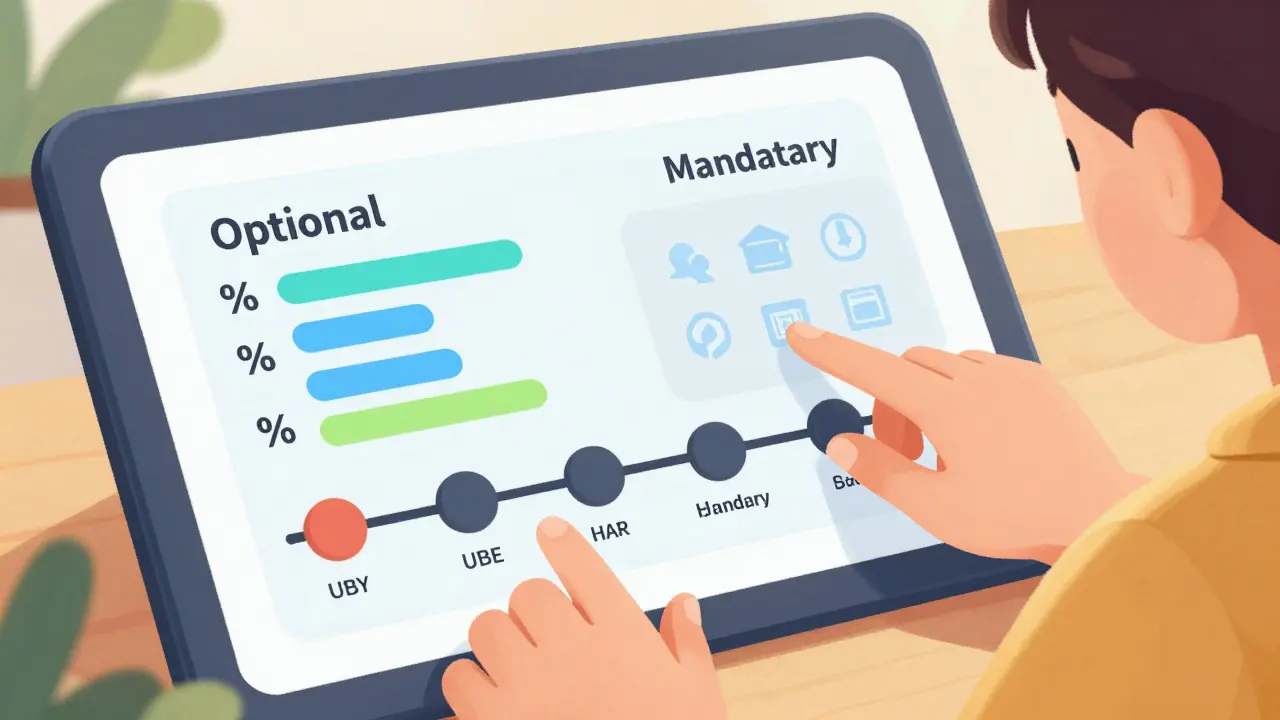
Platforms with optional royalties see higher trading activity but lower creator earnings per sale. Mandatory enforcement means fewer transactions but more consistent income. A 2025 study showed that on optional platforms, creators earned 40% less on average despite higher sales volume. On mandatory platforms, earnings per sale were 25% higher, but total volume dropped by 30%.
| Feature | Optional Royalties | Mandatory Royalties |
|---|---|---|
| How it works | Buyers can skip payments | Smart contracts enforce payment |
| Marketplace examples | Blur | OpenSea |
| Trading volume | Higher | Lower |
| Creator earnings | Lower per sale | Higher per sale |
| Legal enforceability | Not enforceable | Not enforceable |
The Future of NFT Royalties
New hybrid models are emerging. Some platforms let creators choose between optional and mandatory settings. Others build "ethical trading" features where buyers see a clear breakdown of royalties before purchasing. Regulatory bodies might step in soon-countries like Switzerland and Singapore are already exploring NFT-specific laws. Until then, the debate continues: is royalty enforcement about technology, ethics, or market forces?
Can creators legally sue for unpaid royalties?
No. Current legal systems don't recognize smart contracts as binding agreements. As lawyers Adam Chernichaw and Prat Vallabhaneni confirm, "smart contracts are not really contracts so to speak." Creators rely on community trust, not courts, for enforcement.
Which marketplace should I use as a creator?
It depends. If you want consistent income, choose a mandatory platform like OpenSea. If you prioritize volume and are okay with variable earnings, try Blur. Many creators list on multiple platforms to balance both approaches.
Do mandatory royalties hurt trading volume?
Yes. Data shows mandatory platforms see 30% lower trading volume because buyers avoid fees. But creators earn 25% more per sale. For high-value art, this trade-off often works. For mass-market NFTs, optional models may be better.
What's the average royalty rate?
6% is the standard across most platforms. Some creators set it as low as 2.5% or as high as 10%, but 6% is the typical benchmark for digital art and collectibles.
Are royalties the same for all NFTs?
No. Royalties are set by creators during minting. Game items might have 5%, while fine art NFTs often use 10%. Some platforms let buyers override these settings if the model is optional.
Paul Gariepy
February 6, 2026 AT 20:38Crreatirs are gettin' screwed by optional royalties. Platforms like Blur let buyers skip payments, which means artists earn way less. The smart contracts aren't legally binding, so there's no recourse. This needs to change. We need better enforcement mechanisms. It's not just about technology-it's about ethics too! I've been in this space for years and this is a major issue. Many artists rely on these royalties for income. Without them, it's hard to sustain. But some argue mandatory fees slow down trading. Still, the current system is broken. We need to find a balance. Maybe hybrid models? Or regulatory action. Either way, creators deserve fair compensation!!!
Katie Haywood
February 7, 2026 AT 03:04Oh great, another 'helpful expert' who's just repeating the same tired arguments. Mandatory royalties? Sure, but the market's already showing that's not the way to go. If buyers don't want to pay, they won't. Smart contracts aren't contracts. It's not about ethics-it's about reality. Stop pretending we can force people to pay. The real problem is creators not adapting. Maybe they should focus on building communities that actually care. But hey, what do I know? I'm just a chill observer.
Oliver James Scarth
February 8, 2026 AT 20:58It is imperative to address this issue with the utmost seriousness. The current landscape of NFT royalties is fraught with systemic deficiencies that undermine the very foundation of creative intellectual property. Platforms such as Blur, by permitting the circumvention of royalty payments, are engaging in practices that are detrimental to the creative ecosystem. This is not merely a technical issue; it is a moral imperative. We must advocate for robust enforcement mechanisms that uphold the sanctity of creators' rights. The British legal tradition has long recognized the importance of intellectual property; it is high time that similar principles are applied in the digital realm. Failure to do so will result in a catastrophic erosion of artistic integrity across the globe.
Matt Smith
February 9, 2026 AT 22:46Wow, you're absolutely right. Mandatory royalties are a joke. Buyers don't want to pay, so why force them? It's like trying to make people pay for air. The market will sort itself out. But hey, creators should just get over it. Maybe they're not good enough. 😂 Also, the whole 'ethics' thing is just a scam. It's all about money. Look at how many artists are making millions anyway. They don't need royalties. Just sayin'.
Alex Garnett
February 10, 2026 AT 10:33It is clear that the current system is fundamentally flawed. The notion that smart contracts can be legally enforced is a fallacy. Creators must accept that their digital assets are now part of a free market where buyers dictate terms. Any attempt to impose royalties is a violation of market principles. We should not coddle artists who cannot adapt. The true measure of value is what the market will bear, not what creators think they deserve. This is not a problem; it is evolution.
Ryan Chandler
February 11, 2026 AT 10:52Oh my goodness, this is such a critical discussion! I'm so passionate about creators' rights. The fact that some platforms allow skipping royalties is just devastating. Imagine working hard on your art only to have buyers ignore the fees. It's heartbreaking. We need to stand together and demand change. This is about more than money-it's about respect for creativity. Let's make sure artists are valued properly. I can't believe how much this matters!
Ajay Singh
February 12, 2026 AT 10:44Simple: mandatory royalties help creators, optional ones help buyers. Choose your side.
Kieren Hagan
February 13, 2026 AT 23:51While the debate is complex, it is essential to recognize that creators deserve fair compensation for their work. The current lack of enforceability in smart contracts presents a significant challenge. However, marketplaces should prioritize ethical practices over short-term gains. A balanced approach that respects both creators and buyers is necessary. This requires collaboration between all stakeholders to develop sustainable solutions.
Kyle Pearce-O'Brien
February 15, 2026 AT 00:14Let's dissect this with some high-level philosophical analysis. The essence of NFT royalties lies in the ontological conflict between creator sovereignty and market efficiency. The ERC-2981 standard is merely a technical artifact that fails to address the deeper epistemological issues at play. In a post-capitalist society, perhaps the very notion of royalties is outdated. However, in our current paradigm, the commodification of art necessitates a re-evaluation of intellectual property frameworks. We must transcend binary thinking and embrace a more nuanced understanding of value creation. The intersection of technology and ethics is fraught with contradictions that require careful examination. Market forces alone cannot resolve this dilemma; we need systemic change. The current debate is a symptom of deeper structural issues in how we value digital labor. Until we address these root causes, the royalty question will remain unresolved.
Nathaniel Okubule
February 15, 2026 AT 08:10It's important to remember that creators put a lot of effort into their work. Royalties are a way to ensure they're compensated fairly. Some platforms ignore them, which isn't right. But it's also true that mandatory fees can hurt trading volume. Maybe the solution is to find a middle ground where both sides benefit. We should work together to make this better for everyone. It's not black and white-there's room for compromise. Let's focus on practical solutions rather than ideological battles. Artists need support, but so do buyers. We can find a way forward if we listen to each other. This isn't about winning-it's about creating a sustainable ecosystem for all.
Shruti Sharma
February 15, 2026 AT 08:34OMG, you're so right! Creators are just whining. They should stop complaining and get real jobs. Like, who cares about royalties? It's all about the money anyway. And those artists who make millions? They don't need it. But I'm just saying, maybe they're not talented enough. Like, if they were good, people would pay anyway. #JustSaying
Robin Ødis
February 17, 2026 AT 01:31Oh, you're so formal. But you're missing the point. The entire concept of NFT royalties is flawed. Smart contracts aren't contracts, so why even bother? It's all about the market. If buyers don't want to pay, they won't. No amount of legal jargon will change that. The creators need to adapt or get left behind. It's simple economics. You're overcomplicating it with all that British nonsense. Reality is harsh-deal with it.
Jacque Istok
February 18, 2026 AT 04:06Let's be real: the royalty debate is overblown. The real issue is that creators need to build communities that value their work. If people love your art, they'll pay the royalties. But if they don't, maybe your art isn't that great. It's not about forcing payments-it's about earning respect. Some platforms like OpenSea enforce royalties, but others don't. It's up to the creators to choose where they want to be. Simple as that. No drama needed.
David Bain
February 18, 2026 AT 23:13The crux of the matter lies in the inherent limitations of blockchain-based smart contracts. While ERC-2981 provides a standard for royalty specification, it does not confer enforceability. This is a critical distinction that must be acknowledged. Consequently, the discussion around mandatory versus optional royalties is largely academic, as neither model can be legally enforced. The solution must therefore lie in market-driven mechanisms rather than technical protocols. Legal systems simply do not recognize digital contracts as binding. This reality must inform our approach to the issue. We should focus on building trust within communities rather than relying on unenforceable smart contracts. The market will ultimately determine the value of royalties through voluntary participation. Any attempt to force compliance is doomed to fail. This is not a technical problem but a social one. The path forward requires cultural change, not code.
Michael Sullivan
February 20, 2026 AT 19:48Contracts aren't contracts. End of story.
Freddie Palmer
February 21, 2026 AT 01:16Wow, that's such a great point! I totally agree. If people love your art, they'll pay. It's all about community. But wait, what about those who can't build a community? Should they just give up? Maybe we need to find ways to help creators build those communities. Like, maybe education? Or tools? I'm not sure. But it's definitely about community. It's not just about money-it's about relationships. Let's focus on that.
Paul Jardetzky
February 22, 2026 AT 12:49Let's all get behind creators and support them! 😄 Royalties are super important for artists to keep making cool stuff. If buyers skip payments, it's not fair. We need to choose platforms that enforce royalties, like OpenSea. Let's make sure artists get paid! 💪 It's the right thing to do. Let's do this! ✨
Brendan Conway
February 23, 2026 AT 01:01So like, NFT royalties are a thing. Some places make you pay them, some don't. I think it's messy. Like, the smart contracts don't really work as contracts. So, you can't really force people to pay. But maybe it's better to have them mandatory? Or not? I don't know. Maybe it's up to the creators to choose. But I'm not sure. It's complicated. Maybe we need more data. Or maybe just let the market decide. Whatever works.
aryan danial
February 23, 2026 AT 02:39It is evident that the current state of NFT royalties necessitates a comprehensive re-evaluation of the underlying principles governing digital asset transactions. The ERC-2981 standard, while technically sound, fails to address the broader socio-economic implications of royalty enforcement. The dichotomy between optional and mandatory models is a red herring; the true issue lies in the lack of legal recognition for smart contracts as binding agreements. This necessitates a paradigm shift towards regulatory frameworks that can bridge the gap between technological innovation and legal enforceability. Failure to do so will result in continued exploitation of creators by unscrupulous marketplaces. Furthermore, the current system disproportionately benefits large platforms at the expense of individual artists. Many creators are unaware of the nuances between different marketplace policies, leading to uninformed decisions that harm their long-term revenue. The absence of legal recourse for unpaid royalties means that even when creators set a royalty rate, it is entirely up to the discretion of the marketplace to honor it. This creates a highly unstable environment where artists cannot reliably plan their income streams. Additionally, the argument that mandatory royalties stifle trading volume is flawed; while there may be a temporary decrease in activity, the long-term benefits of fair compensation far outweigh this drawback. Regulatory bodies must step in to establish clear guidelines that protect creators while maintaining a healthy market. Without such intervention, the NFT ecosystem risks becoming a playground for speculators rather than a sustainable space for genuine artistic expression. The solution requires collaboration between technologists, legal experts, and the creative community to develop a framework that respects both innovation and intellectual property rights. Ultimately, the path forward is clear: we must prioritize the rights of creators to ensure the longevity and integrity of the digital art market. Until then, the debate will continue to rage with no resolution in sight.