


Most people shopping for a crypto exchange look for the same things: a huge list of coins, flashy charts, and instant support. But if you're trading in Europe, there's a different priority that often gets overlooked-regulatory peace of mind. Paymium is a France-based cryptocurrency exchange that focuses on providing a compliant, secure gateway for trading Bitcoin with Euros. Originally launched in 2011 as Bitcoin Central, it's one of the oldest players in the game. Instead of trying to be a global supermarket for every altcoin in existence, Paymium plays a specific role: a regulated bridge for European users who value legality over variety.
The Big Picture: What Makes Paymium Different?
If you've used giants like Binance or Coinbase, Paymium will feel like a breath of fresh air-or a step back in time, depending on your perspective. The biggest draw here isn't the tech; it's the legal framework. Paymium is regulated by the Autorité des Marchés Financiers (AMF), the French financial authority. For a trader, this means the platform isn't operating in a legal grey area. It's fully compliant with EU payment service regulations, which is a massive deal if you're moving significant amounts of fiat currency into digital assets.
The platform's primary goal is facilitating the trade of Bitcoin (BTC) using Euros (EUR). While they've expanded slightly to support about 10 different cryptocurrencies, including Ethereum (ETH), they aren't trying to compete with the 300+ coins you'll find elsewhere. It's a lean, focused approach that caters specifically to those who believe in the "blue chip" assets of the crypto world.
Breaking Down the Costs: The Weird and the Wonderful
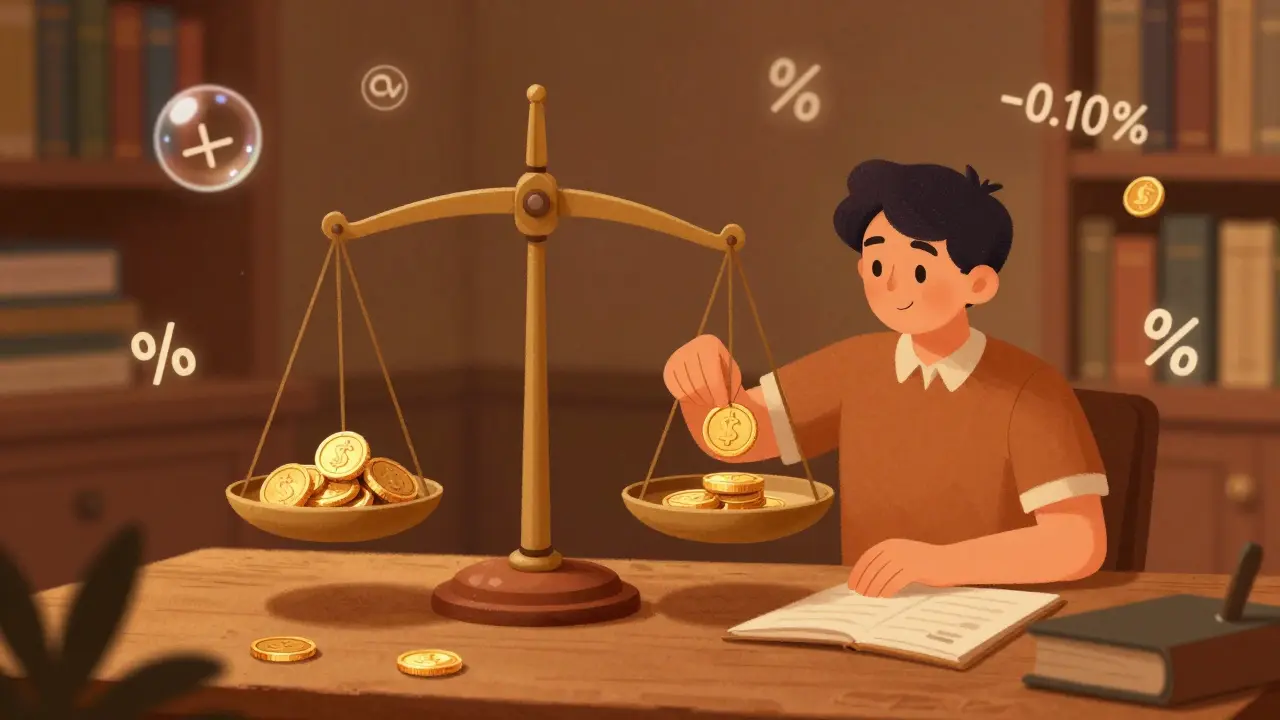
The fee structure at Paymium is where things get interesting. Most exchanges charge you regardless of whether you're the one placing the limit order or the one taking it. Paymium does things differently. They employ a maker-taker model that actually rewards people for providing liquidity.
Here is the wild part: Paymium has historically offered a negative maker fee of -0.10%. In plain English? If you create an order that stays on the books (a "maker" order), the exchange effectively pays you to trade. It's a powerful incentive to keep the market moving. However, if you're a "taker" (someone who buys or sells instantly at the current market price), you'll pay a fee around 0.50%. Some analysts point out that this taker fee is roughly double the industry average, so if you're an active day trader hitting the "buy" button instantly, this might eat into your profits.
| Feature | Value / Detail | Note |
|---|---|---|
| Maker Fee | -0.10% | You get paid to provide liquidity |
| Taker Fee | 0.50% | Higher than global averages |
| Min. Deposit | €5 | Very accessible for beginners |
| Daily Deposit Limit | €100,000 | High capacity for institutional users |
| BTC Withdrawal Fee | €0 | Paymium often covers network fees |
Is the Interface User-Friendly?
Depending on who you ask, Paymium's design is either "intuitive" or "too simple." For a beginner who just wants to swap Euros for Bitcoin without getting lost in a sea of candlestick charts and leverage sliders, it's perfect. There's no steep learning curve here. You sign up, go through the KYC (Know Your Customer) process, deposit your funds via SEPA transfer or VISA, and you're ready to go.
However, if you're a pro trader looking for 5x leverage or complex derivative tools, you won't find them here. Paymium doesn't offer leverage at all. This is a conscious choice to maintain a lower-risk profile and stick to their regulatory roots. If you're moving huge sums-specifically over €50,000-they offer an OTC (Over-the-Counter) desk. This is a huge win for institutional clients who want to avoid "slippage" (where a huge order moves the market price) and prefer a direct, negotiated trade.
The Security Trade-off: Privacy vs. Protection
You can't use Paymium anonymously. Because they are so tightly integrated with French and EU law, the mandatory KYC process is non-negotiable. For some in the crypto community, this is a dealbreaker. But for the average person, this regulatory oversight provides a safety net. Knowing that the exchange is audited and follows MiCA (Markets in Crypto-Assets) frameworks makes the platform feel more like a bank and less like a digital wild west.
Technically, they keep things tight with 2FA (Two-Factor Authentication) and cold storage for assets. Cold storage means the bulk of the funds are kept offline, away from hackers. It's the industry gold standard for preventing the kind of catastrophic thefts that have plagued unregulated exchanges in the past.
The Reality Check: The Pros and Cons
Let's be honest: Paymium isn't trying to be the next Binance. With a 24-hour trading volume of around $28,393, it's a niche player. While Binance handles billions, Paymium focuses on a loyal base of roughly 500,000 users, mostly in France and surrounding EU countries. This smaller scale means the experience is more focused, but it also means the support isn't 24/7. Their team is available Monday to Friday, 10 am to 6 pm. If you have a crisis on a Saturday night, you're going to have to wait until Monday morning.
Here's a quick breakdown of how they stack up against the competition:
- Versus Blockchain.com: Paymium has a stronger, more specific European regulatory footprint and a better EUR-focused infrastructure.
- Versus Kraken: Kraken wins on features (like leverage and coin variety), but Paymium's negative maker fees can be more attractive for specific liquidity-providing strategies.
- Versus Binance: There is no contest on volume or variety, but Paymium offers a simpler, more compliant environment for those who find Binance overwhelming.
Final Verdict: Who Should Use Paymium?
Paymium is essentially a "specialist" exchange. It's a great fit if you are a European resident, you primarily care about Bitcoin and Ethereum, and you want to know that your exchange isn't going to vanish overnight because it ignored a government regulation. The low entry barrier (€5 minimum deposit) makes it a safe playground for beginners.
On the flip side, if you're an altcoin hunter looking for the next 100x moonshot, or a high-frequency trader who needs 24/7 support and advanced leverage, you'll find Paymium too limiting. It's a tool for stability and compliance, not for aggressive speculation.
Is Paymium safe to use?
Yes, Paymium is considered very safe due to its regulation by the French Autorité des Marchés Financiers (AMF). They use industry-standard security like 2FA and cold storage to protect user funds, and they strictly adhere to EU payment service regulations.
What are the fees on Paymium?
Paymium has a unique structure where makers (those who add liquidity) can actually earn money with a -0.10% fee. However, takers (those who execute market orders) pay a fee of approximately 0.50%, which is higher than the global average.
Can I buy altcoins on Paymium?
The selection is very limited. While they support around 10 cryptocurrencies, including Ethereum, their primary focus is on Bitcoin (BTC). It is not the right platform for traders who want a diverse portfolio of small-cap altcoins.
How do I deposit Euros into Paymium?
You can deposit Euros using SEPA transfers or VISA cards. The minimum deposit is only €5, and for high-net-worth individuals or institutions, the daily limit is as high as €100,000.
Does Paymium have a mobile app?
Yes, Paymium is available across various platforms. Users generally praise the digital wallet management experience, though some suggest the interface could be even more intuitive for total beginners.
What happens if my account is inactive?
Paymium has a policy regarding dormant accounts. If an account remains inactive for more than 3 years, dormant fees may be applied. It's a good idea to check your account periodically if you're using it for long-term storage.
Robert Mosolygo
April 21, 2026 AT 21:52The obsession with "regulatory peace of mind" is a convenient smokescreen for the inevitable systemic collapse. If you believe that a government agency like the AMF actually protects your assets rather than simply providing a legal framework for the state to seize them more efficiently, you are delusional. These institutions don't exist to safeguard your wealth; they exist to monitor the flow of capital and ensure the taxman gets his cut before the bubble bursts. The very fact that this platform is "compliant" is a red flag, as it means they have already traded their autonomy for a license to operate within a failing fiat system. We are essentially handing the keys to our digital vaults to the same people who caused the 2008 crisis. It's a farce. A complete and utter farce. You are not buying security; you are buying a front-row seat to the controlled demolition of privacy.
Doc Coyle
April 23, 2026 AT 03:45It is simply better to be safe than sorry. Using a regulated platform is the only moral way to handle these assets without causing chaos.
Keith Garcia
April 24, 2026 AT 23:20Imagine thinking a -0.10% maker fee is a "reward" when the overall liquidity is practically nonexistent 🙄. It's a quaint little boutique for people who are terrified of a little volatility. Truly a peasant's gateway to the crypto world. 💅
Greg Reynolds
April 26, 2026 AT 00:15The claim that a high taker fee is "roughly double the industry average" is a vague generalization. If one actually analyzes the tiered structures of larger exchanges, the disparity is far more nuanced than this review suggests.
Ellie Drews
April 26, 2026 AT 02:18I think it's great that there's an option for people who just want something simple and legal. Not everyone wants to gamble on a moonshot!
Kyle Bush
April 26, 2026 AT 07:34WHO CARES ABOUT FRENCH RULES?! 🇺🇸 USA ALL THE WAY! 🇺🇸 Get your money out of Europe and put it where the real power is! 🦅💥 This whole "regulated" thing is just a scam to keep us weak! 😡🔥
Liz Ariza
April 26, 2026 AT 12:28Actually, having a low entry point like €5 is such a vibe for anyone just starting out! 🌟 It's all about those baby steps toward financial freedom! ✨🚀
Yvette P
April 27, 2026 AT 10:17Oh, look at me, I'm a "specialist" exchange because I can't manage to list more than ten coins without my servers melting down. How absolutely revolutionary. I'm sure the institutional clients moving €50k through an OTC desk are just thrilled to be using a platform that's basically a digital version of a 2011 blog. The latency must be simply breathtaking, assuming you can even get the page to load before the AMF decides to change the rules again for the third time this week. It's a masterpiece of mediocrity wrapped in a fancy European flag, and the fact that people call this "security" instead of "extreme limitation" is the real joke here. I'll be over here with my actual portfolio while you guys enjoy your regulated safety blanket.
Jason M
April 29, 2026 AT 01:01Everyone, please remember that we are all on a journey! Whether you choose a regulated path or a wilder one, the important thing is that you are learning! This is a huge step for the cautious trader! 🌟
debashish sahu
April 29, 2026 AT 13:49It is interesting to see how different countries approach the regulation of digital assets.
Miranda Jamieson
April 30, 2026 AT 02:31If you're okay with KYC and giving your soul to the French government, be my guest. Real traders value privacy over some fake "safety net." Pathetic.
Paige Raulerson
May 1, 2026 AT 17:40The interface sounds dreadfully boring. I can't even imagine spending more than five minutes on a site that looks like it was designed for a bank in 2012.
praveen subbiah
May 2, 2026 AT 05:15This is amazing! My heart swells with pride seeing a European platform so dedicated to the law! It's truly a magnificent bridge for the world! 🇮🇳✨
Guy Bianco
May 2, 2026 AT 06:15I believe this provides a stable environment for newcomers. 😊
Ali Tate
May 2, 2026 AT 12:12regulating crypto is a joke lol... why buy into a system that just wants to clip your wings... pure mediocrity
Findlay Duncan Lyon
May 4, 2026 AT 02:24Quite a niche spot for EU traders.
Larry Yang
May 5, 2026 AT 02:36the volume is a joke lol. who actually trades here? it's basicly a ghost town with a fancy amf stamp on it.
Alex Wan
May 6, 2026 AT 00:56I would be most delighted to assist any of you in understanding the SEPA process, as it can be quite daunting for some! Let us collaborate for success! 🌟
Sarah Fisher
May 7, 2026 AT 08:42It's interesting how we define 'security'. Is it the protection of a law, or the freedom from it?
jill huyo-a
May 8, 2026 AT 23:30I'm glad there are options for those who feel intimidated by the bigger platforms.
Benjamin Forg
May 9, 2026 AT 09:18you think the amf is protecting you lol... they just track your every move for the new world order... no one is safe in a cold wallet if the government has your kyc
Sara Ellis
May 11, 2026 AT 08:54just buy btc and hold it
Mike Krasner
May 11, 2026 AT 16:10who cares about the interface just tell me how to get the negative fees without getting scammed lol
Kathleen Bergin
May 13, 2026 AT 09:49It's just a way to trade Bitcoin with Euros safely.
Charlie Queen
May 14, 2026 AT 05:23Love seeing more people getting into crypto! 🌍 Let's keep the vibes positive! ✌️
Mike Word
May 15, 2026 AT 01:52It is quite a specific utility for the European market.
Lisa Camp
May 16, 2026 AT 22:11STOP COMPLAINING ABOUT THE FEES AND JUST START TRADING! GET YOUR LIFE TOGETHER AND MAKE SOME MONEY! 🚀💥