

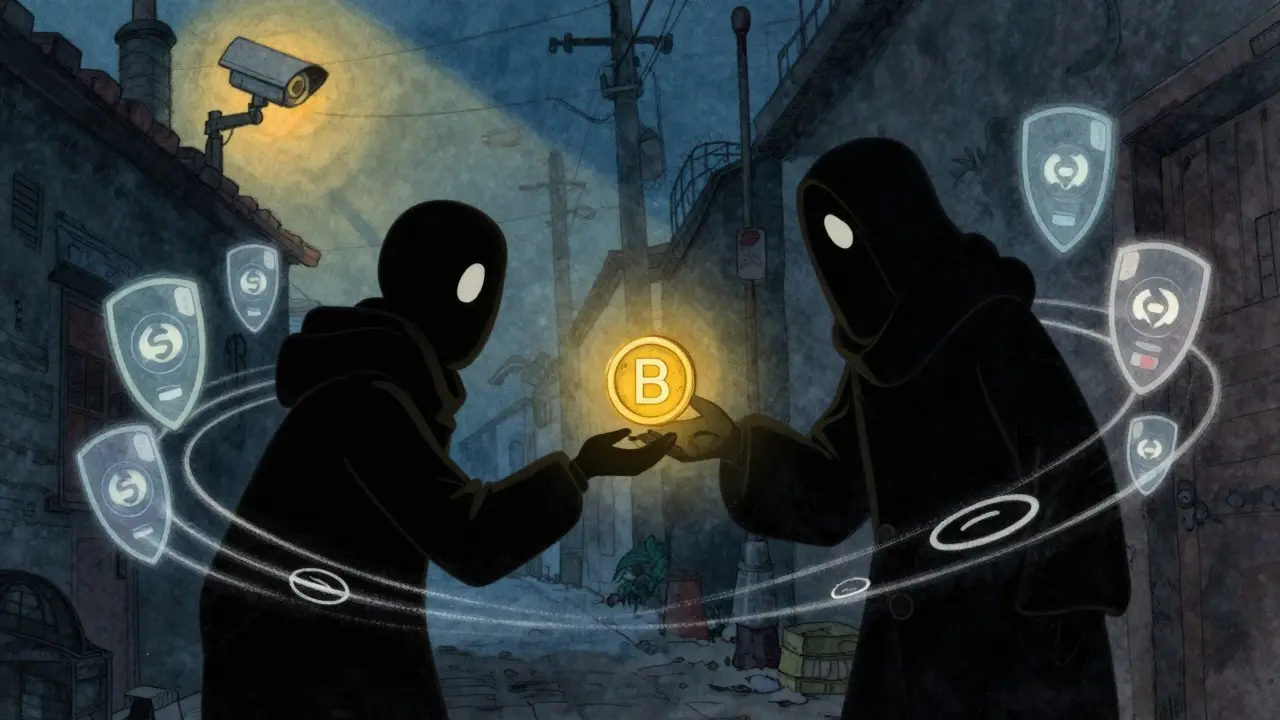
When you send money through Bitcoin, everyone on the network can see exactly how much you sent, who you sent it to, and when. Your transaction is permanently recorded on a public ledger. That’s fine for some. But for others - people worried about surveillance, censorship, or being targeted by criminals - this level of transparency is a serious risk. That’s where privacy cryptocurrencies come in. These aren’t just Bitcoin with a mask. They’re built from the ground up to hide who’s sending money, who’s receiving it, and how much is changing hands.
Why Privacy Matters in Digital Payments
Think about using cash. No one tracks what you buy, who you pay, or how much you spent. That’s the standard privacy most people expect. But digital payments? They leave trails. Your bank knows. Your employer knows. Advertisers know. Governments know. Even if you’re not doing anything illegal, you still have a right to control who sees your financial history. Privacy cryptocurrencies aim to bring that cash-like anonymity to digital money. Without them, your spending habits, income sources, and financial relationships are all exposed. Imagine a whistleblower, a journalist in a repressive country, or someone fleeing domestic abuse. Their ability to move money without being tracked could literally save their life. Even everyday users benefit - no one needs a public record of their medical bills, charitable donations, or private purchases.Monero: The Gold Standard for Total Anonymity
Monero (XMR) doesn’t give you a choice. Every single transaction is private. There’s no option to turn off privacy. That’s intentional. It’s built into the protocol. If you use Monero, you’re using full anonymity by default. It achieves this with three key technologies:- Ring signatures - Mix your transaction with several others, making it impossible to tell which one is yours.
- Stealth addresses - Each time you receive Monero, a one-time address is generated. No one can link that address back to your real wallet.
- RingCT (Ring Confidential Transactions) - Hides the transaction amount. No one sees how much was sent.
Zcash: Privacy You Can Choose
Zcash (ZEC) takes a different approach. It lets you pick. You can send money openly like Bitcoin, or you can use shielded transactions powered by zk-SNARKs - a type of zero-knowledge proof that proves a transaction is valid without revealing any details. This flexibility sounds great. But here’s the catch: only about 15% of Zcash users actually use shielded transactions. Most stick with transparent ones. Why? Because shielded addresses (z-addresses) are harder to use. They require extra steps. Wallets don’t always support them well. And many users don’t even realize they’re not getting privacy by default. Zcash also had a controversial "trusted setup" in its early days - a one-time cryptographic ceremony that, if compromised, could break privacy. While newer versions have moved to zk-STARKs (which remove this risk), the early stigma stuck. Still, Zcash’s optional privacy makes it more acceptable to regulators. Some institutions use it because they can audit transparent transactions when needed, while still offering private options to users.
Dash: Speed Over Stealth
Dash (DASH) doesn’t pretend to be the most private coin. It’s more about speed and usability. Its privacy feature, PrivateSend, uses CoinJoin - a method that mixes your coins with others to blur the trail. Think of it like putting your cash in a pile with other people’s cash, then pulling out an equivalent amount. It’s not perfect. If someone watches the mixing pool closely, patterns can still be spotted. But it’s enough to confuse casual observers. What Dash does well is speed. Its InstantSend feature confirms transactions in under two seconds. That’s faster than Visa. It’s also easier to use. Most wallets have PrivateSend turned on with one click. You don’t need to learn about zero-knowledge proofs or ring signatures. For users who want a little privacy but care more about quick payments - like small businesses or daily spenders - Dash is a solid pick.Other Players: Firo, Grin, and Beam
Firo (FIRO), formerly Zcoin, uses the Lelantus Spark protocol. It lets you "burn" old coins and redeem new ones with no history. It also uses Dandelion++ to hide your IP address during broadcasts. It’s clever, but adoption is low. Grin and Beam use MimbleWimble - a protocol that combines transactions and deletes old data. This makes the blockchain smaller and more private. But neither has gained much traction. They’re technically impressive but lack user-friendly tools and community support.
Regulation Is Tightening - But Privacy Isn’t Going Away
Governments hate untraceable money. The Financial Action Task Force (FATF) wants all exchanges to track where money comes from and goes to. That’s impossible with Monero. So in 2025, countries like South Korea and Japan banned privacy coins entirely. The EU’s MiCA regulation is watching closely. Major exchanges have removed them. Over 51% of regulators in the Asia-Pacific region now say privacy-by-default features are a barrier to institutional adoption. But users aren’t giving up. Decentralized exchanges saw a 200% jump in privacy coin trading volume in 2025. People are moving off regulated platforms and onto peer-to-peer networks. They’re using Tor or VPNs. They’re storing keys offline. They’re learning how to protect themselves. Privacy advocates argue this isn’t about crime - it’s about rights. If you can track every purchase you make, who’s to stop someone from freezing your funds because you bought a protest sign or donated to a banned group? Financial privacy isn’t optional for everyone. It’s essential.What You Need to Know Before Using Privacy Coins
If you’re thinking about trying one:- Monero is best if you want total anonymity and don’t mind the complexity. Use a hardware wallet. Always use Tor.
- Zcash is good if you want control - but only if you use shielded addresses. Most users don’t. You’ll need to learn z-addresses and viewing keys.
- Dash is easiest for beginners. PrivateSend is one click. But don’t expect bulletproof anonymity.
- Never reuse addresses
- Use a VPN or Tor when sending
- Keep your private keys offline
- Avoid sending from exchanges - they can trace your history
What’s Next?
Ethereum and other major blockchains are now testing zero-knowledge proofs to add privacy to DeFi. That could mean less need for separate privacy coins. Maybe one day, all crypto will be private by default. But for now, Monero remains the only coin that forces privacy. And that’s why it still leads. The future of money isn’t just about speed or low fees. It’s about control. And for many, that means keeping their financial life private - even if the world is trying to watch.Are privacy cryptocurrencies illegal?
No, privacy cryptocurrencies themselves are not illegal. But many countries have restricted or banned their trading on regulated exchanges due to concerns about money laundering. Using Monero, Zcash, or Dash is legal in most places, but accessing them often requires using decentralized platforms that don’t require ID verification.
Can I trace a Monero transaction?
No. As of 2025, no blockchain analysis company - including Chainalysis and Elliptic - has been able to trace Monero transactions. Its ring signatures, stealth addresses, and RingCT make it mathematically impossible to link sender, receiver, or amount. This is by design.
Why do Zcash transactions often lack privacy?
Zcash offers optional privacy through shielded addresses, but most users stick with transparent ones because they’re easier to use. Since only about 15% of transactions are shielded, the anonymity set is small. That means even if you use privacy, there’s a higher chance your transaction can be linked to others.
Can I buy privacy coins on Coinbase or Binance?
As of 2025, most major centralized exchanges like Coinbase and Binance have delisted Monero and other privacy coins due to regulatory pressure. Zcash and Dash may still be available in some regions, but even those are being removed. To buy privacy coins, you’ll likely need to use decentralized exchanges like Flashift, SideShift, or ThorChain.
Is Monero better than Bitcoin for privacy?
Yes, by a huge margin. Bitcoin transactions are fully public - anyone can see your balance, who you paid, and when. Monero hides all of that. Even if someone knows your wallet address, they can’t see your transaction history. Monero was built for privacy. Bitcoin was built for transparency.
Do privacy coins have higher fees?
Yes, generally. Privacy features require more complex cryptography, which uses more data and computing power. Monero transactions are typically 2-3 times larger than Bitcoin’s, leading to higher fees. Zcash shielded transactions also cost more than transparent ones. Dash fees are lower, but its privacy is weaker.
Can I use privacy coins for everyday purchases?
Very few merchants accept privacy coins directly. You’ll mostly use them for peer-to-peer trades or as a store of value. Some services allow you to convert privacy coins to fiat or Bitcoin for spending, but direct use is rare. Their main value is in financial privacy, not convenience.
Will privacy coins disappear because of regulation?
Not likely. While regulated exchanges have delisted them, demand remains strong among users who value financial privacy. Decentralized platforms are growing. New tools are emerging to make privacy coins easier to use. Regulation pushes them underground - but doesn’t kill them. As long as people want control over their financial data, privacy coins will have a place.
Steven Lefebvre
March 7, 2026 AT 07:11Christina Young
March 8, 2026 AT 17:33jay baravkar
March 10, 2026 AT 05:18Ian Thomas
March 11, 2026 AT 13:06Rachel Rowland
March 12, 2026 AT 20:48Bonnie Jenkins-Hodges
March 14, 2026 AT 09:13Basil Bacor
March 14, 2026 AT 23:38Cerissa Kimball
March 15, 2026 AT 10:28Jamie Hoyle
March 15, 2026 AT 23:25Emily Pegg
March 16, 2026 AT 06:50Drago Fila
March 17, 2026 AT 01:01Ethan Grace
March 17, 2026 AT 12:04Jeffrey Dean
March 18, 2026 AT 08:32Brian T
March 19, 2026 AT 15:57Nash Tree Service
March 19, 2026 AT 19:28Jane Darrah
March 21, 2026 AT 09:20Denise Folituu
March 22, 2026 AT 15:27nalini jeyapalan
March 23, 2026 AT 06:16Melissa Ritz
March 24, 2026 AT 07:18