

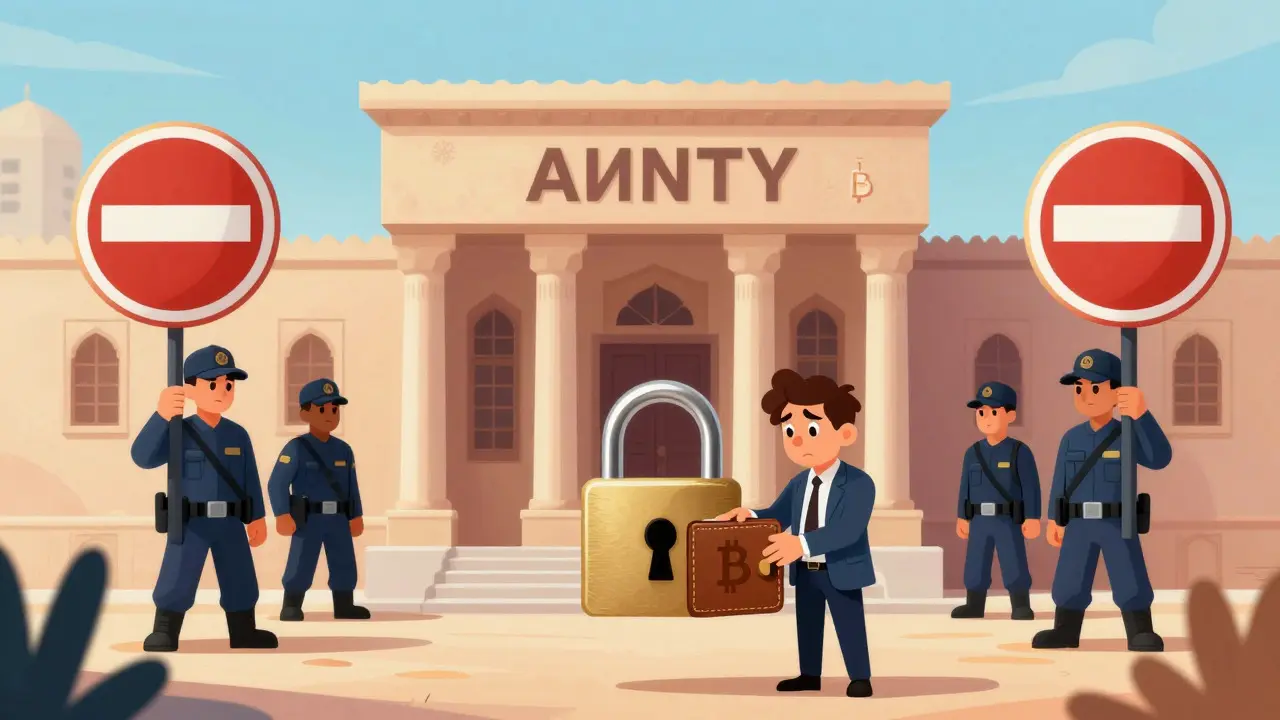
Imagine wanting to buy Bitcoin while sitting in Doha. You can't do it through any local bank or licensed exchange. Since February 2018, the Qatar Central Bank has effectively shut the door on cryptocurrencies for its regulated financial institutions. This isn't just a temporary pause; it is a strict prohibition that defines how money moves within the country's formal banking system. If you are looking at investing in the Gulf region, understanding this specific restriction is critical because it separates Qatar from its neighbors like the UAE and Bahrain.
The situation gets nuanced when you look past the simple "no crypto" rule. While trading Bitcoin or Ethereum is banned for banks and financial firms, Qatar has opened a backdoor for something called asset tokenization. This means you can own a digital slice of a real building or a bond, but you cannot own a volatile coin used purely for speculation. This article breaks down exactly what is prohibited, what is allowed, and why the Qatar Financial Centre (QFC) took this unique path.
Key Takeaways
- Cryptocurrency trading is strictly prohibited for all financial institutions in Qatar under Circular No. (6) of 2018.
- The ban extends to stablecoins and central bank digital currencies (CBDCs), classifying them as "Excluded Tokens."
- Since September 2024, the QFC allows the tokenization of real-world assets like real estate and sukuk (Islamic bonds).
- This approach prioritizes financial stability over speculative market participation, distinguishing Qatar from the UAE and Bahrain.
- Compliance costs for firms navigating these rules are significantly higher than in neighboring countries due to verification requirements.
The Origin of the Ban: Why Qatar Said No
To understand the current landscape, we have to look back to early 2018. The Qatar Central Bank issued a circular that explicitly stopped banks, insurance companies, and other financial entities from dealing in crypto. At the time, regulators viewed cryptocurrencies as high-risk instruments lacking intrinsic value. They were seen as speculative bubbles rather than sound investment vehicles. This stance was reinforced in December 2019 when the Qatar Financial Centre Regulatory Authority (QFCRA) issued an alert banning virtual asset services within the QFC zone.
The logic behind this decision was rooted in risk management. Unlike the United Arab Emirates, which created the Virtual Assets Regulatory Authority (VARA) to welcome exchanges, Qatar chose caution. The fear was that unregulated volatility could destabilize the local financial system. By keeping crypto out of the formal banking sector, regulators ensured that retail investors wouldn't lose their savings to sudden price crashes without a safety net. It was a defensive move designed to protect the integrity of the national currency, the Qatari Riyal.
What Counts as Prohibited? Defining Excluded Tokens
In 2024, the regulatory framework became more precise with the enactment of the QFC Digital Assets Regulations. These rules define a specific category called "Excluded Tokens." If you fall into this category, you are banned from the QFC ecosystem. The definition includes any virtual asset that does not represent a right in physical property or serves as a substitute for currency.
This explicitly covers three main groups:
- Cryptocurrencies: Assets like Bitcoin, Ethereum, and Solana used primarily for transfer of value or speculation.
- Stablecoins: Even tokens pegged to the US Dollar are considered substitutes for fiat currency and are thus excluded.
- Central Bank Digital Currencies (CBDCs): Future digital versions of the Riyal will likely face similar scrutiny if they function purely as payment methods outside the traditional banking rails.
This distinction is crucial. It means that even if you want to hold a digital dollar stablecoin for safekeeping, it is technically off-limits within the QFC's regulated perimeter. The regulators view these instruments as competing with the state's monetary control rather than complementing it.
The Exception: Tokenized Real-World Assets
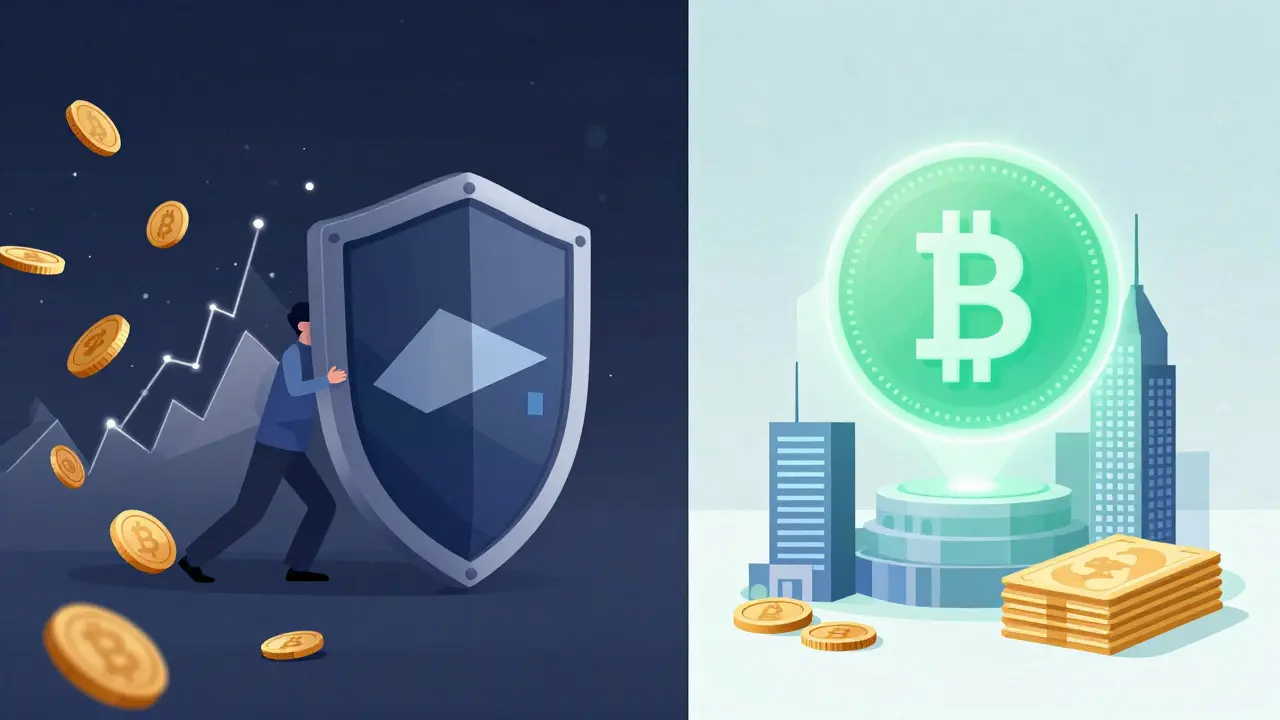
So, if crypto is banned, why talk about blockchain at all? Because Qatar wants the technology without the speculation. The QFC Digital Assets Regulations 2024 permit the tokenization of illiquid assets. This involves using blockchain to create digital certificates representing ownership in tangible things.
Consider commercial real estate. Instead of buying an entire tower, an investor can buy a token that represents a fraction of that building. This process reduces settlement times dramatically. For example, Barwa Real Estate Company tokenized a QAR 150 million property in early 2025, cutting settlement time from 30 days to just 48 hours. Similarly, Islamic finance products, known as Sukuk, are being tokenized to increase liquidity. As of March 2025, Islamic finance products made up 58% of all tokenization initiatives in the QFC.
This approach aligns with Qatar's conservative financial tradition. The assets have underlying value, legal recourse, and clear ownership rights recognized by law. Smart contracts, which automate these transfers, have been given legal enforceability in Qatar, providing a robust foundation for institutional investors who demand security over speed.
| Country | Crypto Trading Status | Regulatory Body | Primary Focus |
|---|---|---|---|
| Qatar | Prohibited for financial institutions | QFCRA / QCB | Asset Tokenization & Stability |
| UAE | Licensed & Regulated | VARA (Dubai) | Crypto Exchange Hub |
| Bahrain | Licensed via Crypto-Asset Module | Central Bank of Bahrain | Fintech Innovation |
| Kuwait | Comprehensive Ban | Multiple Ministries | Risk Avoidance |
Impact on Businesses and Investors
For financial firms operating in Qatar, this dual-track system creates a complex compliance environment. A survey of 127 Qatari financial institutions found that 78% reported increased compliance costs, averaging 15% higher than their regional competitors. Why? Because every transaction must be verified to ensure it doesn't involve a prohibited cryptocurrency. If you are setting up a business in the QFC, expect a 6-8 month timeline for full compliance, with setup costs around QAR 850,000 ($233,500 USD).
For individual investors, the frustration is palpable. Many Qatari citizens use offshore exchanges to trade crypto, facing higher fees and stricter Know Your Customer (KYC) hurdles. One user on a popular crypto forum noted that these offshore routes cost them approximately 2.5% more per transaction compared to a hypothetical local exchange. Despite this, retail adoption remains low at just 0.8% of the population, compared to 14% in the UAE. The ban keeps the casual trader out, leaving the market to institutional players focused on tokenized assets.

Future Outlook: Will the Ban Lift?
As of mid-2026, there are no signs that the core prohibition on cryptocurrencies will be lifted soon. Industry analysts project that Qatar will maintain this stance through 2030. However, the scope of what is allowed is expanding. The QFC is looking at tokenizing carbon credits, intellectual property rights, and art collections. This suggests that while you may never be able to buy Bitcoin through your Qatari bank, you might soon be able to buy a digital share of a carbon credit portfolio.
The strategic goal is clear: position Qatar as a hub for institutional-grade, Sharia-compliant digital assets. By excluding the noisy, volatile world of meme coins and speculative trading, Qatar aims to attract serious capital looking for stable, transparent, and legally secure digital investments. It is a calculated bet that long-term stability beats short-term hype.
Frequently Asked Questions
Can I legally buy Bitcoin in Qatar?
Yes, but only through offshore exchanges. The ban applies to financial institutions within Qatar, not necessarily to individuals holding personal wallets. However, using local banks to fund these purchases can be difficult as banks may flag crypto-related transactions.
Are stablecoins like USDT banned in Qatar?
Yes. Under the QFC Digital Assets Regulations 2024, stablecoins are classified as "Excluded Tokens" because they act as a substitute for fiat currency. They are treated similarly to cryptocurrencies for regulatory purposes.
What is the difference between crypto and tokenized assets in Qatar?
Crypto assets (like Bitcoin) are speculative and lack underlying physical backing. Tokenized assets (like a digital share of a building) represent ownership in a real-world entity with legal rights. Qatar bans the former for financial institutions but regulates the latter.
Why did Qatar choose this path over the UAE model?
Qatar prioritizes financial stability and conservative risk management. The UAE focuses on becoming a global crypto trading hub. Qatar sees less value in speculative trading volume and more in efficient, secure settlement of traditional assets using blockchain technology.
Is mining cryptocurrency illegal in Qatar?
While not always explicitly criminalized for individuals, the infrastructure and energy costs make large-scale mining impractical. More importantly, selling mined coins through local financial channels is prohibited, making the activity commercially unviable for most residents.