


Key Takeaways
- Smart contracts remove intermediaries, cutting costs and speeding up transactions.
- They rely on "Oracles" to bring real-world data (like weather or flight status) onto the blockchain.
- Industries from insurance and real estate to gaming and energy are already using them to automate trust.
- The core value lies in shifting from "trusting a person" to "trusting the code."
Automating Insurance and Finance
Finance was the first place to really embrace this tech, and for good reason. Traditional banking is slow and bloated. Decentralized Finance (or DeFi) uses smart contracts to let people lend, borrow, and trade assets without a bank ever getting involved. The contract acts as the escrow agent and the judge, ensuring that collateral is held and released only when the loan is repaid. But the real magic happens in parametric insurance. Traditional insurance requires you to file a claim and wait for a human to verify it. Parametric insurance flips this. It uses Chainlink oracles to pull data from the real world. For example, Etherisc provides flight delay insurance. If the oracle confirms your flight is delayed by more than a few hours, the smart contract triggers an immediate payout. You don't even have to fill out a form; the money just hits your account because the condition was met. Similarly, Arbol helps farmers in developing nations. They pull rainfall data from the National Oceanic and Atmospheric Administration (NOAA). If the rain doesn't hit a certain threshold, the contract automatically pays out the farmers. This prevents a single bad season from causing total financial ruin without the farmer having to fight a corporate insurance giant for months.Revolutionizing Real Estate and Construction
Buying a house is usually a nightmare of escrow accounts, title searches, and endless signatures. Smart contracts can turn this into a few clicks. By tokenizing property ownership, a contract can hold the buyer's funds and the seller's digital title in a secure vault. The moment the digital signatures are verified and the inspection report is uploaded as "passed," the contract swaps the funds for the title instantly. In the construction world, payments are often a huge point of contention. Contractors often wait weeks for payment after finishing a phase of work. Some firms are now combining smart contracts with IoT (Internet of Things) sensors and computer vision. Imagine a camera on a job site that recognizes a shipment of steel beams arriving. The moment the computer vision system confirms the delivery, the smart contract releases the payment to the supplier. No invoices, no disputes, and no manual data entry.| Feature | Traditional Contract | Smart Contract |
|---|---|---|
| Execution | Manual/Legal Process | Automatic/Algorithmic |
| Intermediaries | Lawyers, Notaries, Banks | None (Code is the intermediary) |
| Speed | Days to Weeks | Near-Instant |
| Cost | High (Fees for professionals) | Low (Network gas fees) |
| Alterability | Can be amended by agreement | Immutable once deployed |
Supply Chain Transparency and Energy Trading
Global supply chains are notoriously opaque. You might buy "organic" coffee, but how do you actually know it came from that specific farm in Ethiopia? Smart contracts allow for end-to-end tracking. When a batch of coffee beans passes a quality check at the port, the smart contract records the verification and triggers a partial payment to the exporter. This ensures that quality is maintained and suppliers are paid based on actual performance metrics rather than arbitrary payment cycles. Then there is the energy sector. Most of us just buy power from a giant utility company. But with platforms like Power Ledger, your home can become a mini power plant. If you have solar panels and generate more electricity than you need, a smart contract can automatically sell that excess energy to your neighbor. The contract handles the pricing and the transfer of funds in real-time, creating a peer-to-peer energy marketplace that optimizes the grid and puts money back in your pocket.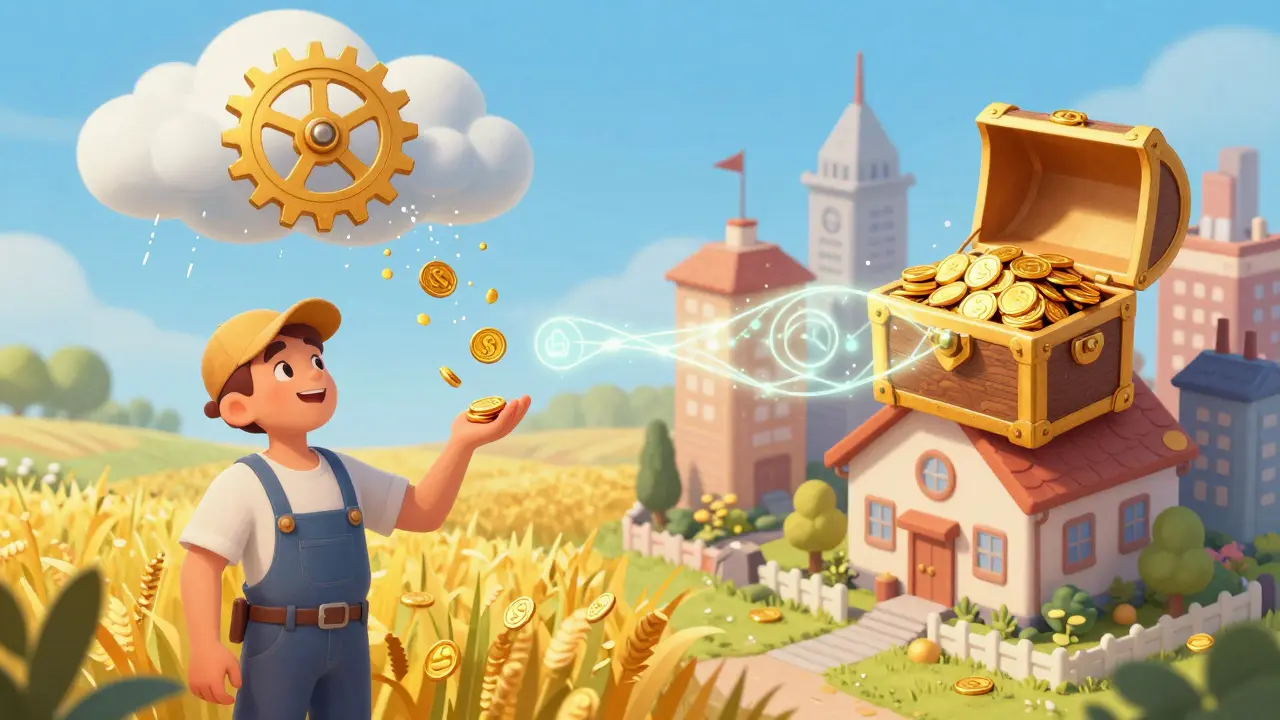
Digital Assets and the Creator Economy
If you've heard of Non-Fungible Tokens (or NFTs), you're looking at smart contracts in action. An NFT is essentially a smart contract that proves you own a unique digital item. In games like Axie Infinity or Illuvium, these contracts ensure that a rare sword or a piece of virtual land truly belongs to the player, not the game developer. Players can trade these assets on open marketplaces without needing the game studio to approve every single transaction. This is also a game-changer for musicians and authors. Historically, royalties are a mess-money filters through labels, distributors, and agencies before a tiny fraction reaches the artist. Smart contracts can automate royalty distribution. Every time a song is streamed, the contract can instantly split the payment: 70% to the artist, 20% to the producer, and 10% to the songwriter. No more waiting six months for a royalty statement that might be wrong.Retail, Advertising, and Healthcare
Retailers are using these tools to fix loyalty programs. We've all had points expire or disappeared into a void. Blockchain-backed rewards systems, like those explored by Starbucks, allow points to be earned and spent instantly across different brands without the "fine print" friction. In advertising, the problem is "pixel stuffing" or fake clicks. Advertisers pay for impressions they never actually got. Smart contracts solve this by requiring proof of work. For instance, a brand might pay an influencer to promote a discount code. The smart contract only releases the payment after 100 legitimate purchases using that code are verified. The influencer gets paid for actual results, and the brand doesn't waste money on fake engagement. Finally, healthcare is using these contracts for clinical trial management. Managing patient consent is a legal nightmare. Smart contracts can automate the consent process, ensuring that a patient's data is only shared with researchers if the specific, encrypted conditions of the patient's agreement are met. This keeps data integrity high while protecting privacy.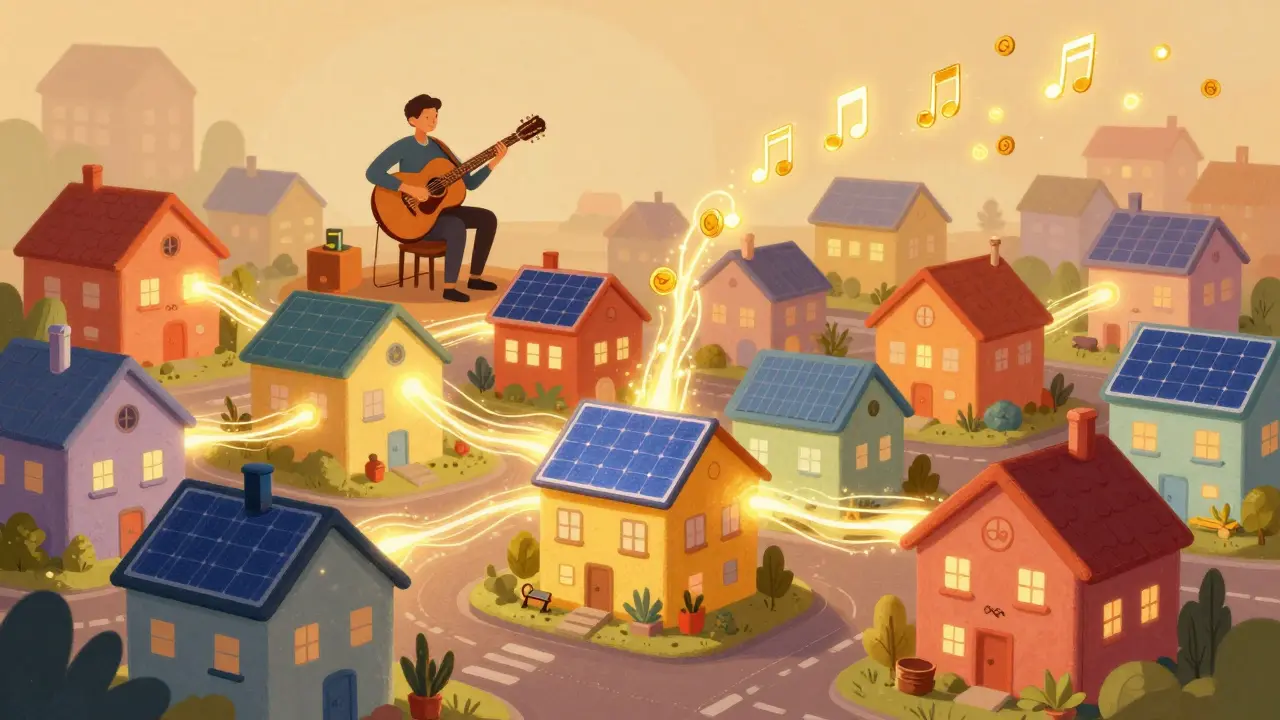
The Roadblocks and the Future
It sounds perfect, but there are a few catches. The biggest is the "Oracle Problem." A smart contract is only as good as the data it receives. If an oracle provides incorrect weather data, the contract will still execute the payout-it doesn't know it's being lied to. This is why decentralized oracle networks are so critical; they cross-reference multiple sources to ensure accuracy. There's also the issue of scalability. Processing thousands of complex contracts per second can clog a network, leading to high fees. However, as blockchain infrastructure matures and we see more interoperability between different networks, these bottlenecks are disappearing. We are moving toward a world where the "legal' layer of the internet is just as automated as the 'information' layer is today.What is the difference between a regular contract and a smart contract?
A regular contract is a legal document that requires humans to interpret and enforce it, often involving lawyers or courts if someone defaults. A smart contract is a piece of code that executes itself automatically when conditions are met. It doesn't need a third party to verify the outcome; the code is the law.
Do smart contracts actually require a blockchain?
Technically, you can have automated scripts on a central server, but that's not a "smart contract" in the blockchain sense. The blockchain provides the immutability and transparency. Without it, the person owning the server could just change the code to avoid paying, defeating the purpose of a trustless agreement.
Can a smart contract be changed after it is deployed?
By default, they are immutable, meaning they cannot be changed. This is a feature for security. However, developers often use "proxy contracts" that allow them to point the original contract to a new version of the code if an update or bug fix is needed.
What is an Oracle in the context of smart contracts?
An oracle is a bridge that feeds real-world data into a blockchain. Since blockchains cannot "look" outside their own network, they need oracles to tell them things like the current price of gold, the result of a sports game, or whether a plane landed on time.
Are smart contracts legal in my country?
The legal status varies. In many places, they are treated as binding agreements if they meet the basic criteria of a contract (offer, acceptance, and consideration). However, because they are new, the legal frameworks are still catching up, and most people use them for commercial efficiency rather than as a replacement for all legal protections.
Next Steps and Troubleshooting
If you are a business owner looking to implement this, don't start by rewriting your entire legal department. Start with a small, high-friction process. Look for areas where you spend too much time verifying data or chasing payments.- For Small Businesses: Explore simple escrow contracts for freelance work. Use a platform that holds funds and releases them upon milestone completion.
- For Developers: Start by learning Solidity (for Ethereum) or Rust (for Solana). Build a simple voting contract or a basic reward system to understand how state changes work.
- For Enterprise: Focus on the "Oracle」 strategy first. Determine where your data is coming from and how to ensure that data is tamper-proof before deploying the contract.
Prachi Bhadarge
April 18, 2026 AT 21:28Sure, let's just trust a few lines of code written by some guy in a basement to handle my entire house sale. Absolute genius move.
Chintu Parikh
April 19, 2026 AT 08:15It is truly inspiring to witness the intersection of cryptography and real-world utility. I believe this shift towards transparency will foster a more equitable global economy for everyone involved. Let us all embrace these innovations with an open mind and a spirit of collaboration!
Ian Chait
April 21, 2026 AT 01:57The 'oracles' are just backdoors for the globalists to manipulate the data feed. Total scam. They want us on a ledger so they can track every single cent we move via the CBDC agenda. Its all a psyop to phase out physical cash and keep us under the boot of the New World Order. Wake up people, the code isn't 'law', it's a cage.
Shantal Sanjur
April 21, 2026 AT 22:52Oh, honey, you actually think the 'Oracle Problem' is just a technical glitch? Please. It's the perfect way for the elites to 'accidentally' lose your funds while claiming the data was wrong. I've seen this movie before and it always ends with the little guy getting crushed while the devs fly off to the Bahamas. Absolute joke.
Joshua Salwen
April 22, 2026 AT 00:09I am LITERALLY shaking right now because the idea of an automated payout for flight delays is the only thing that can save my sanity!! Why is the banking system so obsessed with making us suffer through 14-page forms just to get 50 bucks back?! This is the REVOLUTION we deserve!
Adedamola Oyebo
April 22, 2026 AT 11:27Very useful explanation!! I'm curious about the gas fees for high-frequency energy trading!!
Abhinav Chaubey
April 22, 2026 AT 18:24Typical Western hype. India is already implementing digital public infrastructure far more efficiently than any of these fragmented DeFi projects. We don't need 'smart contracts' when we have a centralized system that actually works for a billion people. Keep dreaming about your decentralized utopia while we actually build the future.
Sandeep Bhoir
April 24, 2026 AT 13:29Imagine thinking a centralized government system is more trustless than a blockchain. Cute.
Michelle Stanish
April 26, 2026 AT 11:46I don't like it.
Jeff Barlett
April 27, 2026 AT 20:19Finally, someone says it! Who actually wants their property title to be a 'token'? One bad hack and you're homeless. I'd rather deal with a thousand slow lawyers than a single bug in a Solidity contract. The risk-to-reward ratio here is absolutely pathetic.
Kim Smith
April 29, 2026 AT 07:18It's just funny how we keep trying to solve human problems with math, as if the essence of a contract isnt actually the social bond and the shared understanding between two people who might disagree later on, but instead we want this cold, hard, immutable logic that doesnt allow for mercy or context or the general messiness of being a human being in a complicated world where things just happen and sometimes the 'code' is just wrong because life is wrong, you know?
John and Lauren Busch
April 29, 2026 AT 07:46Whatever floats your boat.
Mike Kempenich
May 1, 2026 AT 03:02I really think the energy trading part is the most promising. Imagine the impact on rural communities if they could just trade solar power locally. It's a win-win for the environment and the wallet.
Michael Harms
May 2, 2026 AT 03:11Spot on! I've been mentoring some students on this and the lightbulb moment always happens when they realize the 'middleman' is just a cost center. Let's keep pushing for a more open system!
Mark Pfeifer
May 2, 2026 AT 13:11I'm interested in the healthcare aspect. How do we actually ensure the data entered into the oracle is accurate and hasn't been tampered with at the source? That seems to be the real bottleneck.
Keri Pommerenk
May 4, 2026 AT 11:07totally agree on the healthcare part, its about time we got some real privacy controls that actually work for the patient
Gaurav Undirwade
May 5, 2026 AT 00:27It is quite distressing to observe the lack of moral fortitude in this discussion. One must question the ethical implications of replacing human judgment-which is infused with conscience-with a heartless algorithm. To seek efficiency at the cost of human empathy is a spiritual failure of the highest order. I find it deeply unsettling that you all treat this as a mere technical upgrade rather than a fundamental erosion of the human spirit.
siddharth narula
May 5, 2026 AT 15:49Indeed, the pursuit of automation is but a veil for the avoidance of duty. 🧘♂️ We must ask ourselves if a world without friction is a world without growth. The struggle for a payment is a test of character for both parties. By removing the struggle, we remove the lesson. 🌌
Sean Mitchell
May 6, 2026 AT 18:11Oh please, the 'creator economy' part is just a fancy way to say 'you're still getting ripped off, but now the rip-off is automated'. I can't even fathom the laziness of people who think an NFT is a revolutionary business model. It's an overpriced JPEG with a fancy receipt. Give me a break.
Anna Grealis
May 8, 2026 AT 01:50The arugment for 'transparency' is a total lie. They just want a different way to launder money that the feds cant track as easily until they lauch the new update that lets them see everything. Typical corporate speak to get us to adopt a system thats fundamentally broken from the start.
Luke George
May 8, 2026 AT 11:05Exactly. And notice how they don't mention the energy cost of running these chains. It's a massive distraction while the real power players consolidate the nodes. Once the 'bridge' is built, they'll just flip the switch and we'll all be locked out of our own wallets. I'm staying in cash.
Kaitlyn Wu
May 9, 2026 AT 02:52Let's keep the conversation focused on the actual utility. Whether you like the tech or not, the ability to automate royalties for artists is a massive step forward for creators who have been exploited for decades. We should be talking about implementation, not just doom-posting.
nikki krinkin
May 9, 2026 AT 20:13I'm just here for the drama of people fighting over a piece of code. It's actually kind of relaxing to watch from the sidelines.
Karen Mogollon Gutierrez
May 10, 2026 AT 15:04The sheer audacity to suggest that a 'proxy contract' solves the problem of immutability is laughable! You are essentially saying 'the contract is permanent, except when we decide it's not.' This is a logical contradiction of the highest order and a mockery of the very principles of blockchain technology!
Yuhan Mo
May 12, 2026 AT 02:28From a technical standpoint, the modularity provided by proxy patterns is standard for mitigating smart contract vulnerability. It's a necessary trade-off for maintainability in an evolving ecosystem. I appreciate the detailed breakdown of the oracle infrastructure in the post.
Thomas Jewett
May 13, 2026 AT 08:10I dont care what any of these so called experts say, the US is the only country that can actually scale this without total colapse because our market is the only one that matters. Every other country is just copying our homework and pretending they invented the wheel. Get it thru your heads that without American capital this whole thing is just a bunch of zeros and ones in a void!