


Imagine a world where your smart fridge doesn't just tell you that you're out of milk, but actually negotiates a price with a local delivery drone and pays for the delivery using its own digital wallet. This sounds like science fiction, but it's exactly what Robonomics Network is building. It isn't just another coin designed for trading on an exchange; it's a specialized infrastructure designed to give machines a financial identity.
What Exactly is Robonomics Network?
At its core, Robonomics Network is a Web3 cloud platform that lets Internet of Things (IoT) devices and robots operate autonomously using blockchain technology . Created by Airalab, the project aims to solve a massive problem: how do we let machines talk to each other and exchange value without a human middleman or a giant corporate server controlling every move?
To do this, the network integrates with heavy hitters like Polkadot, Ethereum, and Kusama. By leveraging these ecosystems, Robonomics creates a secure environment where a robot can essentially "hire" another robot to complete a task, paying for the service in real-time using the XRT crypto token.
The Role of the XRT Token
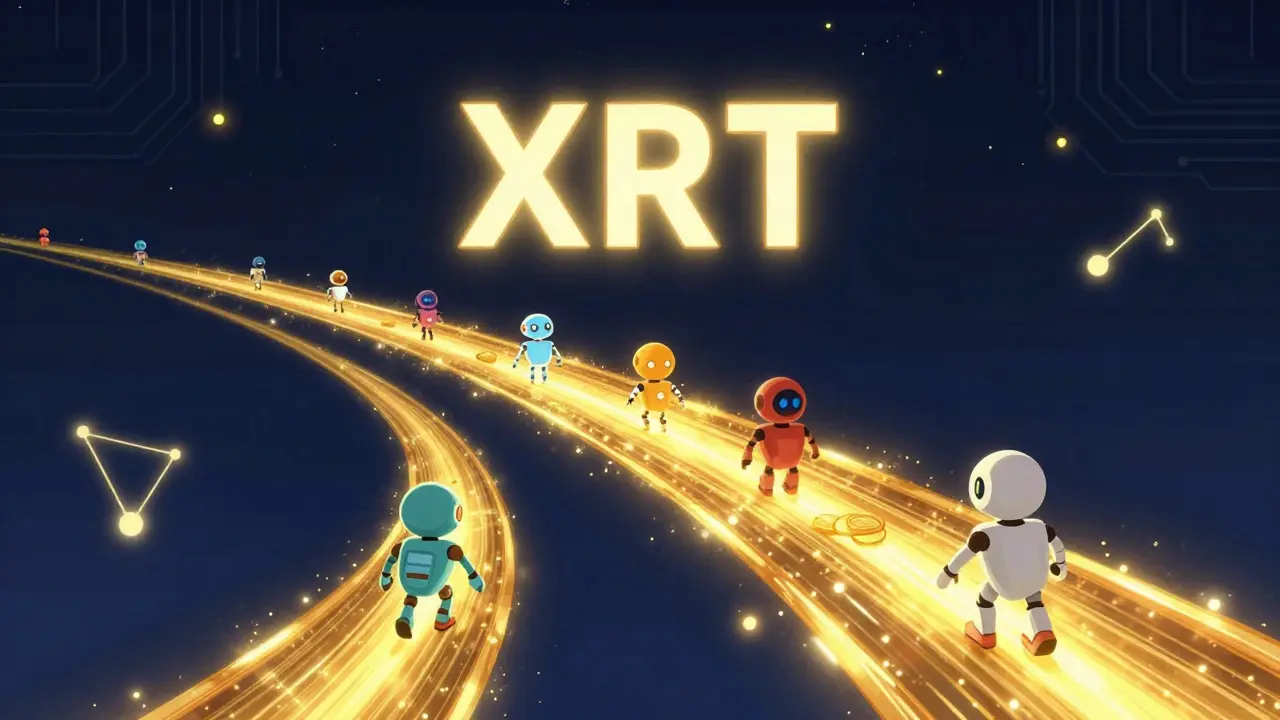
You can think of XRT as the fuel for the entire robotics economy. If the Robonomics Network is the highway, XRT is the gasoline that allows the vehicles (robots and IoT devices) to move and interact. It isn't just a speculative asset; it has very specific jobs to do within the ecosystem.
- Subscription Payments: Users and companies buy Web3 cloud subscriptions using XRT to ensure their devices have predictable latency and connectivity.
- Transaction Fees: When a machine-to-machine (M2M) transaction happens, XRT covers the cost of the operation on the parachains.
- Infrastructure Support: The network uses XRT to reward "collators"-the people and systems that produce blocks and keep the network running.
One of the most interesting parts of XRT is its "auction' system. When someone activates an IoT subscription, the price isn't fixed. Instead, a lightning-fast auction happens over about 10 blocks (roughly 1 to 2 minutes). This ensures the price remains fair and based on actual demand at that exact moment.
How the Economics Actually Work
Robonomics uses a clever balancing act to manage the supply of XRT. Most crypto projects struggle with inflation, but XRT has a built-in "burn" mechanism. Every time a subscription is activated via that fast auction, the fee is burned-meaning it's removed from circulation forever. This creates a deflationary pressure that can drive value up if the network grows.
On the flip side, the network has to pay for its own security and the people running the infrastructure. To cover these costs, the protocol mints new tokens. This creates a dynamic market: if the number of robots and devices using the network increases, more tokens are burned, and the system becomes deflationary. If usage drops, the system becomes inflationary. It's a self-regulating machine economy.
| Factor | Action | Effect on XRT Supply |
|---|---|---|
| IoT Subscription Activation | Auction fees are burned | Deflationary (Supply decreases) |
| Network Maintenance | Collator rewards & security payments | Inflationary (Supply increases) |
| High Device Adoption | Increased subscription frequency | Strong Deflationary Pressure |
The Magic of Digital Twins
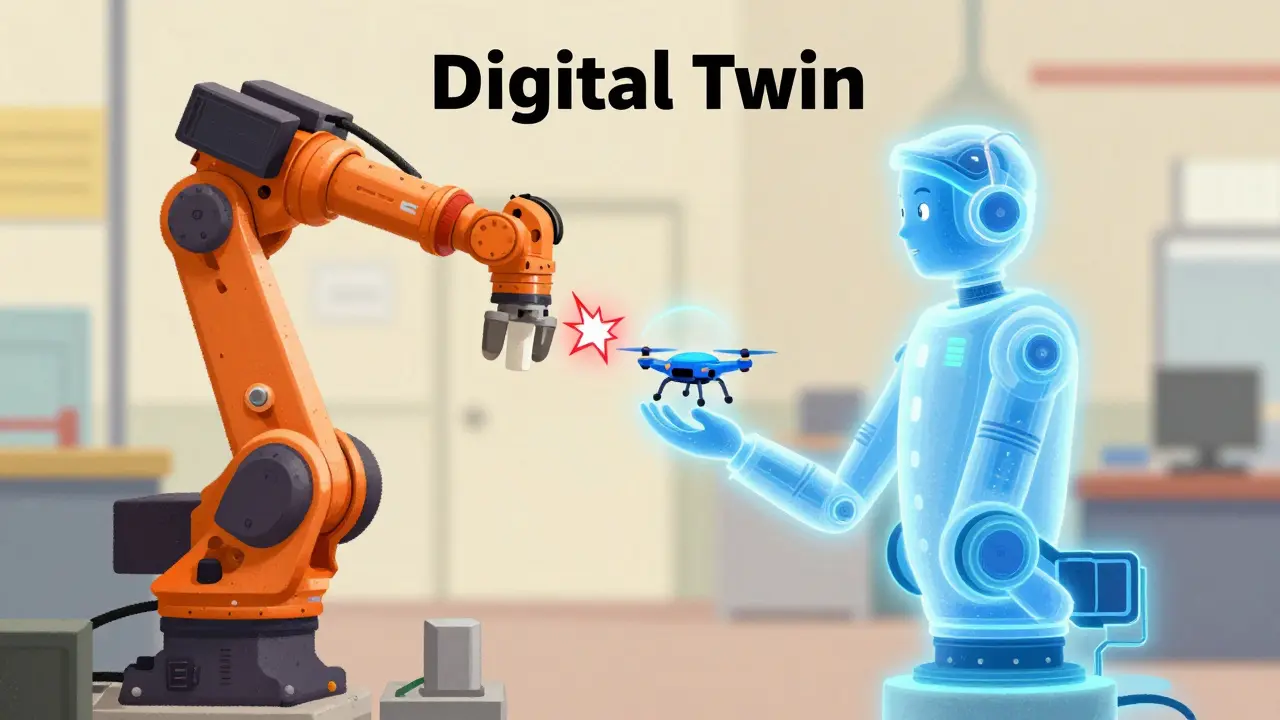
You can't manage a physical robot efficiently using just a line of code on a blockchain. That's where the concept of Digital Twins comes in. A digital twin is a virtual replica of a physical device. Every single piece of operational data, maintenance history, and current status of a robot is mirrored in this digital version.
By using digital twins, the Robonomics Network can track a device's entire lifecycle. For example, if an industrial arm in a factory starts vibrating abnormally, its digital twin records the data. The system could then automatically trigger a smart contract to pay a maintenance drone to come and inspect the arm-all without a human having to file a ticket or approve a payment manually.
Real-World Use Cases
So, where does this actually get used? It's not just about fancy robots in labs. The practical applications are scattered across several industries:
- Smart Cities: Imagine traffic lights that communicate with autonomous cars to optimize flow, or waste bins that pay a collection robot to empty them only when they are actually full.
- Industrial Automation: In a warehouse, different machines from different manufacturers need to work together. Robonomics provides the common "language" and payment layer so they can coordinate without needing a single centralized controller.
- Autonomous Logistics: Delivery drones and automated lockers can handle the hand-off of packages and the payment for the delivery service trustlessly.
Technical Framework and Connectivity
To make all this work, Robonomics doesn't just rely on a coin. It uses the Robot Operating System (ROS) and AIRA OS. These are the software layers that allow the physical hardware to actually "understand" the blockchain commands. By bridging the gap between hardware (the robot) and the ledger (the blockchain), they've created a system where the robot is essentially its own economic agent.
As of April 2026, XRT has shown some interesting market behavior. While it often fluctuates with the broader Ethereum ecosystem, its value is tied more closely to the actual adoption of the Robonomics cloud services than to general market hype. With a circulating supply of around 2.9 million tokens, it remains a niche but highly specialized asset.
Is XRT a stablecoin?
No, XRT is a utility token. Its value fluctuates based on market demand and the actual usage of the Robonomics Network. It is used to pay for services and secure the network, not to maintain a peg to the US Dollar.
How does the token burn mechanism work in Robonomics?
When users activate an IoT subscription through the platform's auction system, the payment is made in XRT. Once the auction concludes, those tokens are permanently removed from the supply (burned), which helps prevent inflation if the network is heavily used.
What is the difference between XRT and a regular cryptocurrency?
While most cryptocurrencies are used for payments or store of value, XRT is specifically designed for machine-to-machine (M2M) economics. It provides the financial layer for autonomous robots and IoT devices to operate without human intervention.
Which blockchains does Robonomics support?
The network is designed to be cross-chain and leverages the capabilities of Polkadot, Ethereum, and Kusama to ensure scalability and security for its IoT operations.
What are Digital Twins in the context of Robonomics?
Digital Twins are virtual replicas of physical IoT devices. They store all the operational data and history of the robot, allowing the blockchain to manage the device's lifecycle and trigger automatic payments or maintenance via smart contracts.
Kieran Smith
April 11, 2026 AT 10:09this sounds like some next level stuff tbh. the idea of robots just hirin other robots is wild but kinda makes sense if you think about how we use apps now. hope it actually scalez well without just being another vaporware project :)
daniella davis
April 12, 2026 AT 19:58Um, please. As if anyone actually believes a "digital twin" is anything more than a glorified spreadsheet on a blockchain. I've seen a dozen projects try this and they all fail because they ignore basic latency issues. Honestly, the way this is written makes it sound like magic, which is exactly why it's probably a scam. Totaly amateur hour here.
Adam Auksel
April 13, 2026 AT 10:00The concept of M2M economics is a game changer for automation! 🚀 Imagine the efficiency gains when the overhead of human approval is gone. Really cool to see Polkadot and Ethereum being integrated to handle the scale 🌐✨
7stargee Emmanuel Obani
April 14, 2026 AT 20:11Just another way to burn money. 🙄 These tokens always crash once the hype dies. Good luck to those holding bags :)
Kelly Cantrell
April 15, 2026 AT 04:25Wait, so the machines have their own wallets? This is exactly how the surveillance state takes over. First it's a smart fridge, then it's a network of autonomous bots reporting our every move to a centralized cloud that they claim is "decentralized." I don't trust any system that lets a machine "negotiate" prices without human oversight. We're just handing over the keys to the kingdom to some algorithm developed in a lab.
Lela Singh
April 15, 2026 AT 13:06Absolute wizardry! ⚡️ The burn mechanism is a masterstroke for maintaining value. Pure brilliance!
Surender Kumar
April 16, 2026 AT 22:32looks pretty chill. i like the idea of a self regulating economy for bots. might be laaaagging in adoption but the tech is there.
Emily H
April 18, 2026 AT 01:19The implementation of the Robot Operating System (ROS) as a bridge to the ledger is a sophisticated architectural choice. It ensures that the hardware abstraction layer is properly aligned with the smart contract execution, thereby reducing the risk of operational failure during autonomous transactions.
Samson Selleck
April 18, 2026 AT 21:42The insistence on utilizing a parachain model for M2M transactions is a transparent attempt to solve the trilemma, yet the throughput remains questionable given the computational overhead of maintaining digital twins. It is quite quaint that some believe this is an innovative breakthrough rather than a standard application of state channels and sidechains.
Alan Seiden
April 20, 2026 AT 07:02Utterly rubbish. Another "blockchain solution" for a problem that doesn't actually exist. Give me a real industrial PLC system any day over this digital nonsense.
Carroll Foster
April 20, 2026 AT 22:27Oh sure, because we definitely need our trash cans to have a financial portfolio. The sheer irony of using a volatile utility token for "predictable latency" is just chefs kiss. I'm sure the "lightning-fast auctions" will be great right until the network gets congested and your fridge can't buy milk because of gas fees.
Swati Sharma
April 20, 2026 AT 22:49Integrating these autonomous agents into a cross-chain framework allows for a highly scalable interoperability layer. This modular approach to the M2M stack is exactly what the industry needs to move away from monolithic silos.
Agnessa Dale
April 21, 2026 AT 12:05This is such an inspiring vision for the future! It's amazing to see how technology can create new ways for systems to support each other.
aletheia wittman
April 21, 2026 AT 16:07omg the thought of a drone paying my fridge is actually so cute lol. i need this in my life right now!!
Chidinma Sandra okafor
April 23, 2026 AT 06:42Oh, wonderful. More tech for the elite to use while we struggle with basic electricity. I'm sure the robots will be very fair to us peasants once they have their own wallets.
jennelle williams
April 23, 2026 AT 06:52machines talking to machines... it feels like we are losing the human touch in everything
ssjuul z
April 23, 2026 AT 16:15Let's get this moving! The efficiency potential here is huge for logistics. I'm all in on this tech! :)
william manes
April 23, 2026 AT 18:58Fake news. Robots don't need coins. USA needs real tech, not this crypto trash! 🇺🇸🤡
Terrance Hausmann
April 24, 2026 AT 02:45I really think we should keep an open mind about this. While it seems complex, if we can just get the basic infrastructure to work, the long-term benefits for global trade and automation could be absolutely staggering for everyone involved in the supply chain.
Will Dixon
April 25, 2026 AT 15:46sounds cool but i bet its hard to set up for normal pepole
Hope Johnson
April 27, 2026 AT 09:56There is a deeper philosophical question here about the nature of agency. If a robot can enter a contract and pay for a service, does it possess a form of economic personhood? This shifts the entire paradigm of how we view tools versus autonomous entities in a capitalist framework.
Jason Davis
April 28, 2026 AT 22:52The ROS integration is key here. Most peopl forget that the hardware need a way to talk to the chain. it's the most imporatnt part of the whole stack actually.
Artavius Edmond
April 30, 2026 AT 02:24I'm just vibing with the idea of smart cities. Imagine the traffic flow if the lights actually talked to the cars without a central server crashing every five minutes.
Mikayla Murphy
April 30, 2026 AT 17:52It is fascinating to see how different cultures might adopt this. Some might see it as a tool for efficiency, while others might find the lack of human intervention unsettling.
Akshay Gorad
April 30, 2026 AT 20:12The auction system for subscriptions is an interesting way to handle pricing volatility.
Lauren Abrams
May 1, 2026 AT 23:56I wonder how the latency affects the actual real-time movement of the robots during the auction phase.
Rob Mitchell
May 3, 2026 AT 06:35Exactly. The API bridging is what makes it viable.
Tyler Webb
May 3, 2026 AT 21:07I can see why that would be worrying. It's a big shift in how we think about privacy and control. (。-_-。)
Rima Dinar
May 5, 2026 AT 11:34I completely agree that we need to be supportive of these early-stage developments because even if this specific project has hurdles, the foundational logic of machine-to-machine payments will eventually be the standard for all industrial automation across the globe, and providing a supportive environment for these developers is the only way we will reach that future of seamless integration.