

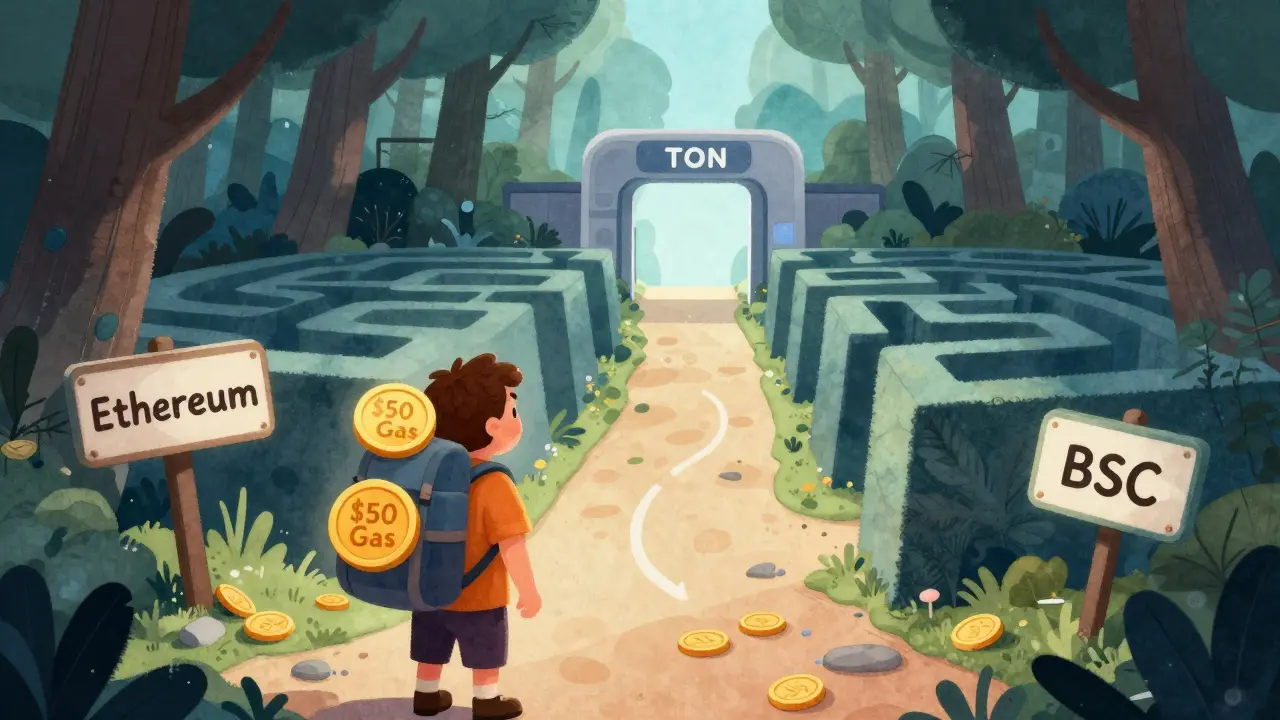
Swapping tokens on the TON blockchain, the network behind Telegram's wallet integration, used to feel like navigating a maze. You had to bridge assets from Ethereum or BSC, pay high gas fees, and wait minutes for confirmations. Then came STON.fi v2a specialized decentralized exchange built exclusively for the TON ecosystem. It promises near-zero fees, sub-10-second swaps, and an interface so simple you can trade in under five minutes. But does it actually deliver, or is it just another hyped-up DEX with shallow liquidity?
I’ve spent weeks testing STON.fi v2, comparing its speed and costs against giants like Uniswap and PancakeSwap. Here is the honest truth about what works, what doesn’t, and whether this platform fits your trading strategy in 2026.
What Is STON.fi v2? A Niche Player in DeFi
STON.fi v2 is not trying to be everything to everyone. Unlike Uniswapthe leading decentralized exchange on Ethereum or PancakeSwapa popular DEX on the Binance Smart Chain, which support thousands of tokens across multiple chains, STON.fi goes all-in on one network: TON. Launched as a complete overhaul of its predecessor, v2 operates natively on the blockchain without needing bridges or wrapped assets.
This specialization is both its greatest strength and its main limitation. By focusing solely on TON, STON.fi achieves incredible speed and negligible costs. However, you won’t find every meme coin or obscure altcoin here. The platform currently supports around 20-30 core tokens, including major pairs like TON-USDTthe primary trading pair between Toncoin and Tether USD, NOT, MAJOR, and the native STON token. If you are looking to trade niche projects outside this circle, you will need to look elsewhere.
Speed and Fees: Where STON.fi Shines
If there is one reason to use STON.fi v2, it is the transaction experience. On Ethereum-based DEXs, a simple swap can cost $5 to $50 in gas fees during peak times and take over a minute to settle. On STON.fi, the reality is starkly different.
- Transaction Speed: Most swaps finalize in under 10 seconds. This is thanks to TON’s high-speed consensus mechanism, which processes blocks rapidly compared to older blockchains.
- Gas Fees: You are looking at fractions of a cent per transaction. In practical terms, this means you can execute dozens of small trades without worrying about eating into your profits with network costs.
- Trading Commissions: While some sources claim 0.00% fees, detailed analysis suggests a spot trading commission of roughly 0.3%. Even so, this is highly competitive when combined with near-zero gas fees.
For active traders who scalp small movements or rebalance portfolios frequently, these savings add up quickly. I tested swapping $100 worth of TON for USDT three times in a row. The total cost, including gas and commission, was less than $0.50. Compare that to $15+ on Ethereum, and the advantage is clear.
Liquidity and Slippage: The Hidden Catch
Here is where things get tricky. Speed and low fees mean nothing if you cannot execute large orders without moving the market price against yourself. This is known as slippage.
As of late 2024 and early 2026, STON.fi’s daily trading volume hovers between $300,000 and $500,000. While this sounds substantial, it is tiny compared to Uniswap, which handles billions daily. The liquidity is concentrated heavily in the top pairs, primarily TON-USDT. If you try to swap larger amounts-say, above $10,000-in less liquid pairs, you might face slippage exceeding 2-5%. That means you could lose hundreds of dollars in value on a single trade simply because the pool wasn’t deep enough.
Pro Tip: Always check the "slippage tolerance" setting before confirming a trade. For standard swaps, keep it at 0.5%-1%. If you see a warning that slippage is too high, break your order into smaller chunks or wait for more liquidity to enter the pool.

Security and Trust: Audited but Decentralized
In crypto, security is non-negotiable. STON.fi v2 addresses this by having its smart contracts audited by Trail of Bitsa leading cybersecurity firm specializing in blockchain audits. This is a significant validation point, as Trail of Bits has reviewed code for many major protocols. No critical vulnerabilities were reported in the public audit summary, which gives users confidence that the underlying code is robust.
However, remember that STON.fi is a decentralized exchange (DEX). This means:
- No Custody: You retain control of your funds via your wallet (like Tonkeeper or OpenMask). STON.fi never holds your assets.
- No KYC: There is no identity verification required. You connect your wallet and start trading immediately.
- No Regulation: The platform is not regulated by any government authority. If you make a mistake, such as sending tokens to the wrong address, there is no customer support team to reverse the transaction.
This model empowers users but also places the burden of security entirely on you. Protect your seed phrase, verify contract addresses, and never share your private keys.
User Experience: Simple but Limited
The interface of STON.fi v2 is clean and intuitive. New users report being able to execute their first swap within 5-10 minutes of connecting their wallet. There are no complex charts, advanced order types, or confusing settings menus cluttering the screen. It is designed for straightforward spot trading.
However, experienced traders might miss features found on centralized exchanges or more mature DEXs:
- No Limit Orders: You can only place market orders. You cannot set a buy order at a specific price and wait for it to fill.
- Limited Token Selection: As mentioned, you are restricted to the ~30 supported tokens. If a new project launches on TON, it may take time to appear on STON.fi.
- Basic Analytics: There are no integrated charting tools or depth-of-view graphs. You will likely need to use external tools like DexScreener or TONScan to analyze price action before trading.
For casual investors and those new to DeFi, this simplicity is a feature, not a bug. For professional traders, it may feel restrictive.
How STON.fi Compares to Other Exchanges
| Feature | STON.fi v2 | Uniswap (Ethereum) | PancakeSwap (BSC) |
|---|---|---|---|
| Blockchain | TON | Ethereum | Binance Smart Chain |
| Avg. Gas Fee | < $0.01 | $5 - $50+ | $0.10 - $1.00 |
| Transaction Time | < 10 seconds | 15 - 60+ seconds | 3 - 10 seconds |
| Token Variety | ~30 (TON native) | 10,000+ | 5,000+ |
| Liquidity Depth | Low ($300k-$500k/day) | Very High | High |
| KYC Required | No | No | No |
As the table shows, STON.fi wins on cost and speed within its niche. It loses on variety and liquidity depth. Choose STON.fi if you are trading TON ecosystem tokens and want efficiency. Choose Uniswap or PancakeSwap if you need access to a wider range of assets or are executing large institutional-sized trades.
Who Should Use STON.fi v2?
STON.fi is not for everyone. Here is how to decide if it fits your needs:
- Use it if: You hold TON or other TON-native tokens and want to swap them quickly and cheaply. You are a retail investor making trades under $5,000. You value simplicity and privacy (no KYC).
- Avoid it if: You need to trade tokens not listed on TON. You are executing large block trades (> $10,000) where slippage matters significantly. You require advanced trading features like limit orders or leverage.
Getting Started: A Quick Guide
Using STON.fi is straightforward. Follow these steps to make your first trade:
- Get a TON Wallet: Download Tonkeeper or OpenMask. Secure your seed phrase offline.
- Fund Your Wallet: Buy TON or USDT on a centralized exchange (like Binance or Kraken) and withdraw it to your TON wallet address.
- Connect to STON.fi: Visit the official ston.fi website and click "Connect Wallet." Approve the connection in your wallet app.
- Select Tokens: Choose the token you want to sell and the token you want to buy. Ensure you are selecting the correct pairs (e.g., TON -> USDT).
- Set Slippage: Adjust the slippage tolerance if necessary. Default settings usually work for major pairs.
- Confirm Swap: Review the details and confirm the transaction in your wallet. Wait less than 10 seconds for completion.
Is STON.fi safe to use?
Yes, STON.fi v2 uses smart contracts audited by Trail of Bits, a reputable security firm. However, as with any DeFi platform, you are responsible for securing your own wallet and verifying contract interactions. Never share your private keys.
Why are there so few tokens on STON.fi?
STON.fi focuses exclusively on the TON ecosystem to ensure maximum speed and minimal fees. This specialization limits token variety to around 30 core assets, prioritizing quality and performance over quantity.
Can I use STON.fi for large trades?
It is not recommended for trades over $10,000 due to limited liquidity. Large orders can cause significant slippage, meaning you receive fewer tokens than expected. For large volumes, consider using a centralized exchange or breaking the trade into smaller parts.
Does STON.fi require KYC?
No, STON.fi is a decentralized exchange and does not require Know Your Customer (KYC) verification. You only need a compatible TON wallet to access the platform.
What happens if the TON network is congested?
While rare, network congestion can slow down transactions slightly. However, TON’s architecture is designed to handle high throughput, so delays are typically minimal compared to networks like Ethereum. Gas fees may increase marginally but remain very low.