


Syria Sanctions Screening Tool
Check OFAC Sanctions List
This tool helps verify if entities or individuals are on the U.S. OFAC Specially Designated Nationals (SDN) List. This is critical for Syrian crypto compliance since 139 individuals and entities remain designated under Executive Order 13894.
Syria cryptocurrency regulatory environment is a patchwork of U.S. sanctions relief, lingering designations, and virtually no domestic crypto law. After the United States lifted most of its comprehensive sanctions on July 1, 2025, many assumed Syrian crypto users would be free to trade without hassle. In reality, businesses still face a maze of compliance steps, limited fiat on‑ramps, and a steep learning curve that can add weeks to any market‑entry plan.
Why the U.S. lifted sanctions and what changed
The shift began with Executive Order 14312, signed on June 30, 2025, which officially revoked the Syrian Sanctions Regulations (SySR) that had governed U.S. dealings since 2004. The Treasury’s Office of Foreign Assets Control (OFAC) removed SySR from the Code of Federal Regulations on August 26, 2025, and the Bureau of Industry and Security (BIS) issued a final rule on September 2, 2025 that opened the Export Administration Regulations (EAR) to most EAR‑99 items destined for Syria. The main effect? U.S. banks can now open correspondent accounts with Syrian banks, and crypto exchanges like Binance began accepting Syrian IP addresses.
What still blocks a smooth crypto experience
Even with the major sanctions removed, two major obstacles remain:
- Residual designations - 139 individuals and entities linked to the former Assad regime stay on the Specially Designated Nationals (SDN) List under Executive Order 13894. Any crypto transaction that touches these parties triggers a violation.
- Domestic legal vacuum - Syria has not passed any law that explicitly legalizes or bans crypto. The lack of clear AML/KYC rules means U.S. and international firms must rely on “enhanced due diligence” to prove they are not facilitating illicit activity.
The result is a compliance minefield. For example, Lightspark’s 2025 analysis estimates that 78% of cross‑border payments involving Syrian counterparties face additional verification, extending processing times by roughly 47hours compared with non‑sanctioned jurisdictions.
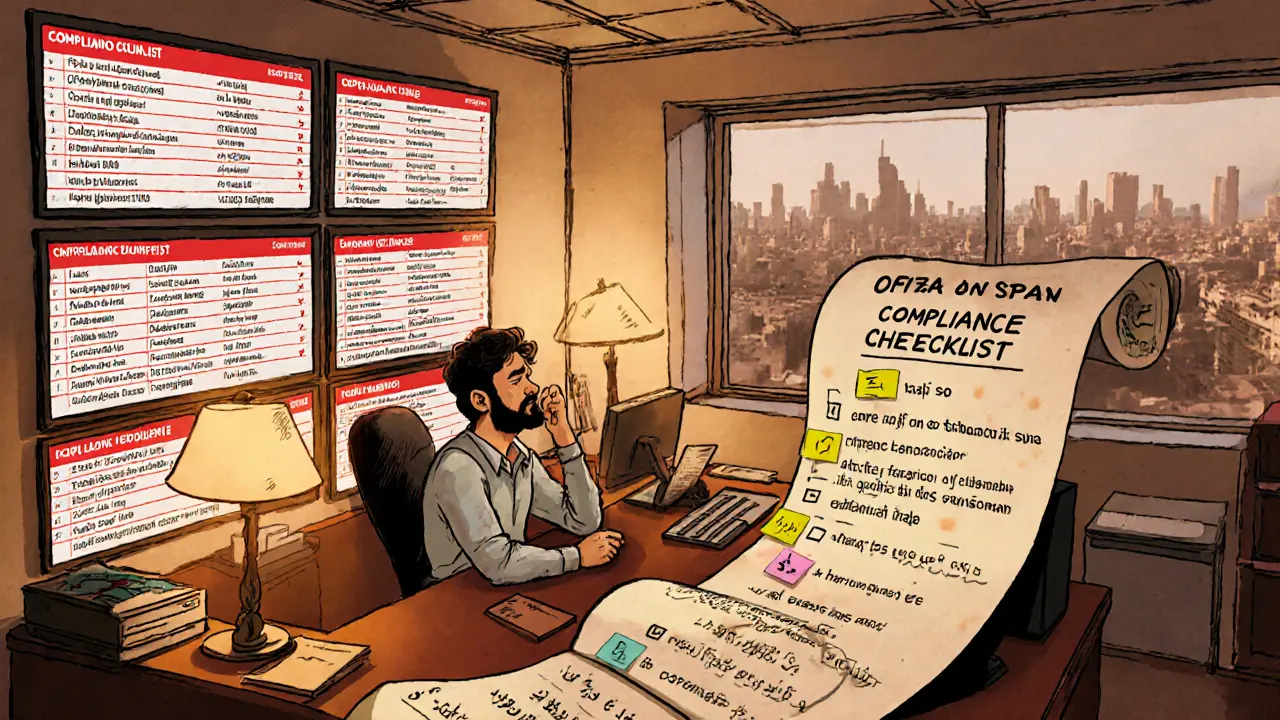
Step‑by‑step compliance checklist for crypto businesses
Below is a practical checklist that turns the abstract legalese into concrete actions. Follow it before you launch or expand services into Syria.
- Screen every counterparty against all 13 U.S. sanctions lists. Use a real‑time screening provider; manual lists become outdated within days.
- Verify that the transaction does not involve any of the 139OFAC‑designated individuals or entities. Flagged matches must be escalated to legal counsel.
- Obtain a written opinion confirming that the crypto activity does not fall under the Global Terrorism Sanctions Regulations or the Foreign Terrorist Organizations Sanctions Regulations, which are still enforced via General Licenses 24 and 25.
- Document the source of funds for every Syrian user. While Syrian law does not mandate this, U.S. regulators expect audit‑ready records for any transaction involving Syrian counterparties.
- Ensure your fiat on‑ramp partners (banks, payment processors) have corresponding accounts with the Central Bank of Syria (Central Bank of Syria) that are themselves cleared under the May2025 OFAC exceptive relief.
- Implement transaction monitoring thresholds aligned with the average $500 per‑transaction limit observed on Binance for Syrian users (Reddit, Sep2025). Anything above that should trigger a secondary review.
- Prepare to handle frequent account freezes. Maintain a rapid‑response team that can supply additional documentation within 24hours to prevent user churn.
Completing these steps typically takes 14‑16weeks, nearly double the timeline for other emerging markets where regulatory frameworks already exist.
Comparing the pre‑ and post‑sanctions crypto landscape
| Aspect | Before July2025 | After July2025 |
|---|---|---|
| U.S. legal basis for restrictions | Syrian Sanctions Regulations (SySR) under EO13338 | SySR removed; only residual EO13894 designations remain |
| Banking access for U.S. institutions | Prohibited correspondent accounts | Allowed with Central Bank of Syria under OFAC FAQ1221 |
| Crypto exchange access | Blocked by most platforms | Binance opened limited services; other exchanges cautious |
| Export controls on mining equipment | Full EAR licensing required | EAR99 items generally permitted; CCL items still need authorization |
| Typical transaction processing time | Several days to weeks due to sanctions checks | Average 47hours extra verification (Lightspark 2025) |
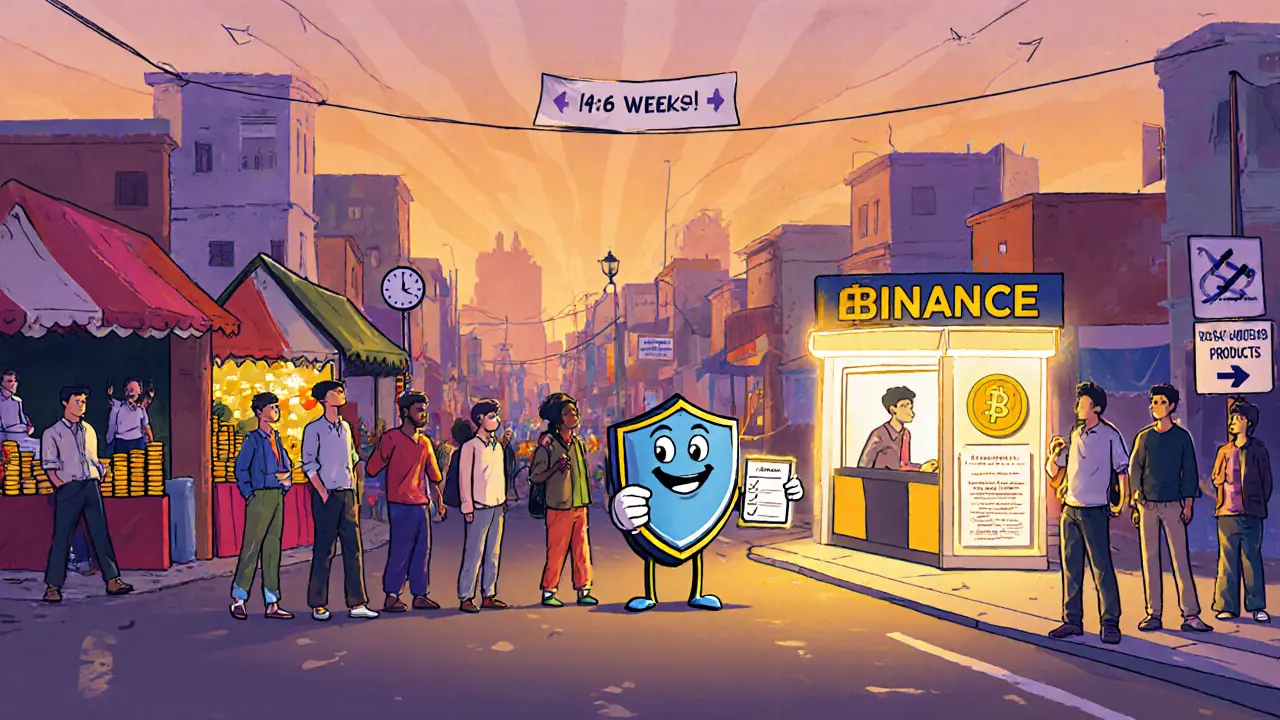
Market outlook and real‑world impact
Despite the regulatory fog, adoption is growing. Chainalysis estimates that about1.2million Syrians - roughly6% of the population - have interacted with crypto since July2025, mainly for remittances and cross‑border trade. The potential market size is significant: CoinDesk projects annual crypto transaction volume could reach$420million by 2027 if clear rules emerge.
However, user experience remains rough. Forum posts from r/CryptoSyria (Sep2025) describe mandatory identity verification, transaction caps of $500, and frequent account freezes. A Trustpilot snapshot of Binance reviews from Syrian IPs gave an average rating of 2.8/5, with 63% of negative feedback citing “excessive verification” and “sudden restrictions.”
Workarounds like peer‑to‑peer swaps or routing fiat through Lebanese and Jordanian banks are common, but they carry a 22% reported loss rate among users who tried such methods. Until Syria adopts a formal crypto framework, these stop‑gap solutions will dominate.
Practical advice for crypto firms eyeing Syria
If you’re considering entering the Syrian market, prioritize three pillars:
- Compliance infrastructure - Build or license a screening engine that updates all U.S. sanctions lists hourly and can flag the 139designated entities instantly.
- Local partnership strategy - Align with a Syrian bank that already has a U.S. correspondent account (e.g., Commercial Bank of Syria) to smooth fiat conversion.
- Risk‑adjusted product design - Offer low‑value, high‑frequency wallets that stay under the typical $500 cap, and keep transaction monitoring thresholds tight.
By treating the Syrian environment as a “transitional compliance zone,” you can reduce onboarding friction and avoid costly fines. Remember that the Caesar Act waiver is only 180days; a long‑term plan should anticipate future U.S. policy shifts.
Frequently Asked Questions
Can U.S. firms legally provide crypto services to Syrian residents?
Yes, but only after completing enhanced due diligence, ensuring no counterparties appear on the remaining OFAC SDN List, and operating under General Licenses24 and25. Direct facilitation of transactions involving the 139 designated individuals is prohibited.
What crypto exchanges currently accept Syrian users?
Binance opened limited services in July2025, but most other major exchanges (Coinbase, Kraken) still block Syrian IPs pending clearer regulations. Smaller regional platforms may allow access but often lack robust compliance tools.
How does the remaining OFAC designation affect crypto on‑ramps?
Any fiat on‑ramp that processes a payment to a designated entity triggers an OFAC violation. Firms must screen both the sender and receiver, and block or report any match immediately.
Is mining equipment subject to U.S. export controls?
Most ASICs and GPUs are classified as EAR99 and can be exported to Syria without a license, but any component on the Commerce Control List still requires a specific or general authorization under the new BIS rule.
What are the penalties for violating the residual sanctions?
Violations can result in civil penalties of up to $1million per violation, criminal fines, and loss of access to U.S. financial markets. The Treasury’s Office of Enforcement actively monitors crypto transactions for breaches.
Kim Evans
October 14, 2025 AT 08:00Thanks for pulling together this massive compliance checklist – it’s a solid starting point for anyone eyeing the Syrian market.
Remember to integrate a real‑time OFAC screening API; static lists become outdated in a matter of days.
Also, flagging the 139 designated entities early can save you weeks of back‑and‑forth with legal counsel.
Don’t forget to keep detailed source‑of‑funds records for each user; auditors love that stuff.
Good luck, and stay on top of those extra 47‑hour verification windows! 🙂
Shrey Mishra
October 20, 2025 AT 08:00The reality of operating in a post‑sanctions Syria feels like navigating a minefield blindfolded.
The lingering SDN designations cast a long shadow over any crypto transaction, no matter how small.
Even though the bulk of the SySR has been lifted, the specter of General Licenses 24 and 25 looms large.
In short, the promises of relief are tempered by a labyrinth of residual controls.
Wayne Sternberger
October 26, 2025 AT 07:00Hey folks, if you’re setting up shop in Syria you gotta start with a full screening of all counterparties – that means every single name on the 13 US sanctions lists.
Then you need a written legal opinion confirming no hit on the 139 OFAC designated entities.
After that, you’ll need to document the source of funds for every Syrian user, even though Syrian law doesn’t demand it.
Finally, keep an eye on your fiat on‑ramps – they must have cleared correspondent accounts with the Central Bank of Syria.
All of this can double the rollout timeline, but it’s better than a costly violation.
Jennifer Bursey
November 1, 2025 AT 07:00From a regulatory‑risk perspective, the post‑relief environment is a classic case of “partial deregulation with full‑blown compliance overhead.”
Think of it as a patchwork quilt: the central blocks (major sanctions) are gone, but the trim (residual designations) still bites.
Crypto firms need to deploy color‑coded risk matrices to differentiate low‑risk fiat on‑ramps from high‑risk counterparties.
In practice, that translates into a dual‑track onboarding flow – one for sub‑$500 transactions, another for anything above that threshold, each with its own monitoring cadence.
Bottom line: you can’t afford to treat this as a “set‑and‑forget” scenario.
Lesley DeBow
November 7, 2025 AT 07:00The intertwining of geopolitical relief and lingering sanctions raises a philosophical paradox: freedom in name, but constraint in practice.
When the U.S. lifts comprehensive sanctions, does the residual list represent a purposeful safeguard or an unintended hurdle?
Either way, the crypto ecosystem must adapt, embedding ethical due diligence into its core protocols.
Only then can it claim to be both innovative and responsible.
Teagan Beck
November 13, 2025 AT 07:00Nice rundown – just make sure you keep the screening tool up to date, otherwise you’ll hit a snag later.
EDMOND FAILL
November 19, 2025 AT 07:00Got to say, the whole thing feels like a sprint through a maze with a blindfold on.
Every time you think you’ve cleared a hurdle, another verification pops up.
But hey, that’s the price of doing business in a place where the rules are still catching up.
Jazmin Duthie
November 25, 2025 AT 07:00Wow, welcome to the “almost‑free” club.
Della Amalya
December 1, 2025 AT 07:00Reading through this checklist feels like watching an epic drama unfold – the heroes (crypto firms) battle against the lingering specters of sanctions, the plot twists with each new compliance requirement, and the climax builds as they finally achieve a smooth onboarding flow.
Each step, from real‑time OFAC screening to documenting source‑of‑funds, is a scene that adds tension and stakes.
The audience (us) can’t help but root for the underdog firms that navigate this labyrinth and emerge victorious, proving that perseverance and diligence can tame even the most chaotic regulatory landscapes.
Luke L
December 7, 2025 AT 07:00Compliance isn’t optional; it’s the only way to stay in the game.
shirley morales
December 13, 2025 AT 07:00One must consider the epistemic ramifications of engaging with a market entrenched in residual designations while ostensibly embracing deregulation.
Mandy Hawks
December 19, 2025 AT 07:00The juxtaposition of lifted sanctions with lingering designations invites contemplation of the nature of legal freedom versus practical constraint.
VEL MURUGAN
December 25, 2025 AT 07:00The post‑sanctions environment in Syria presents a nuanced challenge: while the bulk of the legal barriers have been removed, the residual 139 designations act as a persistent compliance hazard.
Companies must therefore adopt a rigorous, continuous monitoring framework that integrates up‑to‑date OFAC data feeds, ensuring that no transaction inadvertently intersects with a sanctioned party.
This approach minimizes exposure to civil penalties and sustains the integrity of cross‑border crypto operations.
Russel Sayson
January 6, 2026 AT 07:00Let me break down why the “relief” narrative is more complicated than many headlines suggest.
First, the removal of the Syrian Sanctions Regulations removes a blanket prohibition, but it does not erase the underlying risk profile of the region.
Second, the 139 individuals and entities that remain on the SDN list are precisely those that the U.S. deems still closely tied to illicit activities, and any interaction with them triggers a direct violation.
Third, because there is currently no domestic crypto legislation in Syria, firms cannot rely on local guidance and must instead import a comprehensive U.S. compliance regimen.
Fourth, the practical effect of the lifted sanctions is moderated by the fact that many U.S. banks are still cautious, requiring enhanced due diligence for any correspondent accounts tied to Syrian banks.
Fifth, the average processing time for cross‑border payments has increased by roughly 47 hours, a figure that compounds operational costs and user friction.
Sixth, the requirement to document source‑of‑funds for every Syrian user adds a layer of KYC that many startups are not equipped to handle at scale.
Seventh, the reliance on third‑party screening providers means that any lag in data updates could expose firms to inadvertent breaches.
Eighth, the risk of account freezes remains high; a single flagged transaction can lock a user out for days while the firm scrambles to provide documentation.
Ninth, the broader geopolitical environment, including the looming Caesar Act waiver, underscores that this relief could be temporary and subject to rapid reversal.
Tenth, the market data shows that while user adoption is growing, the average transaction size remains low, reflecting user wariness of larger moves.
Eleventh, the lack of clear domestic AML/KYC rules forces firms to adopt the most stringent standards, often mirroring European and U.S. frameworks.
Twelfth, the technical infrastructure for fiat on‑ramps is still nascent, with many providers hesitant to integrate Syrian banking APIs.
Thirteenth, the compliance burden effectively doubles the time to market compared to other emerging economies, stretching from the typical 8‑10 weeks to 14‑16 weeks.
Fourteenth, the cumulative effect of these factors means that while the headline “sanctions lifted” sounds promising, the on‑the‑ground reality is a complex, high‑cost compliance maze.
Fifteenth, firms that succeed will be those that invest early in robust monitoring tools, partner with vetted local banks, and design low‑value, high‑frequency wallet products that stay under the $500 cap.
Finally, continuous monitoring of policy shifts is essential, because a single amendment to the OFAC list could jeopardize the entire operation overnight.
Isabelle Graf
January 12, 2026 AT 07:00Sure, because “unrestricted” crypto in Syria just means “still dealing with a ton of red tape.”
Millsaps Crista
January 18, 2026 AT 07:00Great points on the compliance checklist – keep that vigilance high and the freezes low.
Remember, a proactive monitoring team can turn a potential freeze into a simple paperwork tweak.
Matthew Homewood
January 24, 2026 AT 07:00The interplay between regulatory relief and operational friction illustrates how freedom can be both granted and limited simultaneously.
Shane Lunan
January 30, 2026 AT 07:00Honestly, this whole thing feels like a bureaucratic nightmare that could’ve been avoided with clearer laws.
Jeff Moric
February 5, 2026 AT 07:00It’s helpful to see the step‑by‑step breakdown; it gives a clear roadmap for teams starting their compliance journey.
John Beaver
February 11, 2026 AT 07:00Don’t overlook the need for real‑time screening – static lists get old fast, and you don’t want to get hit with a fine later.
Maureen Ruiz-Sundstrom
February 17, 2026 AT 07:00The so‑called “relief” is just a smokescreen; without a solid legal framework, any firm is walking on thin ice waiting for the next sanction wave.
Brian Elliot
February 23, 2026 AT 07:00Curious how the 47‑hour delay compares to other sanctioned regions – it seems relatively moderate but still a significant hurdle.
Mitch Graci
March 1, 2026 AT 07:00Wow!!! So “sanctions lifted” means we still have to check every single name!!! 😂
Michael Grima
March 7, 2026 AT 07:00Another checklist? Great, because what we really needed was more paperwork.
Michael Bagryantsev
March 13, 2026 AT 07:00Having a partner bank that already has a cleared correspondent account can simplify the fiat on‑ramp process considerably.
Maria Rita
March 13, 2026 AT 07:00Don't let the compliance maze discourage you – think of it as an adventure where each hurdle you overcome brings you closer to unlocking the true potential of crypto in Syria.
Stay resilient, stay informed, and keep pushing forward.