


Imagine waking up to find your exchange has vanished, your funds are gone, and the government has just announced a record-breaking seizure. That's exactly what happened to users of TradeOgre is a centralized cryptocurrency exchange that operated without identity verification requirements, focusing on privacy coins and niche altcoins. First established in 2018, the platform marketed itself as a haven for those dodging the prying eyes of financial regulators. But in September 2025, the party ended abruptly when the Royal Canadian Mounted Police (RCMP) seized roughly CAD$56 million (about US$40 million) in digital assets, marking the largest crypto bust in Canadian history.
How a Privacy Haven Became a Target
TradeOgre wasn't your typical exchange like Coinbase or Binance. It operated as a hidden service via the Tor network, which is designed to mask a user's location and identity. Their big draw? No Know Your Customer (KYC) protocols. This meant you could trade without uploading a passport or proving where your money came from. While this sounds like a dream for privacy advocates, it's a nightmare for law enforcement trying to stop money laundering.
The exchange specifically catered to Monero (XMR) and other privacy-centric coins. Because Monero obscures transaction amounts and sender/receiver addresses, TradeOgre became a primary hub for people who wanted to move money without leaving a digital breadcrumb trail. However, this exact lack of oversight is what eventually put them on the radar of the Financial Transactions and Reports Analysis Centre of Canada (FINTRAC), the agency responsible for monitoring money laundering in Canada.
The Year-Long Trail to the Takedown
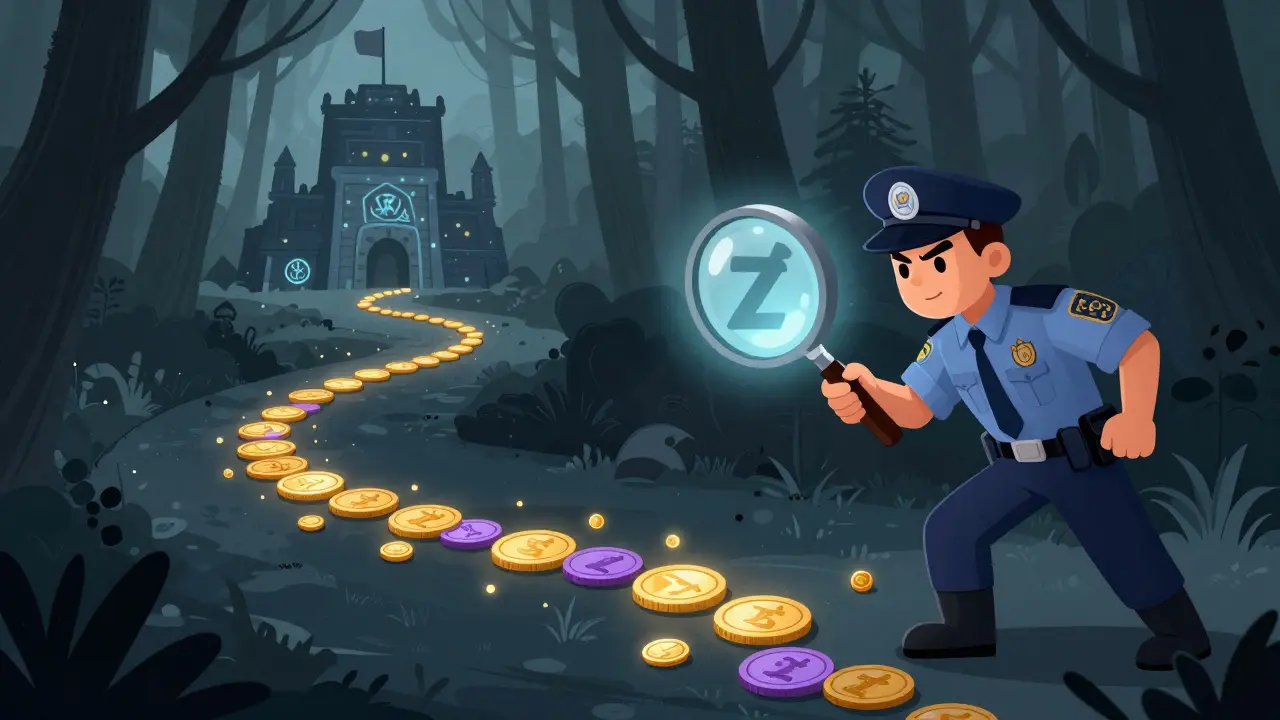
The collapse didn't happen overnight. The investigation actually kicked off in June 2024. It started with a high-level tip from Europol, the EU's law enforcement agency, which flagged suspicious activity flowing through the platform. The RCMP's Money Laundering Investigative Team (MLIT) then spent a year painstakingly mapping out the exchange's infrastructure.
They didn't do it alone. Law enforcement partnered with Arkham Intelligence, a blockchain analytics firm known for its ability to deanonymize crypto wallets. By combining traditional police work with advanced on-chain forensics, investigators could see through the "privacy" smokescreen. They discovered that TradeOgre had completely ignored Canadian laws by failing to register as a money services business, effectively operating as an illegal financial entity on Canadian soil.
| Feature | TradeOgre | Standard Regulated Exchanges |
|---|---|---|
| Identity Verification | None (No KYC) | Mandatory (Passport/ID) |
| Network Access | Tor Hidden Service | Standard Web/App |
| FINTRAC Registration | None | Required for Canadian Operation |
| Primary Asset Focus | Privacy Coins (e.g., Monero) | Major Pairs (BTC, ETH, SOL) |
The Silent Exit and the Digital Fingerprint
If you were a user, the first red flag appeared in July 2025. The website and social media accounts simply went dark. No "maintenance" notice, no apology-just a digital void. While users were panicking on forums, blockchain analysts noticed something strange. Huge sums of money were moving out of TradeOgre's wallets.
The most shocking part? The RCMP didn't just take the money; they left a note. Investigators used a technique where they embedded messages directly into the blockchain transactions, declaring that the assets were now under the control of the Canadian government. It was a public, immutable declaration of victory. By September 18, 2025, the official announcement hit: CAD$56 million had been seized, and the platform was dead.
Why This Changes Everything for Crypto in Canada
For years, many in the crypto space believed that if an exchange was registered offshore or hid behind a Tor layer, they were untouchable. The TradeOgre case proves that's a myth. This wasn't just about seizing a few wallets; it was the complete dismantling of a business infrastructure. It shows that the RCMP now has the technical muscle to hunt down non-compliant platforms regardless of where they claim to be based.
This sends a loud message to any platform serving Canadian users: if you aren't playing by the Anti-Money Laundering (AML) rules, you are a target. The collaboration between government agencies and private firms like Arkham Intelligence means that the "blind spots" in the blockchain are shrinking. The ability to trace funds across complex networks is now a standard tool in the police toolkit, not a niche skill.

What This Means for Privacy Coin Users
Does this mean Monero or other privacy coins are dead? Not necessarily. But it does mean that the TradeOgre shutdown highlights the danger of trusting "no-KYC" centralized exchanges. When you leave your coins on a platform that ignores the law, you aren't just trusting the founder-you're gambling that the government won't notice the platform exists.
The industry is now seeing a divide. On one side, you have the regulated giants who embrace surveillance to stay legal. On the other, you have truly decentralized options (like DEXs) where there is no central entity for the RCMP to shut down. TradeOgre tried to be both-a centralized business with decentralized privacy-and that contradiction is exactly what led to its downfall.
Was TradeOgre a scam?
There is no official evidence that TradeOgre was a "rug pull" or a scam in the traditional sense. It functioned as a trading platform for years. However, it operated illegally by bypassing financial regulations and KYC laws, which eventually led to its seizure by the RCMP.
Can users get their money back from the seizure?
Typically, when law enforcement seizes assets linked to criminal activity or non-compliant businesses, the process for recovery is incredibly difficult. Since TradeOgre did not require KYC, there is no official record of who owns what, making it nearly impossible for the government to verify and return funds to individual users.
Why did the RCMP use Arkham Intelligence?
Blockchain analytics firms like Arkham provide tools that can link clusters of wallets to real-world entities. This allows investigators to follow the "money trail" even when users attempt to hide their identity through mixing services or privacy coins.
What is FINTRAC and why did it matter here?
FINTRAC is Canada's financial intelligence unit. Any business that handles money transfers or currency exchange (including crypto) must register with them and report suspicious transactions. TradeOgre's failure to do this made them an illegal operation in the eyes of Canadian law.
Does this affect other no-KYC exchanges?
Yes. This creates a legal precedent in Canada. Any exchange that allows anonymous trading without proper registration is now at much higher risk of being targeted by the RCMP and international partners like Europol.
Next Steps for Crypto Users
If you're still using exchanges that promise total anonymity without any regulatory oversight, it's time to evaluate your risk. The TradeOgre event shows that "hidden" doesn't mean "invisible." To protect your assets, consider moving toward non-custodial wallets where you hold your own private keys. If the exchange doesn't hold your keys, the government can't seize your coins by simply shutting down a website.
Ian Chait
April 19, 2026 AT 11:36Absolute joke. This is just a front for the globalists to push CBDCs and kill off any real privacy. They use Arkham to "deanonymize" because they've got backdoors into the Tor nodes and probably some zero-day exploit they've been sitting on for years. This isn't law enforcement, it's a digital dragnet to make sure nobody can hide their wealth from the state. Total power grab by the RCMP and their handlers in the EU. Wake up people, your coins aren't safe anywhere that has a web interface.
Nishant Goyal
April 20, 2026 AT 09:43Interesting perspective on the risks of centralized exchanges.
Andrew Southgate
April 20, 2026 AT 13:28I've been telling people for years that the only real way to secure your assets is by using a hardware wallet. If you leave your funds on an exchange, regardless of whether it's a huge corporate giant or a niche privacy-focused site, you are essentially giving someone else the keys to your vault. In this specific case, the RCMP basically walked into the vault and changed the locks. It is a harsh lesson, but it's one that highlights why self-custody is the cornerstone of the entire cryptocurrency movement. If you have the private keys, you have the money; if the exchange has the keys, they have your money, and the government has a very easy target to seize during a raid.
Shantal Sanjur
April 21, 2026 AT 23:44Oh, honey, imagine actually believing that "privacy" coins could hide you from a government agency with a blank check and a partnership with a data firm. How quaint! The irony is just delicious that people thought a Tor link was a magical shield against the RCMP. Truly a masterclass in delusional optimism.
Thomas Jewett
April 22, 2026 AT 08:05This is exactly what happen when you let criminals and money launderers run wild with these fake coins that don't even have real value!! Canada is finally doing its part to clean up the streets and stop these degenerits from hiding their dirty money in the shadows... it is about time the law was enforced with a heavy hand because if we dont stop this now the whole financial system will colapse into chaos caused by these so called "privacy" freaks who just want to avoid paying thier fair share to the country!
Sean Douglas
April 23, 2026 AT 23:10The sheer tragedy of this is almost poetic. The absolute devastation of thousands of users waking up to a digital void is just heartbreaking. I can practically feel the collective gasp of horror as they realized their life savings were replaced by a government receipt. It is a symphony of financial ruin!
Trudy Morse
April 25, 2026 AT 00:04Existence is a series of controlled collapses. We seek anonymity to feel free, yet the state defines that very freedom as a crime. It's a paradox of the digital age.
Saurav Bhattarai
April 25, 2026 AT 15:19Imagine thinking you're a genius for using a "no-KYC" exchange and then acting surprised when it gets nuked. The arrogance is simply astounding. Truly a top-tier comedy of errors.
siddharth narula
April 26, 2026 AT 12:55It is a fundamental truth that those who operate in the shadows eventually succumb to the light of justice. 🧘♂️ One must wonder why individuals seek such anonymity if their intentions are pure. The seizure is a manifestation of karmic retribution for those bypassing the laws of the land. 🕉️
Michael Harms
April 26, 2026 AT 22:44Man, this is a tough blow for the users, but it's a great reminder for everyone to double check where they keep their coins. If anyone needs help figuring out how to set up a non-custodial wallet, just reach out! We can all learn from this and get our security tightened up together.
Prachi Bhadarge
April 28, 2026 AT 15:32Sure, because nothing says "secure" like a website that vanishes without a trace. Brilliant strategy.
Adedamola Oyebo
April 29, 2026 AT 07:21Arkham's tools are incredibly powerful!! This changes the game for all non-compliant platforms!!
Luke George
April 30, 2026 AT 18:38It's all a setup. They let these exchanges grow just to map the network and then snap the trap shut once they have enough data. It's a honey pot on a national scale.
Michelle Stanish
May 1, 2026 AT 18:05I don't think it's that big of a deal.
Gaurav Undirwade
May 2, 2026 AT 15:48The failure to register with FINTRAC is a grave transgression. It is an insult to the regulatory framework of a sovereign nation to operate an illegal financial entity. Those who participated in such an enterprise lack the moral fortitude to respect the rule of law.
nikki krinkin
May 4, 2026 AT 03:24That's a lot of money for the government to just hold onto.
Vicky Duffala
May 4, 2026 AT 19:23This is such a wake-up call for the community! We need to push harder for decentralized tools that actually work and don't rely on a single point of failure. Let's turn this disaster into motivation to build better, truly ownerless systems. 🚀
John and Lauren Busch
May 6, 2026 AT 07:14Whatever, just another day in crypto lol.
Mark Pfeifer
May 6, 2026 AT 11:57I'm curious about the legal precedent this sets. If the government can seize assets from a non-KYC exchange, does that mean they can claim everything since there is no way to prove ownership?
Kaitlyn Wu
May 7, 2026 AT 04:58Stop trying to find loopholes. If you want to trade, do it legally or don't do it at all. The risk is on you.
Kevin Lư
May 8, 2026 AT 22:03Lol imagine trusting a guy with a website on Tor. Honestly, anyone who lost money here deserved it for being so lazy with their security.
Shannon Kelly Smith
May 10, 2026 AT 13:08Exactly! This is why we educate each other! 💡 Always use cold storage, people! Don't let your assets be a trophy for the RCMP! 🛡️💪
nathan jones
May 11, 2026 AT 21:38Typical government move.
Adam Mann
May 12, 2026 AT 15:53It's really a shame that some people lost their funds, but maybe this is a good way to encourage everyone to learn about non-custodial wallets. It's a steep learning curve for some, but once you get the hang of it, you realize that the peace of mind knowing your coins are actually yours is worth the effort. I've helped a few friends transition to Ledger or Trezor and they always say the same thing-they wish they'd done it sooner. We should all try to be a bit more helpful to the newcomers so they don't fall into these traps. It's about building a stronger, more informed community where we all protect each other's interests instead of just gambling on the next "hidden" exchange that promises the world but delivers a government seizure notice.
Keri Pommerenk
May 12, 2026 AT 20:34totally agree with moving to cold wallets no one should leave their life savings on an exchange if they can avoid it
Chintu Parikh
May 13, 2026 AT 22:46I believe we can find a middle ground where privacy is respected but law enforcement can still prevent actual crimes. It is imperative that we collaborate to create standards that satisfy both requirements.
Kim Smith
May 15, 2026 AT 15:56it just feels like we're all just pawns in this giant game of cat and mouse... like we think we're so smart with our encrypton and our hidden services but the state has way more resources than we ever will and they're just waitng for us to slip up once so they can take everything away and leave us with nothing but a blockchain transaction note saying they won... its just so bleak when you really think about the scale of it all and how the dream of a decentralized world is just getting eaten by the very things it tried to escape from in the first place
Mike Kempenich
May 16, 2026 AT 15:49It's a tough lesson, but necessary for the growth of the industry.
Jeff Barlett
May 17, 2026 AT 08:19Everyone is acting like this is a tragedy, but it's actually hilarious. The "privacy" crowd just got outplayed by basic police work. I love it!