

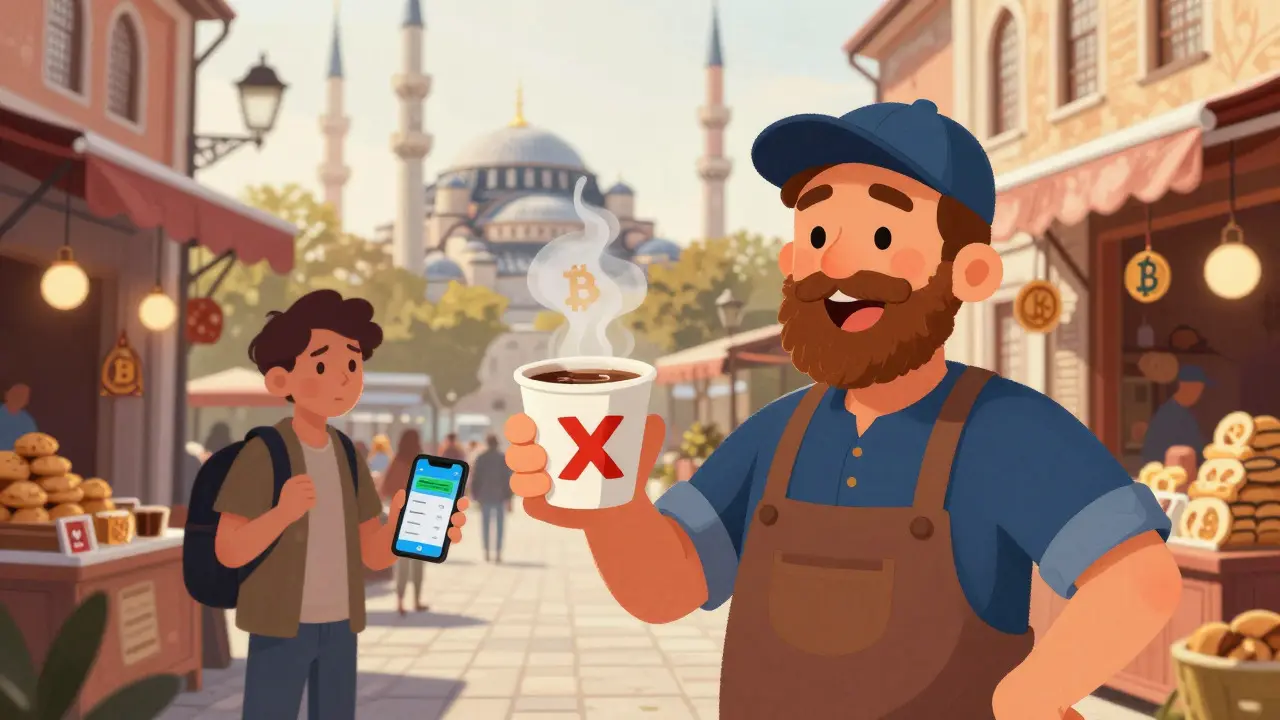
Buying Bitcoin in Istanbul feels like a normal Tuesday for many locals, but try to pay your coffee bill with it, and you hit a brick wall. This is the reality of Cryptocurrency, which is digital assets used for investment and trading but strictly prohibited as legal tender for direct payments in Turkey. The Central Bank of the Republic of Turkey (CBRT), the nation's monetary authority, has drawn a hard line: you can trade crypto, you can hold it, but you cannot use it to buy goods or services.
This dual system creates a unique landscape where Turkey ranks among the top countries globally for crypto adoption volume, yet maintains some of the strictest payment prohibitions in the region. As we move through 2026, the rules have shifted from vague warnings to a rigid, legally enforced framework. If you are an investor, a business owner, or just curious about how this works, understanding the specific boundaries set by Ankara is crucial to avoid heavy fines or frozen accounts.
The Core Restriction: No Payments, Only Investment
The most critical rule to remember is that cryptocurrencies are not money in Turkey; they are assets. Since April 2021, the CBRT has explicitly banned the use of virtual currencies for the direct payment of goods and services. This ban covers everything from buying a loaf of bread to purchasing real estate.
Why does this matter? Because it changes how you think about using your crypto. You cannot walk into a shop and scan a QR code to pay in Ethereum. Instead, the process must go through a regulated intermediary. Here is how the flow works under current rules:
- Step 1: You sell your cryptocurrency on a licensed exchange.
- Step 2: The proceeds are converted into Turkish Lira (TRY) or another fiat currency.
- Step 3: The fiat currency is transferred to your bank account.
- Step 4: You use your bank card or cash to pay for the good or service.
This restriction protects the Turkish Lira’s status as the sole legal tender. It ensures that inflation control and monetary policy remain within the hands of the state. For the average user, this means crypto serves primarily as a hedge against currency devaluation rather than a daily spending tool. Many Turks bought into Bitcoin during periods of high inflation not to spend it, but to preserve value when the Lira was losing ground rapidly.
The Regulatory Shift: March 2025 Communiqués
For years, the crypto market in Turkey operated in a gray area. That changed dramatically in March 2025. On March 13, 2025, authorities published four communiqués in the Official Gazette, fundamentally restructuring how the industry operates. These rules fully came into effect by June 30, 2025, marking the end of the "wild west" era for local exchanges.
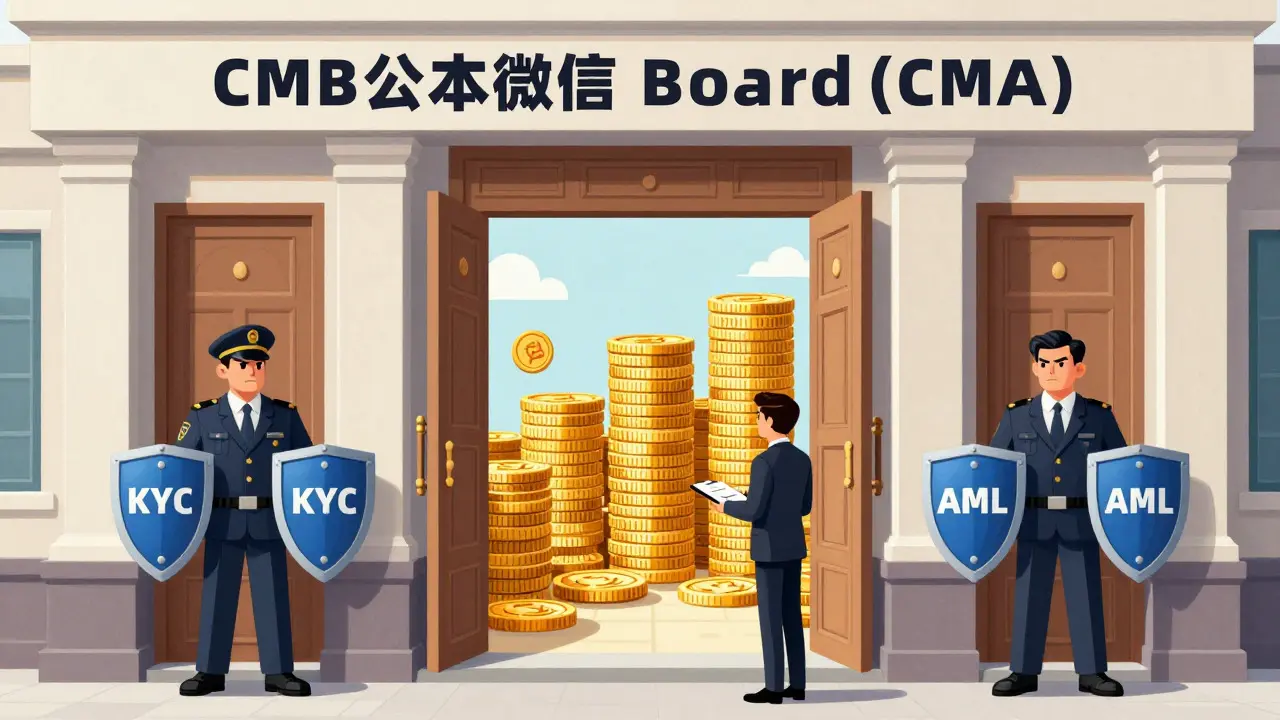
The primary regulator here is no longer just the CBRT watching from the sidelines. The Capital Markets Board (CMB), known locally as SPK, is the main regulatory body responsible for licensing and overseeing Crypto Asset Service Providers (CASPs) in Turkey. They work alongside the Financial Crimes Investigation Board (MASAK, Turkey's financial intelligence unit, enforces anti-money laundering laws and monitors suspicious transactions in the crypto sector.) to ensure compliance.
Two key documents define this new era:
- Communiqué I (III-35/B.1): Sets the foundational rules for who can operate as a Crypto Asset Service Provider. It mandates that these entities must be joint-stock companies with shares issued in cash and registered by name. This kills off anonymous ownership structures.
- Communiqué II (III-35/B.2): Details the operational heavy lifting. It covers capital adequacy, technical standards, and day-to-day compliance measures.
This shift wasn't just bureaucratic paperwork. It was designed to bring transparency to a market that had seen massive inflows of capital, often driven by citizens trying to escape economic instability.
Licensing Requirements: High Barriers to Entry
If you want to run a crypto exchange in Turkey today, you need deep pockets and a clean record. The CMB has set minimum capital thresholds that are significantly higher than in many other jurisdictions. This is intentional-it filters out small, potentially unstable operators.
| Service Type | Minimum Capital (TRY) | Approximate USD Value | Key Requirement |
|---|---|---|---|
| Crypto Exchange | 150 Million TRY | ~$4.1 Million | Must handle trading pairs and order matching |
| Custodian | 500 Million TRY | ~$13.7 Million | Must secure assets in cold/hot wallets with insurance |
Beyond the money, there are strict corporate governance rules. Founders must prove financial integrity and have clean legal records. The CMB reviews every applicant thoroughly. Additionally, TÜBİTAK, the Scientific and Technological Research Council of Turkey, sets the technical compliance standards for cybersecurity and infrastructure required by CASPs. This means your IT security isn't just a best practice; it's a legal requirement validated by national experts.
Foreign exchanges face additional hurdles. While they aren't entirely banned, active marketing to Turkish users without a local license is restricted. This has forced many international platforms to either partner with local licensed entities or risk being blocked by internet service providers.
Anti-Money Laundering (AML) and KYC Rules
The government is terrified of illicit flows entering or leaving the country through crypto. Consequently, the Know Your Customer (KYC) and Anti-Money Laundering (AML) rules are aggressive.
Here is what you need to know as a user:
- Identity Verification: Mandatory for all accounts. No more anonymous trading.
- Transaction Thresholds: Any transaction exceeding 15,000 Turkish Lira (approximately $425) triggers mandatory identity verification checks if not already completed.
- Record Keeping: Exchanges must keep detailed records of all transactions, including canceled and unexecuted orders. This data is available for inspection by MASAK at any time.
- Reporting: Banks must report foreign exchange conversions above $50,000 equivalent. CASPs must submit regular operational updates to the CMB.
These rules mean that privacy is largely gone in the Turkish crypto space. Every move is tracked. If you are moving large sums, expect scrutiny. The goal is to prevent money laundering, terrorist financing, and tax evasion.
Enforcement Actions: Real Consequences
Regulations are only as good as their enforcement. Turkey has shown it is willing to bite. A prime example is the case of Binance TR, the localized version of the global giant Binance, faced significant regulatory pressure and fines in Turkey for breaches of anti-money laundering regulations.
MASAK imposed the statutory maximum administrative fine of 8 million Turkish Lira (approximately $750,000 at the time) on Binance TR. The fine stemmed from deficiencies in their transaction monitoring and customer identification systems. This sent a clear message to all players: cut corners, and you will pay dearly.
Looking ahead, MASAK is planning to expand its powers further. Proposed changes include the ability to freeze bank and cryptocurrency accounts directly, target rented accounts used for layering illicit funds, and implement even stricter compliance requirements. For service providers, this means investing heavily in dedicated risk management teams and automated suspicious activity detection systems is no longer optional-it's survival.
The Digital Lira: The State's Answer
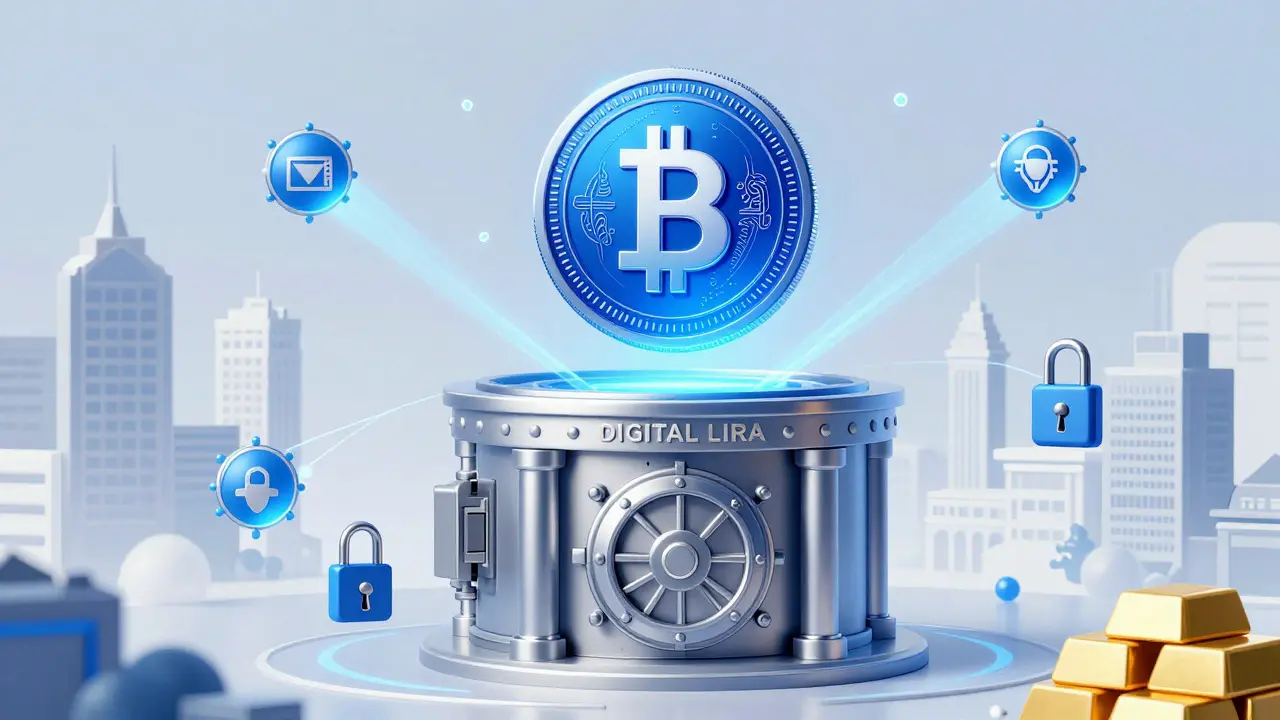
While restricting private crypto, the CBRT is busy building its own. The Digital Lira, Turkey's Central Bank Digital Currency (CBDC), is a tokenized version of the Turkish Lira aimed at modernizing payments while maintaining state control over the currency supply. project is in active development.
Unlike Bitcoin or Ethereum, the Digital Lira would be fully backed by the state and integrated directly into the existing banking infrastructure. It aims to offer the speed and convenience of crypto without the volatility or the lack of oversight. For the government, this is the ideal solution: efficient digital payments that reinforce, rather than replace, the Lira's dominance.
Expect the Digital Lira to focus initially on B2B transactions and interbank settlements before rolling out to consumers. It represents the CBRT's strategy to co-opt blockchain technology for monetary stability rather than letting it disrupt the system.
Future Outlook: Tokenization and Beyond
The regulatory framework isn't static. By late 2025 and into 2026, discussions have shifted toward the tokenization of real-world assets (RWA). Given the importance of real estate and gold in Turkish investment culture, this makes sense.
Institutional investors are showing interest in fractional ownership of properties or commodities via blockchain tokens. The CMB is preparing secondary regulations to govern this space. This could open up new avenues for investment, allowing smaller players to access high-value assets previously reserved for the wealthy. However, expect these rules to be just as strict as those for crypto exchanges, with heavy emphasis on investor protection and asset backing.
Derivatives involving cryptocurrencies remain prohibited. You can spot-trade Bitcoin, but you won't find complex futures or options contracts on Turkish-regulated platforms anytime soon. This limits speculative leverage, keeping the market somewhat grounded compared to wilder jurisdictions.
Practical Tips for Users and Businesses
Navigating this landscape requires care. Here is how to stay compliant and safe:
- Use Licensed Exchanges Only: Check the CMB website for the list of authorized CASPs. Using unlicensed offshore exchanges puts your funds at risk of being frozen or lost with little recourse.
- Keep Records: Maintain your own logs of all crypto purchases and sales. Tax authorities may cross-reference bank statements with exchange data.
- Avoid Direct Payments: Never accept or offer crypto as direct payment for goods. Always convert to fiat first. Receipts should show TRY, not BTC.
- Watch for Scams: With high adoption comes high fraud. Verify any platform claiming to be "licensed" by checking official government sources, not just their website.
- Stay Updated on MASAK Alerts: The financial intelligence unit frequently updates its lists of suspicious patterns. Understanding these helps you avoid accidental red flags.
The Turkish crypto market is mature, regulated, and heavily monitored. It offers opportunities for investment and hedging, but it demands respect for the rules. The days of anonymity and loose oversight are over. By understanding the roles of the CBRT, CMB, and MASAK, you can navigate this space confidently and legally.
Can I use Bitcoin to buy groceries in Turkey?
No. The Central Bank of the Republic of Turkey (CBRT) explicitly prohibits the use of cryptocurrencies for direct payments of goods and services. You must sell your crypto for Turkish Lira on a licensed exchange and then use the fiat currency to pay.
Who regulates cryptocurrency exchanges in Turkey?
The Capital Markets Board (CMB) is the primary regulator for licensing and overseeing Crypto Asset Service Providers (CASPs). They work with MASAK for anti-money laundering enforcement and TÜBİTAK for technical standards.
What is the minimum capital required to start a crypto exchange in Turkey?
As of the 2025 regulations, a crypto exchange needs a minimum capital of 150 million Turkish Lira. Custodians require 500 million Turkish Lira. These entities must be established as joint-stock companies.
Is Binance legal in Turkey?
Binance operates a localized entity called Binance TR, which is subject to Turkish regulations. However, it has faced significant fines from MASAK for AML breaches. Users should ensure they are using the licensed local version and understand that international versions may face access restrictions.
What is the Digital Lira?
The Digital Lira is Turkey's Central Bank Digital Currency (CBDC). It is a tokenized version of the Turkish Lira developed by the CBRT to provide a state-backed digital payment alternative to private cryptocurrencies, aiming to maintain monetary control while modernizing transactions.
Are there taxes on cryptocurrency gains in Turkey?
Yes. Cryptocurrency gains are subject to taxation in Turkey. The Income Tax Law treats crypto as a tangible asset, and profits from sales are taxed as capital gains. Keep detailed records of all transactions for accurate reporting.
Can foreign exchanges serve Turkish customers?
Foreign exchanges face significant barriers. Active marketing to Turkish users without a local CMB license is restricted. Many international platforms are blocked or limited, pushing users toward locally licensed providers to ensure compliance and fund safety.