


Imagine logging into your favorite exchange to trade Bitcoin, only to find out that half a million accounts-including potentially yours-were flagged for serious identity verification failures. This isn't a hypothetical scenario from a dystopian novel; it is the reality facing Upbit, South Korea's largest cryptocurrency exchange operated by Dunamu. In late 2024, regulators uncovered a massive compliance scandal involving over 500,000 suspected Know Your Customer (KYC) violations. For traders and investors watching the Asian market, this event marks a turning point in how digital assets are regulated.
The scale of this investigation is unprecedented. We are not talking about a few sloppy paperwork errors. The Financial Intelligence Unit (FIU) of South Korea's Financial Services Commission (FSC) found systematic failures in how Upbit verified its users. With Upbit controlling roughly 80% of the domestic crypto trading volume, these issues do not just affect one company-they shake the foundation of the entire Korean crypto ecosystem. As we move through 2026, understanding what happened, why it matters, and how it affects your funds is crucial.
The Core of the Upbit KYC Scandal
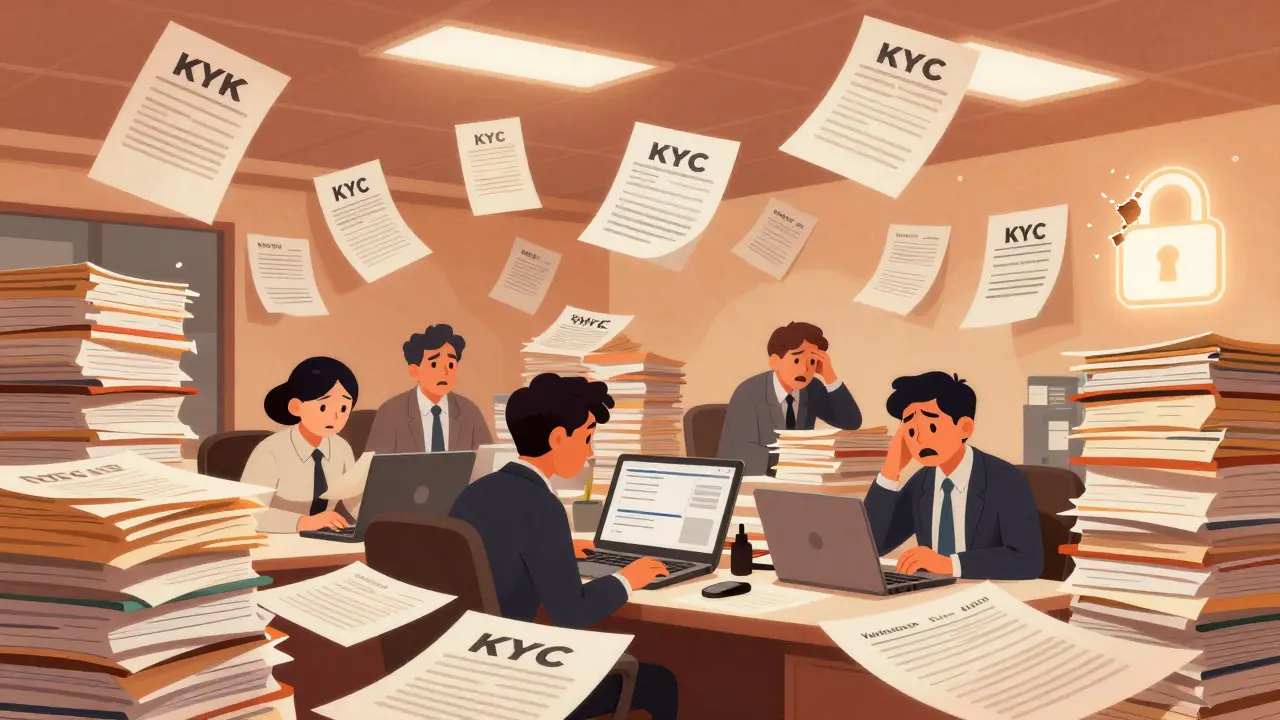
To understand the severity, we need to look at the specific failures identified by regulators. KYC protocols exist to prevent money laundering and terrorist financing. They require exchanges to verify that you are who you say you are. Upbit’s process broke down in several critical areas during routine license renewal reviews.
First, there was the issue of document authenticity. Regulators found that Upbit accepted photocopied identification documents instead of requiring original materials or secure digital uploads. In a world where photo editing tools are accessible to everyone, accepting photocopies creates a huge loophole for bad actors. Second, account registrations were approved even when key identification details were obscured or unclear. If a regulator cannot read the ID, neither should the exchange approve the account.
Perhaps most alarming was the failure regarding driving licenses. In nearly 190,000 cases, Upbit conducted identity checks based solely on personal information entered by the user. They failed to verify the authenticity of the card using the encrypted serial number system mandatory for South Korean driving licenses. This means thousands of accounts could have been opened with fake IDs that looked real but had no valid cryptographic signature.
- Photocopy Acceptance: Allowing non-original ID submissions.
- Obsured Details: Approving applications with unreadable ID fields.
- Serial Number Neglect: Ignoring mandatory encryption checks on driving licenses.
- Missing Re-verification: Over 9 million instances where official IDs were not collected during re-verification processes.
Why the Numbers Matter: 500,000 vs. 9 Million
You might see two different numbers floating around in news reports: 500,000 and 9 million. It is easy to get confused, so let’s clear that up. The 500,000 figure refers to the initial suspected KYC breaches that triggered the major regulatory action and potential fines. However, during deeper audits of customer re-verification processes, investigators discovered over 9 million cases where no official identification documents were properly collected from users.
This distinction highlights a systemic infrastructure problem rather than isolated incidents. It suggests that Upbit’s compliance team did not just miss a few checks; their entire data collection pipeline was leaking. Additionally, the FIU accused Upbit of facilitating approximately 45,000 transactions with unregistered foreign cryptocurrency exchanges. This is a direct violation of the Act on Reporting and Using Specified Financial Transaction Information, which aims to stop capital flight and illicit cross-border flows.
The Regulatory Hammer: FSC and Penalties
The entity behind this crackdown is the Financial Services Commission (FSC), specifically its Financial Intelligence Unit (FIU). South Korea has moved from a laissez-faire approach to a strict licensing framework that requires exchanges to meet banking-level compliance standards. Under the Special Financial Transactions Act, virtual asset exchanges must renew their licenses every three years. This renewal process is now a comprehensive audit of historical transactions and customer onboarding records.
The proposed penalties are severe. The theoretical maximum fine is 100 million Korean won (approximately $68,600) per violation. If applied strictly to all 500,000+ cases, the total could reach $34 billion-a sum larger than many countries' GDPs. While actual fines will likely be lower through negotiated settlements, the financial threat is existential. More immediately impactful is the proposed six-month suspension of new user registrations. This penalty stops growth while keeping existing users active, a strategy designed to punish without causing immediate market collapse.
| Entity | Violation Type | Penalty/Settlement | Impact |
|---|---|---|---|
| Upbit (Dunamu) | KYC Failures (500k+ cases) | Proposed 6-month registration ban | Growth halted, precedent set for Asia |
| Binance | AML & Sanctions Evasion | $4.3 Billion (US Settlement) | Global operational restructuring |
| FTX | Fraud & Mismanagement | Bankruptcy & Criminal Charges | Total platform shutdown |
What This Means for You as a Trader
If you hold assets on Upbit, your immediate concern is likely fund accessibility. The current sanctions do not freeze existing user accounts, meaning you can still withdraw funds. However, the uncertainty causes anxiety. Social media sentiment analysis shows increased interest in alternative platforms like Bithumb and international exchanges such as Coinbase or Kraken.
For new users, the six-month registration ban is a hard barrier. You cannot create a new account until the suspension lifts or is overturned. This forces traders to either wait or migrate to competitors. This migration effect benefits rival exchanges but also exposes traders to new risks if they rush into less established platforms without doing due diligence.
Furthermore, expect stricter verification processes across the board. As Upbit faces legal challenges filed by Dunamu, other exchanges are upgrading their systems. You may encounter longer onboarding times, more frequent re-verification requests, and higher scrutiny on large transactions. This is not necessarily bad-it makes the ecosystem safer-but it does reduce convenience.

The Legal Battle and Future Outlook
Dunamu, the operator of Upbit, has not accepted defeat quietly. They filed a lawsuit to challenge the business sanctions, arguing that the penalties are disproportionate and that some interpretations of the law are overly broad. The January 2025 deadline for Upbit’s response to the suspension notice marked a critical juncture, with final penalty determinations scheduled shortly after.
As of early 2026, the situation remains fluid. FSC officials have stated that "nothing has been decided yet" regarding final sanctions, suggesting ongoing negotiations. Industry observers view this case as a "stress test" for global exchange compliance. If Upbit wins significant concessions, it could signal that regulators are willing to compromise. If they lose, it sets a rigid standard that other jurisdictions may adopt.
The broader implication is the maturation of the crypto market. The days of wild west operations are ending. Exchanges are now treated similarly to banks, with corresponding responsibilities. For South Korea, which boasts a crypto adoption rate exceeding 30% of the adult population, maintaining a robust regulatory framework is essential for market stability. A successful resolution of the Upbit case could strengthen South Korea's position as a leading crypto hub with transparent oversight.
Navigating the Post-Upbit Landscape
How should you adjust your strategy? First, diversify your exchange exposure. Do not keep all your eggs in one basket, especially if that basket is under regulatory siege. Second, ensure your own KYC documentation is flawless. Keep copies of your submitted IDs and proof of address. If an exchange asks for re-verification, respond quickly and thoroughly.
Third, monitor regulatory news closely. The outcome of the Dunamu lawsuit will provide clues about future enforcement trends. If penalties are reduced, Upbit may regain market share quickly. If upheld, competitors may surge ahead. Finally, consider the security implications. Stricter KYC often correlates with better internal security practices. An exchange that takes compliance seriously is less likely to suffer from internal fraud or external hacks.
Will my funds on Upbit be frozen?
Currently, no. The proposed sanctions focus on suspending new user registrations and imposing fines. Existing users retain access to their accounts and can withdraw funds. However, always stay updated on official announcements from Upbit and the FSC, as regulations can change.
Can I open a new account on Upbit right now?
Likely not. The FSC proposed a six-month suspension of new user registrations. Unless this sanction is overturned or modified through negotiation, new sign-ups will be blocked during this period.
What exactly were the KYC violations?
Upbit failed to properly verify user identities in over 500,000 cases. Specific failures included accepting photocopies of IDs, approving accounts with obscured details, and failing to check encrypted serial numbers on driving licenses. Additionally, over 9 million re-verification cases lacked proper ID collection.
Is Upbit going bankrupt?
There is no indication of bankruptcy. Upbit remains solvent and continues to operate for existing users. The penalties involve fines and operational restrictions, not liquidation. Dunamu is actively fighting the sanctions in court.
Should I move my funds to another exchange?
It depends on your risk tolerance. While Upbit is currently operational, the regulatory uncertainty creates volatility. Diversifying across multiple reputable exchanges reduces risk. Ensure any alternative exchange you choose is fully compliant with local regulations.
How does this compare to the Binance settlement?
The Binance settlement ($4.3 billion) was primarily about anti-money laundering and sanctions evasion in the US. The Upbit case focuses on KYC procedural failures within South Korea's domestic regulatory framework. Both highlight the global trend toward stricter crypto oversight, but the mechanisms and penalties differ significantly.