


Imagine a world where every time you buy a coffee or a new pair of shoes, you get a piece of the business back in your digital wallet. That's the core idea behind CashBackPro is a cryptocurrency token designed to help businesses drive sales and keep customers coming back through a tokenized reward system. Also known as CBP, it acts as the fuel for an ecosystem where traditional shopping meets blockchain incentives. While the concept of loyalty points is as old as the grocery store, CBP tries to modernize it by using a digital asset that has potential value outside of a single store.
How the CBP Ecosystem Actually Works
At its heart, CashBackPro isn't just a coin you hold in a wallet; it's a business tool. The project is developed and sponsored by BBA GLOBAL, a firm that focuses on bridging the gap between digital assets and real-world commerce. They've created a marketplace at bbamarket.vn where businesses and online shops can list their products.
Here is the cycle of how a typical transaction works within this system:
- A merchant lists a product on the BBA Market.
- A customer makes a purchase.
- The system triggers a reward mechanism that gives the customer CBP tokens.
- These tokens incentivize the customer to return to the shop or engage further with the ecosystem.
By turning a one-time "walk-in" customer into a token holder, businesses are essentially creating a digital bond with their clientele. It's a shift from old-school punch cards to a global digital ledger.
The Technical Side: Tokenomics and Market Data
If you're looking at the numbers, CBP is a bit of a rollercoaster. One of the first things you'll notice is that the price isn't the same everywhere you look. This happens often with low-liquidity tokens where different exchanges don't sync perfectly. For instance, MEXC might show the price around $0.017, while Holder.io could list it higher at $0.023.
The supply is capped at 102,000,000 tokens. However, there's a catch: the "circulating supply"-the amount of coins actually available for trading-is often reported as zero or left blank on major tracking sites. This is a red flag for some investors because it makes it hard to calculate the true market cap accurately.
| Metric | Value/Source | Context |
|---|---|---|
| Total Supply | 102 Million CBP | Fixed maximum limit |
| Primary Exchange | PancakeSwap (v2) | Most active DEX for CBP/BSC-USD |
| All-Time High | ~$18.12 to $21.22 | Extreme historical volatility |
| Daily Volume | ~$5,800 (CoinGecko) | Low liquidity profile |

Is CBP a Safe Bet? Analyzing the Risks
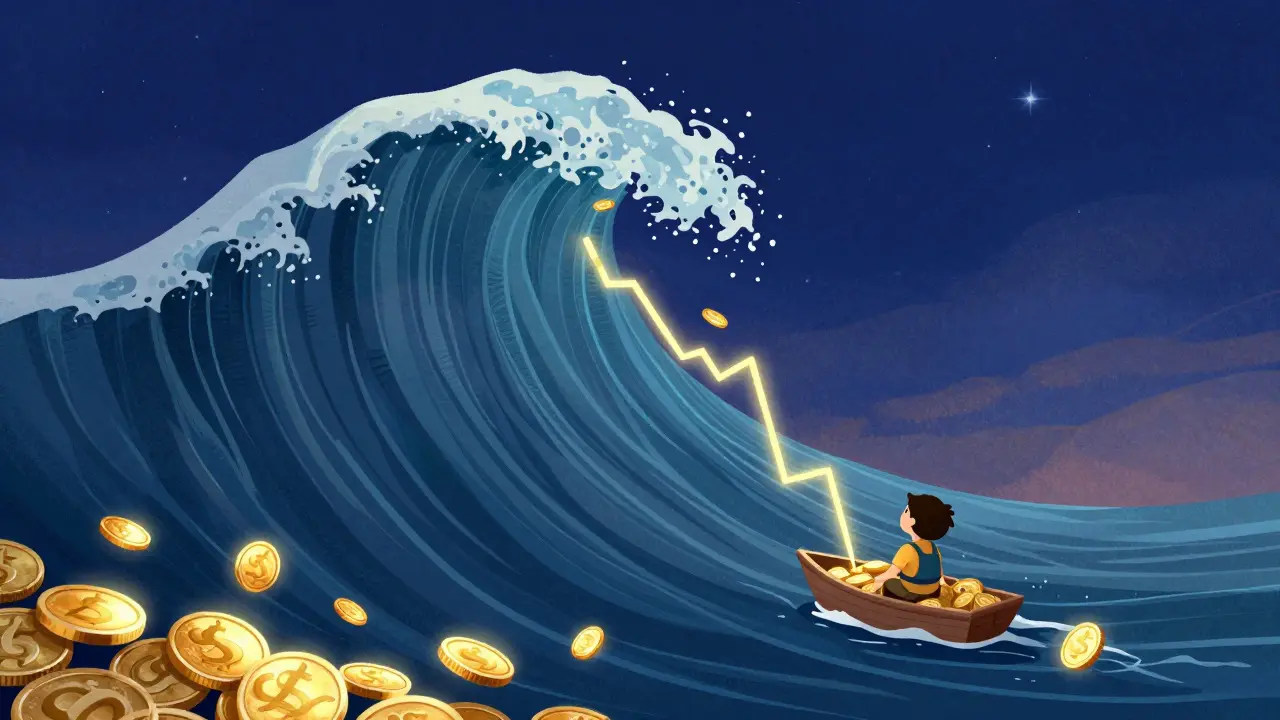
Let's be real: the price chart for CBP looks like a steep mountain slide. Over the last three years, the token has seen a drop of over 99% from its peaks. This kind of crash usually suggests one of two things: either the project struggled to gain adoption, or the initial hype was an unsustainable bubble.
Another major point of concern is liquidity. Liquidity is basically how easy it is to buy or sell the coin without swinging the price wildly. Because CBP has low trading volume, a single large sell order could tank the price further. If you're used to trading Bitcoin or Ethereum, where you can move millions of dollars in seconds, CBP is a completely different beast. It's a niche asset with high volatility.
Technical analysis from algorithmic systems, like those at CoinLore, suggests a bearish short-term mood. While some long-term predictions sound optimistic-even dreaming of triple digits over a decade-those are based on mathematical models, not guaranteed reality. In the crypto world, a project's survival depends more on actual users than on a calculator's projection.
Comparing CBP to Traditional Loyalty Programs
You might wonder why a business would use CBP instead of just giving a 10% discount. The difference lies in the asset's nature. A discount is a loss of immediate revenue for the store. A token, however, is an asset that the customer holds. If the token increases in value, the customer feels they've "won," which creates a much stronger emotional connection to the brand.
However, this also introduces risk. If the token price crashes, the "reward" becomes worthless, and the customer might feel the loyalty program was a sham. This is the double-edged sword of tokenizing rewards.
Where to Find CBP and How to Trade It
CBP primarily lives on decentralized exchanges. If you want to get your hands on it, PancakeSwap is the most common route, as it handles the CBP/BSC-USD pair. This means the token likely operates on the BNB Smart Chain (BSC), allowing for faster and cheaper transactions than the Ethereum mainnet.
For those who prefer centralized platforms, you can find CBP on Coinsbit and ProBit. Just be aware that because the volume is low, you might encounter "slippage"-where the price you actually get is different from the price you saw on the screen.
The Future Outlook: What to Watch For
For CashBackPro to move from a niche token to a mainstream success, it needs to solve the "trust gap." This means more transparent reporting on circulating supply and a surge in actual merchants using the bbamarket.vn platform. If more real-world shops start accepting and giving CBP, the utility of the coin increases, which is the only sustainable way to drive price growth.
Keep an eye on their GitHub and Twitter (@cbp_finance). In crypto, silence is usually a bad sign. If the developers are pushing code and announcing new partnerships, there's a pulse. If the social media accounts go dark, it's a warning to stay away.
What is the main purpose of the CBP token?
The CBP token is designed as a reward mechanism for businesses. It allows merchants to give digital incentives to customers, turning casual buyers into loyal repeat customers by providing them with a tradable cryptocurrency asset.
Who is behind CashBackPro?
CashBackPro is sponsored and developed by BBA GLOBAL, which also manages the bbamarket.vn marketplace where the token's utility is primarily realized.
Why does the CBP price vary between different exchanges?
This is due to low liquidity. When a coin isn't traded in massive volumes, there isn't enough activity to keep prices perfectly synchronized across different platforms like MEXC and Holder.io, leading to small price discrepancies.
Is CBP a high-risk investment?
Yes, it is considered high-risk. The token has experienced extreme price volatility, losing over 99% of its value from its all-time high, and suffers from low trading liquidity, which can make it difficult to sell quickly.
Where can I buy CBP coins?
The most popular place to trade CBP is on PancakeSwap (v2). It is also available on centralized exchanges such as ProBit and Coinsbit.
Iestyn Lloyd
May 1, 2026 AT 14:12The liquidity issue mentioned here is quite standard for small-cap tokens on BSC. Without a significant market maker, these price discrepancies between DEXs and CEXs are inevitable.
VIVEK SINGH
May 2, 2026 AT 04:32Oh look, another 'revolutionary' loyalty token that crashes 99% of its value. Truly a masterpiece of modern finance. I'm sure the 'digital bond' with customers is just fantastic when the reward is worth less than the electricity used to mine it.
Ralph Espinosa
May 3, 2026 AT 03:07I completely agree with the points on transparency!!! A missing circulating supply is a massive red flag for any serious investor!!! Always do your own research before diving into these low-cap assets!!!
April D Thompson
May 3, 2026 AT 08:19Imagine the sheer cosmic tragedy of a coffee reward that vanishes into the void of a bearish market! It's almost poetic how we try to digitize human loyalty into a volatile asset. We are essentially gambling on the hope that a shopping mall ecosystem can survive the brutal reality of crypto winters. It makes you wonder if we are chasing innovation or just a more complex way to lose money in the name of progress. The emotional rollercoaster of seeing a token drop 99% is a spiritual experience in itself, a lesson in impermanence that no traditional punch card could ever teach us. We cling to these digital tokens as if they are anchors in a storm, but they are more like paper boats in a hurricane. Why do we crave this instability? Perhaps it's the thrill of the abyss. I see so many people trying to find meaning in the decimals of a price chart, forgetting that the real value of a transaction is the exchange of energy and trust between two humans. When that trust is replaced by a smart contract with low liquidity, we lose the soul of commerce. It's a wild ride, a digital circus where the clowns are all holding bags of CBP tokens, waiting for a moonshot that may never come. Yet, here we are, diving deep into the tokenomics of a project that looks like a slide into oblivion. It's absolutely fascinating and terrifying all at once!
Chloe Fletcher
May 3, 2026 AT 16:17Stay positive everyone! 🌟 Just remember to only invest what you can afford to lose! 📉💖
Arun Prabhu
May 3, 2026 AT 18:07Typical plebeian project. This entire concept is an affront to actual economic theory, wrapped in the gaudy packaging of 'blockchain' to lure the intellectually bankrupt.
Lex Harley
May 3, 2026 AT 18:43the slippage on pancake swap is realy bad for this one..’s basically an illiquid asset at this point lol. if the tvl stays this low the price impact will just keep eating the gains.
Tony Phan
May 4, 2026 AT 22:46I lost so much on this one! The pump and dump was insane! I really thought the utility was there but the whale dumped everything on us!
Bevon Findley
May 6, 2026 AT 07:00Quite the volatile asset. :)
Kristi Swartz
May 7, 2026 AT 22:21The fact that the circulating supply is not reported is a failure of governance and a breach of basic investor trust
Alex Mazonowicz
May 9, 2026 AT 10:33I still believe in the vision!!! If the merchants actually onboard, this could be huge!!! Keep holding!!!
Veronica Bago
May 9, 2026 AT 12:38It's a bit risky but the idea is cool.
Arti Jain
May 10, 2026 AT 03:59Waste of time. Purely speculative garbage.
Harvey Alford
May 11, 2026 AT 19:34I'm broke because of this. Help me.
Mitali Rajvanshi
May 12, 2026 AT 23:47Glad to see the risks laid out clearly here. It helps in making a balanced decision.