

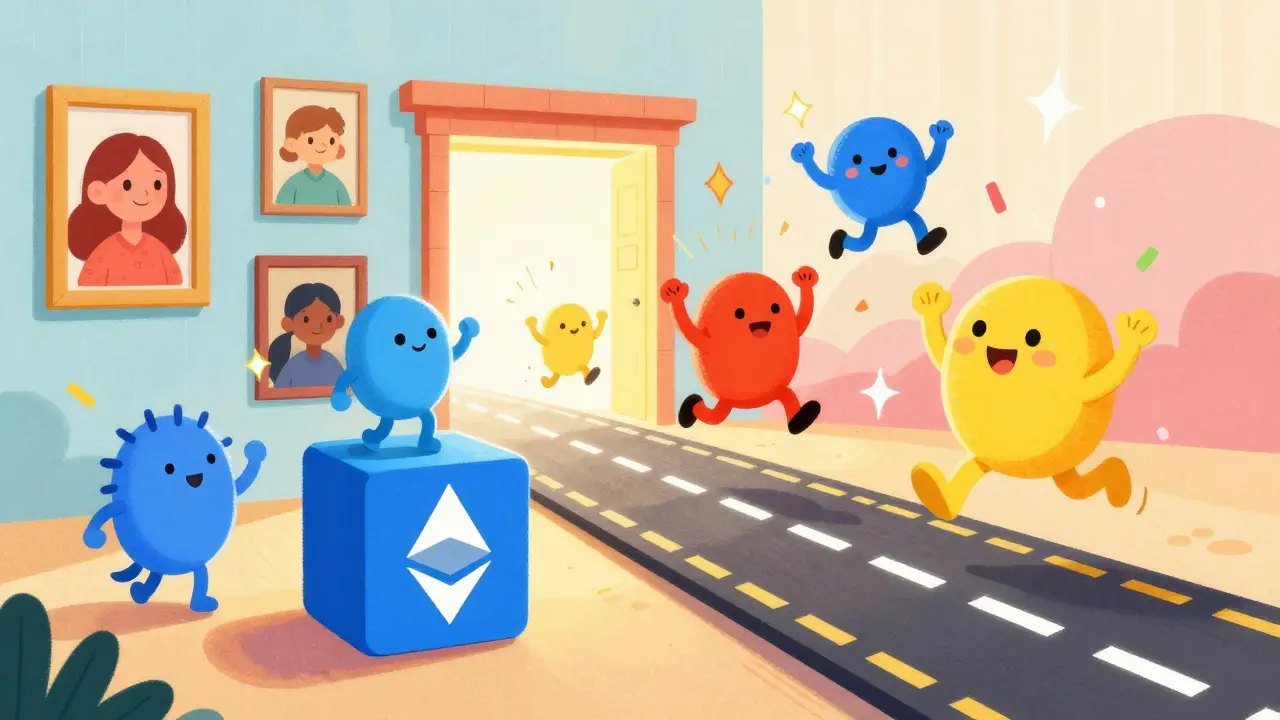
Remember when Doodles was just a collection of colorful, hand-drawn avatars on Ethereum? That era ended in May 2025. The project didn’t just stay static; it evolved into a full-blown entertainment universe powered by its own native cryptocurrency. This token is called DOOD, and it serves as the utility and governance fuel for the entire Doodles ecosystem. If you are holding onto an old Doodle NFT or watching the charts from the sidelines, you might be asking: what does this new coin actually do? Is it just another meme coin chasing hype, or does it have real utility? As of May 2026, one year after its launch, the answer leans heavily toward utility. DOOD isn't just a speculative asset; it is the key that unlocks access to gaming, customization, and community voting within a brand that has already partnered with giants like McDonald's and Pharrell Williams. Let’s break down exactly what DOOD is, how it works on the Solana blockchain, and why it matters for your portfolio or your digital wardrobe.
The Evolution: From Static Art to Interactive Utility
To understand DOOD, you first need to understand the shift in strategy. Launched in 2021, the original Doodles collection consisted of 10,000 unique characters created by Canadian illustrator Burnt Toast. It became a "blue-chip" NFT, known for traits like the iconic "Rainbow Puke." But owning a JPEG doesn't pay bills, and the market for static art cooled significantly over time. The team realized they needed more than just art. They needed an economy. Enter DOOD. Announced in February 2025 and launched on May 9, 2025, the token marked the transition from a simple collectible brand to a decentralized entertainment platform. While the original NFTs live on Ethereum, the DOOD token operates primarily on Solana, a high-performance blockchain known for fast transactions and low fees. This move to Solana wasn't random. For a gaming and social ecosystem, speed and cost matter. On Ethereum, buying a small accessory for your avatar could cost $5 to $20 in gas fees depending on network congestion. On Solana, those same transactions cost fractions of a cent. This infrastructure allows micro-transactions-like buying a hat or voting on a proposal-to feel seamless rather than painful.
What Can You Actually Do With DOOD?
A token without utility is just a number on a screen. DOOD has three primary jobs within the ecosystem, moving beyond simple speculation.
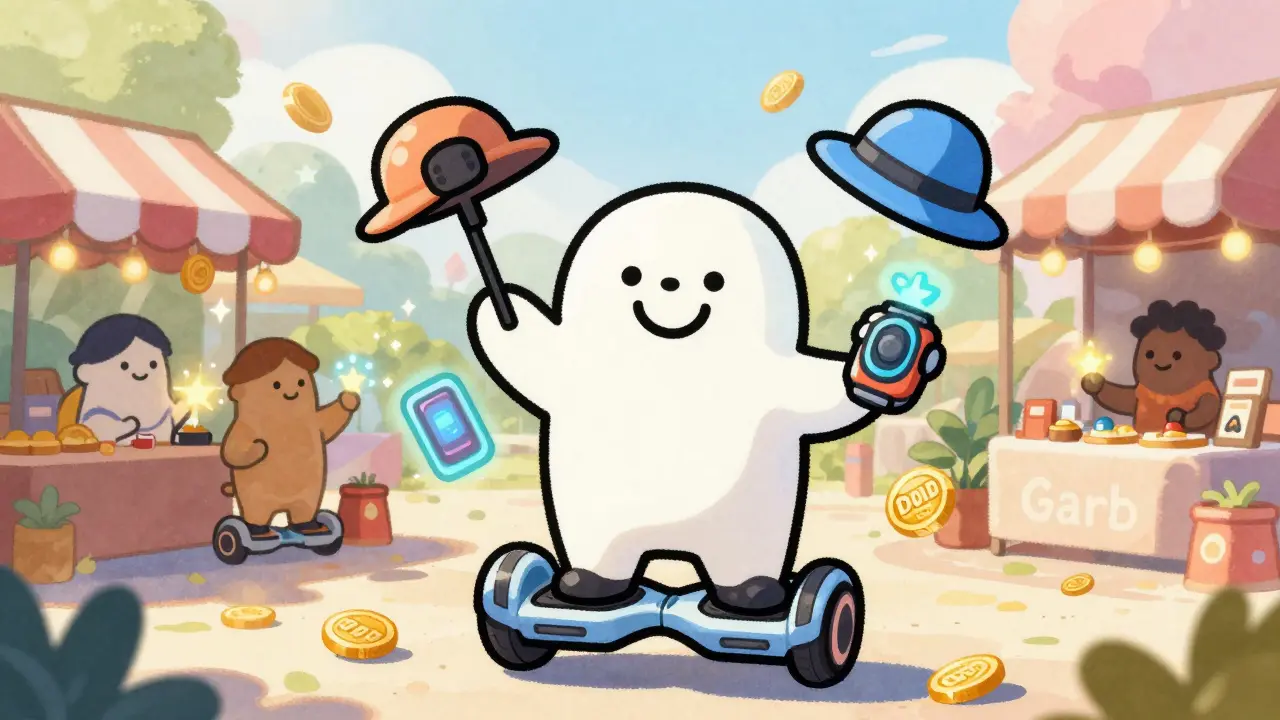
- In-Game Economy and Customization: The biggest driver for DOOD demand is Doodles 2, the scalable sequel game that allows mass adoption through customizable avatars. In this environment, your character is programmable. You can use DOOD to mint accessories like hoverboards, hairstyles, and gear directly on-chain. These aren't just cosmetic; they change the metadata and visual appearance of your avatar instantly. The Garb Marketplace is where these trades happen, and DOOD is the currency used to buy, sell, and trade these style attributes.
- Governance via Doodles DAO: Holding DOOD gives you a voice. The Doodles DAO is the decentralized autonomous organization that manages the project's treasury and roadmap. Token holders vote on proposals ranging from fund allocation to partnership decisions. If you want to influence where the brand goes next, you need DOOD to cast your vote.
- Access and Rewards: DOOD acts as a ticket to exclusive events and content within the broader media franchise. Whether it’s early access to animations, music releases, or special community drops, the token gates access while rewarding loyal participants.
Tokenomics: Supply, Distribution, and Dilution
Before buying any crypto, you need to know how many tokens exist and who holds them. DOOD has a maximum supply of 10 billion coins. At launch in May 2025, approximately 7.8 billion were in circulation, with a fully diluted valuation (FDV) of roughly $31.9 million. The distribution model is heavily weighted toward the community, which is a positive signal for long-term sustainability. Here is how the pie is sliced:
| Allocation Category | Percentage | Purpose |
|---|---|---|
| Community & Growth | 68% | Airdrops, incentives, and user acquisition |
| Ecosystem Fund | 25% | Development, partnerships, and liquidity |
| Team | 17% | Core development and operational costs |
The Bigger Vision: DreamOS and AI Storytelling
This is where DOOD separates itself from typical NFT utility tokens. The Doodles team isn't just building a game; they are building an operating system for entertainment. They call it DreamOS and DreamNet, platforms designed as decentralized entertainment systems for co-creation and interactive storytelling. DreamNet is an AI-powered protocol on Solana. It structures community-created stories as composable, AI-readable data. What does that mean for you? It means the narrative isn't controlled by a single writer in a room. Instead, users contribute to the story, and AI helps weave those contributions into coherent plots, animations, or games. DOOD incentivizes this creation. If you write a story arc that gets adopted into the main canon, or if you design an asset that becomes popular, the protocol can reward you with tokens. This transforms DOOD from a simple payment method into a share of the creative economy. It aligns the interests of creators, consumers, and investors under one roof.
Where to Buy and Trade DOOD
If you decide DOOD fits your investment thesis, you need to know where to find it. Since it lives on Solana, you cannot buy it on Ethereum-based exchanges like Uniswap. You will need a Solana-compatible wallet, such as Phantom or Solflare. For trading, the options are split between centralized and decentralized exchanges:
- Centralized Exchanges (CEX): Bybit has emerged as the most popular CEX for DOOD trading. This offers ease of use for fiat on-ramps but requires you to trust the exchange with your funds.
- Decentralized Exchanges (DEX): Meteora is the leading DEX for DOOD on Solana. Trading here allows you to keep custody of your assets but requires managing private keys and understanding slippage settings.
Risks and Considerations
No crypto asset is risk-free. DOOD carries specific risks tied to its niche and structure. Dependency on Ecosystem Success: DOOD’s value is tightly coupled with the success of Doodles 2, DreamOS, and the broader brand. If the games fail to attract players or the storytelling platform doesn’t gain traction, the demand for the token could dry up. Unlike Bitcoin, which has intrinsic scarcity, DOOD’s value is derived entirely from its utility within a specific app ecosystem. Market Volatility: As a relatively new token launched in mid-2025, DOOD is subject to high volatility. Memecoin origins can lead to sharp pumps and dumps based on social sentiment rather than fundamental developments. Regulatory Uncertainty: As governments worldwide tighten regulations on utility tokens and DAOs, projects like Doodles may face compliance hurdles. Ensure you are aware of the legal status of crypto assets in your jurisdiction, especially if you are using DOOD for governance or staking.
Is DOOD Worth Your Attention?
The Doodles brand has survived the bear markets of previous years by pivoting from static art to dynamic engagement. DOOD is the engine behind that pivot. If you believe in the intersection of AI, gaming, and Web3 ownership, DOOD offers a tangible way to participate. It provides governance rights, access to a growing marketplace, and a stake in a decentralized media franchise. However, do not buy it blindly. Research the latest updates on DreamOS development, monitor the active user count in Doodles 2, and watch the token’s liquidity depth on Meteora. The token is a tool for engagement first and an investment second. Use it accordingly.
When was the DOOD token launched?
The DOOD token was officially launched on May 9, 2025, on the Solana blockchain. It was announced earlier in February 2025 as part of the Doodles ecosystem expansion.
What blockchain is DOOD built on?
DOOD is primarily built on the Solana blockchain. This choice allows for fast transaction speeds and low fees, which are essential for the gaming and marketplace features of the Doodles ecosystem. The original Doodles NFTs remain on Ethereum.
How do I get DOOD tokens?
You can acquire DOOD tokens through centralized exchanges like Bybit or decentralized exchanges like Meteora on Solana. Eligible community members also received allocations through an official airdrop portal at dood.doodles.app during the launch phase.
What is the total supply of DOOD?
The total maximum supply of DOOD is 10 billion tokens. Approximately 68% is allocated to community and growth, 25% to the ecosystem fund, and 17% to the team.
Can I use DOOD to buy Doodles NFTs?
Not directly for the original Ethereum NFTs. DOOD is used within the Doodles 2 ecosystem and the Garb Marketplace to buy customization items, accessories, and gear for your avatars. It powers the in-game economy and governance rather than the primary NFT sale.
What is DreamOS?
DreamOS is a decentralized entertainment operating system being developed by Doodles. Along with DreamNet, it aims to create an AI-powered platform for co-creation and interactive storytelling, where users can earn rewards through blockchain incentives.