

You've probably heard of Dogecoin and Shiba Inu. But have you met Inu Inu (INUINU)? It’s a community-driven meme token on the Ethereum blockchain that launched in July 2022 with a zero-tax policy and a massive supply burn. Unlike many projects that promise revolutionary tech or complex utility, Inu Inu keeps it simple: it’s a cultural statement wrapped in code. If you’re wondering why anyone would buy a coin named after itself twice, you’re not alone. This article breaks down exactly what this token is, how its economy works, and whether its "anti-establishment" vibe has any staying power.
The Origin Story of a Stealth Launch
Inu Inu didn’t arrive with a fanfare of venture capital funding or a glossy whitepaper. Instead, it stealth-launched on Ethereum on July 7, 2022. The developer behind it did something unusual: they locked the liquidity for 200 years and then vanished. Yes, you read that right. There was no team meeting, no CEO interview, and no roadmap presentation. The project was handed over to the community immediately. This approach is often called a "fair launch." By removing the central authority, the creators aimed to prevent rug pulls-where developers dump their tokens and run away. The anti-bot protection mechanisms used during the initial distribution were designed to ensure regular people got in, not just high-frequency trading bots. For many holders, this disappearance wasn't a bug; it was the feature. It signaled that the project belonged to the people holding the coins, not a corporate entity trying to sell them a dream.
Tokenomics: Zero Tax and Massive Supply
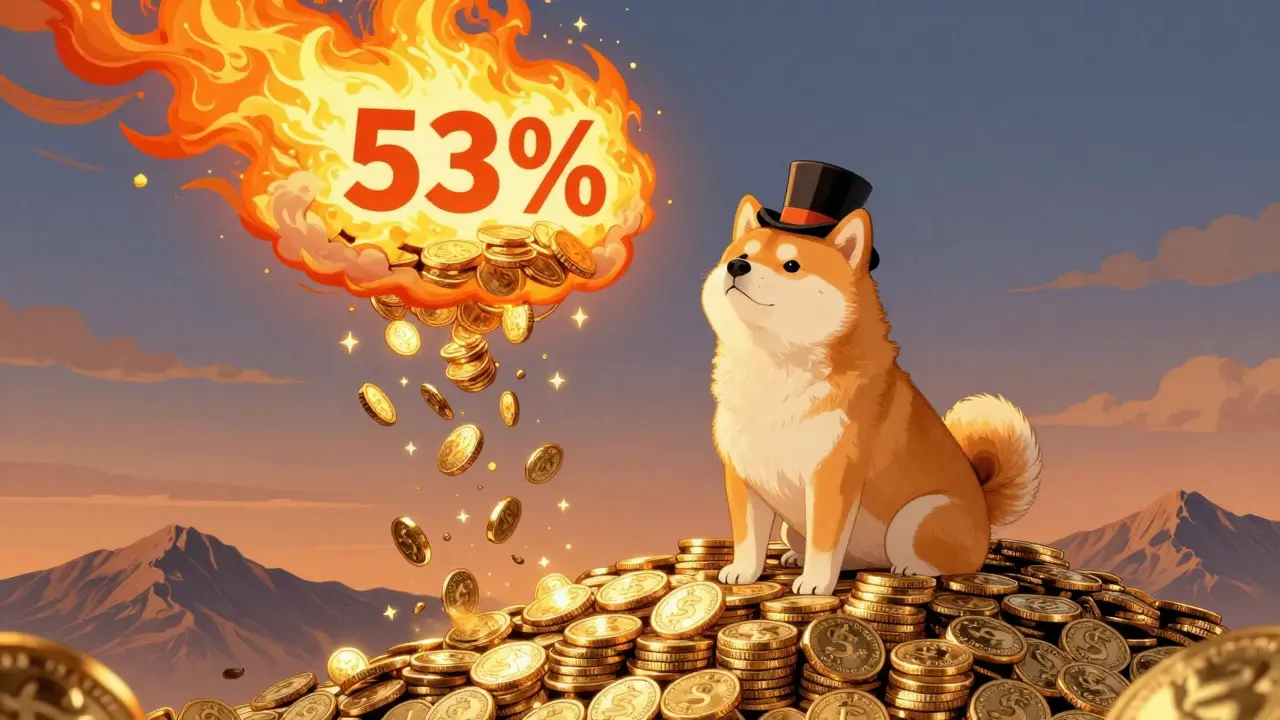
If you look at the numbers, Inu Inu looks different from standard ERC-20 tokens. Most meme coins charge a tax on every transaction-often 5% to 10%-to fund marketing or development wallets. Inu Inu charges zero. When you buy or sell, you keep 100% of your value (minus gas fees). This makes it attractive for traders who hate hidden costs. But here’s where it gets wild. At launch, 53% of the total supply was burned. Burning means sending tokens to an address no one can access, effectively removing them from circulation forever. This reduces supply, which theoretically supports price if demand stays steady. However, the remaining supply is enormous. Sources vary, but the circulating supply sits around 465 trillion INUINU. That’s a lot of zeros. Because of this massive supply, the price per token is microscopic, often hovering below $0.000000001.
| Feature | Detail | Implication |
|---|---|---|
| Transaction Tax | 0% | No fees deducted by the project on buys/sells |
| Liquidity Lock | 200 Years | Prevents early exit scams by locking funds long-term |
| Supply Burn | 53% at launch | Reduces circulating supply to potentially boost scarcity |
| Total Supply | ~470 Trillion | Extremely high volume leads to sub-penny pricing |
| Blockchain | Ethereum | Subject to ETH gas fees and network congestion |
Who Is Running the Show?
Since the original developer disappeared, the community runs everything. This isn’t just a slogan; it’s operational reality. Community members manage social media accounts, organize promotional events, and decide on future directions through informal consensus. There is no official governance token or voting contract that we know of. Decisions happen in Telegram groups and Twitter threads. Is this good or bad? It depends on your perspective. On one hand, there’s no central point of failure. No single person can halt the project or change the rules unilaterally. On the other hand, coordination is hard. Without a dedicated dev team, updates are slow, and technical improvements are rare. The community describes itself as "the strongest, most loyal," but with only about 2,710 holders recorded on-chain, it’s a tight-knit club rather than a mass movement. You’re buying into a small, dedicated group identity more than a broad retail phenomenon.
Market Performance and Volatility
Let’s talk money. As of August 2026, INUINU trades at fractions of a cent. Its all-time high was reached in April 2024 at roughly $0.00000002. Since then, the price has dropped by approximately 95%. If you bought at the peak, you’d be looking at a steep loss today. This volatility is typical for meme coins, but the lack of active development exacerbates the risk. There’s no new product launching to drive fresh demand. Trading volume is also low. Daily volume often ranges between $58 and $313 across exchanges like Coinbase, MEXC, and LBank. Low volume means slippage. If you try to sell a large amount of INUINU, you might move the market against yourself. It’s easy to get in, but harder to get out with significant profit without impacting the price. The market cap hovers around $177K to $429K, placing it firmly in the micro-cap category. It’s speculative territory, plain and simple.
Risks You Should Know Before Buying
Investing in Inu Inu isn’t like buying Bitcoin. Here are the specific risks tied to this token:
- Lack of Documentation: There is no published whitepaper. You won’t find detailed technical specs or security audits from major firms like CertiK. You’re relying on the code being clean because no one said otherwise.
- Illiquidity: With such low trading volume, exiting a position quickly can be difficult. You might have to accept a lower price to find a buyer.
- Community Dependency: If the core group of enthusiasts loses interest, the social momentum dies. Meme coins live and die by attention.
- No Utility: Unlike some newer memes that integrate NFTs or gaming, INUINU doesn’t have a clear use case beyond speculation and community membership.

How to Buy and Store INUINU
If you still want to join the "dog with a hat" club, here’s how you do it. First, you need an Ethereum-compatible wallet, like MetaMask. Fund it with ETH. Then, head to a decentralized exchange (DEX) like Uniswap, or a centralized exchange that lists it, such as MEXC or LBank. Search for the correct contract address to avoid fakes. Once you swap ETH for INUINU, you can hold it in your wallet or send it to a cold storage device for better security.
Remember, because the price is so low, you’ll likely end up with millions or billions of tokens. Don’t let the number of tokens fool you; it’s the market cap that matters. Check current prices on aggregators like CoinGecko before executing trades to ensure you’re getting a fair rate.
Frequently Asked Questions
Is Inu Inu a scam?
It’s not necessarily a scam, but it carries high risk. The liquidity lock and supply burn suggest good intentions, but the lack of a whitepaper and active development means it relies entirely on community sentiment. Always do your own research.
Why did the developer disappear?
The developer aimed for a true decentralization model. By stepping away after locking liquidity, they removed themselves as a central point of control, allowing the community to take ownership of the project.
Does Inu Inu have a roadmap?
No official roadmap exists. Future developments depend on community initiatives and spontaneous decisions made by holders, rather than a pre-planned schedule.
Where can I buy INUINU?
You can buy INUINU on platforms like MEXC, LBank, and via DEXs like Uniswap using Ethereum. Always verify the contract address to ensure you’re buying the real token.
Is there a tax on transactions?
No, Inu Inu has a zero-tax policy. You don’t pay fees to the project when buying or selling, though standard Ethereum gas fees still apply.
Final Thoughts
Inu Inu is a relic of the pure meme coin era-a project built on vibes, community trust, and a desire for decentralization. It lacks the tech stack of Ethereum or the brand recognition of Dogecoin, but it offers something else: simplicity. If you believe in the power of a small, loyal community to sustain a digital asset without corporate backing, INUINU fits the bill. Just remember, the price is volatile, and the future is unwritten. Only invest what you can afford to lose.