


Imagine a world where you could send crypto, pay for a coffee, or play a blockchain game without ever leaving your favorite messaging app. For millions of people in Asia, that isn't a futuristic dream-it's the core promise of Kaia is an Ethereum Virtual Machine (EVM) Layer 1 public blockchain designed to bring Web3 capabilities to millions of users across Asia. Launched on January 15, 2024, this project isn't just another random coin; it's the result of a massive merger between two established networks: Klaytn (from the Korean giant Kakao) and Finschia (from the Japanese service LINE). By combining these forces, Kaia aims to bridge the gap between traditional internet apps and the decentralized web for over 250 million potential users.
The Origin Story: A Merger for Mass Adoption
To understand what Kaia is, you have to look at its parents. Before Kaia existed, Klaytn and Finschia were competing for dominance in the Asian market. Klaytn was backed by Kakao, the company behind South Korea's ubiquitous KakaoTalk app, while Finschia evolved from LINE, the messaging powerhouse in Japan and Thailand. Instead of fighting for the same users, they merged to create a unified ecosystem.
This strategic move solved a major problem in crypto: the "onboarding gap." Most people find wallets and seed phrases terrifying. By integrating directly into apps people already use every day, Kaia removes those hurdles. It's effectively acting as a stablecoin layer for on-chain finance, allowing capital markets and digital payments to live inside a chat window. This is why experts call it a "mobile-first" infrastructure, specifically tailored for regions where the smartphone is the primary gateway to the internet.
Technical Muscle: How Kaia Actually Works
Under the hood, Kaia is built for speed and efficiency. While Ethereum is the gold standard for security and decentralization, it can be painfully slow and expensive. Kaia takes a different approach by using a refined version of the Practical Byzantine Fault Tolerance (pBFT) consensus mechanism. This allows the network to achieve 1-second block times, meaning your transaction is basically instant.
The network architecture is split into three specialized roles to keep things running smoothly:
- Consensus Nodes (CNs): These are managed by the Core Cell Operators and are the "brains" responsible for generating blocks.
- Proxy Nodes (PNs): These help a wider variety of participants join the network.
- Endpoint Nodes (ENs): These handle the API requests, ensuring that when you click a button in a Mini Dapp, the data flows correctly.
Because it is EVM compatible, developers don't have to learn a new language. They can use Solidity-the same language used for Ethereum-to write smart contracts. This means a developer can port an existing app from Ethereum to Kaia in a matter of days, benefiting from 4,000 transactions per second (TPS) and fees that are a tiny fraction of what you'd pay on the main Ethereum chain.
| Feature | Kaia | Ethereum | Polygon | BNB Chain |
|---|---|---|---|---|
| Block Time | 1 Second | 12-14 Seconds | 2 Seconds | 3 Seconds |
| Avg. Transaction Fee | ~$0.0001 | $1.50 - $50.00 | Low | Low |
| Max Throughput (TPS) | 4,000 | 15-30 | High | High |
| Primary User Base | Asia (LINE/Kakao) | Global | Global | Global/Asia |
The Ecosystem: Mini Dapps and Real-World Use
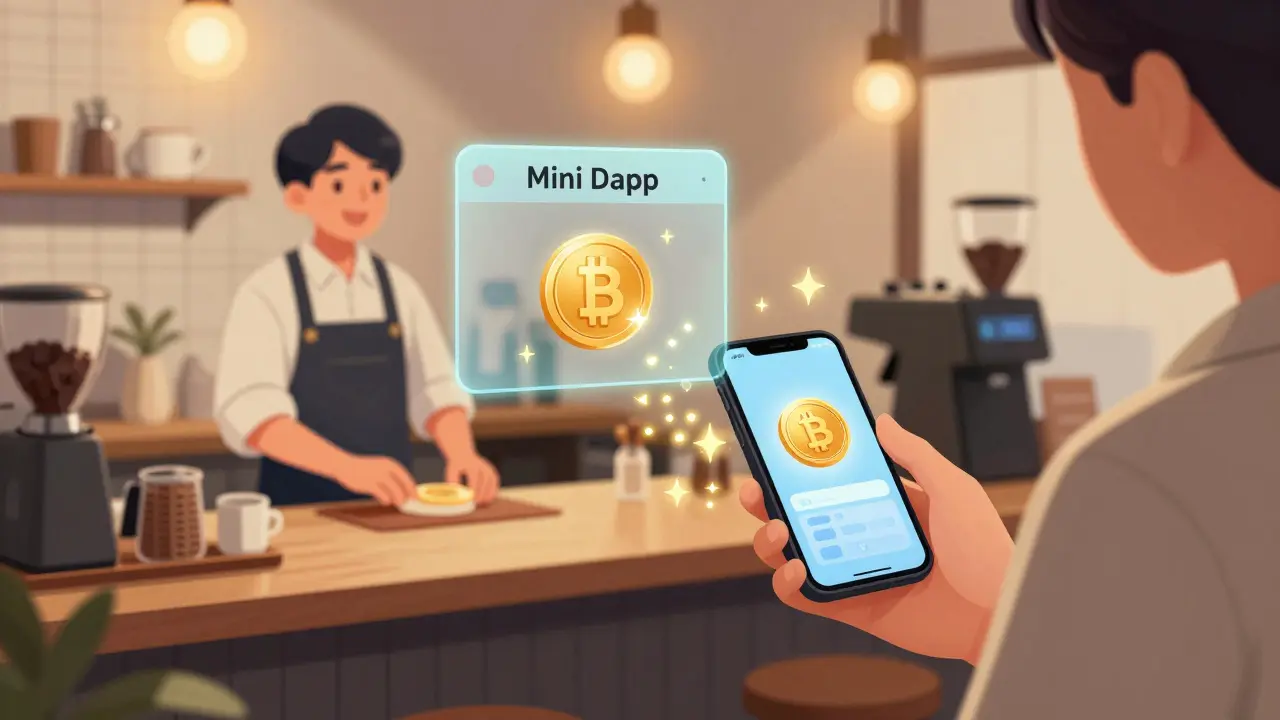
The real magic of Kaia happens within the LINE Mini Dapp ecosystem. Instead of downloading a separate app for every crypto service, users interact with "Mini Dapps" inside the LINE messenger. For a regular person, this feels like using a website or a bot, but in the background, a blockchain is handling the ownership, payments, and security.
Think about loyalty programs. Instead of a paper card or a clunky store app, a coffee shop in Tokyo could issue Kaia-based tokens directly through LINE. Because the fees are virtually zero, these microtransactions actually make sense. We're seeing this play out in gaming microtransactions and in-app payments, where a 1-second confirmation time is the difference between a seamless experience and a frustrated user.
The governance is handled by the Kaia Governance Council, a group of reputable companies including Kakao and LINE. While this provides stability and enterprise-grade backing, it does create a point of contention. Some analysts argue that Kaia is too dependent on these two companies. If people stop using LINE or KakaoTalk, Kaia's primary highway to the masses disappears. It's a high-reward strategy, but it comes with a specific kind of concentration risk.
Developer Experience and Implementation
If you're a developer, Kaia is designed to be an easy win. The NEXT WEB SDK allows you to build these Mini Dapps using standard web skills. You don't need to be a cryptography wizard to get started. Most Ethereum developers find they can get proficient with the platform in about two to three weeks.
One of the coolest features for devs is Kaia's approach to account abstraction. In the old days of crypto, if you lost your private key, your funds were gone forever. Kaia's model allows for key replacement and multi-signature setups. This makes the blockchain feel more like a traditional bank account where you can recover access, which is essential for onboarding people who aren't "crypto-native." To date, the project has attracted over 12,500 active community members across GitHub and Discord, showing a growing interest beyond just the corporate giants.

Market Position and the Road to 2027
Kaia isn't just hoping for users; it's strategically positioning itself within the legal frameworks of South Korea and Japan. It operates under the Digital Asset Basic Act and the amended Payment Services Act, giving it a level of regulatory legitimacy that many other coins lack. This has already attracted 47 major corporations, including Shinhan Bank and SK Telecom.
Looking ahead, the roadmap is aggressive. The launch of Kaia 2.0 in early 2026 brought better interoperability with the Cosmos and Ethereum ecosystems, meaning assets can move more freely between chains. The next big milestones include:
- Q3 2026: The introduction of zk-Rollups, which could push the network's capacity to a staggering 10,000 TPS.
- Q1 2027: Integration with Central Bank Digital Currencies (CBDCs) from Japan and South Korea, potentially turning Kaia into the primary settlement layer for national digital currencies.
While global scalability remains a question mark-since the focus is so heavily on Asia-the potential is enormous. If Kaia can successfully onboard even 10% of the LINE and KakaoTalk user base, it would dwarf the active user counts of almost every other Layer 1 blockchain in existence.
Is Kaia a new coin or a merger?
Kaia is the result of a merger between two existing blockchains, Klaytn and Finschia. It launched officially on January 15, 2024, combining the resources, technology, and user bases of both parent networks to create a single, more powerful ecosystem for Asia.
How fast are Kaia transactions?
Kaia is incredibly fast, featuring 1-second block times and immediate absolute finality. This means transactions are confirmed almost instantly, supporting up to 4,000 transactions per second (TPS).
Can I use Ethereum tools on Kaia?
Yes. Kaia is fully EVM (Ethereum Virtual Machine) compatible. This means developers can use Solidity for smart contracts and use familiar tools like MetaMask to interact with the network.
What are Mini Dapps?
Mini Dapps are decentralized applications that run directly inside the LINE messenger app. They allow users to access Web3 services (like games or payments) without needing to leave their chat app or manage complex external wallets.
What are the risks associated with Kaia?
The primary risk is concentration. Because Kaia is so deeply integrated with KakaoTalk and LINE, its success is heavily tied to the market dominance of those two messaging apps in Asia. Additionally, its global developer community is currently smaller than that of Ethereum or BNB Chain.
Next Steps for Users and Developers
Depending on who you are, your path into the Kaia ecosystem looks different:
- For Casual Users: If you use LINE or KakaoTalk, keep an eye out for integrated Web3 features or Mini Dapps. You can start by exploring the ecosystem via the native wallets provided within these apps.
- For Investors: Look into the adoption rates in South Korea and Japan. The key metric for Kaia isn't just the coin price, but how many monthly active users (MAU) are actually using the on-chain services.
- For Developers: Start with the NEXT WEB SDK. If you already know Solidity, you can deploy a test contract on Kaia in minutes. Focus on "micro-services" that fit into a chat interface, as that's where the most growth is happening.
JERRY ORTEGA
April 5, 2026 AT 15:55this is actually a smart move for mass adoption since most people wont touch a separate wallet if it's already in their chat app. keeping things simple is the only way we get the general public onboard
david head
April 6, 2026 AT 00:50looks like a game changer for Asia 🚀🔥
Deepak Prusty
April 6, 2026 AT 05:07Everyone is acting like 4,000 TPS is revolutionary when other chains have claimed higher numbers for years. The real bottleneck isn't the TPS but the actual utility and the risk of centralization given the corporate backing.
shubhu patel
April 6, 2026 AT 07:34It is quite interesting to see how they are leveraging the existing user base of LINE and Kakao and I believe that if they can actually bridge the gap for non-crypto users it will be a huge win for the whole industry because we have been struggling with the onboarding process for so long now.
June Coleman
April 7, 2026 AT 02:48Oh great, another "giant" blockchain. Because what we really need is more corporate control over our decentralized finances, right? Totally a dream scenario.
Robert Coskrey
April 8, 2026 AT 14:28I agree with the points made regarding the technical infrastructure; the use of pBFT is quite efficient for this specific use case!
Earnest Mudzengi
April 8, 2026 AT 19:48You guys are blind. This is just a front for state-level surveillance. Integrated wallets in messaging apps? That's a goldmine for data harvesting and tracking every single move you make on-chain. Total Trojan horse for the globalist agenda.
Emily 2231
April 9, 2026 AT 06:11It is most concerning that such a system is being established within foreign jurisdictions without oversight. The sovereignty of our own digital assets is at stake when we rely on Asian conglomerates.
Krystal Moore
April 11, 2026 AT 02:46Literally who cares about the TPS if it's just for buying coffee? We need projects with actual soul not just corporate mergers that feel like a bank with a fancy name.
Sharhonda Walker
April 11, 2026 AT 10:44if you're lookin to build on this the SDK is actualy pretty decent. just make sure u check the documntation for the account abstraction part since its the best feature for new users
sekhar reddy
April 13, 2026 AT 06:14OMGGGG the speed is actually insane!! 1 second block time is just wild compared to the lag we get on other networks. I'm so here for this merger drama turning into success!!
Adriana Gurau
April 13, 2026 AT 14:38Imagine thinking a "Mini Dapp" is a revolutionary breakthrough 🙄. It's just a wrapper for a website. Groundbreaking. 💅
Trish Swanson
April 14, 2026 AT 03:29Concentration risk is real!! Is there a plan for decentralizing the council??
Suzanne Robitaille
April 15, 2026 AT 05:59There is something so poetic about the way these two rivals merged to create a bridge for millions. It's like they realized that unity is the only path to true digital evolution in the east!
gladys christine
April 16, 2026 AT 16:37this is just wow!! imagine the impact on asian culture when everyone is on chain without even knowing it’s blockchain!! absolutely stunning vision for the future
Arlen Medina
April 17, 2026 AT 17:09Why are we talking about Asia? We need this kind of infrastructure in the US before we get left in the dust. I don't care if it's corporate, as long as it works and we're the ones winning the tech race.
Brooke Herold
April 18, 2026 AT 02:12Interesting read. I'll be watching how the regulatory integration in Japan plays out.