


When you hear about Obol (OBOL), don’t think of it as just another cryptocurrency. It’s not a coin you buy to flip or hold for moonshots. Obol is infrastructure - the quiet engine behind some of the most secure staking operations on Ethereum. If you’ve ever wondered how big staking platforms like Lido or ether.fi keep running even when one server fails, Obol is likely why.
What Obol Actually Does
Obol isn’t a wallet, an exchange, or a DeFi app. It’s a Distributed Validator Technology (a system that splits validator duties across multiple independent operators so no single point can break the network). Think of Ethereum validators like security guards at a bank vault. Normally, one guard holds the full key. If they quit, get hacked, or their machine crashes, the vault locks up. Obol gives each vault five guards, each holding a piece of the key. Even if two guards go offline, the vault still opens.This is called a Distributed Validator (a validator whose private key is split among multiple nodes so no single entity controls it). Obol’s software, called Charon (the core open-source tool that enables distributed validator operations on Ethereum), makes this possible. It uses Distributed Key Generation (a cryptographic method that lets multiple parties jointly create a key without any one of them holding the full key) and threshold signing (a process where a signature is only valid if a minimum number of parties contribute their part). No single node ever sees the full validator key. That’s the whole point.
The OBOL Token - What It Is and What It Does
The OBOL token is an ERC-20 (a standard for tokens on the Ethereum blockchain) token with a total supply of 500 million. It launched in late 2024 via CoinList, with half of the supply unlocked immediately and the rest released slowly over a year. The token isn’t designed for speculation - it’s built to run the Obol ecosystem.Here’s how it actually gets used:
- Governance - OBOL holders vote on protocol upgrades, funding decisions, and changes to the network. You don’t vote directly. Instead, you delegate your vote to trusted Delegates (community members chosen to represent token holders in governance votes) through a system called Token House.
- Staking - You can stake OBOL to earn stOBOL, a liquid staking token that grows over time as rewards accumulate. The initial reward rate was set at 0.33% of total supply in the first six months, but this is designed to adjust based on network demand.
- Retroactive Funding - Contributors who helped build the network before the token launched can claim rewards through RAFT (Retroactive Funding) programs.
- DeFi Integration - OBOL is now used as collateral in lending platforms like Morpho and as a liquidity token in pools on Symbiotic and EigenLayer.
The token isn’t required to run a validator. You don’t need OBOL to use Charon. But if you want to help shape the future of the network, or earn ongoing rewards, OBOL is the tool.
Why Obol Matters - The Real Problem It Solves
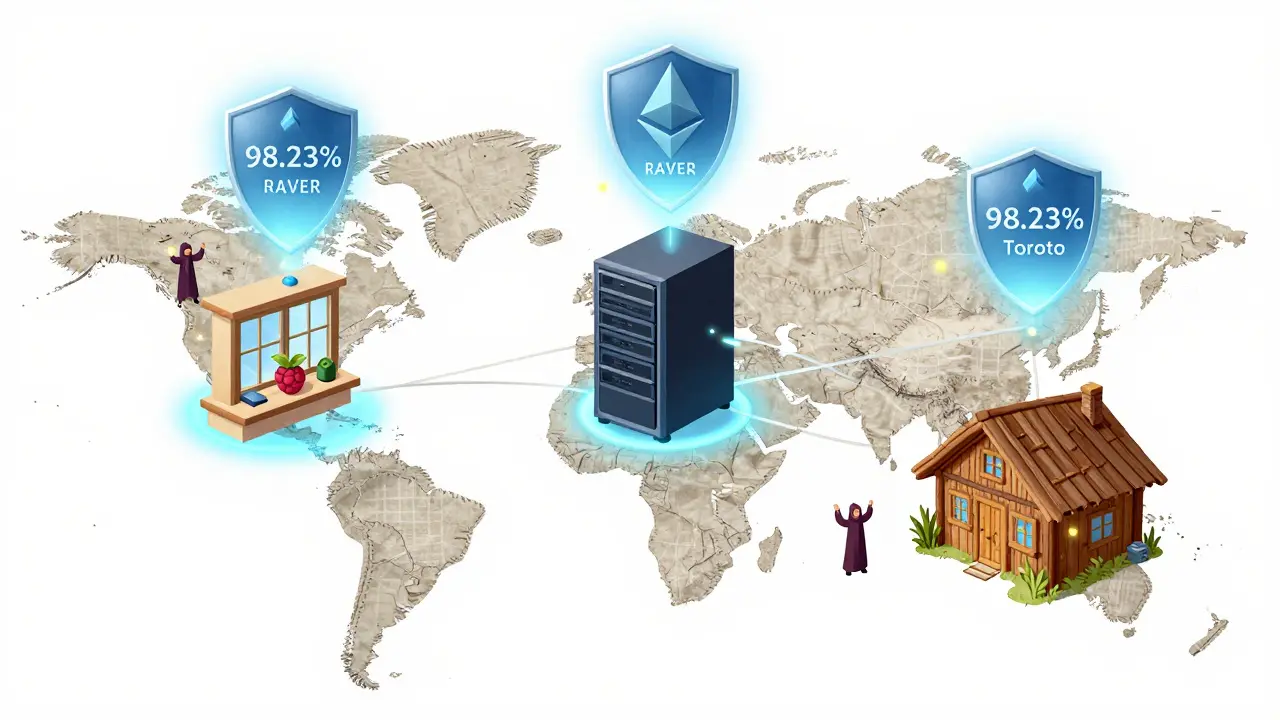
Before Obol, Ethereum staking was risky for institutions. Big players like Lido or Coinbase ran hundreds of validators on the same cloud provider, in the same region, on the same hardware. If Amazon Web Services had an outage? Or if a single operator got hacked? Thousands of validators went offline at once. That’s not decentralization - that’s a single point of failure with a big logo on it.Obol fixes that. By splitting validator control across multiple independent operators - say, a home staker in Berlin, a data center in Singapore, and a node in Toronto - no single event can take down a validator. Even if one operator goes dark, the validator keeps working. The system is designed to survive even if one-third of its operators vanish.
The numbers speak for themselves. As of February 2026, Obol-powered validators secure over $3 billion in ETH. Nearly every major staking provider uses Obol: Lido, ether.fi, StakeWise, Liquid Collective, Swell. Lido alone went from 36 operators to over 200 after adopting Obol. Institutional players like Blockdaemon, DSRV, and Bitcoin Suisse now rely on Obol to keep their operations running 24/7.
And the performance? In January 2025, Obol’s validators hit a RAVER score (a metric that measures validator uptime and correctness across proposals and attestations) of 98.23%. That’s higher than competing systems. That’s not luck. That’s architecture.
Who’s Behind Obol and Who Uses It
Obol Labs, the team behind the project, includes engineers who’ve worked on distributed systems for over a decade. Their background isn’t just crypto - it’s in secure authentication and fault-tolerant networks. That shows in the design. This isn’t a team that built a token first and then a product. They built the product, then the token.Investors like Pantera Capital (a leading crypto investment firm that backs foundational blockchain infrastructure) have called Obol "the missing layer" in Ethereum’s security stack. Lido Finance doesn’t just use Obol - they’re betting their entire validator infrastructure on it. And it’s not just for big players. Solo stakers with a Raspberry Pi and a home internet connection can now join a distributed validator cluster and earn rewards with enterprise-grade resilience.

The Bigger Picture - Obol and the Future of Ethereum
Ethereum isn’t just a blockchain anymore. It’s a global financial layer. Over 34 million ETH is staked - worth over $64 billion. That’s trillions in economic activity resting on the validator layer. If that layer fails, everything collapses.Obol is building the foundation that keeps that layer alive. Its technology isn’t just for staking. It’s being used to secure Actively Validated Services (layer-2 protocols and other services that require Ethereum’s security without running full validators), RPC networks (services that provide blockchain data to apps), and even decentralized cloud computing. Obol’s stack is becoming the plumbing behind Ethereum’s entire economy.
As adoption grows, Obol’s role will shift from a niche tool to a core utility. It’s not about the price of OBOL. It’s about whether Ethereum can scale securely. Obol is one of the few projects that answers that question with a clear, working, battle-tested system.
Is Obol Right for You?
If you’re a solo staker? Obol makes your setup safer. No more worrying about your home server going down.If you run a staking service? Obol reduces your operational costs by up to 80% and removes single points of failure that could cost you millions.
If you’re a long-term ETH holder? Obol makes the Ethereum network more resilient - which means more value over time.
OBOL isn’t a coin you buy because it’s cheap. It’s a tool you learn about because it’s essential. The future of Ethereum isn’t just about bigger blocks or faster transactions. It’s about making the base layer unbreakable. Obol is helping build that.
Is OBOL a good investment?
OBOL isn’t designed as a speculative asset. Its value comes from utility - governance, staking rewards, and ecosystem participation. If you’re looking for short-term gains, it’s not the right fit. But if you believe in Ethereum’s long-term security and want to help shape its infrastructure, OBOL offers real, measurable value through its token mechanics.
Do I need OBOL to stake ETH?
No. You can run a distributed validator using Obol’s Charon software without owning any OBOL tokens. The token is only needed if you want to participate in governance, earn staking rewards, or use OBOL in DeFi protocols.
How does Obol compare to SSV Network?
Both Obol and SSV Network offer distributed validator technology, but Obol has broader institutional adoption and higher performance metrics. As of early 2026, Obol’s validators have a 98.23% RAVER score, outperforming SSV’s average. Obol also integrates more deeply with major staking platforms like Lido and ether.fi, giving it wider network effects.
Can I run an Obol validator at home?
Yes. Obol was designed for both institutions and solo stakers. You can join a distributed validator cluster with just a Raspberry Pi, a stable internet connection, and a small amount of ETH. The software handles the complexity - you just need to keep your node online.
Is Obol centralized?
No. Obol’s core technology is open-source and decentralized. While Obol Labs developed the initial software, thousands of independent operators now run validators. No single company controls the network. Governance is handled by token holders, and the infrastructure is spread globally across hundreds of operators.
Obol isn’t flashy. It doesn’t have memes or influencers. But in the world of Ethereum, where security is everything, it’s one of the most important projects alive. If you care about the network staying up - not just growing - you should understand what Obol does.
Cameron Pearce Macfarlane
February 21, 2026 AT 03:01maya keta
February 21, 2026 AT 22:59Mary Scott
February 22, 2026 AT 15:31Richard Cooper
February 23, 2026 AT 00:33Tabitha Davis
February 23, 2026 AT 07:05Ryan Burk
February 23, 2026 AT 19:49KingDesigners &Co
February 24, 2026 AT 12:20Alyssa Herndon
February 26, 2026 AT 05:50Megan Lavery
February 26, 2026 AT 23:18Lilly Markou
February 28, 2026 AT 11:33Tracy Peterson
February 28, 2026 AT 15:23Shannon Black
March 1, 2026 AT 03:23Paul Reinhart
March 2, 2026 AT 21:24Shannon Holliday
March 3, 2026 AT 11:43Curtis Dunnett-Jones
March 5, 2026 AT 05:45Nicki Casey
March 6, 2026 AT 18:16Sean Logue
March 7, 2026 AT 22:40Amita Pandey
March 8, 2026 AT 04:08Kenneth Genodiala
March 9, 2026 AT 04:47Jan Czuchaj
March 9, 2026 AT 19:44Carl Gaard
March 11, 2026 AT 12:37Vishakha Singh
March 13, 2026 AT 05:21Michelle Mitchell
March 14, 2026 AT 14:37Robert Conmy
March 15, 2026 AT 21:11Don B.
March 17, 2026 AT 10:25Mae Young
March 18, 2026 AT 19:03precious Ncube
March 20, 2026 AT 04:50Trenton White
March 20, 2026 AT 11:11