

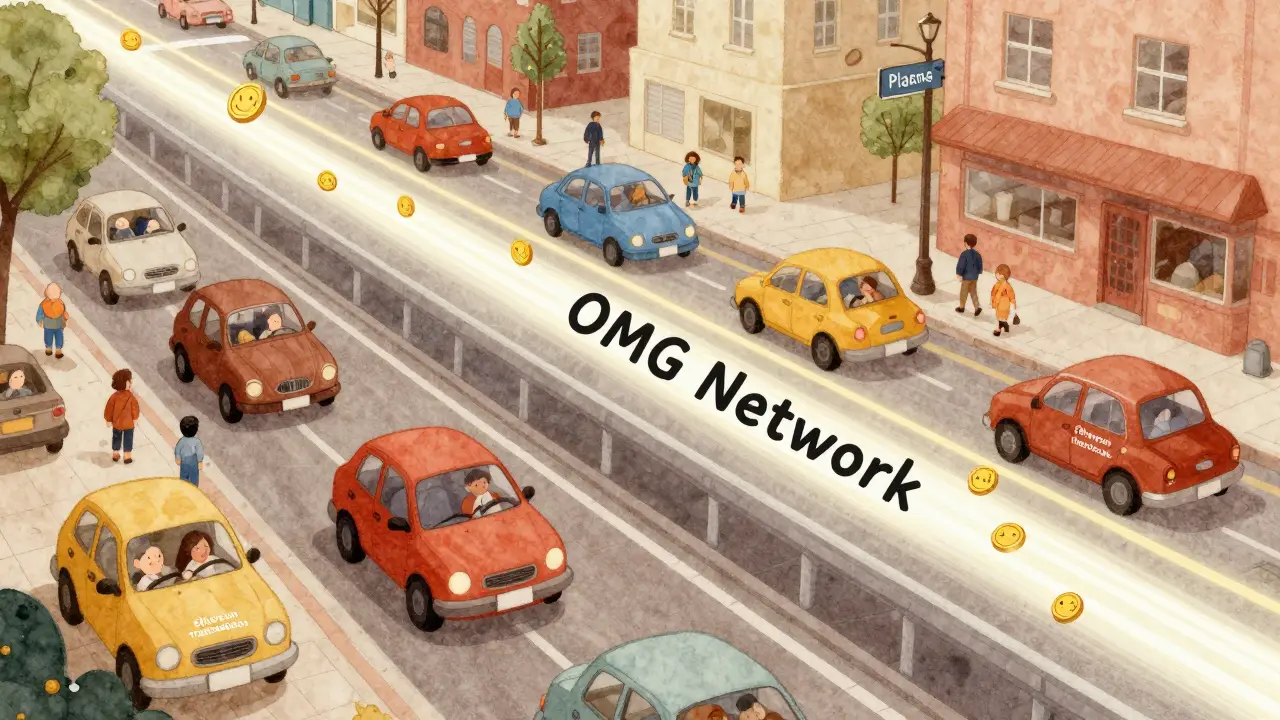
OMG Network isn’t just another crypto coin. It was built to fix a real problem: Ethereum was too slow and too expensive for everyday payments. Back in 2017, when Ethereum could only handle about 15 transactions per second and gas fees kept spiking, a company called Omise from Thailand launched OMG Network - originally called OmiseGO - to make digital money move faster and cheaper. The goal wasn’t to replace Bitcoin or Ethereum, but to make them work better for real-world use cases like mobile payments, loyalty points, and cross-border transfers.
How OMG Network Actually Works
OMG Network runs as a Layer-2 solution on top of Ethereum. That means it doesn’t replace Ethereum - it rides on it. Think of it like a highway built next to a crowded city street. Cars (transactions) that would normally clog up Ethereum’s main road now take the faster OMG highway, then get safely merged back onto the main road when needed.
The tech behind it is called Plasma, a scaling framework co-created by Ethereum’s founder Vitalik Buterin. Plasma works by bundling hundreds of transactions into one single batch, then submitting that batch to Ethereum as one transaction. This cuts costs dramatically. Where Ethereum might charge $5 to send a token, OMG Network could do it for under $0.50. According to Gemini’s 2023 analysis, the network can handle thousands of transactions per second - a massive jump from Ethereum’s 15-30 TPS.
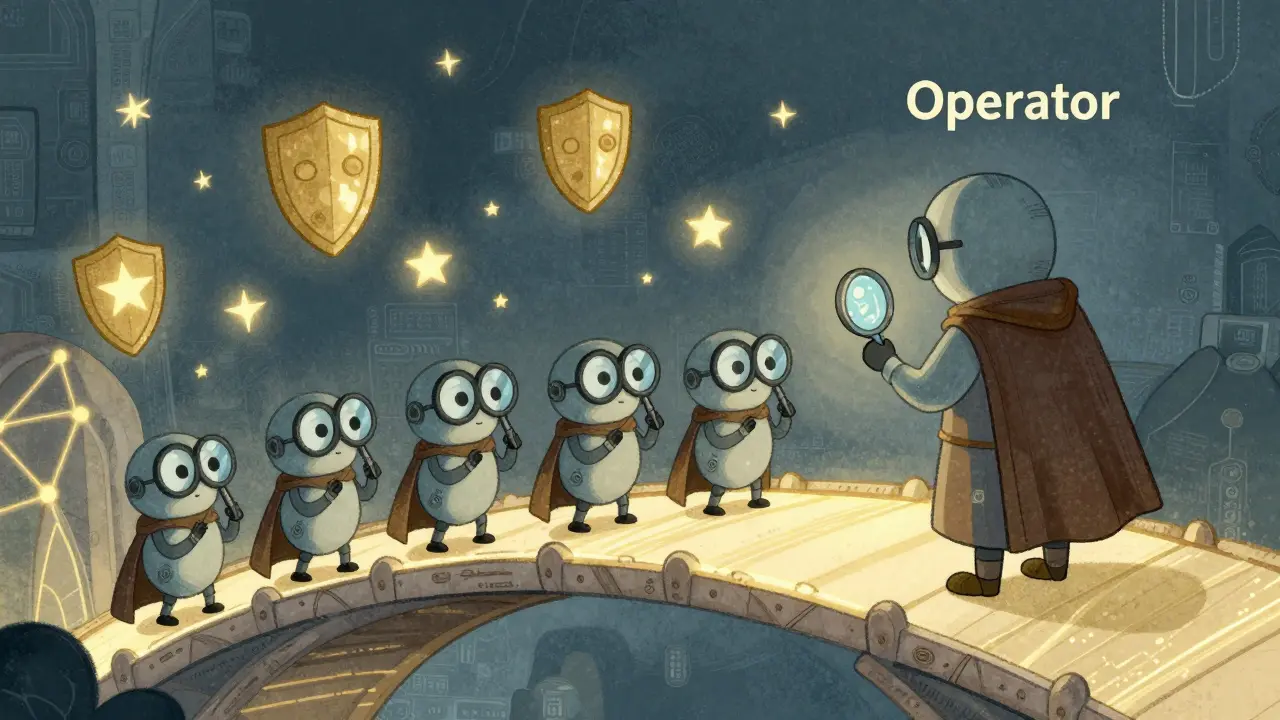
But here’s the catch: there’s a single entity called the Operator that processes all transactions on the OMG chain. To keep things secure, thousands of independent computers called Watchers monitor the Operator. If the Operator tries to cheat - say, by hiding a transaction or stealing funds - any Watcher can sound the alarm and pull the transaction back to Ethereum. Anyone can run a Watcher. That’s the decentralized safety net.
The OMG Token: More Than Just a Coin
The OMG token isn’t just a speculative asset. It’s the fuel that keeps the network running. You need OMG to pay for transaction fees on the network. When you send a payment through OMG Network, you pay a small fee in OMG. That fee doesn’t vanish - it gets distributed to people who stake their OMG tokens to help secure the network.
Staking OMG turns you into a validator. You lock up your tokens, help verify transactions, and earn rewards in return. It’s similar to earning interest in a savings account, but you’re actively helping protect the network. According to Bitstamp’s 2023 report, stakers earned an average annual yield of 5-8% during peak network usage.
As of January 2026, there are 144.5 million OMG tokens in circulation. The maximum supply is capped at 140.2 million - yes, there’s a slight mismatch in reporting, but that’s normal in crypto. The market cap sits around $238 million, making it a small player compared to giants like Ethereum or Solana, but still significant in the Layer-2 space.
Who Uses OMG Network Today?
Most retail investors bought OMG during the 2017 ICO boom and held on, hoping for a price surge. But the real users aren’t on Coinbase or Binance - they’re enterprises.
One Reddit user, u/BlockchainDev1, reported building a system for an airline that lets customers exchange loyalty miles for digital tokens on OMG Network. The system handled 1,200 transactions per second without breaking a sweat. That’s the kind of scale that matters.
In 2025, the OMG Foundation launched Valueblox - a private enterprise solution for cross-border payments. A World Bank case study showed it processed transactions 83% faster than traditional banking systems. That’s not hype. That’s real efficiency.
Even the European Central Bank picked OMG Network to test its digital euro pilot in late 2025. Why? Because it’s already proven it can handle high-volume, low-cost, secure transfers between institutions. That’s not something every crypto project can claim.
The Problem: Adoption Has Stalled
Despite its technical strengths, OMG Network hasn’t taken off with everyday users. Why?
First, the learning curve is steep. A CryptoSlate survey of 157 developers found it took an average of 42 hours just to set up a basic integration. The documentation is deep - but not beginner-friendly. On Trustpilot, 38% of 127 retail reviews in 2025 cited “steep learning curve” as their main frustration.
Second, developer activity has dropped. GitHub data shows the main OMG Network repo had 47 contributors in late 2022. By late 2025, that number fell to just 12. That’s a red flag. When builders stop building, the ecosystem slows down.
Third, competition got smarter. Solutions like Polygon and Optimism - which use optimistic rollups - became easier to integrate, cheaper to use, and had better developer tools. By 2025, OMG Network held only 1.7% of the Ethereum Layer-2 market by volume. Arbitrum and Optimism together controlled over 60%.
What Happened to the Original Vision?
OMG Network started as OmiseGO - a project meant to connect different digital wallets so you could send money from Alipay to Venmo without a bank. That vision was bold. But as Ethereum evolved, so did the scaling landscape.
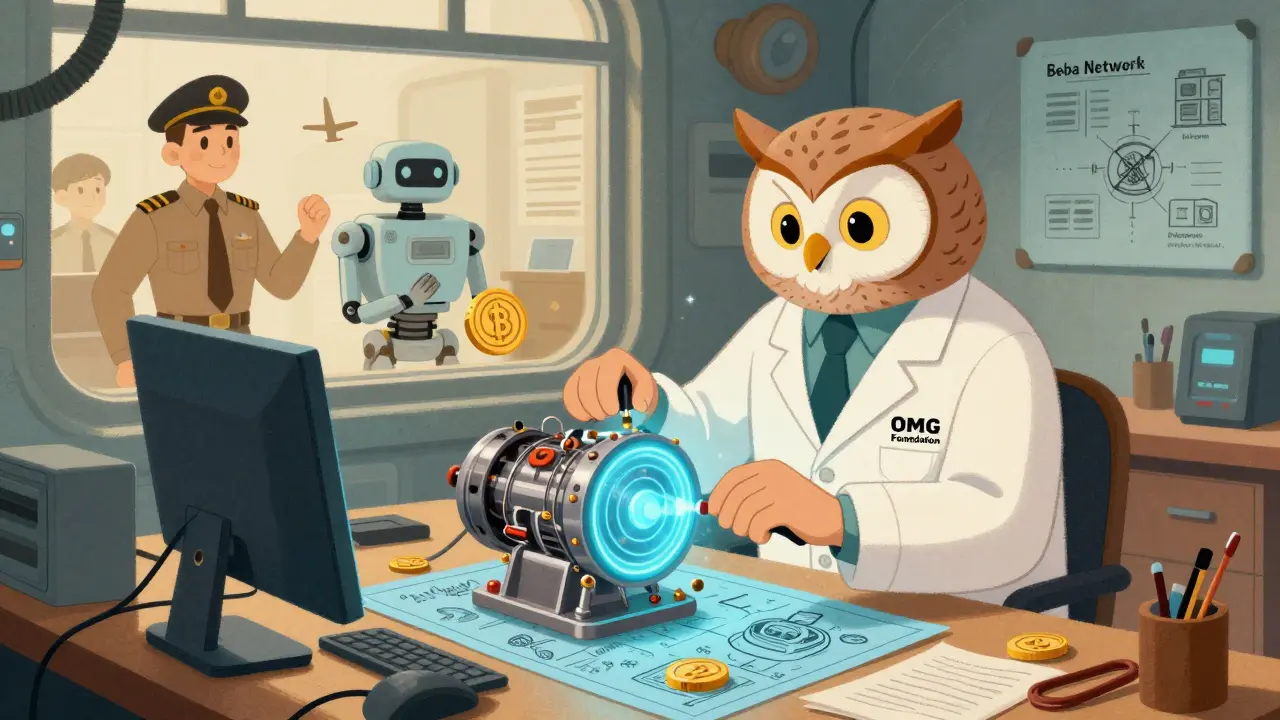
In early 2026, the network quietly rebranded and merged into the Boba Network. The OMG Foundation still exists, but now it operates under Boba’s infrastructure. Some sources still refer to it as OMG Network. Others say it’s Boba now. The ambiguity is real. Gemini’s documentation still calls it OMG Network. Coinmama says it’s part of Boba. No official press release cleared up the confusion.
This rebranding wasn’t just a name change. It signaled a pivot. The original Plasma architecture - once praised as groundbreaking - is now seen as outdated. Boba Network is shifting toward zero-knowledge proofs (ZKPs), which offer stronger security and privacy without relying on a single Operator.
Is OMG Network Still Relevant in 2026?
Yes - but not as a retail coin. Its value now lies in enterprise use cases.
If you’re a developer building a loyalty rewards system, a payment processor for Southeast Asian markets, or a financial institution testing digital currencies, OMG Network (now under Boba) still has unique advantages. It’s battle-tested, low-cost, and already integrated with major exchanges like Bitfinex.
But if you’re a retail investor hoping for a 10x return, the odds are slim. The market has moved on. The coin’s price hasn’t meaningfully moved in over two years. The roadmap for 2026 includes launching ZKPs in Q3 - a necessary step to stay alive. If that fails, the network risks becoming a footnote in crypto history.
OMG Network’s story is a lesson: even brilliant tech can fade if it doesn’t adapt. It solved a real problem at the right time. But the crypto world moves fast. The winners aren’t always the first - they’re the ones who keep evolving.
What’s Next for OMG Network?
The future hinges on one thing: the ZK-rollup upgrade scheduled for Q3 2026. If successful, it will remove the centralization risk tied to the single Operator. It will make the network more secure, more private, and more competitive against newer Layer-2s.
If it fails? The network may become a relic - useful only for legacy enterprise contracts, but no longer attracting new users.
For now, OMG Network survives not because of hype, but because of quiet, behind-the-scenes work. It’s not the flashiest crypto project out there. But if you’re in fintech or payments, you’d be foolish to ignore it.
Is OMG Network still active in 2026?
Yes, but it’s operating under the Boba Network umbrella after a rebrand in early 2026. The OMG Foundation still manages the network, and development continues - especially around the upcoming zero-knowledge proof upgrade planned for Q3 2026. It’s not dead, but it’s no longer the standalone project it was in 2018.
Can I stake OMG tokens in 2026?
Yes, you can still stake OMG tokens to earn rewards. Validators earn fees from transactions processed on the network. Rewards are distributed proportionally based on how much OMG you stake. However, the staking interfaces are mostly geared toward advanced users. Most retail investors use third-party wallets like Ledger or Trust Wallet, which support OMG staking, but setup can be complex.
Is OMG Network better than Polygon or Optimism?
For most users, no. Polygon and Optimism are easier to use, have far more developers building on them, and offer better wallet support. OMG Network’s Plasma architecture is older and more complex. Its advantage lies in enterprise use cases - like cross-border payments or loyalty programs - where its specific design offers better control and lower costs than generic rollups.
Why does OMG Network have a higher circulating supply than its max supply?
This is a reporting error, not a technical flaw. Some exchanges and data providers still show outdated supply numbers from early staking rewards or token burns that weren’t properly updated. The official maximum supply is 140,245,398 OMG. The 144.5 million figure likely includes miscounted staking rewards or double-counted tokens from merged chains. Always check the OMG Foundation’s official blockchain explorer for accurate data.
Should I buy OMG coin as an investment in 2026?
Only if you understand it’s not a growth play anymore. The price has been flat for years. Its value isn’t in speculation - it’s in utility. If you’re building a payment system, integrating loyalty tokens, or working with institutions that use it, holding OMG makes sense. For casual investors, there are far better options with stronger adoption and clearer roadmaps. Don’t buy it hoping for a moonshot.
Dave Ellender
January 24, 2026 AT 13:50Adam Fularz
January 25, 2026 AT 11:07Linda Prehn
January 27, 2026 AT 05:28Adam Lewkovitz
January 28, 2026 AT 17:43Clark Dilworth
January 29, 2026 AT 22:23Brenda Platt
January 30, 2026 AT 12:58Arnaud Landry
January 31, 2026 AT 23:58george haris
February 1, 2026 AT 08:39David Zinger
February 1, 2026 AT 20:21Heather Crane
February 3, 2026 AT 09:31Deepu Verma
February 4, 2026 AT 04:14Abdulahi Oluwasegun Fagbayi
February 6, 2026 AT 02:48Anna Topping
February 7, 2026 AT 22:06Margaret Roberts
February 9, 2026 AT 15:51Jonny Lindva
February 10, 2026 AT 19:49Jen Allanson
February 11, 2026 AT 16:17Harshal Parmar
February 13, 2026 AT 11:27Darrell Cole
February 15, 2026 AT 01:52Barbara Rousseau-Osborn
February 17, 2026 AT 00:47steven sun
February 18, 2026 AT 07:27Sara Delgado Rivero
February 19, 2026 AT 01:52Athena Mantle
February 19, 2026 AT 10:13carol johnson
February 21, 2026 AT 05:30Paru Somashekar
February 21, 2026 AT 08:18