

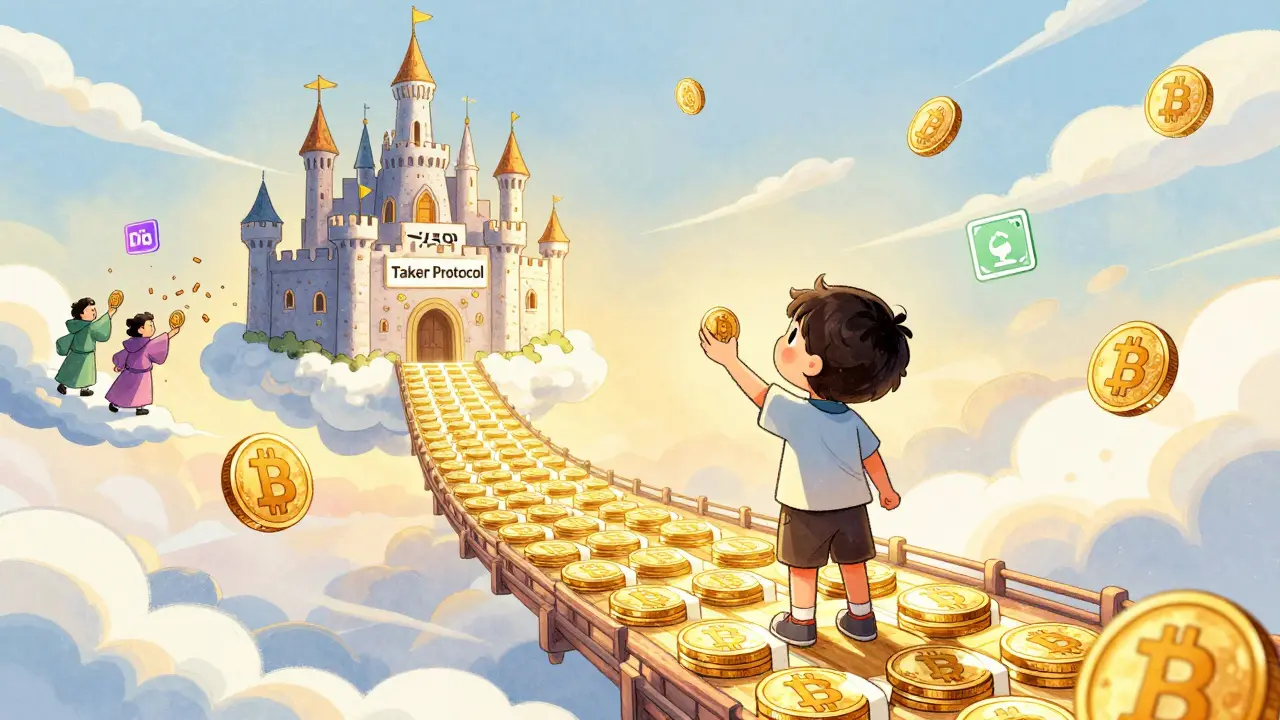
Taker (TAKER) is not just another altcoin. It’s a protocol built to solve a real problem in the Bitcoin ecosystem: how do you give people who hold small amounts of Bitcoin a way to earn real rewards without leaving Bitcoin’s network? Launched in 2021 by founder Angel Xu, Taker Protocol positions itself as the first and largest Bitcoin incentive layer - a system designed to turn passive BTC holdings into active yield opportunities.
How Taker Protocol Works
Taker doesn’t mine Bitcoin or change how Bitcoin works. Instead, it runs on the BNB Smart Chain (BEP20) and lets users stake wrapped Bitcoin (like tBTC or wBTC) to earn TAKER tokens. The magic happens through its proprietary consensus mechanism called Nominated Proof-of-Liquidity (NPOL). Unlike traditional proof-of-stake, which rewards people for locking up their own coins, NPOL rewards users for providing liquidity to Bitcoin-based assets across DeFi platforms.
Think of it this way: if you own 0.1 BTC, you can’t earn interest on it through Bitcoin’s native network. But with Taker, you can lock that 0.1 BTC into a wrapped version and stake it on Taker’s platform. In return, you get TAKER tokens as rewards - currently offering around 12% APY based on user reports from September 2025.
The protocol supports apps like decentralized exchanges, lending platforms, and even blockchain games that use Bitcoin assets. By incentivizing liquidity for these services, Taker helps Bitcoin derivatives become more usable - something Bitcoin itself can’t do natively due to its limited smart contract capabilities.
Technical Basics You Need to Know
To use Taker, you need a Web3 wallet like MetaMask or Trust Wallet. You’ll also need a small amount of BNB (at least 0.01) to pay for gas fees on the BNB Smart Chain. The process involves approving token transfers, staking your wrapped BTC, and then claiming your TAKER rewards.
It’s not beginner-friendly. Community feedback shows 28% of new users mess up their slippage settings or misunderstand lockup periods. One Reddit user, BitcoinMaxi2021, earned 12% APY after 90 days - but another Trustpilot reviewer lost $150 worth of tokens during their first unstaking attempt because of confusing gas fee controls.
The protocol’s support team runs a 24/7 Discord channel with 15 volunteer moderators and a knowledge base with 47 articles. Still, average response time for email support is over 12 hours. If you’re new to DeFi, expect to spend 3-5 hours learning how to use it properly.
Token Supply and Market Data
As of September 2025, there are 170 million TAKER tokens in circulation out of a max supply of 1 billion. The token trades at around $0.0124 USD, giving it a market cap of roughly $12.4 million. That’s tiny compared to top DeFi tokens like Aave ($1.8B) or Curve Finance ($1.1B), which rank in the top 150.
But TAKER isn’t quiet. In one 24-hour period in September 2025, it surged 52% - far higher than even Dogecoin’s average 35% daily volatility that year. Trading volume hit $2.2 million in that same window, showing strong speculative interest. It’s ranked #1,287 on CoinMarketCap, meaning it’s a micro-cap coin with high risk and high reward potential.
Who Backs Taker Protocol?
Taker has serious financial backing. Venture firms like Electric Capital, Dragonfly Capital, and DCG Portfolio have invested in the project. These are the same names behind major crypto successes like Solana, Arbitrum, and Coinbase. Their involvement signals confidence in the long-term vision - even if the token price swings wildly.
Dr. Marcus Chen from Electric Capital called NPOL a “novel solution to Bitcoin’s liquidity fragmentation.” Haseeb Qureshi from Dragonfly Capital pointed to 27 active trading markets as proof of organic demand. But not everyone is convinced.
The Controversy: Is Taker Trusting Too Much?
Here’s the big criticism: Taker runs on BNB Smart Chain, not Bitcoin. That means users have to trust Binance’s infrastructure, not Bitcoin’s decentralized security model. Elena Rodriguez from Blockstream wrote in July 2025 that this “contradicts Bitcoin’s core philosophy.”
Bitcoin purists argue that if you’re going to use a sidechain, why not go all-in on Ethereum or another smart contract chain? Why add complexity just to earn yield on Bitcoin?
Proponents counter that Bitcoin holders want to keep their BTC safe while still earning returns. Taker lets them do that without selling or moving their core holdings. It’s a bridge - not a replacement.
Competition and Market Position
Taker isn’t alone in this space. Sovryn, Keep Network, and THORChain also let users earn yield on Bitcoin assets. But Taker is the only one built specifically as an incentive layer - meaning its entire purpose is to reward users for participating in the ecosystem, not just swapping or lending.
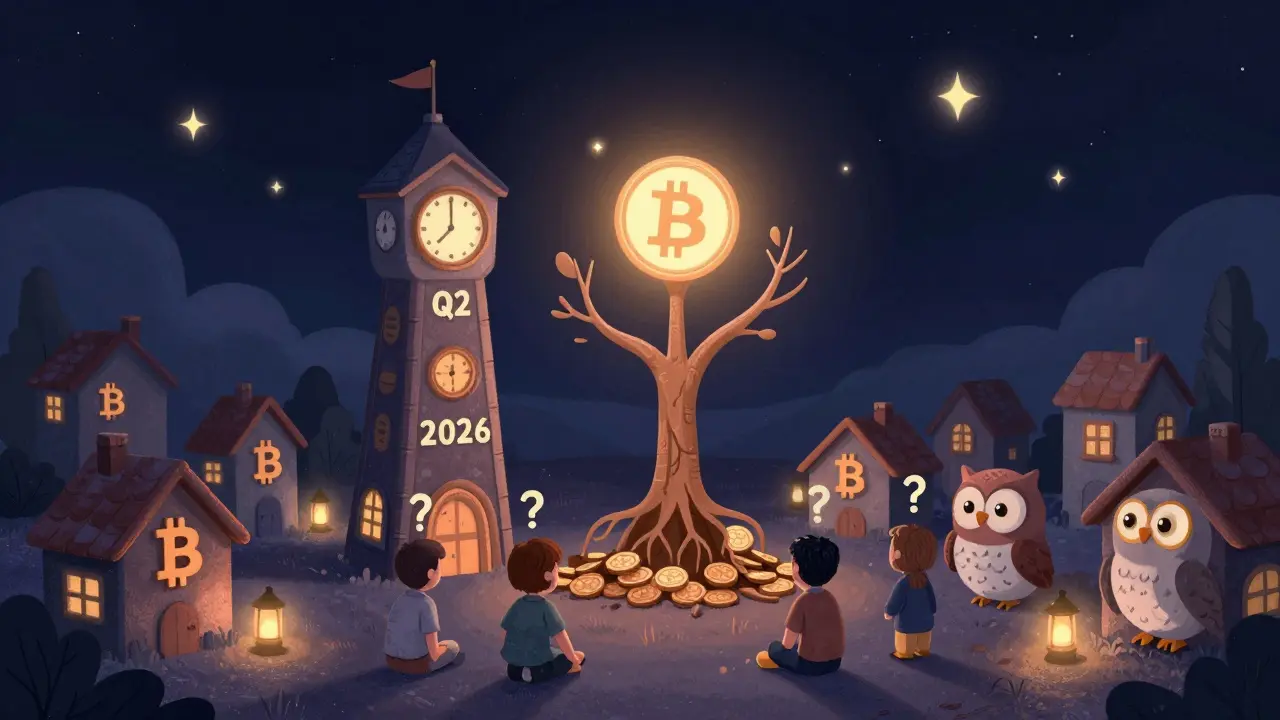
As of August 2025, Taker had 8,450 unique stakers, each putting in an average of $285. That’s a small community compared to Ethereum-based protocols, but growing. The protocol’s roadmap includes integrating with Bitcoin Ordinals (NFTs on Bitcoin) and launching a native Bitcoin sidechain in Q2 2026 - a move that could reduce reliance on BNB Smart Chain.
Risks and Regulatory Concerns
The biggest red flag isn’t technology - it’s regulation. Perkins Coie LLP, a top crypto law firm, warned in August 2025 that TAKER tokens could be classified as securities under SEC enforcement priorities. Why? Because users expect profits from staking, and the protocol actively promotes yield.
If the SEC comes after Taker, it could force the protocol to shut down staking in the U.S. or restructure entirely. That’s a major threat to its growth.
Another risk is volatility. A 52% single-day price swing isn’t normal for a project with this kind of infrastructure. It suggests the token is being traded more like a gambling asset than a utility token. That’s not sustainable long-term.
Is Taker Worth It?
It depends on what you want.
If you’re a Bitcoin holder who wants to earn yield without selling your BTC - and you’re comfortable with DeFi risks, BNB Smart Chain, and volatile tokens - then Taker offers something unique. The APY is higher than most Bitcoin yield options, and the protocol is actively building.
If you’re a Bitcoin maximalist who believes any solution outside Bitcoin’s native chain is a betrayal - then Taker is a step too far.
And if you’re just looking for a quick crypto flip? Taker’s volatility makes it tempting. But with a $12 million market cap and no institutional adoption yet, it’s a high-risk bet.
Right now, Taker Protocol is in a fragile but fascinating phase. It’s not a giant. It’s not safe. But it’s solving a real problem that no other protocol has tackled with the same focus. Whether it survives the next 12 months depends on whether users believe in its mission - or just its price chart.
What’s Next for Taker?
The roadmap is ambitious. By mid-2026, Taker plans to launch its own Bitcoin sidechain - a move that could finally let users interact with Bitcoin-based yield without touching BNB Smart Chain. If that happens, the protocol could shed its biggest criticism: reliance on a centralized chain.
They’ve also added gas optimizations that cut transaction costs by 37% since August 2025. Their GitHub shows 143 commits in the last 30 days - proof that developers are still active. With 17 core contributors, they’re not fading away.
But the real test is adoption. Can they grow from 8,450 stakers to 84,500? Can they convince Bitcoin users that earning yield through wrapped assets is worth the trade-off? The answer will determine if Taker becomes a cornerstone of Bitcoin DeFi - or just another footnote in crypto’s long history of volatile tokens.
What is TAKER crypto used for?
TAKER tokens are used as rewards for staking wrapped Bitcoin (like tBTC or wBTC) on the Taker Protocol. Users earn TAKER by providing liquidity to Bitcoin-based DeFi apps such as decentralized exchanges, lending platforms, and blockchain games. The token incentivizes participation in the Bitcoin ecosystem without requiring users to sell their BTC.
Can I stake Bitcoin directly on Taker Protocol?
No, you cannot stake Bitcoin (BTC) directly. You must first wrap your BTC into a tokenized version like tBTC or wBTC using a bridge service. Once wrapped, you can stake those tokens on Taker’s platform to earn TAKER rewards. This process requires a Web3 wallet and some BNB for gas fees on the BNB Smart Chain.
Is Taker Protocol safe to use?
Taker Protocol is not risk-free. It runs on BNB Smart Chain, which is less decentralized than Bitcoin. Users have reported losing funds due to complex gas settings and slippage errors. The platform has no insurance, and smart contract vulnerabilities could lead to losses. While the team is active and backed by reputable VCs, it’s still a high-risk DeFi project best suited for experienced users.
Where can I buy TAKER tokens?
TAKER tokens are available on both centralized exchanges (CEX) and decentralized exchanges (DEX). Major CEX listings include Gate.io and KuCoin. On DEX, you can trade TAKER on PancakeSwap (BSC) using BNB or USDT. Always verify the contract address: 0xc19539eB93444523Ec8F1432624924d2e6226546 to avoid scams.
Why does Taker use BNB Smart Chain instead of Bitcoin?
Bitcoin’s network doesn’t support smart contracts, so it can’t run DeFi apps like staking or lending. Taker uses BNB Smart Chain because it’s fast, cheap, and compatible with Ethereum-style smart contracts. This allows Taker to build yield mechanisms that Bitcoin can’t support natively. Critics say this breaks Bitcoin’s decentralization ideal, but supporters argue it’s the only practical way to bring yield to Bitcoin holders today.
Is Taker Protocol regulated?
Taker Protocol is under regulatory scrutiny. Legal experts from Perkins Coie LLP suggest TAKER tokens may be classified as securities because they offer predictable returns to users. The SEC has targeted similar yield platforms before. If classified as a security, Taker could be forced to restrict access for U.S. users or shut down staking entirely - a major risk for its future.
What’s the future outlook for TAKER token?
Taker’s future depends on two things: adoption and regulation. If they successfully launch their native Bitcoin sidechain in 2026 and attract more stakers, the token could grow 3-5x by 2027. But if the SEC cracks down or users lose trust due to volatility, the project could fade. With active development and VC backing, it has potential - but it’s still a high-risk, early-stage project.
Ramona Langthaler
January 30, 2026 AT 01:00Sunil Srivastva
January 31, 2026 AT 02:38Devyn Ranere-Carleton
January 31, 2026 AT 10:25Kevin Thomas
January 31, 2026 AT 11:51Robert Mills
January 31, 2026 AT 15:44Elle M
January 31, 2026 AT 21:06Brianne Hurley
February 2, 2026 AT 08:47christal Rodriguez
February 3, 2026 AT 09:12Gavin Francis
February 5, 2026 AT 06:09Dahlia Nurcahya
February 6, 2026 AT 16:55Dylan Morrison
February 8, 2026 AT 12:41Lori Quarles
February 10, 2026 AT 08:00josh gander
February 11, 2026 AT 13:39Akhil Mathew
February 11, 2026 AT 23:44Rachel Stone
February 12, 2026 AT 07:40Gurpreet Singh
February 13, 2026 AT 15:56Will Pimblett
February 13, 2026 AT 22:29Christopher Michael
February 15, 2026 AT 02:03Freddy Wiryadi
February 16, 2026 AT 19:59Tressie Trezza
February 18, 2026 AT 10:14Gustavo Gonzalez
February 18, 2026 AT 22:39