

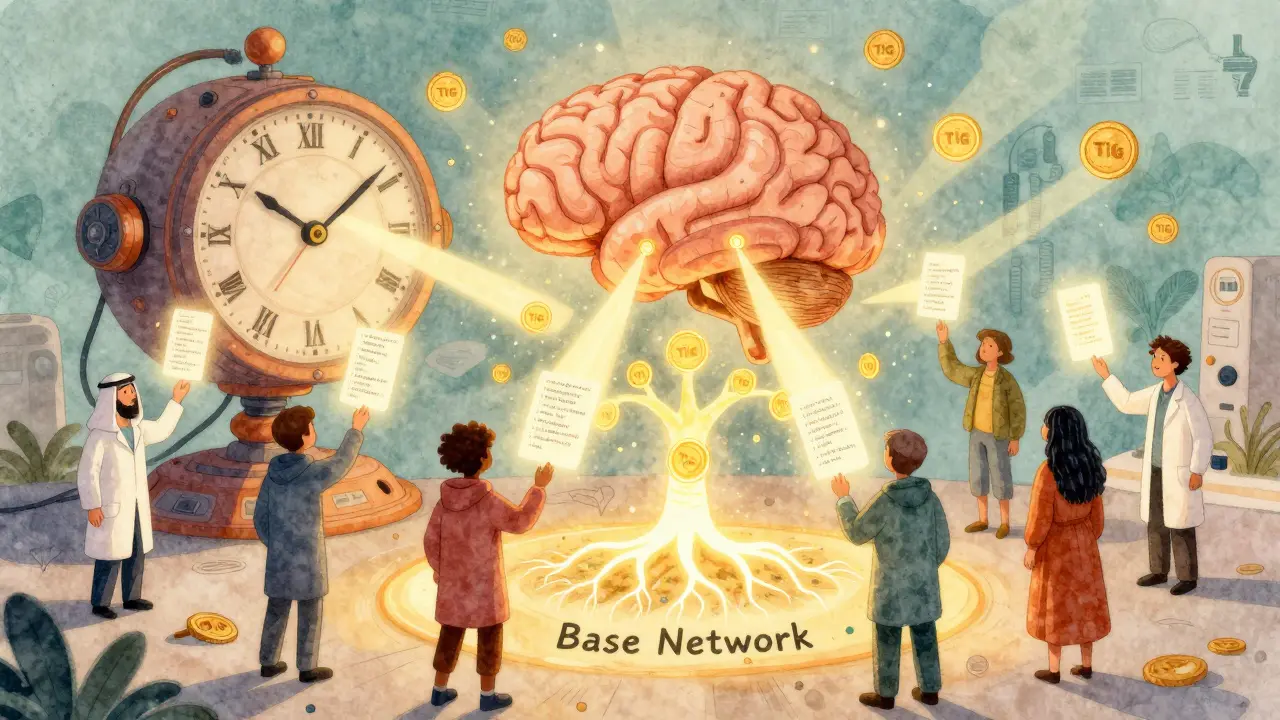
The Innovation Game (TIG) isn't another meme coin or a copycat blockchain project. It's a cryptocurrency built around one radical idea: pay people to solve real scientific problems with algorithms. Unlike Bitcoin, which rewards miners for securing a ledger, or Ethereum, which runs smart contracts, TIG turns crypto into a funding engine for algorithmic breakthroughs in AI, medicine, climate science, and cryptography. If you've ever wondered how a token could be tied to actual innovation - not just speculation - TIG is the most concrete example out there.
How TIG Turns Algorithms Into Assets
Most people think of crypto as money. TIG thinks of it as a marketplace for ideas. At its heart, TIG has two types of participants: Innovators and Benchmarkers. Innovators submit algorithms - code designed to solve specific scientific challenges. Benchmarkers run those algorithms on powerful hardware to test how fast and efficient they are. The better the algorithm, the more work Benchmarkers do to run it, and the more TIG tokens they earn. But here’s the twist: the Innovator who wrote that algorithm gets paid too. This creates a feedback loop. If you build an algorithm that cuts cancer diagnosis time in half, and Benchmarkers start using it because it’s faster than anything else, you get rewarded. No grant applications. No patent lawyers. Just pure performance-based value. The protocol tracks every algorithm’s performance on-chain and automatically distributes rewards based on usage. It’s like a stock market for code.Why This Matters: Breaking the AI Monopoly
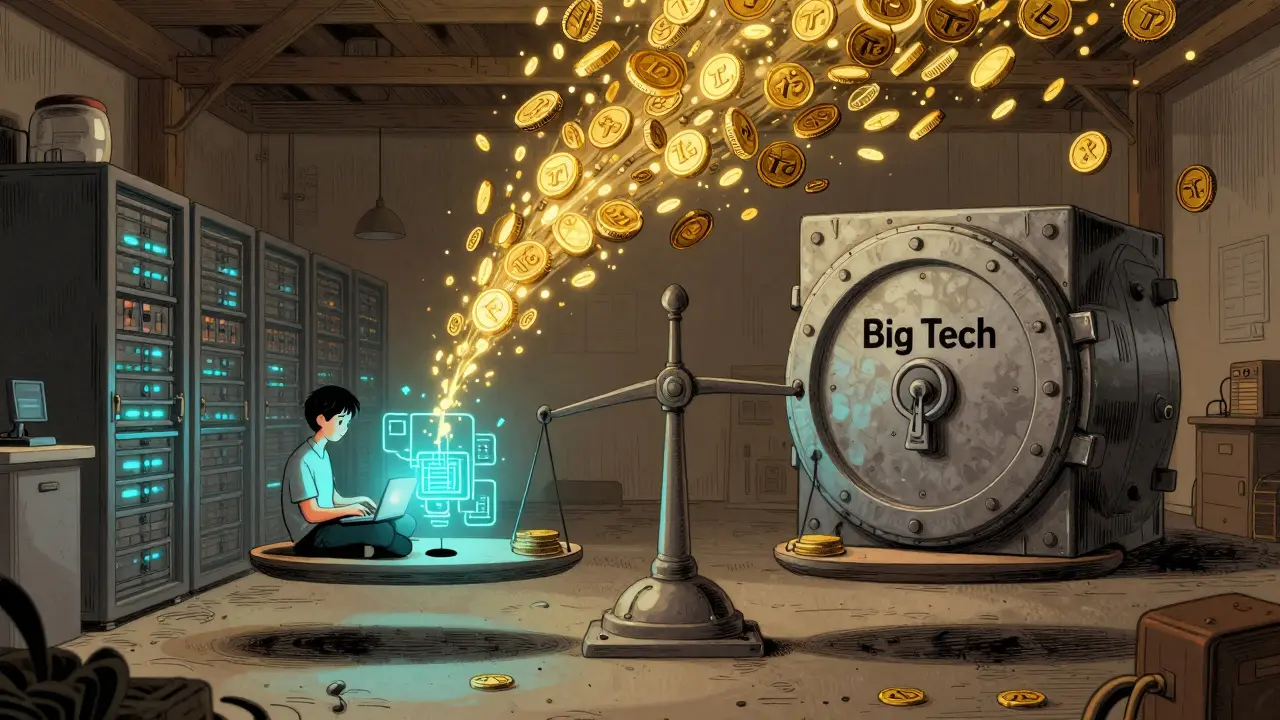
Right now, the biggest advances in AI are locked inside Big Tech. Companies like Google, Meta, and OpenAI control the data, the compute, and the talent. They build models behind closed doors, and the rest of the world gets to use them - often for a fee. TIG flips that model. It says: what if every researcher, grad student, or hobbyist with a good idea could compete on equal footing? The protocol doesn’t care if you’re from Stanford or a basement in Jakarta. If your algorithm solves a challenge better than anyone else’s, you get paid. The challenges are curated by the community - things like optimizing fusion reactor simulations, improving protein folding predictions, or reducing energy use in data centers. Each solved challenge adds value to the entire ecosystem. And because every algorithm is licensed and tracked on-chain, creators earn royalties every time their code is used.How TIG Works: The Proof-of-Work That Actually Does Something
Traditional proof-of-work (PoW) uses massive amounts of electricity to solve pointless math puzzles. TIG’s version, called Proof-of-Innovation, replaces those puzzles with real-world problems. Here’s how it breaks down:- Challenge Selection: The TIG Foundation proposes high-impact problems across domains like biomedical research and climate modeling. The community votes on which ones to prioritize.
- Algorithm Submission: Anyone can submit an algorithm. It must be open-source and verifiable.
- Benchmarking: Participants run these algorithms on their hardware. The fastest, most efficient ones get used more - and their creators earn more TIG tokens.
- Token Distribution: Rewards are split between Innovators (who built the algorithm) and Benchmarkers (who ran it). The system auto-calculates payouts based on performance metrics.
Tokenomics: Supply, Price, and Market Reality
As of February 2026, here’s what the numbers look like:| Metric | Value |
|---|---|
| Circulating Supply | 25.4M-26.8M TIG |
| Total Maximum Supply | 131.04M TIG |
| Current Price (Avg) | $0.60-$0.65 USD |
| All-Time High | $5.65 USD (Binance) |
| All-Time Low | $0.026 USD |
| 24-Hour Volume | $2M-$3.8M USD |
| Market Cap | $15M-$18M USD |
| Fully Diluted Market Cap | $79.2M USD |
Where TIG Fits in the Crypto World
TIG doesn’t compete with Bitcoin or Ethereum. It competes with grant systems, university labs, and corporate R&D departments. Its closest analog isn’t another crypto coin - it’s the Human Genome Project or CERN. But instead of being funded by governments or philanthropists, TIG is funded by its own users. Every time someone earns TIG by running an algorithm, they’re helping finance the next breakthrough. That’s why TIG ranks around #800-#3,700 on market cap lists. It’s not meant to be a store of value. It’s meant to be a tool - a way to align economic incentives with scientific progress. If 10,000 researchers start using it to solve real problems, its value won’t come from speculation. It’ll come from the algorithms it unlocks.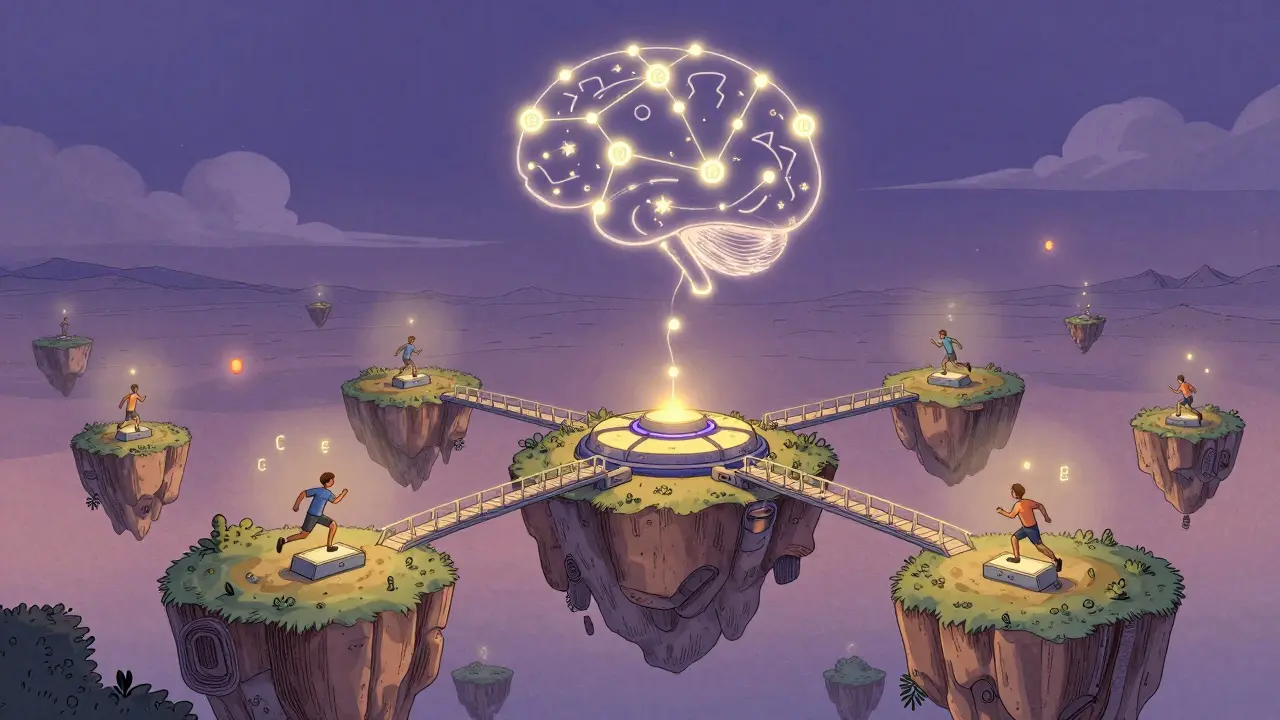
Is TIG Worth Paying Attention To?
If you’re a developer, scientist, or just someone tired of seeing innovation locked behind corporate walls, TIG is worth watching. It’s one of the few crypto projects that doesn’t just talk about decentralization - it builds a working system to enforce it. You can’t buy a share of Google’s AI team. But with TIG, you can earn tokens by helping build the next big algorithm. The risks? Plenty. Adoption is still small. Many challenges are still in early testing. And like all crypto, prices can swing wildly. But the underlying idea - that innovation should be open, rewarded, and measurable - isn’t speculative. It’s necessary.How to Get Involved
You don’t need to be a millionaire to participate:- Get a wallet that supports Base blockchain (like MetaMask).
- Buy TIG on Binance, Coinbase, or HitBTC.
- Visit the official TIG Foundation portal to see active challenges.
- If you’re a coder: submit an algorithm. If you have spare GPU power: become a Benchmarking node.
- Track your contributions and rewards on-chain.
Is TIG a good investment?
TIG isn’t designed as a traditional investment. Its value comes from real-world usage - not speculation. If algorithms developed on the platform start being used in hospitals, labs, or climate models, the token could gain long-term value. But if adoption stalls, the price could stay flat or drop further. Think of it more like buying shares in a research lab than a stock.
Can anyone submit an algorithm to TIG?
Yes. The protocol is open to anyone with an internet connection. You don’t need a PhD or institutional backing. All you need is a working algorithm that solves one of the listed challenges. Submissions are reviewed for technical validity, not credentials. Open-source code is required.
What blockchains does TIG run on?
TIG is built on the Base blockchain, which is a Layer-2 network built on Ethereum. This gives it lower fees and faster transactions than Ethereum mainnet, while still benefiting from Ethereum’s security. Smart contracts for algorithm tracking and reward distribution are live and audited.
How are algorithm performance metrics measured?
Each challenge has predefined benchmarks - like speed, accuracy, energy efficiency, or memory usage. Benchmarkers run the submitted algorithms under identical conditions and report results on-chain. The system then ranks algorithms by performance. The top performers get the most usage - and the highest rewards.
What happens if my algorithm becomes widely used?
You earn ongoing royalties. Every time another Benchmarking node uses your algorithm, a small percentage of the reward goes back to you. This creates a passive income stream tied directly to real-world impact. The more your code helps, the more you earn - even years after you first submitted it.
Mary Scott
February 21, 2026 AT 15:12Shannon Holliday
February 21, 2026 AT 20:19Jeremy buttoncollector
February 22, 2026 AT 22:23Arya Dev
February 24, 2026 AT 08:39Leslie Cox
February 24, 2026 AT 19:30Derek Sasser
February 24, 2026 AT 21:43Nadia Shalaby
February 26, 2026 AT 15:09Danny Kim
February 26, 2026 AT 22:59Cathy Sunshine
February 27, 2026 AT 15:35Michelle Mitchell
February 28, 2026 AT 03:31christopher luke
February 28, 2026 AT 18:28Fiona Monroe
March 2, 2026 AT 17:10Molley Spencer
March 3, 2026 AT 11:27John Fuller
March 4, 2026 AT 02:00Lucy Simmonds
March 5, 2026 AT 11:28Maggie House
March 5, 2026 AT 19:47Dana Sikand
March 6, 2026 AT 01:57Cameron Pearce Macfarlane
March 7, 2026 AT 15:45Elizabeth Smith
March 8, 2026 AT 13:31Curtis Dunnett-Jones
March 8, 2026 AT 22:39Sean Logue
March 9, 2026 AT 02:01Carl Gaard
March 9, 2026 AT 17:18precious Ncube
March 11, 2026 AT 15:42Amita Pandey
March 11, 2026 AT 21:38