


YoBit has been around since 2014. That’s longer than most crypto exchanges. You won’t find it on the same list as Binance or Coinbase, but if you’re looking to trade obscure altcoins without handing over your ID, YoBit is still one of the few places that lets you do it. The catch? There’s no safety net. No regulation. No insurance. No customer service hotline. Just a website with 3,300+ trading pairs and a warning sign you can’t ignore.
What You Get: A Wild West of Altcoins
YoBit doesn’t care about mainstream coins. It’s all about the obscure ones. You’ll find tokens with names you’ve never heard of, trading against BTC, ETH, USDT, DOGE, YO, and WAWES. Some reports say it used to list over 8,000 pairs. Today, it’s closer to 3,300. Still more than most exchanges offer. If you’re hunting for a coin no one else supports, YoBit might be your only option.The trading fee is flat at 0.2% for both makers and takers. That’s not the cheapest-Binance charges 0.1%-but it’s lower than Coinbase’s 0.6%. Minimum deposit? Just $1. Minimum withdrawal? Also $1. No account verification needed. You sign up with an email, confirm it, and start trading. No passport. No selfie. No questions asked. That’s the appeal.
What You Don’t Get: Security, Support, or Simplicity
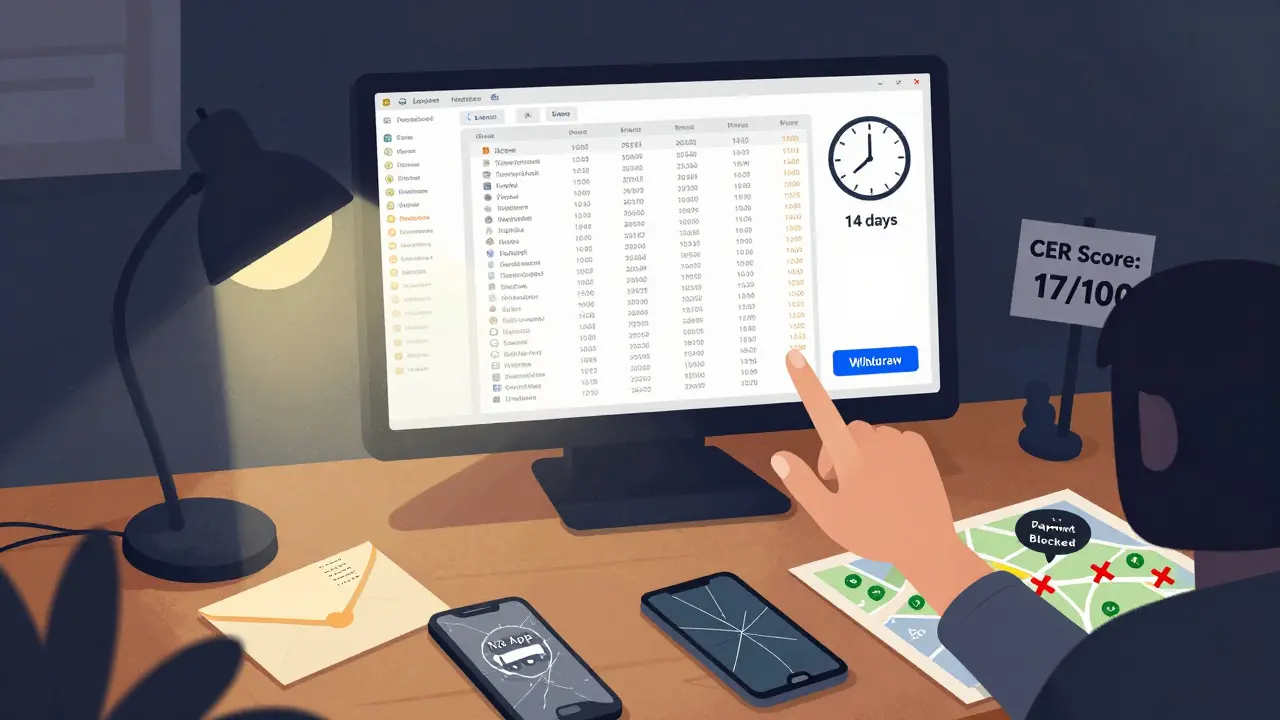
Security on YoBit is basic. It has SSL encryption, two-factor authentication (2FA), and stores most coins in cold wallets. That sounds fine on paper. But here’s the problem: it doesn’t do penetration testing. No bug bounty program. No public security audits. CER.live gave it a 17 out of 100-worst in the top 200 exchanges. That’s worse than a lot of sketchy platforms that got shut down years ago.There’s no mobile app. You can’t trade on your phone. No margin trading. No futures. No leverage. If you want to do anything beyond spot trading, you’ll need another exchange. Customer support? Only through a ticket system. Responses can take days. Some users report never getting replies at all.
The interface is cluttered. It’s not designed for beginners. No tutorials. No help guides. No educational content. If you don’t already know how to read order books, set limit orders, or understand trading pairs, you’ll get lost. One user wrote: “I spent three hours just figuring out how to deposit.” That’s not a feature-it’s a red flag.
The Withdrawal Problem
This is where most people get stuck. YoBit lets you deposit with Advcash, PerfectMoney, WebMoney, Payeer, and bank cards. But withdrawals? That’s a different story. Multiple users on Bestchange.com and Cryptoradar report delays of 2-14 days. Some say they had to wait weeks. Others claim their withdrawal requests vanished into thin air.There’s no clear reason why. YoBit doesn’t explain delays. No ETA. No tracking. No apology. One user on G2 said: “I’ve had two withdrawals take over a month. No one answers. I’ve given up on them.” That’s not normal. Even unregulated exchanges like KuCoin or Gate.io have faster withdrawal times. YoBit’s system feels broken.
Who Should Use YoBit?
YoBit isn’t for everyone. In fact, it’s only for a very specific type of trader:- You’re experienced in crypto trading and understand the risks of unregulated platforms.
- You need to trade altcoins that aren’t listed anywhere else.
- You value privacy over protection and don’t mind losing your funds if something goes wrong.
- You’re okay with no mobile app, no customer service, and no guarantees.
If you’re a beginner, this is the worst place to start. You’ll lose money-not because the market crashed, but because you didn’t know how to use the platform. There’s no hand-holding. No safety net. Just a button that says “Withdraw” and a prayer.
Who Should Avoid YoBit?
If any of these describe you, walk away:- You want to store large amounts of crypto long-term.
- You expect fast withdrawals or reliable customer support.
- You’re in the EU, US, UK, or Australia-where regulators are cracking down on unlicensed exchanges.
- You’re using fiat currency to buy crypto and want to cash out later.
- You care about your funds being protected if the exchange gets hacked.
Regulators in the US, UK, and EU have been targeting exchanges like YoBit since 2023. In 2025, banks started cutting ties with payment processors like PerfectMoney and WebMoney. That means even depositing might get harder. YoBit’s reliance on these systems makes it vulnerable.
The Big Contradiction: Safe or Scam?
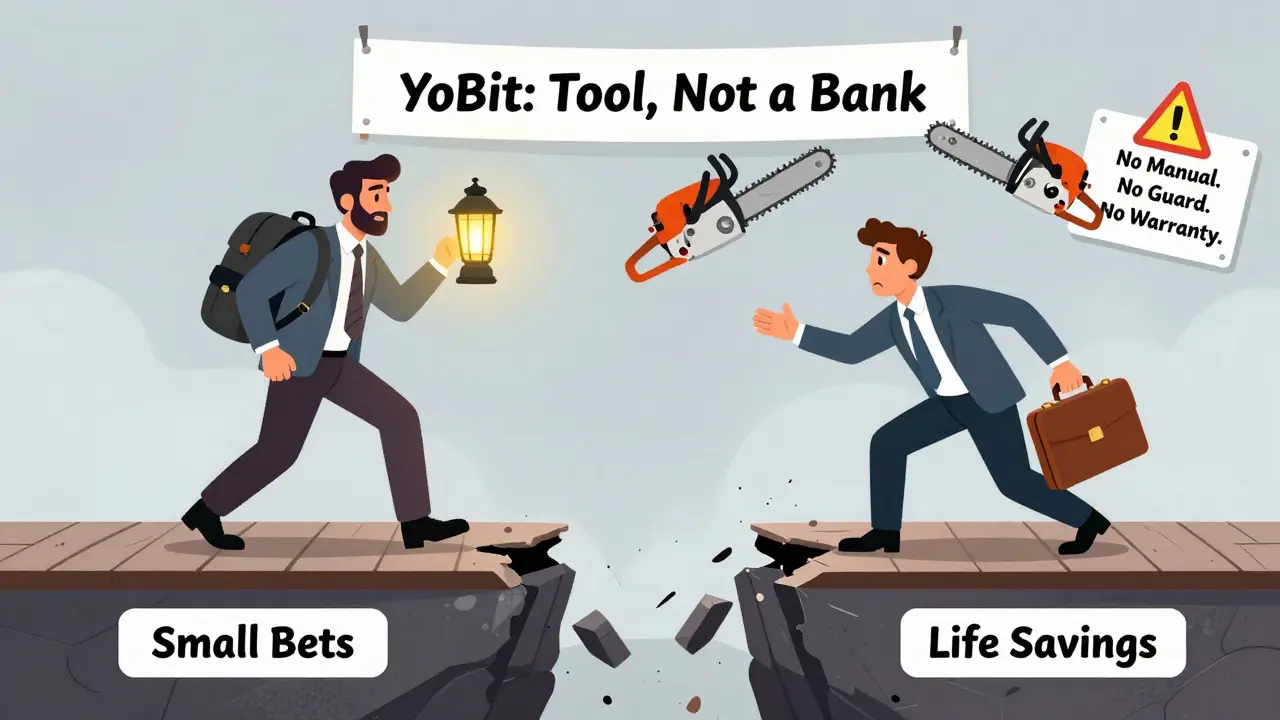
Here’s the weird part. Some users give YoBit a 5/5 rating. They say it’s “secure,” “reliable,” and “the best for altcoins.” Others call it a “total scam.” Why the split?It’s not about the platform being rigged. It’s about expectations. If you treat YoBit like a casino-small bets, high risk, no emotional attachment-you might walk away with profit. If you treat it like a bank, you’ll get crushed.
YoBit hasn’t been hacked since 2014, according to some. But that doesn’t mean it’s safe. It means no one’s bothered to break in-or the damage was never made public. There’s no transparency. No accountability. No way to verify claims.
Final Verdict: A Tool, Not a Platform
YoBit isn’t a crypto exchange in the way Binance or Kraken are. It’s a tool. A niche tool. Like a chainsaw you use to cut down trees in the woods-no manual, no safety guard, no warranty. If you know how to use it, it works. If you don’t, you’ll lose a finger.For experienced traders who need access to obscure altcoins and don’t mind the risks, YoBit still has a place. But it’s not a place to keep your life savings. It’s not a place to learn. It’s not a place to trust.
As global regulations tighten, YoBit’s future looks shaky. Deloitte predicts unregulated exchanges will lose 40-60% of their users by 2027. Chainalysis says exchanges without AML compliance face “existential threats.” YoBit has survived 12 years. That’s impressive. But survival doesn’t mean safety.
If you’re considering YoBit, ask yourself: Are you trading for profit-or just hoping to beat the odds?
Is YoBit safe to use in 2026?
No, YoBit is not considered safe by industry standards. It has no regulatory oversight, no security audits, and no bug bounty program. Its CER.live security score is 17/100-the lowest among major exchanges. While it hasn’t suffered a public hack since 2014, its lack of transparency and weak security practices make it high-risk. Only experienced traders who accept full responsibility for their funds should use it.
Does YoBit require KYC verification?
No, YoBit does not require KYC. You only need an email address to register. This makes it popular among users who want privacy or live in regions with strict crypto regulations. However, this also means there’s no recourse if your account is compromised or funds are stolen. You’re completely on your own.
Can I trade on YoBit using my phone?
No, YoBit has no official mobile app. All trading must be done through a web browser on a desktop or laptop. This is a major disadvantage compared to exchanges like Binance or Kraken, which offer fully functional mobile apps with real-time alerts and push notifications. Mobile users are forced to use browser-based trading, which is slower and less reliable.
Why do people say YoBit is a scam?
People call YoBit a scam because of frequent withdrawal delays, unresponsive support, and hidden fees. While the platform doesn’t steal funds outright, it makes it extremely difficult to access your money. Users report waiting weeks for withdrawals, with no explanation or timeline. The lack of customer service and transparency fuels distrust. It’s not a classic scam-it’s a platform designed to discourage casual users from withdrawing.
What are the best alternatives to YoBit?
For altcoin trading with better security, try KuCoin or Gate.io-they offer hundreds of altcoins, mobile apps, and faster withdrawals. For regulated platforms with strong security, use Binance (outside the US) or Kraken. If you need no-KYC options, Bisq or Hodl Hodl are peer-to-peer alternatives with more transparency. None of these have YoBit’s extreme altcoin count, but they offer real customer support and better protection.
Does YoBit support fiat deposits?
Yes, but only through third-party payment processors like Advcash, PerfectMoney, WebMoney, and Payeer. You can’t deposit USD or EUR directly via bank transfer or credit card. These payment systems are increasingly restricted by banks and regulators, making deposits harder over time. Withdrawals to fiat are even more difficult and often take weeks.
Is YoBit still operational in 2026?
Yes, as of early 2026, YoBit is still operational. It continues to list altcoins, process trades, and accept deposits via its supported payment methods. However, its user base has declined significantly since 2023 due to regulatory pressure and payment processor restrictions. The platform shows no signs of updating its interface, adding mobile support, or improving security-suggesting it’s in maintenance mode rather than growth mode.
What to Do Next
If you’ve already used YoBit and are waiting on a withdrawal: keep checking your ticket. Save every email. Document every delay. There’s no official recourse, but if enough users report the same issue, it might get noticed.If you’re thinking about starting: don’t. Use a regulated exchange first. Learn how trading works. Get comfortable with wallets and order types. Then, if you still want to chase obscure altcoins, consider YoBit-but only with money you’re willing to lose.
YoBit isn’t evil. It’s just outdated. And in crypto, outdated means dangerous.
steven sun
January 22, 2026 AT 06:41Arielle Hernandez
January 24, 2026 AT 06:23Mathew Finch
January 25, 2026 AT 22:43Roshmi Chatterjee
January 26, 2026 AT 23:58Deepu Verma
January 28, 2026 AT 20:00MICHELLE REICHARD
January 29, 2026 AT 07:51Bonnie Sands
January 29, 2026 AT 15:50Jennifer Duke
January 29, 2026 AT 16:25Andy Marsland
January 30, 2026 AT 23:13Jeffrey Dufoe
January 31, 2026 AT 18:44Jonny Lindva
February 1, 2026 AT 04:35Jen Allanson
February 1, 2026 AT 16:51Dave Ellender
February 2, 2026 AT 01:05Adam Fularz
February 3, 2026 AT 20:44Adam Lewkovitz
February 4, 2026 AT 15:23Barbara Rousseau-Osborn
February 5, 2026 AT 05:04Arnaud Landry
February 5, 2026 AT 17:20george haris
February 6, 2026 AT 14:42Mark Estareja
February 8, 2026 AT 00:53David Zinger
February 9, 2026 AT 14:05Sara Delgado Rivero
February 11, 2026 AT 01:37Athena Mantle
February 12, 2026 AT 01:07carol johnson
February 12, 2026 AT 05:29Chidimma Catherine
February 13, 2026 AT 19:11Nathan Drake
February 15, 2026 AT 00:21Melissa Contreras López
February 15, 2026 AT 17:32Kevin Pivko
February 17, 2026 AT 08:06steven sun
February 18, 2026 AT 20:07Nathan Drake
February 20, 2026 AT 08:41Arielle Hernandez
February 20, 2026 AT 17:30