


You’re scrolling through CoinMarketCap, hunting for that one obscure altcoin with massive upside potential. The big exchanges like Coinbase or Binance don’t list it. You’ve heard whispers about YOOBTC, a niche platform promising high volume and low friction. But before you connect your wallet and risk your capital, you need to know what’s actually happening behind the scenes. Is YOOBTC a hidden gem for privacy-focused traders, or is it a liquidity trap waiting to happen?
| Feature | Verdict |
|---|---|
| Best For | Experienced traders seeking specific altcoins without identity verification. |
| Biggest Risk | Limited regulatory oversight and potentially thin order books on minor pairs. |
| Fee Structure | Competitive flat rates, often around 0.2%, but check for withdrawal spikes. |
| User Experience | Functional but dated interface; lacks modern mobile app polish. |
What Exactly Is YOOBTC?
YOOBTC is a centralized cryptocurrency exchange that focuses on providing access to a wide range of digital assets with minimal bureaucratic hurdles. Unlike major US-regulated platforms that demand passport scans and utility bills before you can trade a single satoshi, YOOBTC operates in a gray area that appeals to users who value speed and anonymity. It sits somewhere between the wild west of decentralized exchanges and the polished, compliant world of Coinbase.
The platform has carved out a niche by listing coins that haven’t yet made it to Tier-1 exchanges. If you’re trying to get early exposure to a project that just launched on Ethereum or BNB Chain, YOOBTC might be one of the few places offering a direct fiat-to-crypto or stablecoin-to-crypto pair. However, this convenience comes with caveats. Because it doesn’t adhere to strict Know Your Customer (KYC) laws in all jurisdictions, it attracts a different kind of trader-one who understands that less regulation often means less protection if things go sideways.
The No-KYC Advantage and Its Hidden Costs
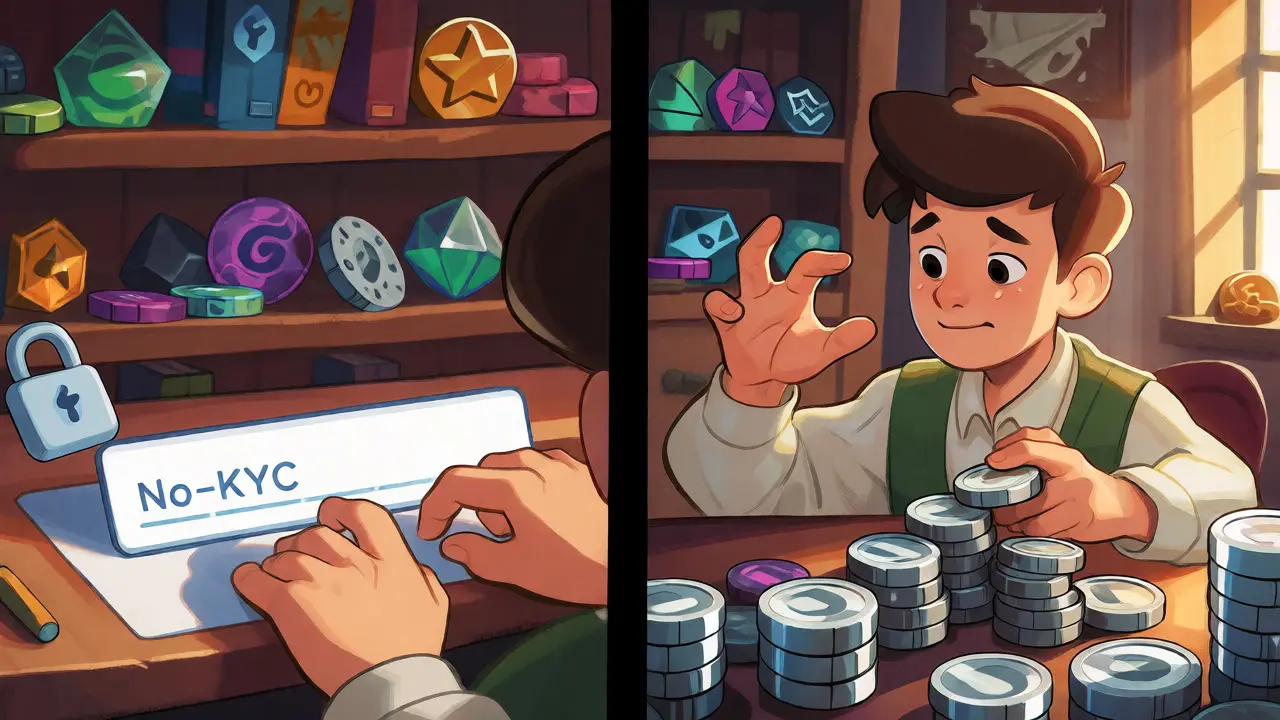
Let’s talk about why people click on "no KYC" links. It’s not just about laziness; it’s about privacy. In an era where data breaches are common, keeping your personal information off a database feels safer to many. With YOOBTC, you can typically sign up with just an email address. You verify your email, set a password, and you’re ready to deposit Bitcoin or Tether.
But here’s the catch: no KYC usually means lower withdrawal limits initially. While some competitors allow unlimited withdrawals after basic email verification, YOOBTC may impose caps until you provide additional documentation. This isn’t necessarily a dealbreaker, but it changes how you manage your portfolio. If you plan to move large sums regularly, you’ll likely end up completing the same identity checks you tried to avoid, just later in the game.
Furthermore, operating without full KYC compliance places YOOBTC outside the safety nets provided by governments. If the exchange faces insolvency or legal action, you won’t have the same recourse as you would with a bank-backed entity. It’s a trade-off: you gain immediate access and privacy, but you lose the institutional-grade security guarantees found on regulated platforms.
Trading Fees and Cost Efficiency
When evaluating any exchange, fees are the silent killer of profits. YOOBTC generally positions itself competitively here. Most reviews indicate a flat fee structure, often hovering around 0.2% for both maker and taker orders. This simplicity is appealing because you don’t need to calculate complex tiered discounts based on 30-day trading volume.
However, don’t ignore the withdrawal fees. This is where many niche exchanges make their money back. While trading fees might look low, withdrawing Bitcoin or Ethereum can cost significantly more than on larger exchanges due to network congestion handling policies. Always check the current withdrawal fee table before moving assets. A 0.2% trading fee looks great until you realize the $15 withdrawal fee on a small transaction eats up 5% of your total capital.
- Maker/Taker Fees: Typically flat at ~0.2%, consistent across most pairs.
- Deposit Fees: Usually free for crypto deposits; fiat deposits via third-party processors may incur costs.
- Withdrawal Fees: Variable per asset; often higher than industry averages for popular chains.
Asset Variety and Liquidity Concerns
This is YOOBTC’s strongest selling point. The exchange boasts an extensive catalog of cryptocurrencies, ranging from established names like Bitcoin and Ethereum to micro-cap tokens that are barely traded elsewhere. For the active trader looking to diversify beyond the top 50, this breadth is invaluable.
But quantity does not equal quality. Liquidity-the ability to buy or sell an asset without affecting its price-is a major concern on smaller exchanges. On a major pair like BTC/USDT, YOOBTC likely has sufficient depth. But try to sell $10,000 worth of a minor altcoin, and you might find yourself hitting the spread hard. Slippage becomes real fast when order books are thin.
If you’re trading small amounts, this won’t bother you much. But if you’re managing a mid-sized portfolio, you need to watch the order book closely. Use limit orders instead of market orders to protect yourself from sudden price swings caused by low volume.
User Interface and Mobile Experience
Let’s be honest: the interface isn’t going to win design awards. YOOBTC’s web platform feels functional rather than flashy. It gets the job done-charts load, orders execute, balances update-but it lacks the sleek, intuitive navigation of newer competitors like Bybit or KuCoin.
A significant pain point for many users is the lack of a robust, native mobile application. While there may be a responsive web view, it doesn’t offer the push notifications, biometric login, or offline caching that a dedicated iOS or Android app provides. If you’re a trader who needs to react to market moves while on the go, relying solely on a browser tab can feel clunky compared to the seamless experience offered by top-tier exchanges.
Additionally, educational resources are sparse. There’s rarely a comprehensive "Academy" section explaining how staking works or what DeFi protocols are supported. This reinforces the idea that YOOBTC is designed for users who already understand the mechanics of crypto trading, not beginners looking for hand-holding.

Security and Trustworthiness
Security is the elephant in the room for any non-mainstream exchange. Has YOOBTC suffered a major hack? As of late 2025 and into 2026, there have been no widespread reports of catastrophic fund losses comparable to the Mt. Gox disaster or recent FTX collapses. However, the absence of news isn’t always proof of perfect health.
The platform employs standard security measures like two-factor authentication (2FA) and cold storage for the majority of user funds. Yet, without regular, transparent Proof of Reserves audits published by reputable firms like CertiK or PeckShield, trust relies heavily on community reputation and operational history. Keep an eye on social media sentiment and forums like Reddit or Bitcointalk for real-time user feedback regarding withdrawal delays, which are often the first sign of liquidity stress.
Who Should Use YOOBTC?
You should consider YOOBTC if you fit one of these profiles:
- The Altcoin Hunter: You want early access to new tokens that aren’t listed on Binance or Coinbase yet.
- The Privacy Advocate: You prioritize keeping your trading activity separate from your broader financial identity.
- The Experienced Trader: You understand order books, slippage, and risk management well enough to navigate a less-polished interface.
Conversely, skip YOOBTC if you are a beginner who needs educational support, require instant fiat off-ramps to a local bank account, or plan to hold large sums long-term without actively trading.
Is YOOBTC safe to use for large investments?
For large investments, caution is advised. While YOOBTC implements standard security protocols like 2FA and cold storage, it lacks the deep regulatory backing and insurance coverage of Tier-1 exchanges. It is generally recommended to keep only the amount you intend to trade actively on the platform and store long-term holdings in a hardware wallet.
Does YOOBTC require KYC verification?
YOOBTC operates primarily as a no-KYC exchange, allowing users to register and trade with just an email address. However, depending on your jurisdiction and withdrawal volume, you may be prompted to complete identity verification to lift certain limits or comply with evolving anti-money laundering regulations.
What are the main alternatives to YOOBTC?
If you prefer similar features, consider MEXC or Gate.io, which also offer extensive altcoin lists and flexible KYC options. For stricter regulation and higher liquidity, Binance or Kraken are better choices, though they require full identity verification and may list fewer micro-cap assets.
How do I withdraw fiat currency from YOOBTC?
Fiat withdrawals on YOOBTC are typically processed through third-party payment processors like PerfectMoney, WebMoney, or Advcash rather than direct bank transfers. This means you may need an intermediary account to convert crypto proceeds into usable cash in your local currency.
Is there a mobile app for YOOBTC?
YOOBTC primarily functions as a web-based platform. While the site is responsive on mobile devices, it does not offer a dedicated, feature-rich native iOS or Android application with advanced push notifications, which can hinder quick reaction times for mobile traders.