

Margin Trading Calculator
Margin Calculator
Risk Assessment
Warning: ZT Exchange offers up to 1:100 leverage, which magnifies both gains and losses. High leverage can lead to rapid account liquidation. Only trade with money you can afford to lose.
Quick Takeaways
- ZT Exchange is registered in Seychelles and operated by Glory Global Technology Ltd.
- Offers crypto‑to‑crypto trading, margin up to 1:100, and a native ZTB token for fee discounts.
- No direct fiat deposit; users must fund via an OTC desk.
- Regulatory red‑flags: blocked in the US, mixed credibility, many users report verification‑code failures.
- Overall rating: cautiously usable for experienced traders in permissive jurisdictions.
When you type “ZT crypto exchange review” into a search box, you’re probably trying to decide if the platform is worth your money or just another rug pull. Below is a deep‑dive that covers the history, licensing, fees, security, user experience, and how ZT stacks up against more established rivals.
What Is ZT Exchange?
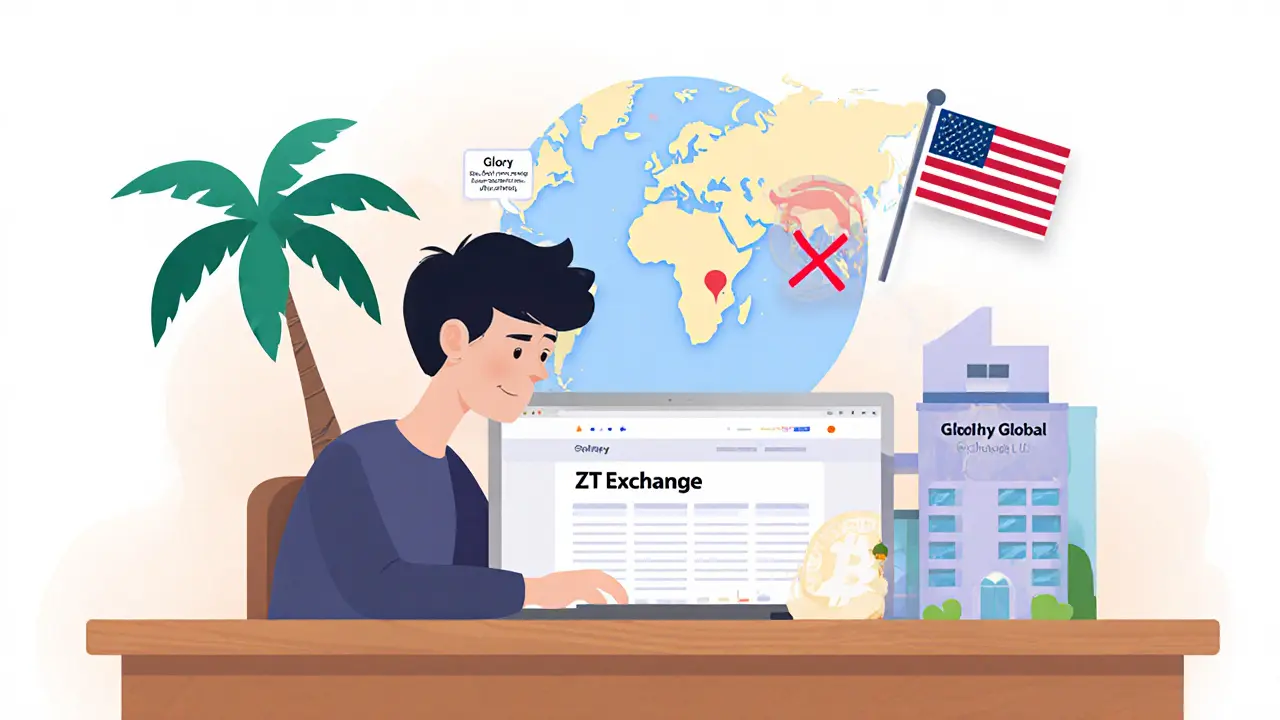
ZT Exchange is a centralized cryptocurrency trading platform registered in Seychelles in 2018. The site operates under the brand ZT.com and is run by Glory Global Technology Ltd.. According to multiple sources, the exchange claims to serve users in more than 158 countries, but it explicitly bans residents of the United States because of SEC enforcement risk.
The platform markets itself as a “professional” venue for Bitcoin (BTC), Ethereum (ETH), Litecoin (LTC) and Tether (USDT), while also supporting dozens of altcoins. Its ecosystem includes a native utility token called ZTB token that allegedly reduces trading fees when held in the user’s wallet.
Regulatory Landscape & Legitimacy Concerns
Registrations in offshore jurisdictions like Seychelles are common for crypto exchanges that want a lighter compliance burden. While this can be perfectly legal, it also means users have limited legal recourse if the exchange disappears or mishandles funds.
Two expert sites clash on ZT’s reputation:
- TradersUnion.com (2025) bluntly calls ZT a scam, citing the offshore registration and a lack of verifiable audits.
- CaptainAltcoin.com (2025) labels it “legit BUT pay attention to this,” warning about verification‑code glitches and hidden fees.
The United States Securities and Exchange Commission (US SEC) has warned foreign platforms that accept US investors without registration, so ZT’s decision to block US users is a defensive move rather than an endorsement of compliance.
Trading Features & Fee Structure
ZT focuses on crypto‑to‑crypto markets. You cannot deposit fiat directly; instead, you must use the Over‑The‑Counter (OTC) desk to swap stablecoins for the assets you want to trade. This adds a step that many newcomers find confusing.
Key features include:
- Spot trading for >200 crypto pairs.
- Margin trading with up to 1:100 leverage on select pairs (BTC/USDT, ETH/USDT).
- ZTB token holders receive a 30% discount on taker fees.
- Minimum deposit of $1 (in crypto).
Fee claims are contradictory. The platform advertises “low commission costs,” yet several users on CaptainAltcoin report unexpectedly high transaction fees and hidden charges when withdrawing.

Security Measures & Verification Process
Security claims include bank‑level encryption and a cold‑wallet storage system for the majority of user funds. Mandatory KYC (Know Your Customer) and AML (Anti‑Money Laundering) checks are required before you can withdraw or access margin features.
However, real‑world reports highlight two pain points:
- Verification codes often never arrive via email, locking users out of their accounts.
- Customer support is frequently unresponsive, with multiple tickets closed without resolution.
Because the exchange is headquartered in Seychelles, any legal dispute would fall under that jurisdiction, which many users consider a weak consumer‑protection environment.
User Experience: Interface, Mobile Access, and Support
The web UI is described as “fast” and “intuitive” by TradersUnion, but several reviewers note a “messy” chart layout where price lines overlap, making technical analysis difficult. The platform’s mobile presence is ambiguous: CoinCodex mentions a mobile app, while Cryptogeek says no official app exists. In practice, the website is responsive, so you can trade from a phone browser, but the experience is not as polished as Binance or Coinbase.
Support channels claimed to be 24‑hour include live chat and email. In reality, users have shared screenshots of unanswered tickets and automated replies that never solve the verification‑code issue.
How ZT Stacks Up Against Bigger Players
| Feature | ZT Exchange | Binance |
|---|---|---|
| Year founded | 2018 | 2017 |
| Headquarters | Seychelles | Malta (global) |
| Fiat on‑ramps | No direct fiat; OTC only | Bank cards, bank transfers, PayPal |
| Leverage options | Up to 1:100 (selected pairs) | Up to 1:125 (various pairs) |
| Native token fee discount | ZTB (30% taker discount) | BNB (25% discount on spot) |
| US accessibility | Blocked | Blocked (US users must use Binance.US) |
| Customer support rating (out of 5) | 2.5 | 4.2 |
The table shows that ZT lags in fiat onboarding, support quality, and overall ecosystem breadth. Its niche advantage is the ultra‑high leverage on a few pairs and a very low $1 minimum deposit, which may attract traders who can’t meet higher entry thresholds.

Pros, Cons, and Who Should Consider ZT
| Pros |
|
| Cons |
|
If you are a seasoned trader who can handle crypto‑only funding, lives in a country with friendly crypto rules, and wants ultra‑high leverage without a huge capital outlay, ZT might be worth a test run (start with a tiny amount). Beginners, US residents, or anyone who needs reliable fiat on‑ramps and quick support should probably look elsewhere.
Final Verdict
ZT Exchange sits in a gray zone. It offers real trading tools, a native token, and very low entry barriers, but the lack of fiat integration, frequent verification hiccups, and patchy customer support make it risky. The platform’s offshore registration adds another layer of legal uncertainty. Treat it as a high‑risk sandbox rather than a primary home for your crypto portfolio.
Frequently Asked Questions
Is ZT Exchange a scam?
Expert opinions are split. Some sites call it a scam because of its offshore registration and lack of audits, while others consider it legit but warn about verification issues and hidden fees. Use only money you can afford to lose.
Can I deposit USD directly?
No. ZT only accepts crypto deposits through its OTC desk. You must first buy crypto on another platform and then transfer it to ZT.
What is the ZTB token?
ZTB is ZT’s native utility token. Holding ZTB in your exchange wallet lowers taker fees by about 30% and can be used for certain promotional campaigns.
Is margin trading available for all pairs?
Margin is limited to a handful of high‑volume pairs such as BTC/USDT and ETH/USDT. Leverage tops out at 1:100.
Why can’t US residents use ZT?
The US SEC strictly regulates crypto exchanges. ZT does not have a US licence, so it blocks American IPs to avoid legal action.
Natasha Nelson
October 24, 2025 AT 08:26ZT looks slick!!! But those code issues???
Sarah Hannay
October 26, 2025 AT 04:06While your enthusiasm is noted, the platform’s regulatory opacity cannot be ignored; such shortcomings demand rigorous scrutiny.
Richard Williams
October 28, 2025 AT 00:47If you’re comfortable with crypto‑only funding, the low $1 entry can be a decent sandbox to test strategies, just keep risk management front‑and‑center.
Abby Gonzales Hoffman
October 29, 2025 AT 21:28ZT Exchange markets itself as a “professional” venue, but the offshore registration raises immediate red flags. The platform’s lack of a direct fiat gateway forces users into a cumbersome OTC process. While the $1 minimum deposit is attractive for micro‑traders, the thin margin leaves little room for error. High leverage up to 1:100 can amplify gains, yet it equally magnifies potential losses. The native ZTB token promises a 30% fee discount, which sounds beneficial but requires holding the token in the exchange wallet. Verification‑code failures have been reported by numerous users, effectively locking accounts. Customer support responsiveness appears weak, with many tickets left unresolved. Security claims about cold‑wallet storage are common, yet independent audits are missing. Regulatory uncertainty stems from the Seychelles jurisdiction, offering limited recourse. US residents are barred, highlighting the platform’s avoidance of SEC scrutiny. The UI is fast yet suffers from overlapping chart elements that hinder analysis. Mobile trading works through a responsive site, though it lacks a dedicated app. Compared to industry giants like Binance, ZT falls short on fiat onboarding and support quality. Nevertheless, experienced traders seeking ultra‑high leverage may find a niche use case. Ultimately, treat ZT as a high‑risk sandbox rather than a primary portfolio holder.
Rampraveen Rani
October 31, 2025 AT 18:09Leverage is tempting 🚀 but remember the market can swing hard 🛑
ashish ramani
November 2, 2025 AT 14:49The support response times appear subpar, which could hinder timely issue resolution for active traders.
Gabrielle Loeser
November 4, 2025 AT 11:30Prospective users should weigh the ultra‑high leverage against the platform’s limited fiat onboarding and jurisdictional risks before allocating capital.
Cyndy Mcquiston
November 6, 2025 AT 08:11Don’t trust a Seychelles‑registered exchange when US standards exist.
Stephanie Alya
November 8, 2025 AT 04:52Oh great, another exchange that disappears after you deposit 😏
olufunmi ajibade
November 10, 2025 AT 01:32You need to probe deeper into the audit reports; without transparency, trust remains a gamble.
Manish Gupta
November 11, 2025 AT 22:13Your deep dive highlights the leverage‑risk trade‑off nicely 😊
Marianne Sivertsen
November 13, 2025 AT 18:54Sometimes the hype overshadows the underlying fundamentals, which is worth remembering.
Shruti rana Rana
November 15, 2025 AT 15:35In the grand tapestry of crypto ecosystems, ZT occupies a fleeting yet daring niche, its bold leverage a double‑edged sword.
emma bullivant
November 17, 2025 AT 12:15If we look at the bigger picture, the risk taker shouuld consider the lawless nature of offshore platforms.
Michael Hagerman
November 19, 2025 AT 08:56Yo, ZT's got that high‑risk vibe, but yo, you can lose it all in a blink.
Laura Herrelop
November 21, 2025 AT 05:37Some say the silence of regulators is intentional, a veil to let shadow exchanges thrive unnoticed.
Nisha Sharmal
November 23, 2025 AT 02:18Obviously anyone who trusts ZT must have missed the warning signs glaring on every review.
Karla Alcantara
November 24, 2025 AT 22:58For traders who love the thrill of high leverage, ZT can be an exciting testbed, just stay disciplined and protect your downside.
Jessica Smith
November 26, 2025 AT 19:39Scam vibes everywhere no need to waste time.
Sonu Singh
November 28, 2025 AT 16:20Check the fee breakdown again tho, some hidden costs slip in.
Alex Horville
November 30, 2025 AT 13:01US traders should stay clear, but other markets can decide for themselves.
monica thomas
December 2, 2025 AT 09:41The main regulatory concerns for non‑US users center on offshore jurisdiction and limited legal recourse.
Edwin Davis
December 4, 2025 AT 06:22Listen!!! This platform is a ticking time bomb!!!
Nick Carey
December 6, 2025 AT 03:03Honestly, I’m not impressed; the UI feels like a 2015 design.
Peter Schwalm
December 7, 2025 AT 23:44Collaboratively, we can share best practices for risk management when using high‑leverage tools on ZT.
Petrina Baldwin
December 9, 2025 AT 20:24Leverage is risky.
Ralph Nicolay
December 11, 2025 AT 17:05It is imperative to conduct comprehensive due diligence before any capital deployment.
sundar M
December 13, 2025 AT 13:46Hey folks, let’s keep the conversation lively-share your win‑loss stories, and we’ll all learn together!
LeAnn Dolly-Powell
December 15, 2025 AT 10:27Stay positive! 🌟 Even risky platforms can teach valuable lessons. 😊
Anastasia Alamanou
December 17, 2025 AT 07:26Leveraging ZT’s ZTB token can optimize fee structures, but ensure you’re compliant with AML/KYC protocols to mitigate operational risk.