


You want to trade on the Sui blockchain, but you’re tired of high slippage and empty pools. You’ve probably heard about Cetus Protocol, a leading decentralized exchange (DEX) that brings advanced liquidity tools to Sui and Aptos. It promises faster trades, lower fees, and better rewards for those who provide liquidity. But does it actually deliver, or is it just another flashy DeFi project?
I’ve spent weeks testing Cetus, swapping tokens, providing liquidity, and digging into its tokenomics. Here’s what I found.
What Exactly Is Cetus Protocol?
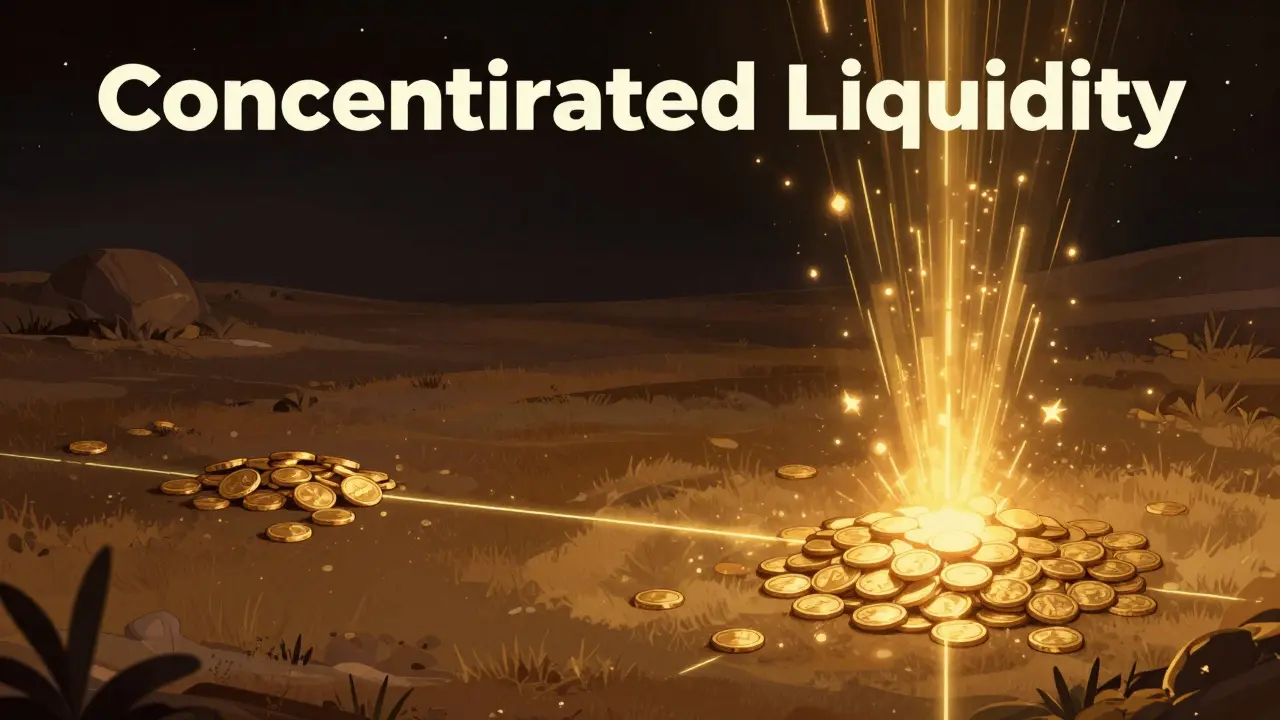
Cetus isn’t your typical swap button. It’s an automated market maker (AMM) built on Sui and Aptos blockchains. Think of it like Uniswap V3, but optimized for newer, faster networks. The big difference? Cetus uses Concentrated Liquidity Market Makers (CLMM). This means you don’t spread your money across every possible price range. Instead, you pick a specific zone where you think the price will stay. Your capital works harder, earning more fees in less time.
As of mid-2026, Cetus has processed over $52 billion in volume and served 13 million accounts. That’s not small-time. It’s become one of the go-to places for serious traders on Sui.
Key Features That Set Cetus Apart
Here’s why people are switching from older DEXs:
- Infinity Pools: These are permissionless pools with multiple fee tiers. You can create a pool for any token pair and set your own rules. No gatekeepers.
- Super Aggregator: When you swap, Cetus doesn’t just check one pool. It scans the whole Sui ecosystem to find the best price. Less slippage, better rates.
- Intent Trading: Automate your strategy. Set up dollar-cost averaging (DCA) plans or limit orders without leaving the platform. It feels closer to a centralized exchange experience.
- Asset Launchpad: New projects can launch tokens directly through Cetus, getting instant liquidity and visibility.
How Concentrated Liquidity Actually Works
Let’s break this down simply. In traditional AMMs, if you provide $1,000 worth of ETH/USDC liquidity, your money sits everywhere-from $100 to $10,000 per ETH. Most of that capital is idle because the price rarely hits those extremes.
With Cetus’s CLMM, you say, “I think ETH will stay between $3,800 and $4,200.” Your entire $1,000 works only in that band. If the price stays there, you earn way more fees. If it leaves, you stop earning until it returns. It’s riskier, but potentially much more profitable.
| Feature | Traditional AMM | Cetus CLMM |
|---|---|---|
| Liquidity Distribution | Across all prices | User-defined range |
| Capital Efficiency | Low | High (up to 4,000x improvement) |
| Slippage for Traders | Higher in thin markets | Lower due to dense liquidity zones |
| Complexity | Simple | Moderate (requires monitoring) |
Tokenomics: CETUS and xCETUS Explained
Cetus runs on two tokens: CETUS and xCETUS. Here’s how they work together:
- CETUS: The main governance and utility token. Use it to vote on proposals, pay fees, and stake for rewards.
- xCETUS: A locked version of CETUS. When you lock CETUS for a period (e.g., 1-4 years), you get xCETUS. Longer locks = more voting power + higher yield. This is called a veToken model.
Why does this matter? Because staking CETUS gives you a share of protocol revenue. Plus, xCETUS holders often get boosted rewards in liquidity mining campaigns. It’s designed to reward long-term believers, not quick flippers.
User Experience: What’s It Like to Trade?
The interface is clean and intuitive. Swapping tokens takes seconds thanks to Sui’s speed. Transaction costs are pennies-sometimes fractions of a cent. I tested a $5,000 swap and paid under $0.10 in gas.
Setting up concentrated liquidity is straightforward but requires attention. You’ll need to monitor your position. If the price moves out of your range, you’ll need to rebalance manually or use auto-compounders (if available). There’s no “set and forget” here unless you’re using Infinity Pools with wide ranges.
One thing I liked: the Super Aggregator worked well. On a volatile day, my swap executed at a 0.3% better rate than other Sui DEXs. That adds up over time.

Risks and Limitations You Should Know
No platform is perfect. Here’s what could trip you up:
- Impermanent Loss Risk: Concentrated liquidity amplifies impermanent loss. If the price swings hard outside your range, you can lose value compared to just holding.
- Ecosystem Dependence: Cetus lives on Sui and Aptos. If those chains struggle, so does Cetus. It’s not yet on Ethereum or Solana.
- Newer Protocol: While impressive, Cetus hasn’t been battle-tested as long as Uniswap or Curve. Smart contract audits are solid, but history matters.
- Active Management Needed: Unlike passive LP spots, CLMM requires you to watch the market. Not ideal for hands-off investors.
Who Should Use Cetus?
Cetus shines for:
- Active Traders: Who want low slippage and fast execution on Sui/Aptos.
- Sophisticated Liquidity Providers: Who understand range selection and want higher yields.
- DeFi Builders: Looking to integrate deep liquidity via SDK or Asset Launchpad.
Avoid it if:
- You prefer simple, passive liquidity provision.
- You mainly trade on Ethereum or Solana.
- You’re uncomfortable managing positions actively.
Final Thoughts
Cetus Protocol isn’t just another copycat DEX. It brings real innovation to Sui and Aptos with concentrated liquidity, smart aggregation, and flexible trading tools. Yes, it demands more effort from users-but that’s where the extra profit comes from.
If you’re already in the Sui ecosystem, Cetus should be your first stop. For newcomers, start small, learn the ropes of CLMM, then scale up. The potential is huge, especially as Sui grows.
Is Cetus safe to use?
Cetus has undergone multiple security audits and operates on reputable chains like Sui and Aptos. However, always remember that DeFi carries inherent risks, including smart contract vulnerabilities and market volatility. Never invest more than you can afford to lose.
How do I start providing liquidity on Cetus?
Connect your wallet (like Ethos or Martian) to the Cetus website. Go to the “Pools” section, choose a pair, select your desired price range, deposit assets, and confirm. Consider starting with stablecoin pairs to minimize impermanent loss while learning.
Can I use Cetus on mobile?
Yes, Cetus is fully responsive and works well on mobile browsers. You can also use wallet apps that support dApp browsing to access Cetus seamlessly on iOS or Android devices.
What happens if the price leaves my liquidity range?
Your liquidity stops earning fees until the price returns to your range. You may experience impermanent loss if the price moved significantly. You can rebalance by adjusting your range or withdrawing/redepositing funds.
Does Cetus charge fees?
Traders pay variable swap fees depending on the pool tier (e.g., 0.01%, 0.05%, 0.3%). Liquidity providers earn most of these fees. Stakers may also receive protocol revenue shares based on their xCETUS holdings.