


Sneed (SNEED) Token Value Calculator
Token Information
Sneed (SNEED) is a hard-capped token with a maximum supply of 10,000 tokens. Its value is highly volatile due to low liquidity and limited market activity.
Valuation Results
Total Tokens: 0
Current Price: $0.00
Total Value: $0.00
Percentage of Max Supply: 0%
Volatility Risk:
Note: Sneed's extreme price swings and low liquidity make it a high-risk investment.
Market Context Comparison
Compare Sneed's limited supply with established cryptocurrencies:
| Metric | Sneed (SNEED) | Bitcoin (BTC) | Ethereum (ETH) |
|---|---|---|---|
| Max Supply | 10,000 tokens | 21 million BTC | No fixed cap |
| Blockchain | Internet Computer Protocol (ICP) | Proof-of-Work/PoS | Proof-of-Stake (PoS) |
| 24h Volume | $100-$300 | $30B+ | $15B+ |
| Community Size | Few hundred followers | Millions | Millions |
Sneed (SNEED) is a cryptocurrency token launched in 2024 on the Internet Computer Protocol (ICP) blockchain. It features a hard‑capped supply of 10,000 tokens, making it one of the most limited digital assets on the market.
TL;DR
- Sneed (SNEED) is an ICP‑based token with a maximum supply of 10,000.
- Price swings are extreme - recent quotes range between $39 and $64.
- Liquidity is low; trading volume rarely exceeds a few hundred dollars.
- Official documentation and community activity are scarce.
- Investors should treat Sneed as a high‑risk speculative asset.
What Is Sneed (SNEED)?
The token’s name is a nod to an internet meme that gained traction on forums in the early 2020s. Beyond the name, the only concrete data points are the launch year (2024), the blockchain it lives on (ICP), and the hard‑capped supply of 10,000 units. No whitepaper, team bios, or roadmap have been published on a dedicated site, which makes verification difficult.
Technical Foundations
Internet Computer Protocol (ICP) is a public blockchain designed for high‑speed smart contracts and a decentralized internet layer. ICP’s architecture promises low transaction fees and near‑instant finality, traits that could benefit a token with few holders. However, the platform is still maturing, and its ecosystem remains smaller than Ethereum’s.
Because Sneed lives on ICP, it can theoretically be stored in any wallet that supports ICP assets - for example, the official DFINITY “Internet Computer” wallet or third‑party apps like Plug. No dedicated Sneed wallet exists, so users must handle it like any other ICP token.
Supply and Distribution
The token’s maximum supply is fixed at 10,000, a figure confirmed by multiple blockchain explorers. Some data providers, like Liquidity Finder, list zero tokens in circulation, suggesting that the contract may not have been fully minted or that the explorer is out of sync. Other platforms report active trading, implying that at least a portion of the supply is on the market.
With such a tiny supply, each token represents a sizable percentage of the total market cap. For instance, at a $45 price point, the entire token would be worth roughly $450,000 - tiny for crypto standards but huge relative to the token count.
Market Performance and Price Volatility
Price data varies dramatically across exchanges:
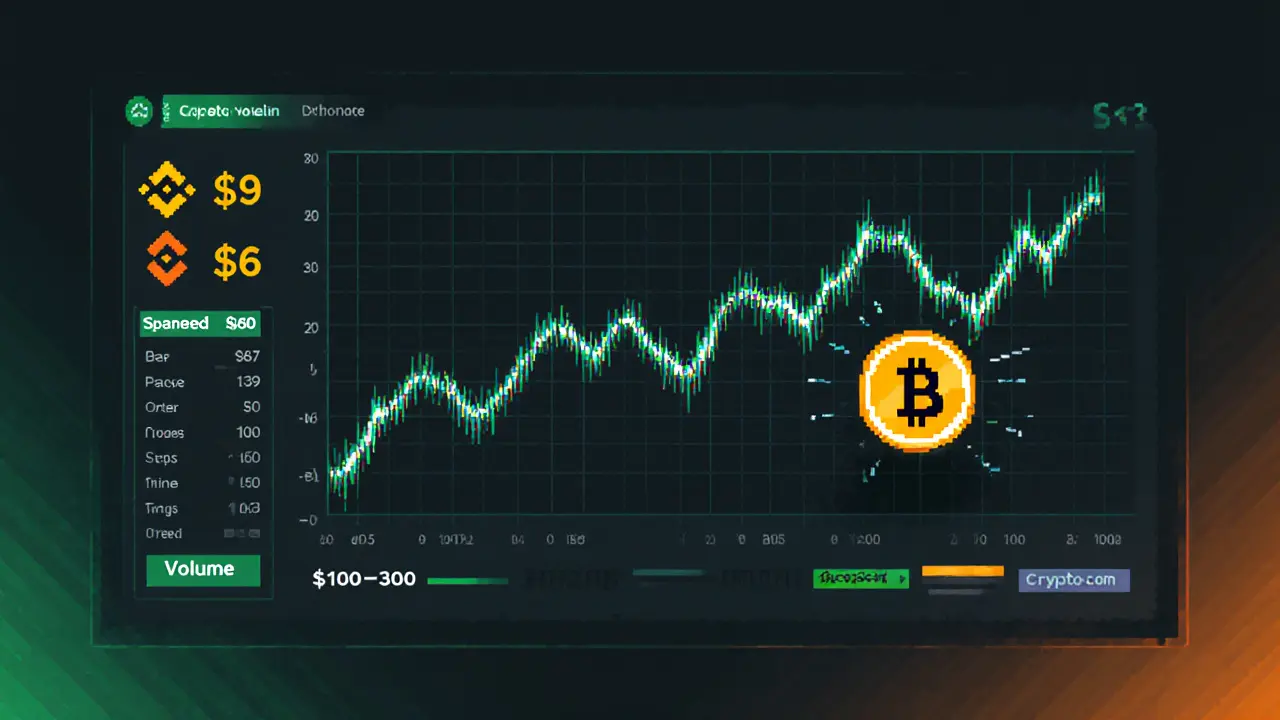
- Crypto.com reports $63.69 with a 24‑hour volume of $136.
- CoinMarketCap lists $39.27 and a volume of $286.19.
- Binance shows $45.73, down 2.37% in the last day, and down 44.58% over the past 60 days.
These discrepancies point to low liquidity - a few trades can swing the price wildly. Over the past three months, the token has shed more than half its value, a pattern common among newly minted, low‑volume assets.
How to Acquire Sneed
Buying Sneed is not as simple as purchasing Bitcoin on a major exchange. The token appears on a handful of platforms:
- Binance lists a trading pair with USDT, but order books are thin and spreads are wide.
- Crypto.com offers spot trading, yet the 24‑hour volume often stays below $200.
- Decentralized exchanges (DEXes) built on ICP occasionally list Sneed, but they require ICP‑compatible wallets and manual contract interaction.
Because of the limited supply, it’s possible to buy a substantial fraction of the circulating tokens with a modest investment - but that also means the price you pay can jump quickly.
Risk Profile
Several red flags should give investors pause:
- Transparency - No official website, no audited code, and no known development team.
- Liquidity - Tiny trading volumes make exiting a position difficult without moving the market.
- Utility - No clear use case, staking mechanism, or governance model has been disclosed.
- Community - Minimal discussion on Reddit, Twitter, or Discord; sentiment polling on Crypto.com remains unpublished.
These factors align Sneed with high‑risk speculative tokens that often fade after an initial hype burst.
Comparison with More Established Coins
| Metric | Sneed (SNEED) | Bitcoin (BTC) | Ethereum (ETH) |
|---|---|---|---|
| Launch Year | 2024 | 2009 | 2015 |
| Blockchain | Internet Computer Protocol | Proof‑of‑Work (PoW) - now PoS | Proof‑of‑Stake (PoS) |
| Max Supply | 10,000 tokens | 21 million BTC | No fixed cap |
| Current Price (USD) | $39-$64 (high variance) | $27,000+ | $1,800+ |
| 24‑h Volume | $100-$300 (very low) | $30B+ | $15B+ |
| Community Size | Few hundred followers | Millions | Millions |
The contrast is stark. While Bitcoin and Ethereum enjoy deep liquidity, extensive developer ecosystems, and clear use cases, Sneed is a niche token with an uncertain purpose.
Possible Confusion with Sneedcoin Classic
Some data aggregators list a token called “Sneedcoin Classic” on Ethereum, priced at $0.000000000418 and with a market cap of $31,000. The contract address is completely different from the ICP token, and trading volume is effectively zero. This suggests two unrelated projects share the name “Sneed,” which can further muddle price feeds and investor research.
Future Outlook
One prediction from Digital Coin Price extrapolates a price of $271.44 by 2030. The methodology is not disclosed, and there are no announced roadmap milestones, partnerships, or development updates to support such growth. In the absence of concrete progress, the token’s trajectory will likely mirror that of many micro‑cap coins: occasional price spikes driven by speculation, followed by long periods of stagnation or decline.
Bottom Line - Should You Consider Sneed?
If you enjoy hunting for ultra‑low‑cap tokens and are comfortable with the possibility of total loss, Sneed could be a “lottery ticket.” For anyone seeking a stable store of value, a platform with proven developer tools, or a token with clear utility, the better choice is to look at established assets or well‑documented ICP projects.
Frequently Asked Questions
What blockchain does Sneed (SNEED) run on?
Sneed is built on the Internet Computer Protocol (ICP), a layer‑1 blockchain designed for fast smart contracts.
How many SNEED tokens will ever exist?
The maximum supply is capped at 10,000 tokens. No additional tokens can be minted.
Where can I buy Sneed?
Sneed appears on a few centralized exchanges such as Binance and Crypto.com, as well as on some ICP‑based DEXes. Liquidity is low, so you may need to place limit orders.
Is there a wallet that officially supports SNEED?
Any wallet that can hold ICP tokens will work - for example, the DFINITY official wallet or the Plug browser extension. There is no dedicated Sneed app.
What are the main risks of investing in Sneed?
Key risks include extreme price volatility, near‑zero liquidity, lack of transparent development team, unclear utility, and minimal community support. Treat it as a high‑risk speculative asset.
Joyce Welu Johnson
February 8, 2025 AT 17:38When you stare at a token with just ten thousand units, the sheer scarcity feels like a fireworks show in a quiet town. The volatility can make your heart race, then stop altogether, and that roller‑coaster vibe is exactly why many investors feel both terrified and thrilled. Even though there’s no whitepaper, the meme‑origin story gives it a quirky cultural hook that can’t be ignored. If you decide to dip a toe in, treat it like a lottery ticket you bought on a whim, not a retirement plan. Remember, the price can swing wildly from $39 to $64 in a single day, so only risk money you can afford to lose.
Fionnbharr Davies
February 9, 2025 AT 13:05Considering the philosophical angle, Sneed acts as a case study in how market perception can inflate value without underlying utility. The token’s existence on the ICP chain proves that technical feasibility is not enough; community buy‑in and transparent governance are essential. A hard cap of ten thousand may appear attractive, yet when liquidity is near zero, that scarcity becomes a double‑edged sword. One could argue that the token embodies the purest form of speculative risk, reflecting broader human tendencies toward herd behavior. In any case, treat it as an experiment rather than a solid investment vehicle.
Anurag Sinha
February 10, 2025 AT 08:31Yo, the whole SNEED thing is probably a front for a secret cabal controlling the ICP universe.
They hide the real agenda behind meme jokes and the price jumps are just a distraction.
Raj Dixit
February 11, 2025 AT 03:58This token is a joke and a waste of time.
Lisa Strauss
February 11, 2025 AT 23:25Hey folks, if you’re looking for a spark of excitement, Sneed can give you that adrenaline rush – just remember to keep it light and fun. A tiny supply means each token feels valuable, but the market’s so thin that you could lose it all in a heartbeat. Think of it as a collectible rather than a financial cornerstone. Play responsibly and enjoy the meme vibes!
Enya Van der most
February 12, 2025 AT 18:51Listen up, crypto adventurers! Sneed’s ultra‑low cap is the perfect arena for bold moves, but you’ve gotta be ready for the chaos. The token’s on ICP, so you can stash it in any ICP‑compatible wallet – no special app needed. Prices swing like a swing set, so set tight limits or you’ll watch your gains vanish. If you’re brave enough to ride, the potential upside feels like a flash of neon in a dark room. Just don’t forget: the volatility is real, and it can bite hard.
Adeoye Emmanuel
February 13, 2025 AT 14:18From an inquisitive standpoint, Sneed offers a fascinating glimpse into micro‑cap dynamics on emerging blockchains. Its extreme price volatility illustrates how low liquidity can amplify even modest trade volumes into massive swings. The lack of a documented roadmap or development team raises legitimate questions about long‑term sustainability. Yet, the meme‑driven narrative may attract a niche community that fuels short‑term hype. Observers should monitor trading volume patterns and any shifts in community engagement to gauge future movements.
Iva Djukić
February 14, 2025 AT 09:45The Sneed token serves as a quintessential exemplar of hyper‑speculative micro‑cap assets whose valuation is dictated less by intrinsic utility and more by stochastic sentiment oscillations within a constrained liquidity envelope. Its immutable cap of 10,000 units ostensibly engenders scarcity, yet the paucity of substantive on‑chain activity precipitates an environment where order‑book depth is effectively nil, rendering price discovery a stochastic process bordering on chaos theory. From a macro‑economic perspective, Sneed epitomizes the perils of meme‑driven tokenomics, wherein cultural referents supersede conventional fundamentals such as network effect, developer activity, and robust governance frameworks. The token's deployment on the Internet Computer Protocol bestows it with theoretical advantages-namely low transaction fees and rapid finality-but these technical merits are largely eclipsed by the token's opacity regarding provenance, auditability, and roadmap articulation. Consequently, any participation in Sneed's market should be predicated upon a risk tolerance calibrated to the possibility of absolute capital erosion. Moreover, the token's market data exhibits pronounced divergences across aggregators, underscoring a fragmented oracle ecosystem that further obfuscates reliable price signals. The confluence of limited market depth, divergent pricing feeds, and an absent utility paradigm coalesces into a high‑entropy environment where arbitrage opportunities are fleeting and often illusory. In essence, Sneed operates at the intersection of speculative mania and cryptographic novelty, a nexus that attracts opportunistic actors while simultaneously deterring institutional participation. Investors would be well‑advised to contextualize Sneed within the broader taxonomy of meme‑centric projects, recognizing that its lifecycle may mirror the classic bell curve of rapid ascent, peak hype, and abrupt decay. Vigilance in monitoring any emergent development milestones-such as partnership announcements, contract upgrades, or community-driven initiatives-remains essential for navigating the token's volatile trajectory. Ultimately, Sneed's existence prompts a broader discourse on the sustainability of ultra‑low‑cap tokens within an evolving regulatory landscape, where compliance considerations may further constrain its market viability. Therefore, engagement with Sneed should be approached with a disciplined, research‑driven methodology, acknowledging the token's speculative nature while extracting any marginal informational advantage that can be gleaned from its market dynamics.
WILMAR MURIEL
February 15, 2025 AT 05:11When I first saw Sneed pop up on a few tiny DEX listings, I felt a mixture of curiosity and caution. The token’s capped supply of ten thousand makes each unit feel like a rare collectible, but the practically nonexistent trading volume means price swings can be brutal. I dug into the blockchain explorer and saw that only a handful of wallets actually hold any SNEED, which suggests a very limited distribution. Without an official roadmap or a visible development team, it’s hard to gauge any future utility beyond meme status. If you decide to experiment, consider using a small fraction of your portfolio-perhaps the equivalent of a coffee budget-so the impact of a potential loss is minimal. Watching the price dance between $39 and $64 is entertaining, but remember that the market can freeze solid if liquidity dries up entirely. In short, treat it as a speculative curiosity, not a cornerstone of any financial plan.
carol williams
February 16, 2025 AT 00:38The token’s superficial promise hinges almost entirely on meme culture, which raises concerns about its long‑term sustainability. While some may view the scarcity of ten thousand units as a selling point, the near‑absence of community governance structures implies a lack of collective direction. Furthermore, the token’s presence across a handful of exchanges with meager daily volumes suggests that any attempt to liquidate a sizable position would severely impact market price. Potential investors should weigh these structural deficiencies against the allure of speculative upside. In addition, the token’s ambiguous legal standing in various jurisdictions could introduce regulatory risks that are often overlooked. Ultimately, the risk‑reward profile skews heavily toward risk, and prudent investors might allocate only a token‑size fraction of their portfolio, if at all.
Maggie Ruland
February 16, 2025 AT 20:05Oh great, another meme‑coin that’s about as stable as a house of cards in a hurricane.
jit salcedo
February 17, 2025 AT 15:31Honestly, I’ve seen better tokens in my spam folder. It’s just a flash in the pan with zero substance.
Ally Woods
February 18, 2025 AT 10:58Looks like a quick pump‑and‑dump to me; don’t get caught in the hype wave.
Kristen Rws
February 19, 2025 AT 06:25i think if you want to try it just be ready to lose it all, thts the real risk.
Andrew McDonald
February 20, 2025 AT 01:51While the original point about scarcity was charming, let’s be realistic: a token with $100‑$300 daily volume can’t sustain any meaningful price. 🧐
Deepak Chauhan
February 20, 2025 AT 21:18Indeed, the philosophical musings are interesting, yet the practically null liquidity renders any strategic approach futile. 😊
Henry Mitchell IV
February 21, 2025 AT 16:45True, the volatile swings are dramatic, but without a solid use‑case, it’s just a risky gamble. 😏
Kamva Ndamase
February 22, 2025 AT 12:11Exactly, the token’s hype is shallow, and any serious investor should steer clear. 💥
bhavin thakkar
February 23, 2025 AT 07:38The enthusiasm for Sneed overlooks the fact that without a development roadmap, it’s a fleeting spectacle.
Thiago Rafael
February 24, 2025 AT 03:05Agree. The token’s design lacks depth, and any perceived upside is likely short‑lived. 🤖
Marie Salcedo
February 24, 2025 AT 22:31In short, treat Sneed as a playful experiment, not a solid investment pillar.
dennis shiner
February 25, 2025 AT 17:58Sure, but remember you can lose every cent on a token with that kind of volume. 🙄
Krystine Kruchten
February 26, 2025 AT 13:25The risk is too high for anyone looking for stable growth; better to focus on proven assets.