

When you hear crypto exchange scam, a deceptive platform pretending to be a legitimate place to buy, sell, or trade cryptocurrency. Also known as fake crypto exchange, it often looks real—clean design, fake testimonials, even fake customer support—but it’s built to steal your keys, not serve you. These aren’t just shady websites. They’re engineered traps that copy the UI of Binance, Coinbase, or Kraken, then lure you in with promises of high returns, free tokens, or exclusive access. Once you connect your wallet or enter your seed phrase, your crypto vanishes—no trace, no refund.
These scams don’t just come from random links. They show up in DMs, fake Twitter accounts pretending to be CoinMarketCap, and even YouTube ads with fake reviews. You might get a message saying, "You’ve been selected for the CDONK X CoinMarketCap airdrop"—but there’s no such thing. Or you’re told to deposit funds to "unlock" a BNC airdrop from Bifrost, when the real one ended months ago. crypto phishing, the act of tricking users into giving up private keys or signing malicious transactions. Also known as wallet theft, it’s the most common way people lose crypto—not because of hacks, but because they clicked the wrong button. And it’s getting smarter. Scammers now use real-looking domains like coinnmarketcap[.]com or binance-support[.]net. They even create fake YouTube tutorials showing you how to "claim" fake airdrops, while secretly approving a transaction that drains your wallet.
It’s not just about avoiding fake websites. DeFi scam, a fraudulent decentralized finance protocol designed to steal funds through fake staking, liquidity pools, or yield farming. Also known as rug pull, it’s when developers vanish after collecting millions in deposits. Projects like SafeLaunch SFEX or LESS Network have zero trading volume, no team, and no audit—but people still send crypto to "participate." If a platform asks you to approve unlimited token spending, or to connect your wallet to a site you’ve never heard of, walk away. No legitimate exchange or airdrop will ever ask for your seed phrase. Ever.
You don’t need to be an expert to stay safe. Just check: Is the site verified on the official project’s Twitter or website? Does it have a public audit from a known firm like CertiK or PeckShield? Is the token listed on major exchanges like KuCoin or LBank—or just on a tiny, unknown DEX? If the answer’s no, it’s likely a scam. The posts below cover real cases: Cryptoforce, CDONK, Recharge Incentive Drop, and others. Each one shows how the scam worked, who got burned, and what red flags to watch for next time. You’ll find real examples, not theory. No fluff. Just what you need to protect your crypto before it’s too late.
Posted By Tristan Valehart On 4 Dec 2025 Comments (19)
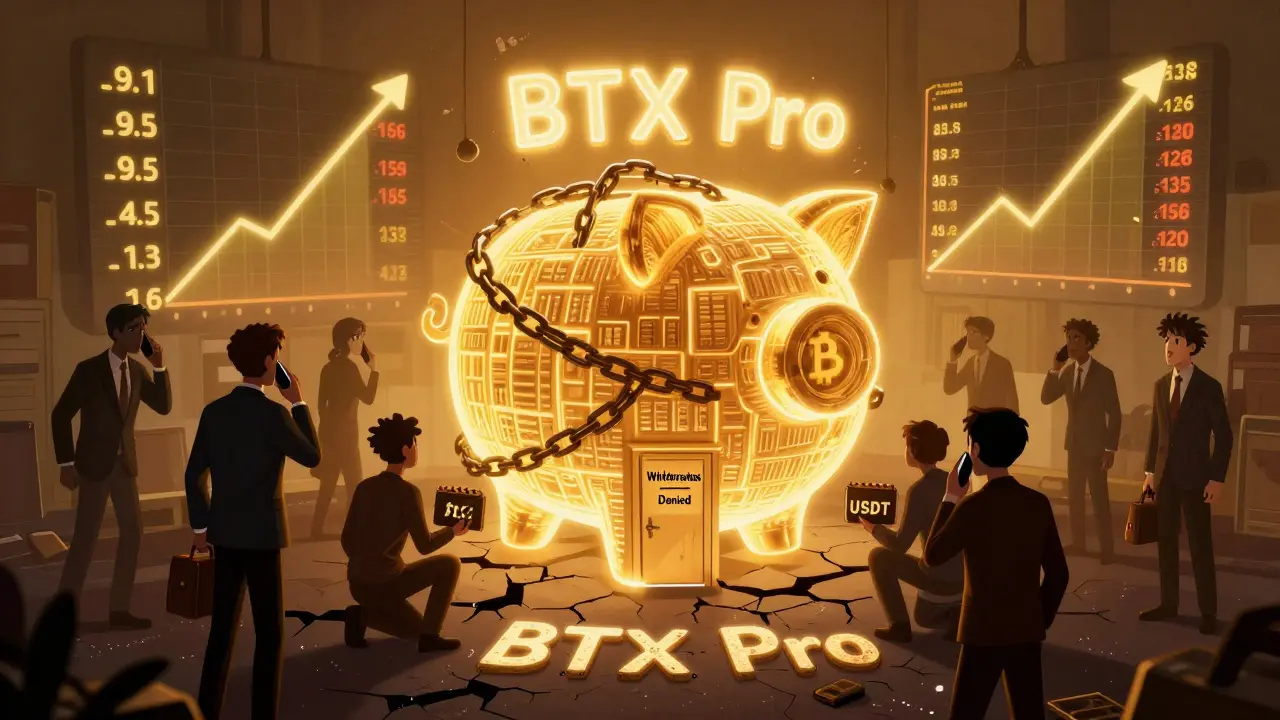
BTX Pro is not a legitimate crypto exchange-it's a scam platform using fake profits and withdrawal blocks to steal funds. Learn how it works, why it's dangerous, and which real exchanges to use instead.
READ MORE