

When you trade or hold crypto in Crypto Tax Indonesia, the legal requirement to report gains from cryptocurrency transactions under Indonesian tax law. Also known as cryptocurrency income tax, it applies to anyone who buys, sells, or trades digital assets through platforms like Indodax or Binance. The Indonesian government doesn’t treat crypto as money—it’s classified as a commodity. That means every time you sell Bitcoin for Rupiah, trade Ethereum for another token, or even use crypto to buy goods, you might owe tax.
This isn’t theoretical. In 2023, Indonesia’s tax agency (DJP) started requiring exchanges to report user transactions. Indodax, Indonesia’s largest crypto exchange with over 1.5 million users. Also known as PT Indodax Nusantara, it now shares trading data with tax authorities. If you’ve traded on Indodax, they’ve likely sent your activity to the tax office. You don’t need to wait for a notice—your obligation starts the moment you profit. Even if you didn’t cash out, swapping one coin for another triggers a taxable event. Many users think holding crypto is safe, but that’s not how Indonesia sees it.
There’s no official crypto tax calculator, and the rules aren’t always clear. But here’s what you can count on: capital gains are taxed at 0.1% to 0.3% per trade on the exchange, and annual income from crypto is added to your personal income tax, which can go up to 30%. If you’re mining, staking, or earning airdrops, those counts as income too. The government doesn’t care if you used a non-custodial wallet—what matters is whether you made money. That’s why crypto wallet Indonesia, any digital wallet used to store or move cryptocurrency within Indonesia’s jurisdiction. Also known as self-custody wallet, it still falls under tax scrutiny if used for transactions. No wallet is invisible to the tax system if it’s linked to an exchange or used to generate income.
People often ask: "Can I avoid crypto tax by using a foreign exchange?" The answer is no. Indonesia’s tax laws apply to residents regardless of where the trade happens. If you live in Jakarta and trade on Binance, you still owe tax. The real risk isn’t getting caught—it’s getting hit with penalties later. Late filings can cost you 2% monthly interest, plus fines up to 200% of the unpaid tax. And if you’re caught hiding income? Criminal charges are possible.
What you’ll find below are real cases, clear breakdowns, and warnings about scams pretending to be tax help. Some posts explain how Indodax handles reporting. Others show you how to track your trades manually. There’s even a post about a fake crypto wallet ban rumor that confused thousands. You won’t find fluff or guesswork—just what’s actually happening on the ground in Indonesia. Whether you’re a casual trader or someone who bought Bitcoin in 2021 and forgot about it, these posts will show you where you stand today—and what to do next.
Posted By Tristan Valehart On 9 Dec 2025 Comments (24)
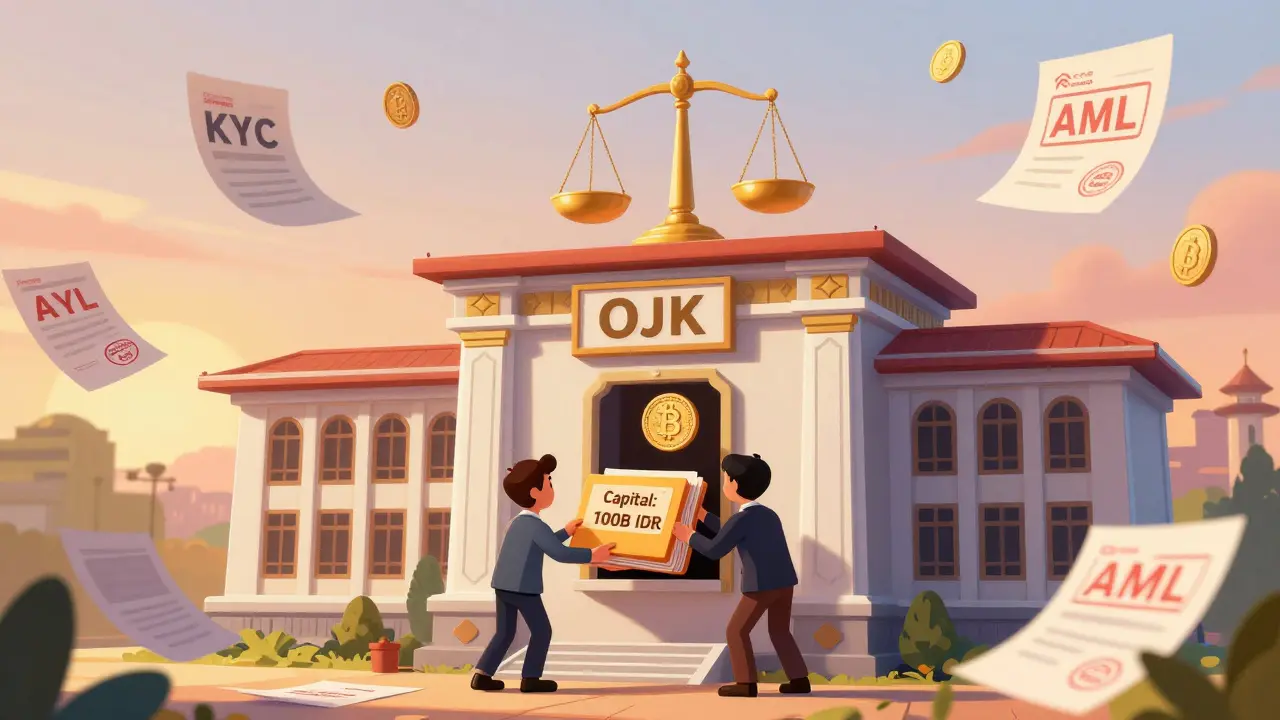
Indonesia’s crypto exchange rules changed in 2025. Learn the new OJK licensing requirements, capital needs, compliance rules, tax changes, and which coins you can trade legally.
READ MORE