

When you trade crypto, you’re not just betting on price moves—you’re stepping into a world with crypto trading risks, the unpredictable dangers of buying and selling digital assets without traditional safeguards. Also known as decentralized market hazards, these risks include everything from smart contract failures to outright scams that wipe out wallets overnight. Unlike stocks, there’s no SEC to investigate fraud, no FDIC to insure your balance, and no customer service line to call when things go south.
Many people think the biggest risk is losing money when a coin crashes. But the real danger is often hidden: DeFi risks, the technical and operational dangers of using decentralized protocols like lending platforms or automated exchanges. Flash loan attacks, oracle manipulation, and buggy smart contracts have stolen billions—not because of market drops, but because the code itself was flawed. Then there’s crypto scams, fraudulent airdrops, fake exchanges, and phishing sites designed to steal your private keys. Over half the posts in this collection expose scams disguised as opportunities—like fake airdrops claiming to be from CoinMarketCap or MultiversX. These aren’t edge cases. They’re the norm.
And it’s not just about bad actors. crypto regulation, the growing patchwork of laws that can suddenly make your activity illegal or heavily taxed is another silent killer. In Thailand, non-compliance can mean jail time. In Egypt, owning crypto is outright banned. In India, heavy taxes and unclear rules make even holding crypto a legal gray zone. You might think you’re safe because you’re not trading on Binance or Coinbase—but if you’re using a local exchange like Cryptoforce or Indodax, you’re still exposed to regulatory shifts, frozen accounts, or sudden KYC crackdowns.
Wallet security is another layer most ignore. Holding crypto in a non-custodial wallet sounds smart—until you lose your seed phrase, or someone tricks you into approving a malicious transaction. India’s wallet ban rumors, Thailand’s invasive KYC, and Egypt’s total ban all show one thing: governments are catching up. And they’re not playing nice.
What you’ll find below isn’t theory. It’s real stories of people who lost money because they trusted a fake airdrop, didn’t understand restaking slashing, or thought a meme coin with zero utility was a good investment. You’ll see how THORChain works but why it’s risky, why BitFlyer is safe but limited, and why most "high-yield" DeFi projects are just gambling with your funds. No fluff. No hype. Just what actually goes wrong—and how to avoid it.
Posted By Tristan Valehart On 4 Dec 2025 Comments (19)
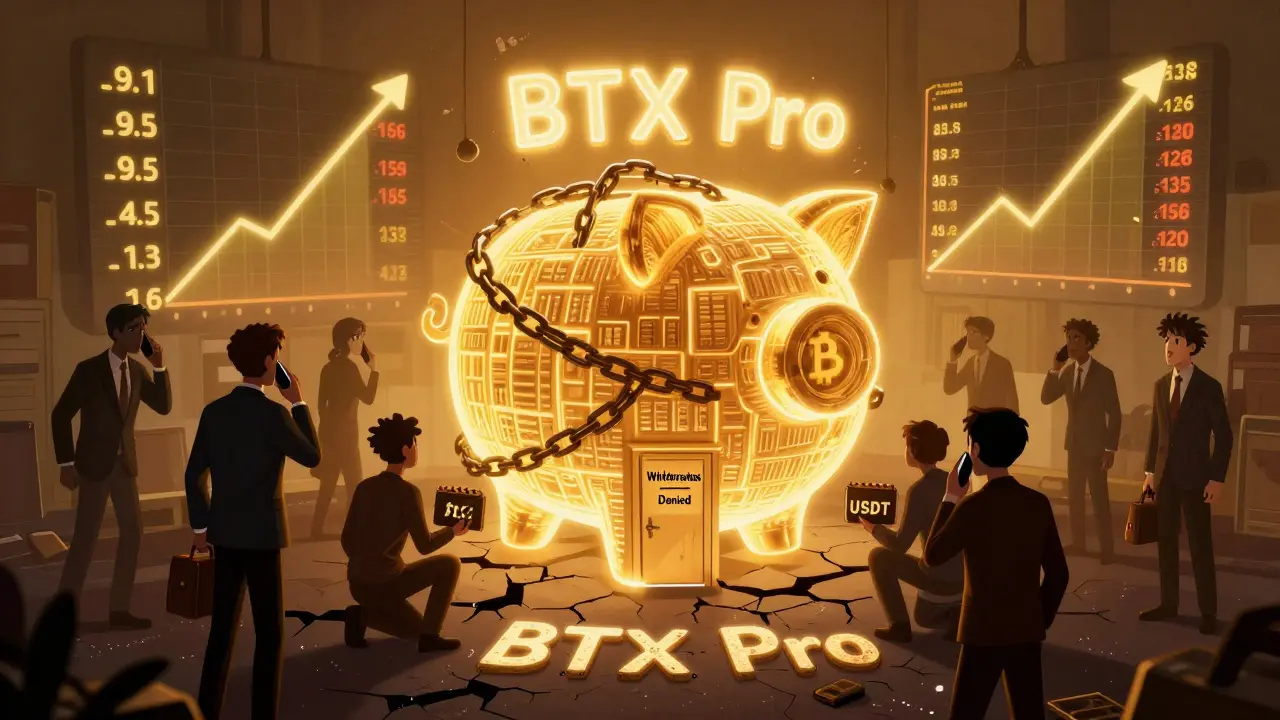
BTX Pro is not a legitimate crypto exchange-it's a scam platform using fake profits and withdrawal blocks to steal funds. Learn how it works, why it's dangerous, and which real exchanges to use instead.
READ MORE