

When you hear about a new fake crypto exchange, a platform that pretends to let you trade crypto but is designed to steal your money. Also known as sham exchange, it often looks just like the real ones—clean design, fake testimonials, even fake customer support. But behind the surface, it’s a trap. These platforms don’t hold your crypto. They don’t process trades. They just wait for you to deposit funds—and then vanish.
It’s not just about fake exchanges. airdrop scams, fake giveaways promising free tokens in exchange for wallet access are everywhere. You’ll see posts claiming "CDONK X CoinMarketCap airdrop" or "SafeLaunch SFEX token free for 24 hours." But CoinMarketCap doesn’t run airdrops. SafeLaunch SFEX trades at $0. These aren’t mistakes—they’re designed to get you to connect your wallet and hand over your private keys. Once you do, your crypto is gone. No recovery. No help. No second chances.
crypto exchange review, a real check of a platform’s history, audits, and user feedback is your first line of defense. Look for verified trading volume, public team members, and regulatory licenses. If a site says it’s based in Dubai or India but has no physical address, no customer service phone, and zero third-party audits? It’s not a platform—it’s a phishing page. Even big names like Cryptoforce and Wagmi (zkSync Era) show up in reviews with zero trading, no transparency, and zero trust. Don’t assume popularity means safety.
And then there’s crypto wallet security, how you protect your keys from being stolen by fake sites, phishing links, or fake apps. Most scams don’t hack you—they trick you. A fake exchange will send you a link that looks like Binance or Coinbase. It’ll ask you to "claim your bonus" or "verify your account." Clicking it doesn’t just log you in—it gives full access to your wallet. No password reset. No two-factor authentication can save you once you’ve signed a malicious transaction.
You won’t find a fake crypto exchange on CoinGecko or CoinMarketCap. You won’t see it listed on official exchange comparison sites. It lives in Telegram groups, Reddit threads, and TikTok ads. It thrives on urgency: "Limited time!" "Only 10 spots left!" "Your tokens are locked—act now!" Real platforms don’t pressure you. They give you time. They explain risks. They don’t ask for your seed phrase.
What you’ll find below isn’t a list of scams—it’s a collection of real cases. People who lost money to fake airdrops. Platforms that vanished overnight. Wallets drained by fake login pages. Each post breaks down exactly what went wrong, how to spot the same trick again, and what to do if you think you’ve been targeted. No fluff. No guesses. Just facts from people who’ve been there.
Posted By Tristan Valehart On 4 Dec 2025 Comments (19)
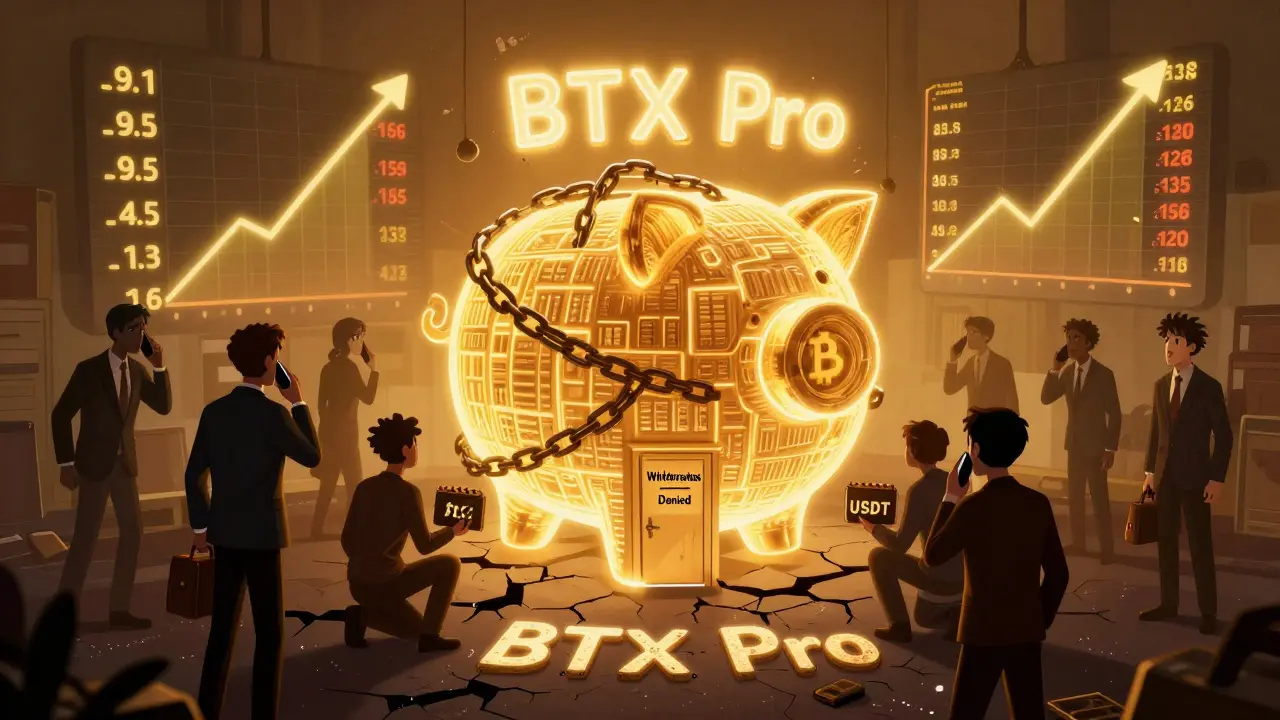
BTX Pro is not a legitimate crypto exchange-it's a scam platform using fake profits and withdrawal blocks to steal funds. Learn how it works, why it's dangerous, and which real exchanges to use instead.
READ MORE