

When you use a non-custodial wallet, a crypto wallet where only you hold the private keys and no company can access or freeze your funds. Also known as self-custody wallet, it’s the only way to truly own your Bitcoin, Ethereum, or any other token in India—without relying on exchanges that can shut down, freeze accounts, or vanish overnight. This isn’t just a technical detail. It’s the difference between holding your money and letting someone else hold it for you.
In India, where crypto trading is growing fast but regulation is still unclear, DeFi, a system that lets you lend, swap, and earn crypto without banks. Also known as decentralized finance, it’s becoming the go-to for users who want more control than traditional exchanges offer. But DeFi only works if you’re using a real non-custodial wallet, a crypto wallet where only you hold the private keys and no company can access or freeze your funds. Also known as self-custody wallet, it’s the only way to truly own your Bitcoin, Ethereum, or any other token in India—without relying on exchanges that can shut down, freeze accounts, or vanish overnight.. Platforms like THORChain and Bifrost let you swap tokens across chains without KYC—but they need your wallet, not your login. And if you’re using a wallet tied to an exchange like Cryptoforce or BTX Pro, you’re not in control. You’re just a user with a fake sense of security.
Most scams targeting Indian crypto users don’t hack wallets—they trick you into giving away your seed phrase. Fake airdrops like CDONK X CoinMarketCap or SafeLaunch SFEX are designed to steal your keys. If you’re using a non-custodial wallet and you see a pop-up asking for your recovery phrase, run. Real airdrops don’t ask for it. Real DeFi apps don’t need it. And real security means you’re the only one who can access your funds. That’s why tools like MetaMask and Trust Wallet are so popular in India—they’re non-custodial by design, open-source, and trusted by millions.
But owning your keys isn’t free. It comes with responsibility. Lose your seed phrase? Your crypto is gone forever. Download the wrong app? A phishing site can drain your wallet in seconds. That’s why learning how to use a non-custodial wallet isn’t optional—it’s survival. You don’t need to be a coder. You just need to know the basics: never share your phrase, double-check contract addresses, and always test small amounts first.
Below, you’ll find real guides and warnings from users who’ve been there. Some show you how to set up a wallet safely. Others expose scams pretending to be DeFi tools. A few explain why Indian users should avoid certain exchanges altogether. No fluff. No hype. Just what you need to know before you send your first transaction.
Posted By Tristan Valehart On 4 Dec 2025 Comments (22)
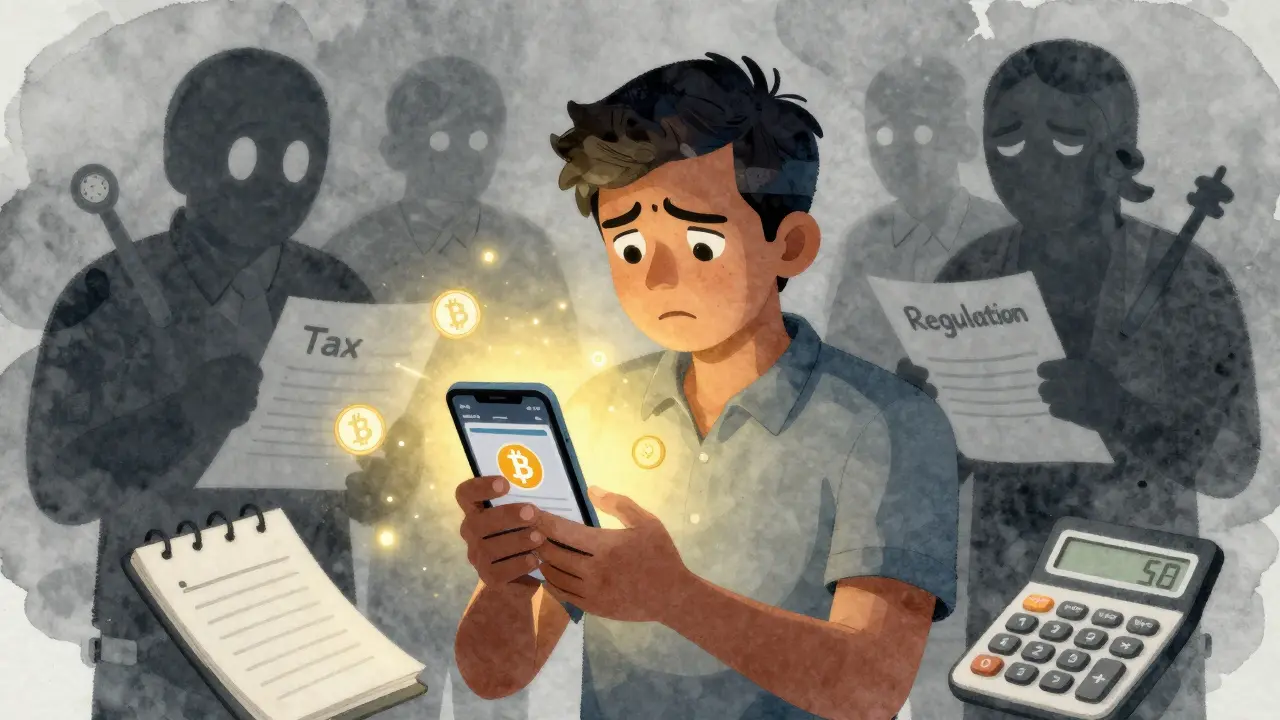
India hasn't banned non-custodial crypto wallets, but heavy taxes, unclear rules, and poor infrastructure are making them hard to use. Here's what's really happening - and what to do next.
READ MORE