

When you hear OJK crypto license, the regulatory approval granted by Indonesia’s Financial Services Authority to crypto exchanges operating legally in the country. Also known as OJK crypto registration, it’s not just a stamp of approval—it’s the only way a platform can legally accept Indonesian rupiah deposits, list tokens, or offer trading services to local users. Without it, exchanges operate in a legal gray zone, and users risk losing funds to platforms that vanish overnight.
Indonesia’s crypto market exploded after 2020, but the OJK, Indonesia’s Financial Services Authority, responsible for regulating non-bank financial institutions including crypto exchanges didn’t sit back. By 2023, they started forcing platforms to apply for licenses or shut down. Over 100 exchanges were told to stop operations. Only a handful—like Indodax and Pintu—got approved. The rules are strict: you need local offices, real audits, KYC for every user, and proof you’re not just a front for money laundering. The crypto licensing Indonesia, the formal process by which exchanges meet OJK’s requirements to legally serve Indonesian customers isn’t about stopping crypto—it’s about controlling it. And that’s why you see so many fake exchanges disappearing from app stores and social media.
What does this mean for you? If you’re using a platform without an OJK license, you’re trading on borrowed time. Withdrawals can freeze. Customer support can vanish. And if the government cracks down, your funds have zero legal protection. The licensed exchanges aren’t perfect—they charge fees, limit coins, and sometimes freeze accounts—but they’re the only ones legally required to keep your money safe. The OJK crypto rules, the official guidelines issued by Indonesia’s Financial Services Authority that define how crypto exchanges must operate to remain compliant also mean you can’t just trade any token. Only those approved by OJK are allowed on licensed platforms. That’s why you won’t find meme coins like Apu or DSFR on Indodax—they don’t meet the bar.
And it’s not just about exchanges. The OJK’s stance affects staking, airdrops, and even wallet usage. Platforms like Cryptoforce and BTX Pro disappeared because they ignored the rules. Even if they promised higher returns, they had no legal backing. Meanwhile, users who stuck with licensed platforms kept their funds intact—even during market crashes. The OJK crypto compliance, the ongoing adherence to Indonesia’s regulatory requirements by crypto exchanges to maintain their operating license isn’t optional. It’s the line between keeping your money and losing it to a scam that looked real.
Below, you’ll find real breakdowns of exchanges that made it through the OJK process, scams that pretended to be licensed, and how to spot the difference before you deposit a single rupiah. No fluff. Just what you need to know to trade safely in Indonesia’s evolving crypto landscape.
Posted By Tristan Valehart On 9 Dec 2025 Comments (24)
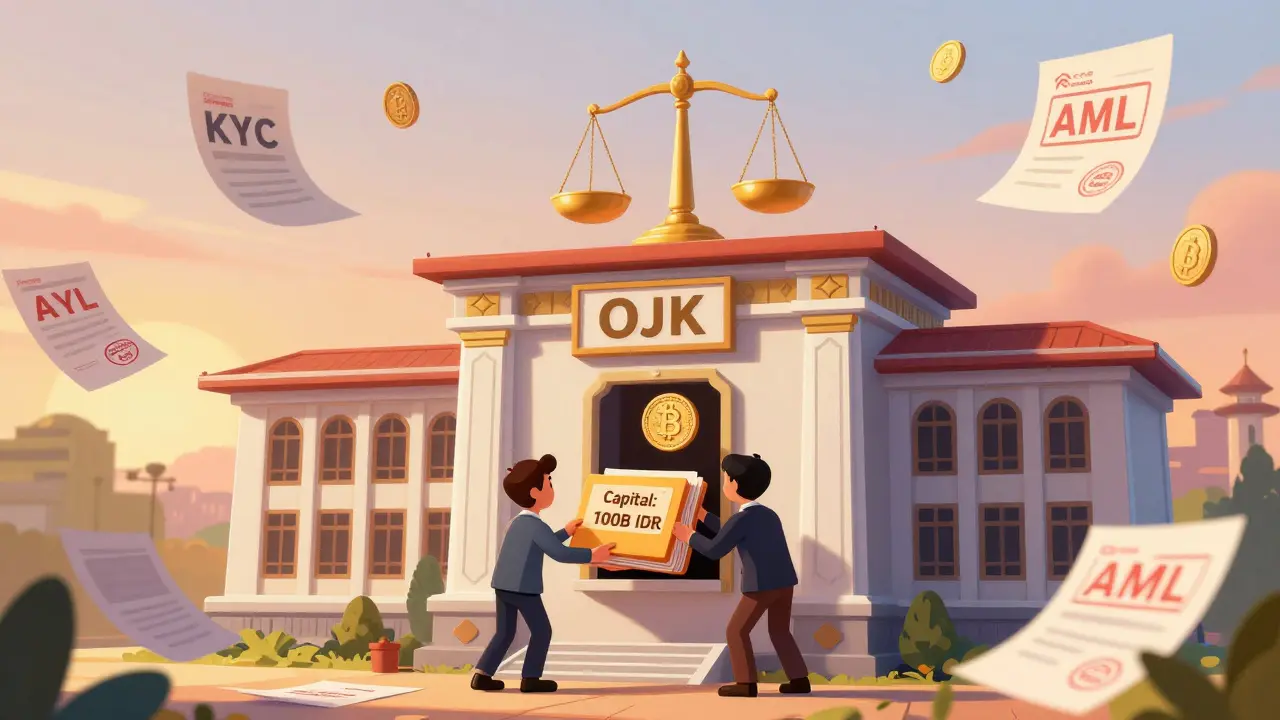
Indonesia’s crypto exchange rules changed in 2025. Learn the new OJK licensing requirements, capital needs, compliance rules, tax changes, and which coins you can trade legally.
READ MORE